量子计算

Search documents
瞭望 | 建立技术输出博弈思维
Sou Hu Cai Jing· 2025-08-11 08:58
Group 1 - The Ministry of Commerce and the Ministry of Science and Technology have adjusted the "Catalog of Technologies Prohibited and Restricted from Exporting," implementing export controls on battery cathode material preparation technology, indicating a significant shift in China's approach to technology trade towards self-innovation and global leadership [1] - China's R&D expenditure for 2024 is projected to reach 36,130 billion yuan, maintaining the second position globally, while the Global Innovation Index ranks China 11th, marking it as one of the fastest-growing economies in innovation over the past decade [1] - China has transitioned from a technology follower to a rule-maker in various fields, necessitating a reevaluation of technology output strategies due to its enhanced technological capabilities [1] Group 2 - Key technologies such as semiconductor manufacturing, quantum computing, and advanced materials are crucial for economic security and must be protected from improper outflow, which could undermine China's economic advantages [2] - A scientific classification and management system for core technologies is needed, with differentiated strategies for technology cooperation based on the partner's profile [2] - The establishment of a dynamic technology evaluation mechanism and a negative list for technology output is essential to prevent the improper outflow of core technologies [3] Group 3 - Enterprises play a vital role in technology innovation and should establish dedicated compliance departments for technology exports, enhancing internal review processes [3] - Government departments are encouraged to provide policy guidance and establish a whitelist system to simplify the approval process for compliant enterprises [3] - Strengthening legal frameworks for technology security and improving early warning mechanisms for technology trends are necessary for effective technology output management [3]
【人民日报】“本源悟空”完成量子边编码技术真机验证
Ren Min Ri Bao· 2025-08-11 02:17
Core Viewpoint - The collaboration between Benyuan Quantum, the University of Science and Technology of China, and the Hefei Comprehensive National Science Center for Artificial Intelligence Research has successfully implemented drug molecular property prediction using quantum edge encoding technology, marking a significant advancement in drug development [1] Group 1: Technology and Innovation - The research team has designed an innovative quantum embedding graph neural network architecture that incorporates pioneering quantum edge encoding technology and quantum node embedding patterns [1] - This technology enables synchronous processing of atoms and chemical bonds at the quantum level, significantly enhancing the accuracy of molecular behavior predictions [1] Group 2: Impact on Drug Development - Accurate prediction of molecular properties is crucial for the rapid screening of candidate drugs, and this new approach opens up a new pathway for molecular property prediction and drug research [1] - The implementation of this technology on China's third-generation autonomous superconducting quantum computer "Benyuan Wukong" has completed real machine verification, demonstrating its practical applicability in the field [1]
药物研发装上“量子显微镜”
Ke Ji Ri Bao· 2025-08-10 23:28
Core Insights - The article discusses the successful implementation of the world's first drug molecular property prediction application based on quantum edge encoding technology by Benyuan Quantum Computing Technology (Hefei) Co., Ltd. in collaboration with the University of Science and Technology of China and the Hefei Comprehensive National Science Center Artificial Intelligence Research Institute [1][2] - This technology significantly enhances the precision of drug discovery by allowing for simultaneous processing of atoms and chemical bonds at the quantum level, akin to equipping drug development with a "quantum microscope" [1][2] Group 1 - The research team has developed a quantum embedded graph neural network architecture that integrates the innovative quantum edge encoding technology and quantum node embedding model [1] - This advancement has led to a substantial increase in the accuracy of predicting key drug properties, with the accuracy for HIV antiviral drug screening rising from 73% to 97%, and Alzheimer's disease drug prediction accuracy increasing from 64% to 70% [2] - The drug toxicity prediction application based on this technology is now available on the Benyuan Quantum Computing Cloud Platform [1]
“本源悟空”完成量子边编码技术真机验证
Ren Min Ri Bao· 2025-08-10 21:55
Group 1 - The core viewpoint of the article highlights the successful application of quantum edge encoding technology for predicting drug molecule properties, achieved by Benyuan Quantum in collaboration with the University of Science and Technology of China and the Hefei Comprehensive National Science Center for Artificial Intelligence Research [1] - The research team designed an innovative quantum embedding graph neural network architecture that integrates pioneering quantum edge encoding technology and quantum node embedding patterns, significantly enhancing the accuracy of molecular behavior predictions [1] - This advancement opens new pathways for molecular property prediction and drug development, which are critical for the rapid screening of candidate drugs in pharmaceutical research [1]
量子玻尔兹曼机及开源编程套件在京发布
Ke Ji Ri Bao· 2025-08-09 11:44
(文章来源:科技日报) 此次大会以人工智能(AI)为核心引擎,旨在充分发挥场景资源富集的优势,着力推动全域全场景的 AI创新应用,加速构建AI产业生态,涵盖算力资源、高质量数据集、模型和智能体、共性技术平台、 开源社区、应用场景、特色产业园区等全链条创新要素,将朝阳区建设为AI创新应用之城。 本次大会由北京市朝阳区人民政府主办、中关村科技园区朝阳园管理委员会(北京市朝阳区科学技术和 信息化局)、北京朝阳国际科技发展集团有限公司承办。 8月7日,"2025朝阳区科技创新大会暨人工智能生态建设大会"在北京昆泰嘉瑞文化中心举办。现场,北 京玻色量子科技有限公司发布自研的量子玻尔兹曼机(QBM)及开源编程套件(KPP)。 会上,北京玻色量子科技有限公司创始人、COO马寅发表了以"量子玻尔兹曼机开启AI制药新范式"为 主题的演讲。据了解,量子玻尔兹曼机(QBM)及开源编程套件(KPP)是玻色量子在"量子计算 +AI"领域领先实现专用量子计算实用化突破的关键成果,以AI制药为首个"爆款场景",也是玻色量子 在以实用化引领量子计算发展历程中的重要里程碑。 ...
我国完成全球首个量子边编码技术真机验证
Ren Min Ri Bao Hai Wai Ban· 2025-08-08 20:42
Core Insights - The article reports that Benyuan Quantum, in collaboration with the University of Science and Technology of China and the Hefei Comprehensive National Science Center's Artificial Intelligence Research Institute, has achieved the world's first application of drug molecular property prediction based on quantum edge encoding technology [1] - This technology has been validated on China's third-generation autonomous superconducting quantum computer "Benyuan Wukong," opening new pathways for molecular property prediction and drug development [1] Group 1 - Accurate prediction of molecular properties is crucial for the rapid screening of candidate drugs [1] - The research team has innovatively designed a quantum embedding graph neural network architecture, which synchronously processes atoms and chemical bonds at the quantum level for the first time [1] - This advancement significantly enhances the prediction accuracy of molecular behavior and markedly improves drug discovery efficiency [1]


中国量子计算行业现状深度研究与发展前景预测报告(2025-2032年)
Sou Hu Cai Jing· 2025-08-08 06:23
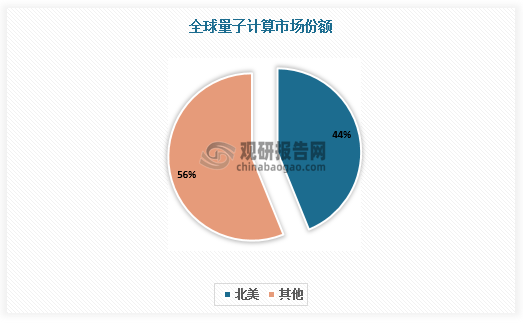
Core Insights - Quantum computing has entered a new era since Google's demonstration with a 53-Qubit quantum computer in 2019, proving its capability to solve problems that traditional computers cannot handle efficiently [1][2] - The global quantum computing market is currently dominated by North America, which holds a 43.86% market share, with major players including Microsoft and Google [2][4] - China has made significant strides in quantum computing since the establishment of its first research group in 2003, achieving a historic leap from following to leading in certain areas of quantum technology [1][10] Group 1: North American Market Leadership - North America leads the global quantum computing market with a 43.86% share, featuring companies like Microsoft and Google, which have different technological approaches [2][4] - Microsoft’s Majorana 1 focuses on topological qubits for stability, while Google’s Willow emphasizes computational performance and error correction [4][6] - The scalability of Microsoft's Majorana 1 is theoretically up to 1 million qubits, while Google's current capability reaches 105 qubits [6] Group 2: China's Policy and Development - China’s quantum computing journey began in 2003, with significant policy support starting from the 2016 "Thirteenth Five-Year Plan," which included quantum computing as a major project [8][10] - The "Fourteenth Five-Year Plan" further emphasizes quantum computing as a strategic development area, showcasing China's commitment to advancing in this field [8][10] - China has demonstrated superiority in superconducting and photonic quantum technologies, with prototypes like "Zuchongzhi" and "Jiuzhang" leading in performance [9][10] Group 3: Early Stage of Global Quantum Applications - Quantum computing applications are still in the early stages across various sectors, including healthcare, automotive, BFSI, chemicals, manufacturing, and energy [13] - The global quantum computing market is projected to grow from $116.01 billion in 2024 to $1,262.07 billion by 2032, with a CAGR of 34.8% [13] - Despite the promising growth, current hardware and software capabilities are still developing, indicating that the industry is on the verge of rapid advancement [13]


中国科研团队给药物研发装上了“量子显微镜”
Qi Lu Wan Bao· 2025-08-07 22:58
Core Insights - A Chinese research team has successfully implemented the world's first drug molecule property prediction application based on quantum edge encoding technology, utilizing a "quantum microscope" [1] - The innovative quantum embedded graph neural network architecture integrates the pioneering quantum edge encoding technology and quantum node embedding model, achieving synchronous processing of atoms and chemical bonds at the quantum level [1] - This advancement significantly enhances the prediction accuracy of molecular behavior and markedly improves the efficiency of drug discovery [1]
CES Asia 2025筹备加速,闭门洽谈会“一位难求”
Sou Hu Cai Jing· 2025-08-07 03:38
Core Insights - CES Asia 2025 is entering a critical phase of preparation, with a significant increase in participation from global tech companies, particularly for the closed-door negotiation meetings, highlighting its importance as a core B2B platform in the tech industry [2][3] - The registration for the closed-door meetings has exceeded expectations, leading the organizers to extend the review period to ensure thorough evaluation of each applicant [2] - Asian companies, especially from China, Japan, and South Korea, dominate the applicant pool, seeking international collaboration to enhance their global presence [2] - Companies from Europe and the US are also participating, bringing advanced technologies and innovative ideas to explore opportunities in the Asian market [2] Industry Trends - In addition to popular sectors like artificial intelligence and the Internet of Things, emerging fields such as quantum computing, brain-computer interfaces, and green energy are also seeing active participation [3] - A European company focused on quantum computing emphasized the growing demand for this technology in the Asian market and aims to find suitable partners through the event [3] - To accommodate the high demand, the organizers plan to increase the number of closed-door meetings and optimize the negotiation process, enhancing efficiency and support for participating companies [3] - The success of CES Asia 2025 reflects the global tech industry's recognition of the Asian market and underscores the event's role in fostering technological exchange and collaboration [3]

马斯克严峻提问:量子电脑能否破解比特币?
Sou Hu Cai Jing· 2025-08-06 07:24
Group 1 - Musk raises concerns about the long-term security of Bitcoin in the context of rapid advancements in quantum computing, specifically regarding the SHA-256 hash algorithm's vulnerability to powerful quantum computers [2][4] - IBM announced its next-generation quantum system "Blue Jay," which is expected to achieve 2000 qubits by 2033, intensifying competition in the quantum computing space [2][6] - Current quantum systems possess around 1000 qubits, significantly lower than the millions of error-correcting qubits needed to effectively break Bitcoin's encryption [4] Group 2 - Grok's analysis indicates that the risk of quantum computers breaking Bitcoin's encryption is near zero in the next five years, with a slight increase to below 10% by 2035 [2][4] - Deloitte's recent analysis suggests that approximately 25% of Bitcoin is at risk of being stolen through quantum attacks, highlighting the urgency for the Bitcoin network to adopt post-quantum cryptography [4] - Tesla holds 11,500 Bitcoins valued at approximately $1.3 billion, while SpaceX reportedly holds around $850 million in Bitcoin, indicating Musk's vested interest in addressing potential threats [6]