Smartphones

Search documents
国产折叠屏集火苹果,库克很受伤
3 6 Ke· 2025-07-04 10:50
Core Viewpoint - Domestic smartphone brands are collectively targeting Apple's upcoming foldable phone, aiming to seize market share and establish a foothold before Apple's entry [1][4][10] Group 1: Market Dynamics - Xiaomi, vivo, and Honor launched their foldable phones within ten days, attempting to shift the perception of foldable devices from niche products to mainstream options [1][3] - The average price of Android foldable phones has decreased by 18% year-on-year, positioning them favorably against Apple's anticipated $2000 foldable phone [4][6] - Apple's market share in China is projected to decline from 19% in 2023 to 15% in 2024, with a significant drop in shipments and ranking [7][8] Group 2: Competitive Strategy - Domestic brands are focusing on breaking Apple's ecosystem barriers and promoting cross-ecosystem connectivity, which is seen as a weakness for Apple [3][11] - Vivo's X Fold5 exemplifies this strategy by enabling synchronization with Apple devices, showcasing a shift from hardware competition to software ecosystem integration [14][11] - The competitive landscape is shifting towards a focus on software and ecosystem advantages, with domestic brands aiming to attract Apple users through innovative features and services [10][11] Group 3: Supply Chain and Technology - Apple's reliance on Samsung for OLED panels poses risks, as it increases costs and may affect product quality and release timelines [4][6] - Samsung holds a dominant position in the global smartphone market with a 20.4% share, while Apple follows with 18.4% [6][8] - Domestic brands have been developing foldable technology for years, giving them a technological edge as they launch products ahead of Apple [4][6]


2025年5月国内折叠屏智能手机UTG前盖使用量达1.3万㎡,同比增长134.8%
CINNO Research· 2025-07-04 08:21
Core Insights - The article highlights that the usage of UTG (Ultra-Thin Glass) front covers for foldable smartphones in China reached 13,000 square meters in May 2025, representing a year-on-year growth of 134.8% [1]. Group 1: Market Trends - The report covers the penetration rate and usage trends of various front cover materials in the Chinese smartphone market from January 2024 to May 2025 [3]. - It provides a detailed analysis of the sales volume and market share of front cover specifications for major smartphone brands in China [3]. Group 2: Foldable Smartphone Analysis - The report details the changes in the usage of UTG and CPI (Cover Polyimide) front covers for foldable smartphones in the Chinese market from January 2024 to May 2025 [3]. - It also examines the penetration rates of front covers for foldable smartphones during the same period [3]. - The brand market share for UTG front covers in foldable smartphones is analyzed [3]. - The brand market share for CPI front covers in foldable smartphones is also included [3]. Group 3: Brand-Specific Insights - The report includes sales volume and market share data for front cover specifications of Apple smartphones in China from January 2024 to May 2025 [3]. - It provides similar data for Huawei smartphones during the same period [3]. - The report also covers sales volume and market share for Honor, OPPO, vivo, and Xiaomi smartphones in China [3].
华为有望Q2重返中国市场第一,苹果预计实现高个位数增长
Nan Fang Du Shi Bao· 2025-07-04 08:06
Core Insights - The Chinese smartphone market is experiencing a mild recovery in Q2 2025, driven primarily by Huawei and Apple [1][3] - Huawei is expected to achieve the highest growth among major brands and reclaim the top position in the Chinese market, while Apple continues to lead the high-end market with the iPhone 16 series [1][4] Market Dynamics - The current smartphone market in China is characterized by a mix of inventory competition and technological iteration, with several factors such as slow consumer confidence and prolonged product innovation cycles putting pressure on the market [3] - Leading manufacturers are activating replacement demand through brand strategies, technological upgrades, and price adjustments [3] Huawei's Performance - Huawei's strong rebound is notable, particularly since its return to the 5G smartphone market, launching new Mate and Pura series products that leverage self-developed chips and the HarmonyOS ecosystem for competitive differentiation [3] - The company experienced a sales peak in May, aided by government smartphone subsidy policies and its own promotional activities, which stimulated a wave of user upgrades [3] - Huawei's core user loyalty remains high, with users replacing old devices with new models, indicating a recovery of market share lost due to previous supply chain constraints [3] Apple's Strategy - Apple is steadily advancing in the high-end market, with the iPhone 16 Pro and Pro Max performing exceptionally well, particularly following a timely price adjustment in May [4] - This price adjustment coincided with the 618 shopping festival, allowing Apple to secure the top sales position during this period, with three iPhone models ranking among the bestsellers [4] Overall Market Outlook - Despite the strong performances of Huawei and Apple, overall consumer confidence remains slow to recover, with actual sales during the 618 festival showing no year-on-year growth [4] - Analysts suggest that the sales performance in Q2 was partially driven by government subsidy policies, which may taper off in the second half of the year, introducing uncertainty into market growth [4] - The competitive landscape is shifting from price wars to a focus on user value and ecosystem capabilities as the market evolves [4]
折叠屏手机迎来“下半场”:荣耀的AI攻势与领跑者野心
Nan Fang Du Shi Bao· 2025-07-04 05:51
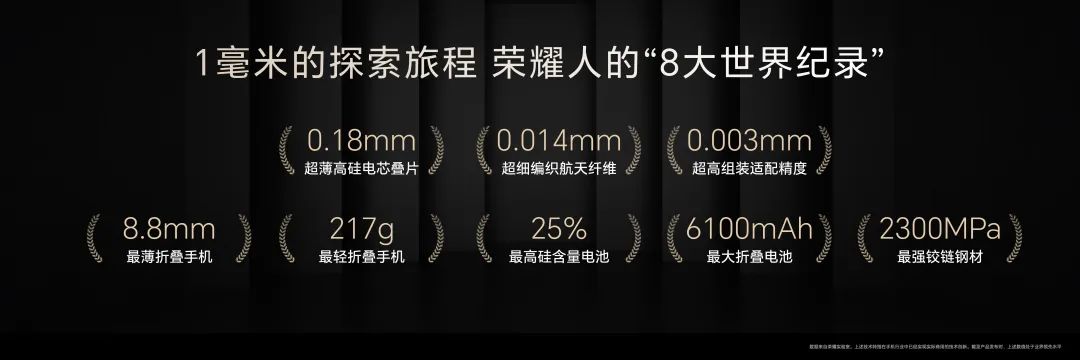
Core Insights - The launch of Honor's new foldable flagship Magic V5 marks a significant shift in the foldable smartphone market, transitioning from a phase of novelty to a competitive landscape focused on technology, experience, and ecosystem [1] - Honor aims to redefine the future of foldable screens by addressing core consumer pain points and eliminating compromises in thickness, weight, battery life, and performance [4][8] Group 1: Product Development and Innovation - Honor has consistently set the pace in the foldable smartphone market, achieving a record thickness of 8.8mm with the Magic V5, making it the lightest foldable flagship globally [2] - The company has broken records three times in two years, showcasing its commitment to "extreme productism" driven by consumer needs and continuous technological innovation [4] - The use of aerospace-grade special fibers in the Magic V5's back cover enhances impact resistance by 40 times while maintaining a lightweight design [6] Group 2: Battery and Manufacturing Technology - Honor's latest "Qinghai Lake Blade Battery" features a silicon content of 25%, achieving an energy density of 901Wh/L and a capacity of 6100mAh within a slim profile [8] - The company has made significant advancements in AI-driven manufacturing, achieving assembly precision of 0.003mm, which is ten times better than the previous industry standard [8] Group 3: AI Integration and User Experience - Honor is positioning itself for the next phase of foldable smartphones by integrating AI capabilities, transforming the device into a "PC-level productivity" tool [10] - The YOYO intelligent assistant can autonomously perform complex tasks, such as generating a complete PPT draft based on user commands, showcasing AI's deep understanding of user intent [10][12] - Key breakthroughs in AI technology include a personal knowledge base for secure data management and cross-application collaboration among multiple intelligent agents [14] Group 4: Strategic Vision and Ecosystem Development - Honor's ambition extends beyond creating the best foldable phone; it aims to build a comprehensive smart ecosystem centered around foldable technology [18] - The Magic V5 supports seamless data transfer with devices running on Apple and HarmonyOS, highlighting Honor's commitment to an open ecosystem [19] - The company expresses confidence in competing with industry giants like Apple, viewing their potential entry into the foldable market as a validation of Honor's efforts [20]
折叠屏竞速:荣耀苹果加码,AI重构高端战场
2 1 Shi Ji Jing Ji Bao Dao· 2025-07-03 13:32
Core Viewpoint - The foldable smartphone market is experiencing significant growth, with companies like Honor, Huawei, and Apple leading the charge in innovation and competition, particularly with the integration of AI technology into foldable devices [1][5][6]. Group 1: Market Growth and Trends - The global foldable smartphone shipment is projected to rise from 9.1 million units in 2021 to 54.7 million units by 2025, representing a compound annual growth rate (CAGR) of approximately 56.5% [1]. - In China, the market share of foldable smartphones is expected to increase from 12% in 2021 to 31% in 2025, highlighting China's role as a key growth driver in the global foldable smartphone market [1]. - In Q1 2025, China's foldable smartphone shipments reached 2.84 million units, marking a year-on-year growth of 53.1% [2]. Group 2: Competitive Landscape - The current competitive landscape features major players like Huawei, Honor, OPPO, Xiaomi, and Samsung, with Huawei leading the market, followed by Honor and OPPO [2]. - Honor's strategy focuses on aggressive development in the foldable segment, emphasizing lightweight design, with the Magic V5 measuring only 8.8mm in thickness and weighing 217g [2][3]. - Apple is also accelerating its entry into the foldable market, with expectations to launch its first foldable iPhone by late 2025 [3][4]. Group 3: Technological Innovations - Honor's advancements in battery technology, particularly the use of silicon-carbon anodes with a 25% silicon content, represent a significant breakthrough in the foldable smartphone sector [3]. - The integration of AI technology into foldable devices is seen as a transformative step, with Honor's Magic V5 featuring AI capabilities that enhance productivity and user experience [5][6]. - The combination of AI and foldable screens is expected to redefine user interaction, moving from basic functionality to innovative, scenario-based applications [5][7]. Group 4: Future Outlook - The foldable smartphone market is anticipated to continue its growth trajectory, with projections indicating over 30% growth in 2026 and more than 20% growth in 2027-2028 [4]. - The shift towards AI-driven functionalities in foldable devices is expected to create new opportunities and reshape the supply chain dynamics within the industry [7].
Apple's China iPhone sales grows for the first time in two years
CNBC· 2025-07-03 11:54
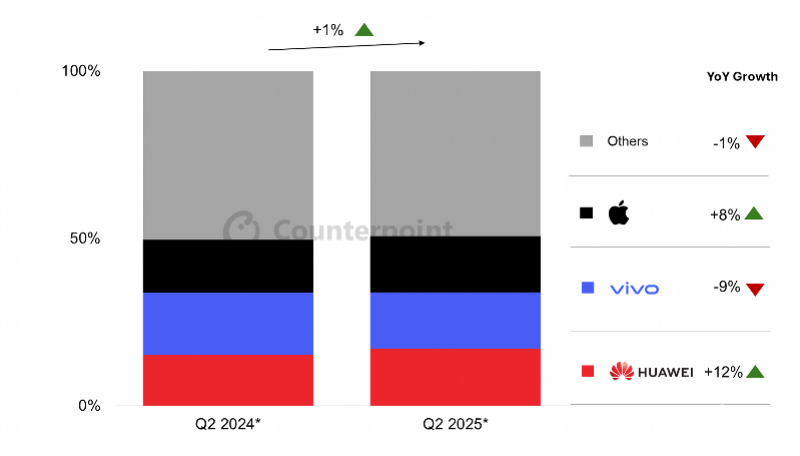
Group 1 - Apple's iPhone sales in China increased by 8% year-on-year in Q2 2023, marking the first growth in two years [1] - The growth was attributed to promotions in May, where Chinese e-commerce firms discounted the iPhone 16 models and Apple raised trade-in prices for certain iPhones [2] - The timing of Apple's price adjustments was strategic, coinciding with the 618 shopping festival in June, which is known for heavy discounts [3] Group 2 - Apple's stock has fallen approximately 15% this year, prompting investor concern, making the return to growth in China significant [3] - Huawei has regained market share in China, with its sales rising 12% year-on-year in Q2 2023, positioning it as the largest player in the market, followed by Vivo and Apple [5] - Huawei's success is attributed to strong user loyalty as customers replace old devices with new Huawei releases [6]

荣耀Magic V5发布:搭载阿里通义千问和VL等大模型
Feng Huang Wang· 2025-07-02 12:44
Core Viewpoint - Honor has launched its new flagship foldable smartphone, Honor Magic V5, which integrates Alibaba's large models and vertical scene agents for the first time in a smartphone [1][2] Group 1: Product Features - Honor Magic V5 is equipped with Alibaba's Tongyi Qianwen-based intelligent agents, including Gaode and Fliggy Travel, marking a significant integration of AI technology into mobile devices [1] - The device features the "One Voice Ask Screen" function, allowing users to upload documents for in-depth Q&A and online searches through the Honor AI assistant, YOYO [1] - The smartphone supports various interactive scenarios, including voice practice and real-time interaction with the physical world through video mode [1] Group 2: Agent Capabilities - The Fliggy Travel agent is specifically designed for Honor Magic V5, enabling users to plan trips, discover destinations, and receive recommendations for nearby attractions and dining [1] - The Fliggy agent also facilitates quick bookings for train tickets, flights, and hotels, enhancing the travel experience for users [1] - The Gaode agent, developed by Gaode Cloud Map, focuses on providing location-based recommendations for dining, entertainment, and integrated travel services, with ongoing expansion into more scenarios [2]

阿里与荣耀进一步深化AI 生态合作
Xin Lang Ke Ji· 2025-07-02 12:40
Core Insights - Honor has officially launched its new flagship foldable smartphone, Honor Magic V5, which integrates Alibaba's AI capabilities through the Tongyi Qianwen model [1] - The device features advanced AI functionalities, including deep document analysis and real-time interaction in voice and video modes, enhancing user experience [1] Group 1 - The Honor Magic V5 is equipped with Alibaba's Tongyi Qianwen-based intelligent agents, including Gaode and Fliggy Travel, marking a significant collaboration in the AI agent ecosystem [2] - The new smartphone supports deep thinking Q&A capabilities, allowing users to upload various documents for enhanced knowledge extraction and interaction [1][2] - Future developments will focus on extending the capabilities of large model technology to more smart terminal devices and applications [1] Group 2 - The Fliggy Travel agent is tailored for the Honor Magic V5, enabling users to plan trips, discover destinations, and book travel services efficiently [2] - The Gaode agent, developed by Gaode Yuntu, focuses on providing location-based recommendations and integrated travel services, with ongoing expansion into various lifestyle and travel scenarios [2]
CFM:预计2025年全球智能手机出货量同比基本持平约12亿台
news flash· 2025-07-02 06:19
Core Insights - CFM forecasts that global smartphone shipments will remain flat at approximately 1.2 billion units in 2025, indicating a significant slowdown in growth [1] - The primary reason for the downward adjustment in smartphone shipments is the market penetration rate nearing saturation, leading to a near-zero growth outlook [1] - The smartphone industry is expected to enter a prolonged low-growth period due to ongoing global geopolitical conflicts, tariff disputes, and consumer fatigue, coupled with an innovation bottleneck [1]
Apple loses bid to dismiss major US antitrust case
TechXplore· 2025-07-01 09:30
Core Viewpoint - A federal judge has allowed a significant antitrust lawsuit against Apple to proceed, challenging the company's alleged monopoly in the smartphone market [1][2]. Group 1: Antitrust Lawsuit Details - The lawsuit, initiated by the US Department of Justice and 20 states in March 2024, accuses Apple of illegally monopolizing smartphone markets through restrictive practices against app developers and device manufacturers [2][4]. - District Judge Julien Neals ruled that the government has sufficiently demonstrated that Apple holds monopoly power in the smartphone market and engages in anticompetitive behavior [2][3]. Group 2: Market Share and Monopoly Power - Apple reportedly controls 65% of the overall US smartphone market and 70% of the premium "performance smartphone" market, which excludes lower-end devices [3]. - The judge noted that these market share figures, along with significant barriers to entry, indicate Apple's monopoly power and justify proceeding to trial [3]. Group 3: Internal Communications and Potential Remedies - The ruling referenced internal communications from Apple executives that allegedly reveal intentions to maintain monopoly power, including efforts to prevent users from switching to competing devices [5]. - If the government prevails at trial, potential remedies for Apple could include changes to business practices or orders to divest parts of its device and software operations [5]. Group 4: Broader Antitrust Context - This case is part of a series of major antitrust challenges facing Apple, which also includes accusations of taking a large cut from proceeds of outside apps on its devices [7]. - The lawsuit is one of five significant cases initiated during the Trump and Biden administrations targeting major tech companies, including Meta and Amazon [7].