
Cosmetics

Search documents
经销商是什么?如何有效管理?
Sou Hu Cai Jing· 2025-06-20 08:08
Core Viewpoint - The relationship between manufacturers and distributors is often fraught with challenges, including lack of trust and communication issues, which can hinder effective market expansion and product distribution [1][5]. Group 1: Role of Distributors - Distributors act as essential partners in the commercial ecosystem, facilitating the movement of products from manufacturers to various markets, thus saving costs and providing localized services [3]. - They help manufacturers reduce expenses associated with direct retail operations, such as rent and labor costs, by leveraging local resources for distribution [3]. - Distributors possess localized knowledge that enables them to effectively market products to regional consumers, which manufacturers may struggle to replicate [3]. Group 2: Pain Points in Managing Distributors - Manufacturers often face challenges in monitoring distributor inventory, leading to issues such as excess stock and product wastage [5][7]. - There is a lack of transparency in sales data, with distributors sometimes providing misleading information about inventory levels and sales performance [7]. - Conflicts can arise between distributors in different regions, leading to pricing inconsistencies and market confusion [7]. Group 3: Solutions for Effective Distributor Management - Implementing digital tools can break down information barriers, allowing for real-time data sharing and inventory management, which can significantly reduce stockouts [8]. - Standardizing processes through digital systems can minimize errors in order management, leading to improved efficiency and reduced complaints from distributors [10]. - Utilizing data analytics can help identify market trends and adjust strategies accordingly, enhancing sales performance [12]. Group 4: Building Collaborative Relationships - Establishing a scoring system for distributors can incentivize performance and encourage them to expand their market reach, benefiting both parties [14]. - Smart management systems can track logistics and prevent unauthorized sales across regions, reducing conflicts and fostering a more cooperative environment [14]. - Transparency in data sharing can rebuild trust between manufacturers and distributors, leading to a more collaborative approach to achieving mutual goals [17].


5 Growth Stocks to Invest $1,000 in Right Now
The Motley Fool· 2025-06-19 07:55
Core Viewpoint - Despite market uncertainties, it is a favorable time to invest in growth stocks with a cautious approach, starting with smaller investments and potentially increasing positions if stock prices decline. Group 1: Nvidia - Nvidia is the leader in AI infrastructure, with its GPUs being the primary chips for AI workloads, supported by its proprietary software platform CUDA [3][4] - Nvidia captured over 90% of the GPU market in Q1, with data center revenue growing more than 9 times in two years, and demand for its new Blackwell chips is accelerating [4][5] - Nvidia is positioned as a key investment in AI infrastructure despite potential risks from data center spending slowdowns [5] Group 2: Taiwan Semiconductor Manufacturing (TSMC) - TSMC is crucial in manufacturing advanced AI chips, holding significant capabilities that few companies possess [6][7] - Nearly 60% of TSMC's business comes from high-performance computing chips, with strong demand continuing [7] - TSMC is raising prices to offset near-term margin pressures and is expected to be a long-term winner in the AI sector [8] Group 3: Pinterest - Pinterest has transformed by embracing AI, leading to increased engagement and improved average revenue per user (ARPU) [9][10] - The company’s AI-driven solutions are enhancing user engagement and helping advertisers run more effective campaigns [10] - Despite potential economic slowdowns, Pinterest has strong growth prospects due to its large user base [11] Group 4: Eli Lilly - Eli Lilly is benefiting from the growth of GLP-1 drugs, with Mounjaro and Zepbound generating $6.1 billion in revenue last quarter [12] - Zepbound's revenue surged from $517 million to $2.3 billion year-over-year, indicating strong momentum [12] - The company’s next-generation oral GLP-1 drug, orforglipron, shows promise and has advantages over existing injectable drugs [13][14] Group 5: e.l.f. Beauty - e.l.f. Beauty is entering a growth phase following its $1 billion acquisition of Rhode, which generated $212 million in sales despite limited product offerings [15][16] - The acquisition is timely as e.l.f.'s growth slowed, and Rhode's expansion into Sephora presents a significant opportunity [16][17] - e.l.f. has strong retail relationships that can facilitate Rhode's distribution growth, making it an attractive investment opportunity [17]



Michael Burry Saw It Before Anyone Else — Then Estée Lauder's Story Took A Dramatic Turn
Benzinga· 2025-06-17 22:29
Core Insights - Estée Lauder's stock has seen a steady increase over the past three months, with a notable jump of over 10% following the death of Leonard Lauder, a key executive and son of the founder [1][3] - Michael Burry's hedge fund, Scion Asset Management, has doubled its stake in Estée Lauder, making it the only long position held by the firm [1][3] Company Developments - Leonard Lauder, who played a significant role in transforming Estée Lauder into a global leader in the beauty industry, passed away at the age of 92 [2] - In the first quarter of 2025, Scion Asset Management purchased an additional 100,000 shares, increasing its total holdings to 200,000 shares [2] Market Trends - The increase in Estée Lauder's stock price may reflect a strategic bet on the "Lipstick Index," which suggests that consumers tend to purchase affordable luxuries like cosmetics during economic downturns [3] - Historical data indicates that during the 2008 recession, cosmetics sales increased, highlighting consumer behavior towards small comfort purchases in tough economic times [4]

Stock Of The Day: Will Estee Lauder Fill The Gap?
Benzinga· 2025-06-17 19:42
Core Viewpoint - The stock of The Estée Lauder Companies Inc. is experiencing consolidation after a significant gain, encountering resistance at approximately $74.75, which may indicate a potential for further movement in the stock price [1][2]. Price Movement and Resistance - The stock gained over 10% on Monday before hitting resistance at $74.75, a level previously established in late February [1][3]. - The resistance at this price level is attributed to buyer's remorse from previous investors who sold their shares when the price dropped [5][7]. Market Dynamics - The presence of remorseful buyers at the resistance level indicates that if these sellers can be overpowered by new buyers, the stock may experience a rapid increase in price [6]. - The gap down from around $80.80 to $74.75 in January created a situation where there was no trading in between these prices, leading to fewer sellers if the stock returns to these levels [7][8]. Implications for Future Trading - If the stock can surpass the resistance level, it may lead to a scenario where buyers compete against each other, potentially driving the price higher [8].

Disclosure of total number of voting rights and number of shares in the capital at May 31, 2025
Globenewswire· 2025-06-17 15:39
Company Overview - L'Oréal is the world's leading beauty player with a history of 115 years dedicated to fulfilling global beauty aspirations [2] - The company operates with a broad portfolio of 37 international brands and emphasizes social and environmental sustainability through its L'Oréal for the Future programme [2] Financial Performance - In 2024, L'Oréal generated sales amounting to 43.48 billion euros, showcasing its strong market presence [3] - The company has a workforce of over 90,000 employees and maintains a balanced geographical footprint across various distribution networks including ecommerce, mass market, and department stores [3] Research and Innovation - L'Oréal has established 21 research centers in 13 countries, supported by a dedicated Research and Innovation team comprising over 4,000 scientists and 8,000 digital talents [3] - The company's focus is on inventing the future of beauty and positioning itself as a Beauty Tech powerhouse [3]


40亿级国货美妆集团,进军功效护肤赛道!
FBeauty未来迹· 2025-06-17 15:18
Core Viewpoint - The acquisition of Baizhichui by Juyi Group marks a significant step in its transition from a color cosmetics leader to a diversified beauty group focused on scientific skincare [2][10]. Group 1: Acquisition Details - Juyi Group has officially signed an acquisition agreement with Baizhichui, a dermatology-based skincare brand [2]. - Baizhichui, founded in 2012, focuses on providing safe and effective skincare solutions for sensitive and problematic skin, leveraging a strong medical background [4]. - The brand's product line includes solutions for various skin concerns, with its "Little Green Bottle" series achieving sales of over 8 million units [5]. Group 2: Brand and Market Position - Baizhichui's founder, Dr. Li Yuanhong, will continue as Chief Product Officer, ensuring the brand's medical expertise is maintained [6]. - The brand has established a comprehensive channel network, initially focusing on professional channels and later expanding to e-commerce and retail [6][10]. - Juyi Group's retail revenue is projected to exceed 4.2 billion in 2024, with a 36% year-on-year increase, showcasing its strong market position [10][14]. Group 3: Strategic Implications - The acquisition is seen as a strategic move to enhance Juyi Group's multi-category brand matrix, which now includes color cosmetics, skincare, and scalp care [10][15]. - Juyi Group aims to leverage Baizhichui's scientific skincare expertise to accelerate its growth in the professional skincare market [15]. - The company has been recognized as one of the top 100 global beauty companies, ranking 68th this year, reflecting its competitive strength [16].

“贵妇”们为什么不买赫莲娜和海蓝之谜了?
创业邦· 2025-06-14 03:07
Core Viewpoint - The luxury skincare brands Helena and La Mer are facing significant challenges in reputation and sales in the Chinese market, despite their high rankings in sales during the 618 shopping festival. The brands are struggling with consumer perception and declining sales figures, indicating a shift in consumer preferences towards domestic brands and efficacy-driven products [4][9][48]. Group 1: Sales Performance and Market Position - Helena and La Mer ranked first and fourth respectively in the Douyin pre-sale rankings during the 618 shopping festival, and sixth and eighth on Tmall's sales list [9]. - Despite strong sales during promotional events, both brands are experiencing a decline in sales in China, with Helena's high-end cosmetics division showing the lowest growth rate within L'Oréal Group [9][48]. - La Mer's parent company, Estée Lauder, reported a year-over-year revenue decline of 7% and 12% in Q3 and Q4 of 2024, attributing this to decreased sales of La Mer and Estée Lauder products [9]. Group 2: Consumer Sentiment and Brand Perception - Consumers have criticized Helena for canceling orders due to pricing errors and La Mer for its simplified packaging during promotions, leading to a perception of diminished brand prestige [4][9]. - The luxury skincare market is witnessing a shift as consumers increasingly question the value of high-priced products, with many turning to medical beauty and clinic-based skincare solutions [10][12][20]. Group 3: Strategic Shifts and Brand Management - High-end brands are strategically abandoning entry-level consumers and focusing on high-value customers, often resulting in price increases for their products [16][18]. - Helena and La Mer have attempted to expand their reach to middle-tier consumers through collaborations with influencers and short video content, successfully attracting new customers from lower-tier cities [17][18]. - However, the loyalty of high-value consumers in first-tier cities is declining, as traditional brand storytelling and marketing strategies are becoming less effective [18][23]. Group 4: Pricing and Quality Control Issues - The luxury skincare brands are facing a chaotic pricing structure, with significant discounts available through various channels, undermining their premium image [27][28]. - Reports indicate that both brands are struggling with quality control, leading to consumer dissatisfaction and a perception of declining product quality [34][36]. Group 5: Internal Challenges and Strategic Direction - The decision-making power of the China divisions of L'Oréal and Estée Lauder has historically been limited, affecting their ability to respond to market changes effectively [39][40]. - Recent organizational changes within Estée Lauder have aimed to grant more autonomy to the China division, but the effectiveness of these changes remains to be seen [40][48].

彩妆界的蜜雪冰城,一年卖了25亿
3 6 Ke· 2025-06-11 11:18
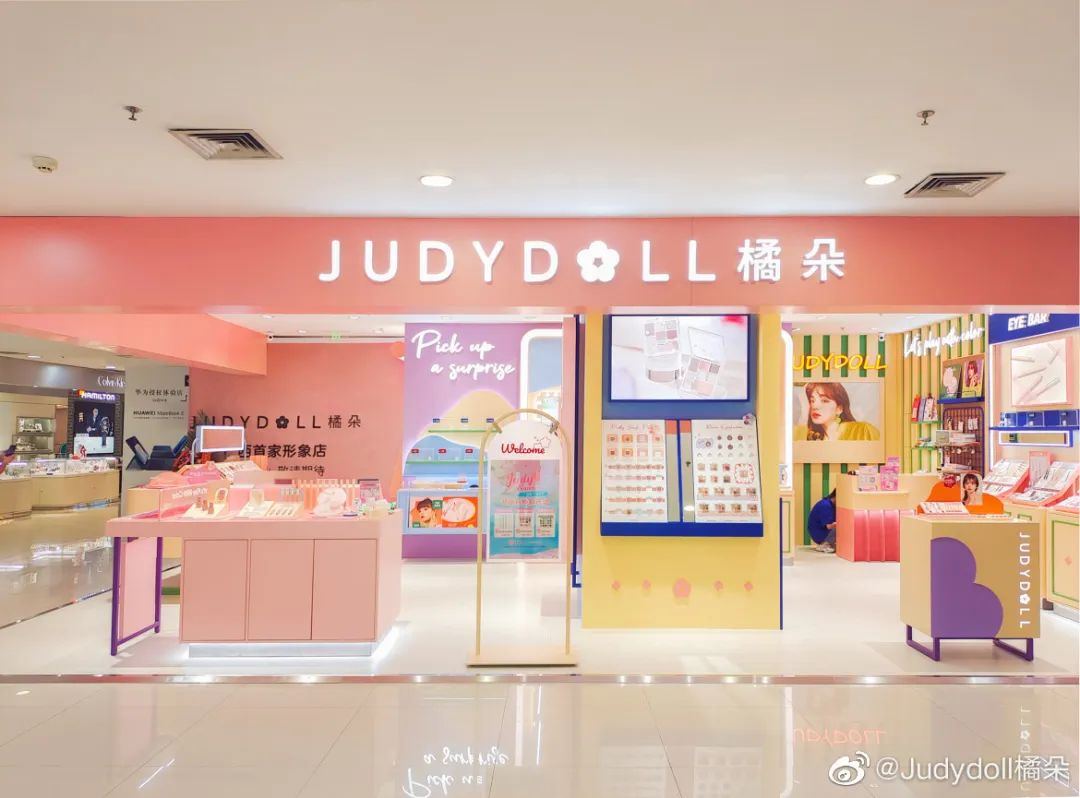
Core Viewpoint - The article discusses the rapid growth and popularity of the Chinese cosmetic brand Judydoll, highlighting its "fast fashion" approach in the beauty industry, which has led to significant sales increases despite some consumer complaints about product quantity and quality [1][10][16]. Group 1: Sales Performance - Judydoll's sales reached over 1 billion yuan in 2022 and are projected to soar to 2.5 billion yuan in 2024, surpassing even more established brands like Mao Geping [1][11]. - The brand has become a staple in young consumers' makeup routines, with its top 10 products each selling over 100,000 units, all priced under 100 yuan [13][26]. Group 2: Product Strategy - Judydoll's strategy mirrors that of fast fashion brands like ZARA and H&M, with frequent new product launches, introducing over 10 new shades in just one month [3][4]. - The brand's product line covers a wide range of makeup needs, aligning closely with current social media trends and popular makeup styles among young consumers [4][6]. Group 3: Consumer Perception - Despite its popularity, Judydoll faces criticism regarding the rapid consumption of its products, with many users expressing dissatisfaction over the quantity and longevity of items like lip creams [11][15]. - The brand has acknowledged these concerns and is increasing the capacity of some products, such as the lip cream and mascara, by 36% and 1.5 times, respectively [15][22]. Group 4: Competitive Landscape - Judydoll competes in a crowded market, facing pressure from both established international brands and emerging local competitors, including its sister brand Joocyee, which also targets similar price points [24][29]. - The brand's positioning as a "budget-friendly" alternative has attracted attention, but it must navigate the challenges posed by "white label" products that offer similar items at lower prices [30][32]. Group 5: Future Outlook - Industry experts remain optimistic about Judydoll's fast fashion model, emphasizing the need for continuous innovation and quality improvement to build a sustainable competitive advantage [24][25]. - The brand is exploring higher-end product lines, such as the newly launched sub-brand "Judydoll Orange Label," which aims to cater to the growing demand for performance-driven cosmetics [20][22].
L'Oréal Taps Nvidia Tech to Supercharge Its AI Efforts
WSJ· 2025-06-11 08:30
Group 1 - L'Oréal announced a collaboration with Nvidia to enhance its artificial intelligence initiatives, focusing on AI-generated advertisements and product recommendations [1] - The partnership will utilize Nvidia's AI Enterprise platform, which consists of microservices designed to improve the management of AI applications, making them faster, more accurate, and more secure [1] - Asmita Dubey, L'Oréal's Chief Marketing Officer, emphasized the benefits of this collaboration for the company's AI efforts [1]

截至5月31日的NielsenIQ数据-美国化妆品销售额在最近两周内呈积极变化
Goldman Sachs· 2025-06-11 02:50
Investment Rating - The report indicates a positive inflection in US cosmetics sales, with a growth of +0.6% in the latest two-week period ending May 31, 2025, compared to previous periods which showed declines [1]. Core Insights - US cosmetics and nails sales have shown resilience with a slight growth, driven by strong performance in lip cosmetics, which grew +9.5% in the latest two weeks [1]. - ELF Cosmetics has significantly outperformed its peers with a sales increase of +25.3%, continuing to gain market share [1]. - Coty has faced challenges, with a sales decline of -9.3%, although its fragrance segment saw a growth of +11.5% [1]. Sales, Volume & Pricing Trends - Total US cosmetics and nails sales reached $9,665 million, with a year-over-year growth of +0.6% in the latest two weeks [4]. - L'Oreal's sales were $2,842 million, showing a slight growth of +0.8% in the latest two weeks, while Coty's sales were $984 million, reflecting a significant decline of -12.5% [4]. - ELF Cosmetics reported sales of $1,037 million, with a robust growth of +16.7% in the latest two weeks [4]. Dollar Share Trends - L'Oreal holds a 29% market share in the US cosmetics sector, while Coty has a 10% share, and ELF Cosmetics has an 11% share [4]. - The report highlights that ELF has been gaining dollar share consistently, contrasting with Coty's declining share [1][4]. Distribution Trends - The report does not provide specific details on distribution trends, focusing instead on sales and volume performance across major brands and manufacturers [3]. Promotional Trends - Promotional activities and their impact on sales are not detailed in the report, which primarily emphasizes sales growth and market performance [3]. Brand Performance - Among the top brands, ELF Cosmetics has shown exceptional growth, while brands like Maybelline and Covergirl have experienced declines [5]. - The lip cosmetics market has seen a total sales of $1,197 million, with a growth of +9.5% in the latest two weeks [5]. Summary of Key Brands - ELF Cosmetics has emerged as a leader with a sales increase of +52.4% in the lip cosmetics category, while Coty and Maybelline have faced significant declines [5]. - L'Oreal's brands, including Maybelline and NYX, have shown mixed results, with some categories experiencing growth while others decline [5].
