医疗机器人

Search documents
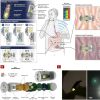
元化智能再度入围国家AI医疗器械“揭榜挂帅”
机器人大讲堂· 2025-12-11 09:02
Core Viewpoint - The article highlights the recognition of Yuanhua Intelligent Technology (Shenzhen) Co., Ltd.'s subsidiary, Bone Saint Yuanhua Robot (Shenzhen) Co., Ltd., for its innovative "Intelligent Bone Tumor Surgery Assistance Navigation System," which has been selected in the "2025 Artificial Intelligence Medical Device Innovation Task" by the Ministry of Industry and Information Technology and the National Medical Products Administration, showcasing the company's strength in AI and orthopedic surgical robotics [1]. Group 1 - The "Intelligent Bone Tumor Surgery Assistance Navigation System" integrates artificial intelligence, robotic control, and real-time navigation technology, aiming to enhance surgical precision, safety, and efficiency, thereby reducing patient trauma [1]. - The selection process for this recognition involved rigorous evaluation, and the system stood out among fierce competition, indicating its potential impact on clinical needs [1]. - This is not the first recognition for Bone Saint Yuanhua Robot, as it was previously awarded "Outstanding Unit" for its core product, the Kunt® Full Orthopedic Surgical Robot, in October 2024, marking it as the only selected enterprise in Shenzhen for "Intelligent Assisted Treatment Products" [4]. Group 2 - Yuanhua Intelligent Technology (Shenzhen) Co., Ltd. is a national high-tech enterprise focused on the research and development of intelligent medical equipment and precision manufacturing, aiming to create globally competitive innovative medical solutions [5]. - The recent selection in the national "Innovation Task" project reinforces the company's ongoing recognition of its core technological capabilities and provides strong momentum for clinical validation, registration, and market promotion of the system [5].

横琴企业全国首创穿刺手术机器人!临床手术突破5000例
Nan Fang Du Shi Bao· 2025-12-10 01:08
Core Insights - The second China Respiratory Health Conference was held in Guangzhou, where Guangdong Zhenjiankang Medical Technology Co., Ltd. announced that its "domestically pioneering" puncture surgery robot has completed over 5,000 clinical surgeries [1][2] - The robot is currently utilized in nearly 100 medical institutions across more than 20 provinces in China, covering various clinical departments such as thoracic surgery, respiratory medicine, interventional medicine, and oncology [1] - Zhenjiankang is recognized as a national high-tech enterprise and a "specialized and innovative" small giant enterprise, focusing on the research and industrialization of soft tissue puncture diagnosis and organ repair intelligent robots [1] Product Development and Recognition - The puncture surgery robot was approved for market launch in May 2022, marking it as the first percutaneous puncture surgery robot approved in China [1] - In June 2023, an upgraded version of the robot received Class III innovative medical device certification from the National Medical Products Administration and was recognized as a "domestically pioneering" product [1] - The company has also contributed to the establishment of the first expert consensus on the clinical application of puncture surgery robots in China, creating a comprehensive operational service system that integrates research, market, academic collaboration, and clinical efficiency [1] Market Impact - The founder of the company, Zhang Hao, stated that the robot's safety, precision, and efficiency are becoming significant drivers for improving regional diagnostic and treatment levels [2] - The milestone of 5,000 clinical surgeries not only validates the technical feasibility and effective exploration of the business model but also establishes a solid market trust system for the robot [2] - This development signifies the arrival of a new era of percutaneous puncture surgery robots that are widely recognized in clinical settings and developed independently in China [2]

推动更多应用场景转变为“科创胜景”
Zhong Guo Jing Ji Wang· 2025-11-22 00:34
Core Insights - The Chinese government has issued an implementation opinion to accelerate the cultivation and large-scale application of new scenarios, leveraging the country's vast market and rich application scenarios to transform them into "scientific and technological innovation landscapes" [1][2] Group 1: Market and Technological Landscape - China's market, with over 1.4 billion people, and its leading number of R&D personnel are key drivers for innovation, enabling applications like autonomous vehicles, drone deliveries, and medical robots [1] - Despite existing advantages in AI, 5G, and quantum computing, many innovations remain in the "laboratory" stage and need effective market transformation [1][2] Group 2: Innovation and Industry Upgrading - Scenario innovation addresses real challenges in manufacturing costs and logistics efficiency, acting as a lever for industrial upgrades, exemplified by the "smart mine" scenario that can drive innovation across the entire supply chain [1] - Successful scenarios represent a systemic reconstruction of technology, industry, and production factors, creating a bidirectional cycle of demand and supply [2] Group 3: Collaborative Ecosystem - The collaboration between large enterprises and small to medium-sized enterprises fosters a synergistic ecosystem that enhances the coupling of innovation chains, industry chains, capital chains, and talent chains [2] - A smart connected vehicle scenario exemplifies the integration of multiple technologies, promoting cross-fusion and integrated innovation [2] Group 4: Implementation Strategies - Realizing the vision requires coordinated efforts from government, market, and society, including driving independent innovation in critical areas like chips and industrial software through demand [2] - Establishing foundational systems for data rights, circulation, and governance is essential for maximizing the potential of data as a production factor [2] - Promoting inclusive regulatory models like "sandbox regulation" will provide space for new developments and accelerate the establishment of corresponding standards and norms [2][3]
中国智能艾灸机器人产业发展报告在苏发布
Su Zhou Ri Bao· 2025-11-15 23:38
Group 1 - The core viewpoint of the article highlights the opportunity for the traditional Chinese medicine industry, particularly acupuncture, to undergo a digital and intelligent transformation driven by advancements in digital and AI technologies [1] - The China Acupuncture Association held an academic exchange meeting focusing on "Digital Acupuncture and High-Quality Development," gathering top experts to discuss key topics such as technology research and clinical applications [1] - The introduction of intelligent moxibustion robots is noted, which can automate standardized treatments, improving precision and reducing human error in acupuncture practices [1] Group 2 - Suzhou is recognized as the only prefecture-level city in China selected for the National New Generation Artificial Intelligence Innovation Development Pilot Zone, indicating its strategic importance in AI development [2] - The Suzhou Health Medical Intelligent Innovation Laboratory has been established to integrate medical data and has released high-quality datasets and innovative application scenarios [2] - Suzhou Traditional Chinese Medicine Hospital is actively participating in the high-quality development of acupuncture, aiming to create a model for acupuncture practices in the Yangtze River Delta region [2]
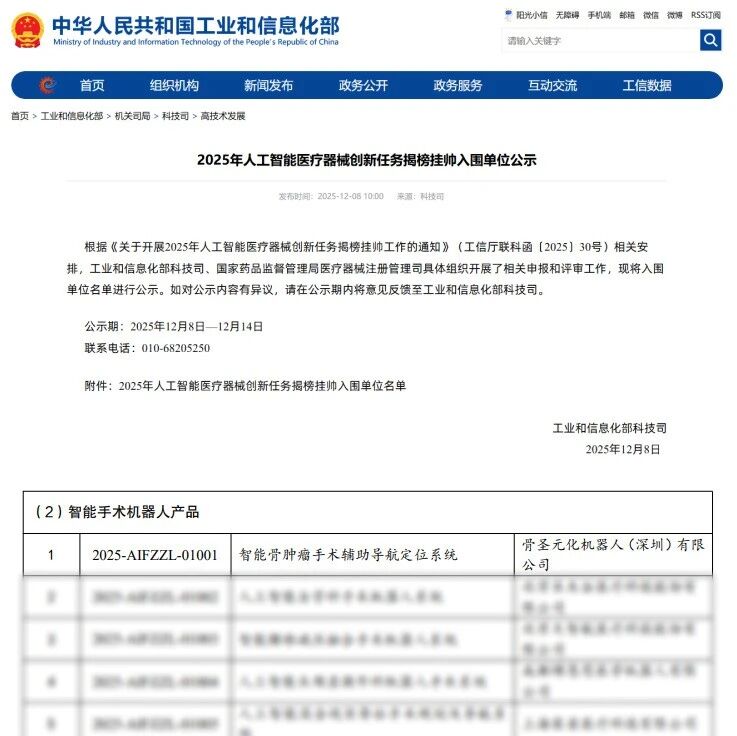
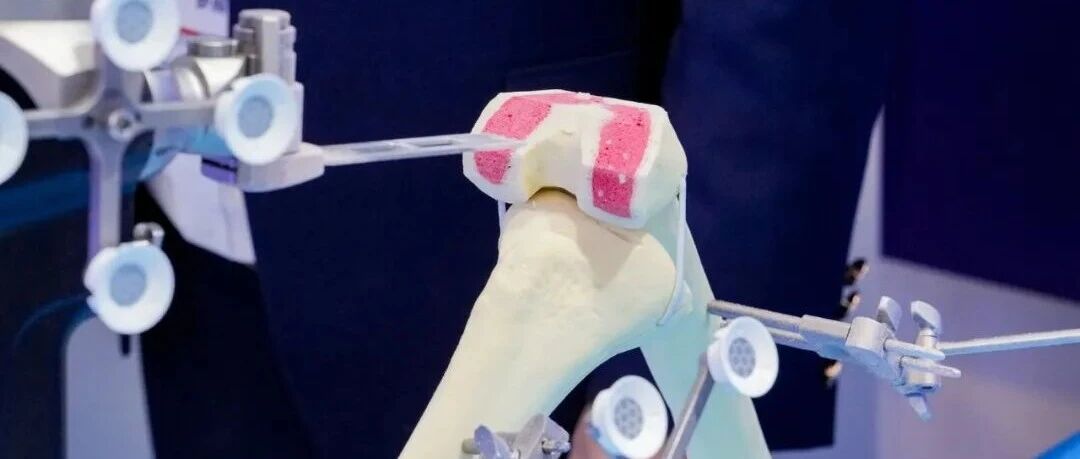
专用化破局!国产骨科手术机器人迈入全自研时代
机器人大讲堂· 2025-11-14 10:09
Core Viewpoint - The article highlights the launch of a fully self-developed orthopedic surgical robotic arm by Yuanhua Intelligent, marking a significant advancement in China's medical robotics industry, transitioning from integrated innovation to original innovation tailored for specific clinical needs [5][20]. Group 1: Product Development and Features - The newly unveiled robotic arm is designed specifically for orthopedic surgeries, enhancing the precision and stability required for procedures such as joint replacement and spinal surgeries [6][12]. - Yuanhua Intelligent's robotic arm boasts a 100% domestic procurement rate for its core components, which reduces costs and mitigates supply chain risks [8]. - The robotic arm incorporates advanced technologies such as high-frequency navigation and closed-loop control systems, achieving sub-millimeter positioning accuracy and significantly improving surgical precision and safety [10][12]. Group 2: Clinical Impact and Adoption - The robotic arm is expected to reduce the learning curve for young orthopedic surgeons, requiring only about 10 surgeries to master the robotic-assisted techniques, thus lowering error rates and enhancing the training of medical professionals [18]. - The introduction of this robotic arm aligns with the increasing demand for orthopedic surgeries in China, where the number of joint replacement surgeries exceeded 1 million in 2022, growing at an annual rate of nearly 20% [17][18]. - The device's design aims to standardize surgical outcomes across different surgeons and institutions, potentially balancing medical resources across regions [20]. Group 3: Industry Transformation - The development of this specialized robotic arm signifies a shift in the orthopedic surgical robotics landscape, moving from generic solutions to tailored, specialized applications that meet specific clinical requirements [5][20]. - Yuanhua Intelligent's approach reflects a broader trend in the industry towards self-research and development, which is expected to break down technological barriers and promote the widespread adoption of high-precision medical equipment [20].
一条“懂医生”的机械臂,揭开骨科机器人的新阶段
思宇MedTech· 2025-11-14 10:03
Core Viewpoint - The article highlights the advancements in domestic orthopedic surgical robots, particularly focusing on Yuanhua Intelligent's new "special arm" designed for orthopedic surgeries, marking a significant shift from reliance on imported components to self-research and development in core execution structures [2][4][24]. Group 1: Product Development and Innovation - Yuanhua Intelligent showcased the world's first "five-in-one" orthopedic surgical robot at the COA 2025, demonstrating its capability to perform five major surgical procedures with one system [7]. - The company has made significant progress in expanding its product offerings from single surgical modules to multi-surgical capabilities within a short span of four years [7][8]. - The new "special arm" is designed specifically for orthopedic surgery, addressing the mechanical needs and operational logic unique to this field, thus redefining the structure of surgical robots [12][14]. Group 2: Technical Advancements - The mechanical arm's design incorporates high-precision zero-gravity compensation systems, allowing surgeons to operate with minimal resistance, enhancing the overall surgical experience [14][16]. - Yuanhua Intelligent has developed key technologies such as control algorithms, zero-gravity compensation, and tactile feedback, achieving a true "customized closed-loop" system [25][28]. - The robotic arm's ability to understand and respond to the surgeon's movements creates a seamless interaction, enhancing the trust and reliability of the surgical process [10][29]. Group 3: Clinical Value and Impact - The robotic system offers sub-millimeter positioning accuracy and high-precision servo control, significantly improving stability during orthopedic surgeries, which is crucial for prosthetic matching and bone preservation [18][20]. - The system's safety features, including real-time monitoring and automatic stopping in case of unexpected collisions, foster a trustworthy partnership between the surgeon and the robot [20][23]. - The standardized operational logic of the system allows for a shorter learning curve for younger surgeons, increasing the efficiency of robotic-assisted surgeries [21][22]. Group 4: Industry Trends and Future Outlook - The article notes a shift in the orthopedic surgical robot industry from system integration to structural self-research, indicating a maturation of the industry [24][26]. - Yuanhua Intelligent's approach to independently defining the mechanical arm's structure and control modes positions it as a leader in the domestic orthopedic robot market [27][28]. - The advancements in robotic technology signify a critical turning point in the integration of manufacturing, medical technology, and intelligent algorithms, paving the way for a more reliable and controllable future in surgical robotics [30].
康诺思腾(Cornerstone Robotics)完成新一轮约2亿美元超募融资
机器人大讲堂· 2025-11-11 04:39
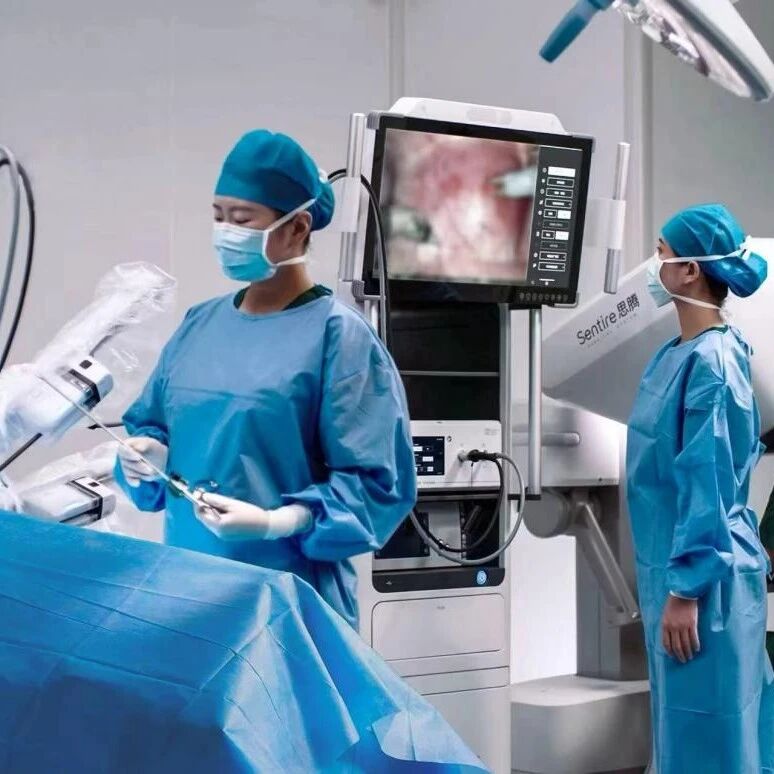
Core Viewpoint - Cornerstone Robotics has successfully completed a new funding round of approximately $200 million, which will be used to accelerate commercialization in China and overseas, as well as to promote the development and clinical registration of new-generation products [1][4]. Group 1: Funding and Investment - The funding round was led by Hong Kong Investment Management Company, a global strategic investor, and a top sovereign wealth fund, showcasing strong support from both local and international capital [1][3]. - The participation of Hong Kong Investment Management Company is significant as it represents the Hong Kong government and reflects confidence in the company's innovation and global commercialization capabilities [3][6]. - Other investors, including Qiming Venture Partners, Daohe Investment, Gao Rong Capital, and XVC, have also increased their investments, indicating high recognition of the company's technology and long-term potential [4][6]. Group 2: Company Development and Vision - Since its establishment in 2019, Cornerstone Robotics has aimed to lead medical innovation and enhance global healthcare accessibility through its self-developed Sentire® laparoscopic surgical robot, which has received approval from the National Medical Products Administration (NMPA) in China [4][7]. - The company has established four R&D centers globally and has set up a mass production factory in the Guangdong-Hong Kong-Macao Greater Bay Area, demonstrating its commitment to innovation and production capacity [7]. - The CEO of Cornerstone Robotics emphasized that 2025 will be a milestone year for the company, highlighting the importance of government support for technology innovation and the foundation it provides for future commercialization and globalization efforts [5][6]. Group 3: Strategic Goals and Market Position - Cornerstone Robotics aims to enhance the usability and accessibility of surgical robots, aligning with the Hong Kong Investment Management Company's standards of being accessible, applicable, and affordable [6]. - The company is focused on transforming its innovative technological achievements into a driving force for the development of a global smart healthcare ecosystem through collaborations with top medical and educational institutions [4][6].
自动驾驶→医疗诊断;语音翻译→创意设计 “中国智慧”引领亚太创造全新生产力
Yang Shi Wang· 2025-10-30 06:40
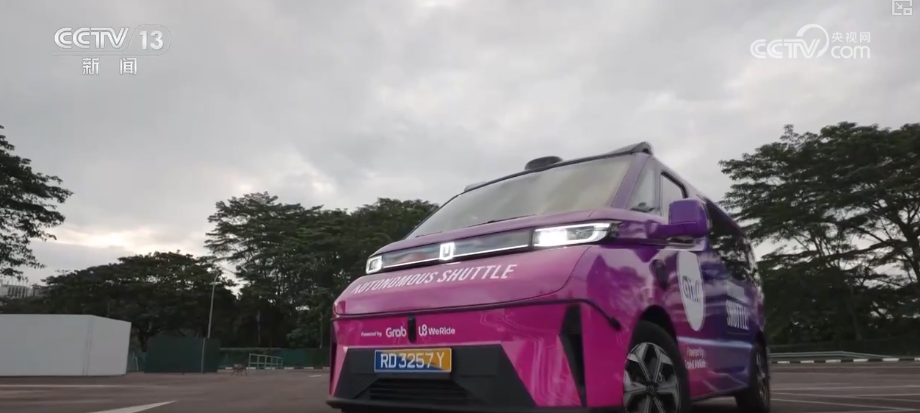
Group 1 - The upcoming APEC Leaders' informal meeting in 2025 will focus on regional cooperation, with China playing a significant role in promoting global initiatives and regional connectivity [1] - China is committed to four major global initiatives under the APEC framework, aiming to boost economic confidence and strength through actions in technology innovation and green development [1] Group 2 - In Singapore, an autonomous vehicle testing project is underway, featuring advanced technology with four laser radars and eleven cameras for 360-degree detection within a 200-meter range [3] - The autonomous vehicle project, developed by a Chinese company, is set to officially operate in Singapore by early 2026, integrating Chinese autonomous driving technology into urban life [8] Group 3 - Hong Kong is advancing in technological innovation as an APEC member, exemplified by the development of the Hua Tuo endoscopic robot, which mimics the actions of a surgeon during operations [9] - The Hong Kong Logistics Robotics Research Center has introduced an AI quadruped robot, known as a "robot dog," showcasing agility and intelligent operational capabilities [11] Group 4 - In South Korea, an autonomous shuttle is designed to transport attendees to various APEC meeting locations, highlighting the impact of technology on lifestyle and progress [13] - Innovation is a key theme of the APEC meeting, with "Chinese wisdom" leading the way in creating new productivity across various sectors, including autonomous driving and medical diagnostics [15]
让瘫痪患者重新行走!脊髓电刺激+康复机器人 | Science子刊
机器人大讲堂· 2025-10-26 10:03
Core Insights - The research team from EPFL has developed an innovative implantable closed-loop spinal neuroprosthesis system that successfully helps paraplegic patients regain walking ability by integrating spinal cord electrical stimulation with rehabilitation robots [1][3]. Rehabilitation Technology - Rehabilitation robots have made significant advancements over the past decades, but they face a fundamental challenge: paraplegic patients cannot generate sufficient muscle activity [5]. - The core mechanism of gait rehabilitation is to promote activity-dependent reorganization of the nervous system, which requires strong, coordinated, and repetitive activation of the neuromuscular system [5]. - Traditional solutions like Functional Electrical Stimulation (FES) have limitations, including cumbersome electrode placement and muscle fatigue, and they do not accurately simulate natural neural control patterns [5][6]. Innovative Approach - The Swiss team's approach involves activating spinal motor neurons through epidural electrical stimulation (EES) rather than directly stimulating muscles, leading to more natural and coordinated muscle activity patterns [6]. - The developed system can adjust stimulation parameters in real-time based on different rehabilitation robots and exercise modes, achieving "activity-dependent biomimetic electrical stimulation" [6]. Closed-Loop Control System - A flexible and precise closed-loop control system is essential for the integration of spinal cord stimulation and rehabilitation robots [8]. - Key components include an implantable pulse generator and an electrode array with 16 electrodes for precise targeting of spinal segments controlling lower limb muscles [8]. - A real-time control platform allows for adjustments based on external sensor signals, with a latency of only 134±26 milliseconds [8]. Sensor Technology - The system employs various sensor modalities, including: - Inertial Measurement Units (IMUs) for detecting limb movement and key gait events [9]. - Ergonomic buttons for patients to actively trigger stimulation [9]. - Force-sensing pedals for bicycle training to measure applied force and adjust stimulation intensity accordingly [9]. Clinical Testing and Results - The system was tested on five spinal cord injury patients, covering a range of rehabilitation activities from bed rest to outdoor activities [11]. - In tests with the Lokomat exoskeleton, patients showed significant muscle activity improvement and better timing of muscle activation, indicating increased active participation in movement [12]. - The system allowed patients to walk independently on various terrains and even participate in a charity run, demonstrating its effectiveness in real-world scenarios [12][14]. Long-Term Rehabilitation Effects - Long-term follow-up of four chronic spinal cord injury patients revealed improvements in lower limb motor scores, even after electrical stimulation was turned off, indicating true rehabilitation effects [14][15]. - Patients gradually reduced their reliance on robotic assistance, showcasing the combined effect of robotic support and electrical stimulation [17]. - The technology does not require modifications to existing rehabilitation equipment, making it easier for therapists to implement [18]. Future Directions - The current neurostimulator is adapted from deep brain stimulation devices and needs a dedicated hardware platform for spinal stimulation [18]. - Larger clinical trials are necessary to validate the findings, but the research opens new avenues for rehabilitation of spinal cord injury patients [18].
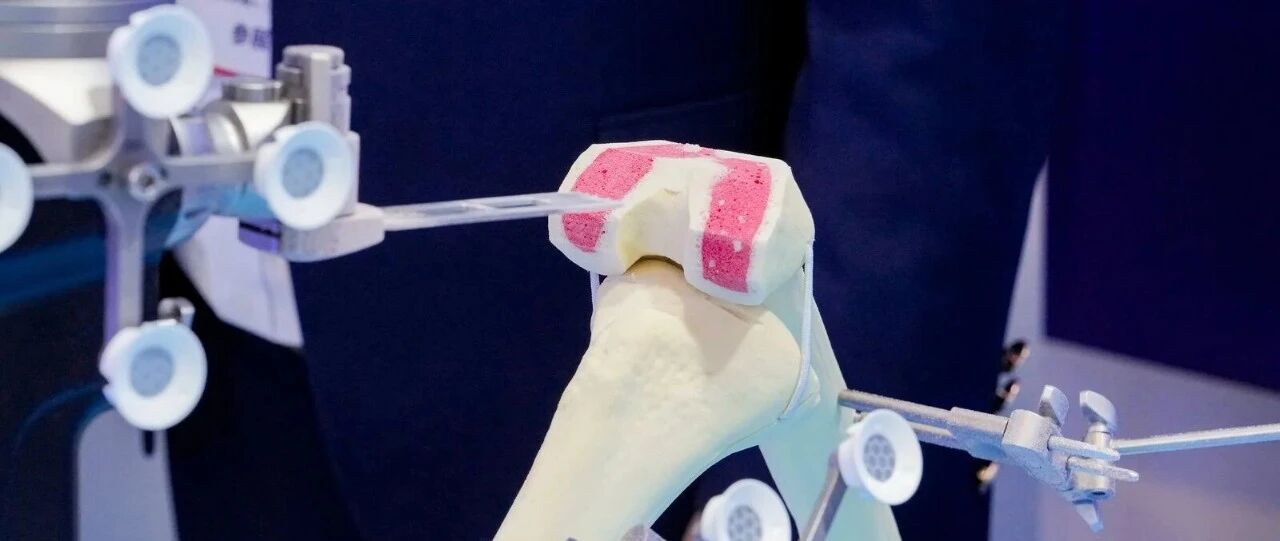
Science Robotics发表!MIT开发FIREFLI可吞服胶囊设备,诊断肠系膜缺血准确率超90%
机器人大讲堂· 2025-10-25 13:31
Core Viewpoint - The article discusses the development of a groundbreaking medical robot, FIREFLI, designed for the diagnosis of acute mesenteric ischemia (AMI), a condition with a high mortality rate of up to 55% due to delayed diagnosis and treatment [1][3]. Group 1: FIREFLI Capsule Design and Technology - The FIREFLI capsule is inspired by the bioluminescent properties of fireflies, utilizing a "light-emitting - light-sensing" mechanism to detect changes in light reflection caused by ischemic conditions in the intestines [4]. - The capsule features a pH-responsive polymer coating that ensures it activates only in the small intestine, preventing premature activation in the stomach [4]. - Inside the capsule, three sets of flexible printed circuit boards (PCBs) are integrated, each containing a white LED and a 10-channel photodiode sensor, allowing for the detection of light reflection across a spectrum of 350-1000 nm [5]. Group 2: Diagnostic Performance and Validation - Animal studies using pigs demonstrated that the FIREFLI capsule could accurately diagnose ischemia, achieving a diagnostic accuracy of 89%, sensitivity of 98%, and specificity of 88% based on the "tissue brightness" biomarker [8][10]. - The study found that the "tissue brightness" indicator was more effective than color change indicators, which had a lower diagnostic accuracy of 65% and sensitivity of only 37% [10]. - The system maintained consistent performance over time, with ischemic tissue brightness remaining below the threshold during a 5-hour monitoring period, providing reliable data for clinical decision-making [11]. Group 3: Safety and Practicality - Safety trials indicated that the FIREFLI capsule passed through the gastrointestinal tract without causing any obstruction or retention, confirming its design's safety [12]. - The capsule is designed for efficient power management, allowing it to operate for over 5 hours on a single charge, which is sufficient to cover the average transit time through the small intestine [14].