
自动驾驶技术

Search documents
中国官方:加快补齐汽车芯片短板
半导体芯闻· 2026-03-19 10:19
Group 1 - The Chinese government held a meeting on March 17 to accelerate the improvement of automotive chips and basic software in the new energy vehicle (NEV) industry [1] - The Ministry of Industry and Information Technology (MIIT) emphasized the need to enhance the competitive order of the NEV industry, boost innovation capabilities, expand automotive consumption, and optimize industry management [1][2] - Key actions include strengthening price monitoring, conducting cost investigations, and ensuring compliance with a 60-day payment commitment by enterprises [1] Group 2 - The meeting proposed to implement special actions to stimulate consumption, promote vehicle trade-in programs, and support the large-scale application of new energy heavy trucks [2] - It aims to improve financial credit services, enhance international logistics support, and facilitate automotive export trade and overseas development [2] - The MIIT is working on legislative processes for the Motor Vehicle Production Access Management Regulations to establish a more open and efficient governance system for the automotive industry [2]

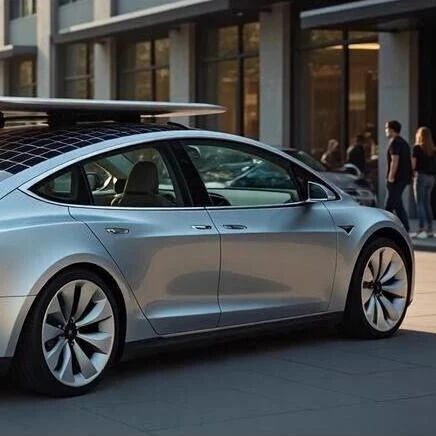
现代起亚将在部分车型中采用英伟达自动驾驶技术
Xin Lang Cai Jing· 2026-03-17 04:32
Core Viewpoint - Hyundai Motor and its subsidiary Kia Motors announced a partnership with Nvidia to integrate advanced autonomous driving technology into select vehicle models, enhancing their collaboration in future mobility solutions [1][2]. Group 1: Partnership Details - The partnership will involve the integration of Hyundai and Kia's software-defined vehicle (SDV) technology with Nvidia's L2+ level autonomous driving capabilities to jointly develop next-generation autonomous driving systems [1][2]. - The collaboration will leverage Nvidia's data platform and artificial intelligence (AI) technology, systematically integrating accumulated data into a unified learning process [1][2]. Group 2: Autonomous Driving Levels - L2 level autonomous driving systems require drivers to remain fully attentive, continuously monitoring the environment and ready to take control of the vehicle [2][4]. - L3 level vehicles can perform certain driving tasks, such as lane changes, without driver intervention under specific conditions [2][4]. - L4 vehicles can operate autonomously in limited environments but cannot function if necessary conditions are not met [2][4]. - L5 vehicles are capable of fully autonomous driving in all conditions without human intervention [2][4]. Group 3: Future Mobility Vision - The expansion of collaboration with Nvidia marks a significant step for Hyundai Motor Group in achieving a vision of safe and reliable autonomous driving technology [3]. - The company aims to enhance its technological competitiveness through a unified group collaboration framework, progressing from L2 and above autonomous driving systems to L4 level driverless taxi services [3]. - The integrated autonomous driving architecture will be built on Nvidia's Drive Hyperion platform, scalable from L2 to L4 levels [3].

全国人大代表何小鹏:建议辅助驾驶政策从L2跳到L4
21世纪经济报道· 2026-03-04 11:11
Core Viewpoint - The article emphasizes the urgent need for advancing autonomous driving technology from L2 to L4 levels, highlighting the importance of policy and regulatory frameworks in facilitating this transition [4][5][10]. Group 1: Autonomous Driving Policy Recommendations - The current "gradual" management framework for autonomous driving faces challenges, necessitating a shift from L2 to L4 levels while maintaining safety [4]. - Four key recommendations are proposed: 1. Transitioning policies from L2 to L4 while simplifying the L3 intermediate stage [5]. 2. Establishing a registration and management system for L4 vehicles to enable compliant operation nationwide [5]. 3. Conducting traffic regulation assessments to optimize rules for both human and machine driving [5]. 4. Granting local pilot management rights for L4 applications in specific low-risk scenarios [5]. Group 2: Humanoid Robot Development - The article discusses the need for advancements in humanoid robots, particularly in developing a local "brain" for autonomous decision-making and execution [6]. - Recommendations include: 1. Promoting breakthroughs in high-level intelligent humanoid robot technology and commercial deployment [6]. 2. Establishing a standardization system for humanoid robots, similar to the autonomous driving classification standards [7]. Group 3: Low-altitude Airspace Management - The article highlights the significance of flying cars as a strategic emerging product in the low-altitude economy [9]. - Recommendations for low-altitude airspace management include: 1. Decentralizing airspace management authority to enhance local government involvement [9]. 2. Clarifying tax classifications for flying cars and implementing phased tax incentives to stimulate market demand [9][10].


透视2026全国两会热点:读懂这五个词,读懂开局之年
21世纪经济报道· 2026-03-03 14:23
Group 1: Macroeconomic Governance - The Chinese economy is expected to reach a total output of 140 trillion yuan by 2025, maintaining a leading growth rate among major economies globally [4] - The central economic work conference emphasizes increasing counter-cyclical and cross-cyclical adjustment efforts to enhance macroeconomic governance effectiveness [4] - Predictions suggest that the GDP growth target for 2026 may be adjusted to between 4.5% and 5.0%, reflecting a more pragmatic approach [4][5] Group 2: Intelligent Economy - The integration of technology and industry is expected to lead to significant economic growth, with a focus on the development of intelligent economies [6][7] - By 2027, the goal is to achieve widespread integration of artificial intelligence across six key sectors, with a rapid growth in the core industries of the intelligent economy [8] - The development of intelligent economies will require reforms in market mechanisms, particularly in adapting listing standards for new business models [9] Group 3: Investment in Human Resources - The government report for 2025 introduces the concept of "investment in people," aiming to enhance the quality of human capital through systematic investments in knowledge, skills, and health [10][11] - Recommendations include improving education and healthcare systems, particularly in underdeveloped regions, to better utilize human resources [11] - By 2025, the elderly population in China is projected to reach 320 million, necessitating policies to support "silver technology" initiatives [11] Group 4: Expanding Consumption - The recent Spring Festival saw a total consumer spending of over 803.4 billion yuan, indicating a robust domestic market [12][13] - The central economic work conference calls for actions to boost consumption, including the implementation of a plan to increase residents' income and expand the supply of quality goods and services [13] - Focus areas for enhancing consumption include education, healthcare, and cultural services, aiming for a shift towards high-quality and diverse offerings [13] Group 5: Reform and Opening Up - Current economic challenges include unreasonable consumption restrictions and "involution" competition, highlighting the need for deeper reforms and steady progress in institutional opening [14][15] - The Hainan Free Trade Port has shown significant growth in duty-free shopping and international visitor numbers, reflecting improved trade facilitation [15][16] - The commitment to expanding rules and standards for institutional opening demonstrates China's determination to continue its reform and opening-up policies [16]
【智能汽车主线周报】Waymo运营城市扩大至10城,看好智能化
东吴汽车黄细里团队· 2026-03-02 13:51
Investment Highlights - The smart car index decreased by 2.0%, while the index excluding Tesla fell by 3.4%, and the index excluding complete vehicles dropped by 3.0% [4][10] - As of February 27, 2026, the smart car index PS (TTM) is 14.2x, placing it in the 96th percentile since the beginning of 2023; the index excluding Tesla is 6.0x, in the 83rd percentile; and the index excluding complete vehicles is 10.0x, in the 81st percentile [4][17] Industry Core Changes - Guangzhou announced the full-scale opening of autonomous driving application scenarios [5][10] - Waymo accelerated its expansion, adding four cities in the U.S. for public autonomous taxi services, bringing the total to ten operational cities [5][10] - Abu Dhabi in the UAE officially launched Tesla's autonomous driving road tests to assess technology performance and verify safety [5][10] Current Investment Recommendations - The company maintains a strong outlook for the L4 RoboX main line in 2026, favoring B-end software stocks over C-end hardware stocks [6][10] - Preferred H-shares include Xpeng Motors, Horizon Robotics, Pony.ai/Wenyan Zhixing, Cao Cao Mobility, and Black Sesame Intelligence; A-shares include Qianli Technology, Desay SV, and Jingwei Hirain [6][10] - Downstream application-related stocks include: - Robotaxi perspective: Integrated models (Tesla/Xpeng Motors), technology providers + operational sharing models (Horizon/Baidu/Pony.ai/Wenyan Zhixing/Qianli Technology), and the transformation of ride-hailing/taxi services (Didi/Cao Cao Mobility/Ruqi Mobility/Public Transport/Jinjiang Online) [6][10] - Robovan perspective: Desay SV + Jiusi Intelligent/New Stone Technology [6][10] - Other autonomous vehicle perspectives: Mining vehicles (Xidi Zhijia, etc.), ports (Jingwei Hirain, etc.), sanitation vehicles (Yingfeng Environment, etc.), and buses (Wenyan Zhixing, etc.) [6][10] - Upstream supply chain-related stocks include: - B-end autonomous vehicle OEMs (BAIC Blue Valley/Guangqi Group/Jiangling Motors/Tongli Co.) [6][10] - Core upstream suppliers: Testing services (China Automotive Research/China Automotive Co.), chips (Horizon Robotics/Black Sesame Intelligence), domain controllers (Desay SV/Jingwei Hirain/Junsheng Electronics/Huayang Group/Keboda), sensors (Sunny Optical Technology/Hesai/Suteng Juchuang), steer-by-wire chassis (Bertley/Nexteer/Zhejiang Shibao), lights (Xingyu Co.), and glass (Fuyao Glass) [6][10]
现代汽车集团据悉将宣布韩国西海岸地区10万亿韩元投资计划
Xin Lang Cai Jing· 2026-02-25 04:58
Core Viewpoint - Hyundai Motor Group plans to invest approximately 7 billion USD (10 trillion KRW) in the Saemangeum area on the west coast of South Korea to expand into artificial intelligence, autonomous driving, and robotics technology [1][3]. Group 1 - Hyundai's stock rose by 10.5% and its subsidiary Kia's stock surged by 15% following the investment announcement [1][3]. - The investment will focus on robotics technology, AI data centers, and hydrogen energy infrastructure [2][4]. - Hyundai previously announced plans to invest a total of 125.2 trillion KRW from 2026 to 2030, aiming to create a "hydrogen and AI city" in coastal areas rich in wind energy resources [2][4].
韩方报告:中国先进制造技术领先韩国
Zhong Guo Xin Wen Wang· 2026-02-24 09:28
Group 1 - The report from the Korea Industrial Research Institute indicates that China has rapidly gained competitive advantages in advanced manufacturing sectors such as robotics, semiconductors, and electric vehicles, with technology levels surpassing those of South Korea [1][3] - In the field of industrial robotics, China excels in procurement of components, mass production, and market expansion [3] - In the electric vehicle sector, China is relatively advanced in autonomous driving technology [3] Group 2 - In the semiconductor industry, while South Korea maintains an advantage in the memory chip market, China leads in non-memory chip areas such as artificial intelligence (AI) chip design and chip design platforms [3] - The findings of the report suggest that South Korea may fall behind China in key chip markets [3]
龙虎榜复盘丨半导体、无人驾驶逆市走强
Xuan Gu Bao· 2026-02-13 12:46
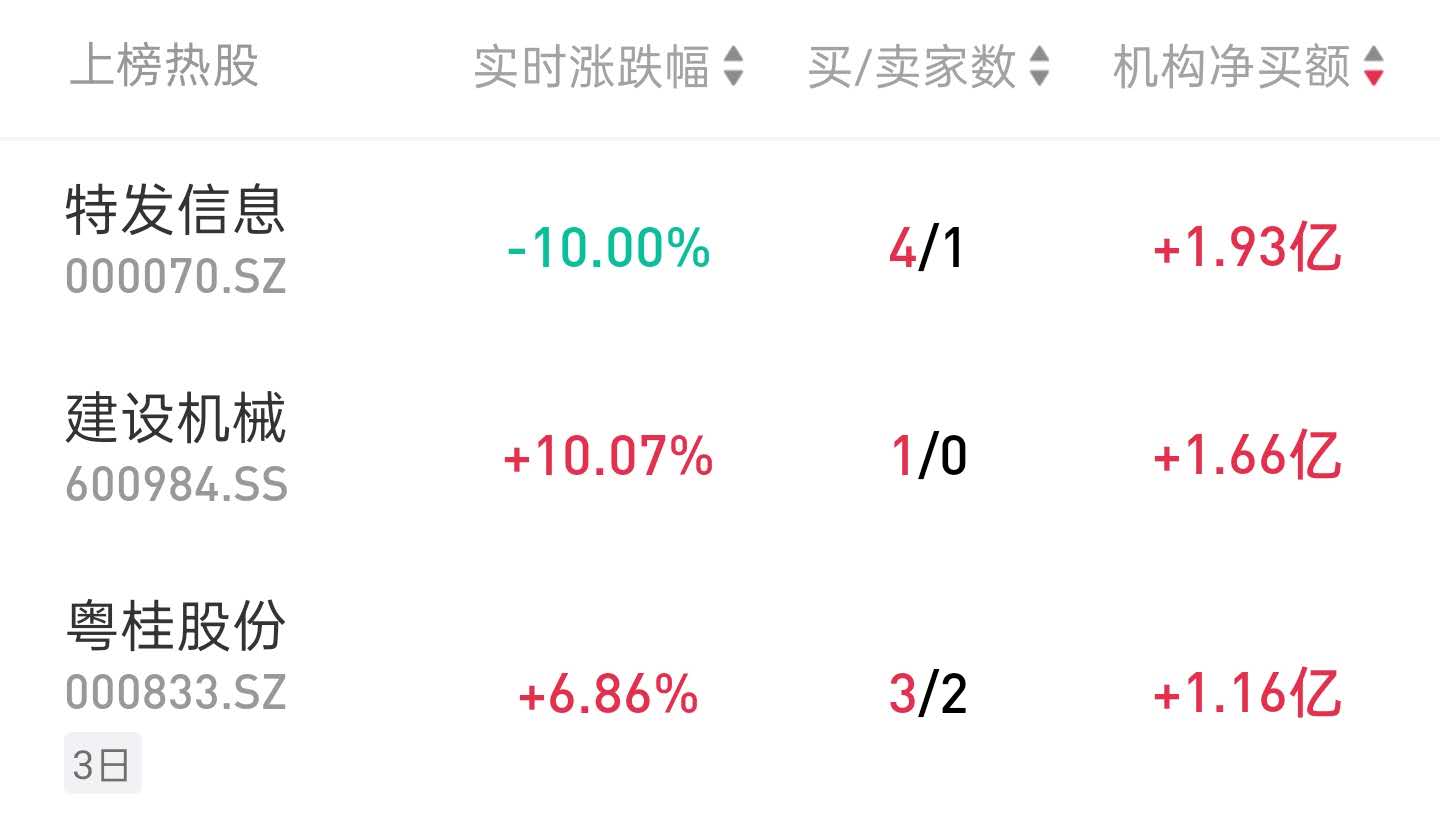
Group 1: Stock Market Activity - On the institutional trading leaderboard, 41 stocks were listed, with 25 experiencing net buying and 16 net selling [1] - The top three stocks with the highest net buying by institutions were: TeFa Information (¥193 million), Construction Machinery (¥166 million), and YueGui Co. (¥116 million) [1] Group 2: Semiconductor Industry - GuoFeng New Materials has achieved progress in the R&D of photo-sensitive polyimide (PSPI) photoresist for semiconductor packaging, currently in the laboratory sample testing phase [2] - Deep Technology is a leading company in the packaging and testing of high-end storage chips (DRAM, NAND Flash), with ChangXin as a major client [2] - The average selling price of ASIC chips from leading design manufacturers (Broadcom, Marvell) is approximately $5,000 to $6,500, which is 50%-60% lower than GPU chips [3] - The AI chip market in China is projected to reach ¥144.7 billion in 2024, with GPU chips accounting for approximately ¥128.8 billion (89%) and ASIC chips about ¥15.3 billion (10.6%) [4] Group 3: Autonomous Driving Industry - QianLi Technology is developing autonomous driving technology and plans to collaborate with Baidu to build a commercial ecosystem for autonomous driving [5] - Zhejiang Shibao has strong technical reserves in steer-by-wire and rear-wheel steering, with mass production projects expected to start in late 2026 and Q4 of this year, respectively [5] - The Ministry of Industry and Information Technology is revising mandatory national standards for intelligent connected vehicles, including safety requirements for autonomous driving systems [5] - By the end of 2025, the first batch of L3 conditional autonomous driving vehicle licenses is expected to be issued, with pilot projects already underway in designated areas [6] - The rollout of L3/L4 vehicles is anticipated to drive demand for high-performance chips, domain controllers, and lidar, with the value of decision-making layers (chips + domain control) expected to account for 25%-30% of the industry chain's profits [6]


MSCI全球指数大举增纳中国公司,被动资金将开启新一轮“扫货”?
华尔街见闻· 2026-02-11 09:15
Core Viewpoint - MSCI has announced the inclusion of 37 Chinese companies into its global standard index while removing 16, resulting in a net increase of 21 companies, marking the largest expansion since May 2023. This adjustment provides new support for the Chinese stock market, which has experienced an unexpected rebound since last year [1][2]. Group 1: Market Impact - The adjustment will directly affect the allocation of passive funds tracking the MSCI index, potentially leading to increased buying of Chinese stocks [1]. - The attractiveness of the Chinese stock market is growing, especially as interest in U.S. asset allocation declines, driven by China's technological advancements and trade resilience [2]. Group 2: Sector Focus - The newly added companies are predominantly in the technology sector, including semiconductor manufacturer Anji Microelectronics, autonomous driving technology provider Pony AI, and quantum information product manufacturer GuoDun Quantum [4]. - Several consumer companies have been removed from the index, reflecting a shift in investor interest towards artificial intelligence and innovation-related sectors [5]. Group 3: Future Outlook - There is an expectation that more companies will be included in the future, as new growth opportunities arise from emerging industries. Global investors are encouraged to focus more on the Chinese mainland market for genuine growth opportunities [5].



MSCI指数大举增纳中国公司,被动资金将开启新一轮“扫货”?
Hua Er Jie Jian Wen· 2026-02-11 05:42
Core Insights - The MSCI has announced the largest inclusion of Chinese companies in nearly three years, adding 37 companies to its global standard index while removing 16, resulting in a net increase of 21 companies [1][2] - This adjustment is expected to attract direct capital inflows and prompt global active funds to reassess their allocation to the Chinese market [1][2] - The focus on technology companies in the new additions highlights ongoing investor interest in artificial intelligence and innovation, indicating a shift in the market structure [1][3] Group 1: MSCI Index Inclusion - The net addition of 21 Chinese companies marks the highest record in nearly three years, with the last significant inclusion occurring in May 2023 [2] - The increase in index weight is likely to lead to more buying of Chinese stocks, as noted by Ten Cap Investment's Jun Bei Liu [2] - The attractiveness of the Chinese stock market is rising amid declining interest in U.S. assets, driven by technological advancements and trade resilience [2] Group 2: Technology Sector Focus - The newly included companies are predominantly from the technology sector, including semiconductor manufacturer Anji Microelectronics, autonomous driving provider Pony AI, and quantum information product manufacturer Guodun Quantum [3] - Several consumer companies have been removed from the index, reflecting a shift in investor interest towards AI and innovation-related sectors [3] - Lotus Asset Management's Hao Hong anticipates further inclusions as new growth emerges from emerging industries, urging global investors to focus more on the Chinese mainland market for genuine growth opportunities [3]