
卫星运营

Search documents
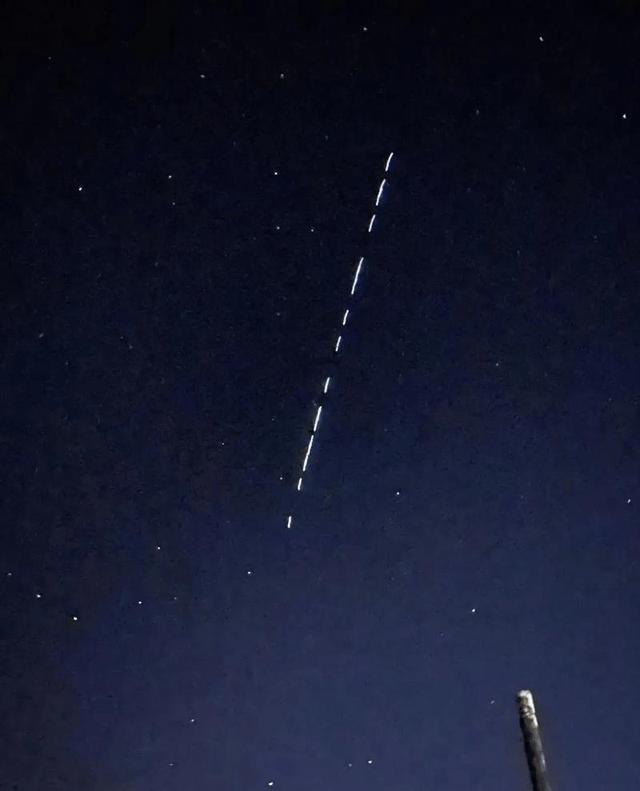
马斯克的“星链”卫星,突然开始大批坠落地球,发生了什么?
Sou Hu Cai Jing· 2025-07-02 09:14
Core Insights - The "Starlink" satellite network operated by SpaceX is experiencing a significant increase in satellite re-entries due to heightened solar activity, with over 120 satellites falling back to Earth in January 2025 alone [1][5][18] Group 1: Satellite Operations and Performance - As of June 2025, Starlink has launched over 8,800 satellites, with approximately 7,600 currently operational, accounting for two-thirds of active satellites in Earth's orbit [3] - Between 2020 and 2024, 523 Starlink satellites prematurely re-entered the atmosphere, with an average of 3 satellites re-entering daily in 2024 [7][18] - The design and operational strategy of Starlink, including the planned retirement of Gen1 satellites to make way for the more advanced V2 models, has contributed to the increased rate of satellite re-entries [14][18] Group 2: Environmental and Safety Concerns - The re-entry of Starlink satellites poses environmental risks, as each Gen1 satellite generates approximately 30 kilograms of aluminum oxide nanoparticles upon re-entry, which may harm the stratospheric ozone layer [13][16] - A 2.5-kilogram piece of Starlink debris was discovered on a Canadian farm, highlighting the potential for incomplete incineration during re-entry [5][14] - NASA has indicated that the risk of debris falling to Earth increases with the frequency of satellite re-entries, although the overall probability remains low [14] Group 3: Solar Activity Impact - The primary cause of the increased satellite re-entries is attributed to the strong solar activity during Solar Cycle 25, which peaked in 2024-2025, leading to frequent solar flares and coronal mass ejections (CMEs) [9][18] - The CMEs have caused geomagnetic storms that heat and expand the upper atmosphere, increasing drag on low Earth orbit satellites, particularly those below 300 kilometers [11][18]

祝贺!它将全面实现国产化
中国基金报· 2025-06-22 09:00
Core Viewpoint - The successful launch of the Zhongxing 9C satellite marks a significant step towards the complete domestication of China's broadcasting and television satellites, enhancing the country's capabilities in satellite communication and broadcasting services [1][2]. Group 1: Satellite Launch and Development - On June 20, China successfully launched the Zhongxing 9C satellite using the Long March 3B rocket, which will be operated by China Satellite Communications Co., Ltd. after in-orbit testing [1]. - The Zhongxing 9C satellite features significant performance improvements, particularly in regional coverage, reinforcing the security of satellite broadcasting services [1][2]. - The development of broadcasting satellites in China has evolved from initial experimental satellites to fully domesticated systems, with the Zhongxing 9C satellite replacing the imported Zhongxing 9 satellite [2]. Group 2: Technological Advancements - The second-generation broadcasting and live satellite upgrade project, initiated in 2017, has led to the successful launch of several satellites, including Zhongxing 9B, 6D, and 6E, demonstrating a commitment to self-reliance in satellite technology [2]. - Key components of the satellites, such as batteries and power distribution units, have been successfully domesticated, breaking previous monopolies and achieving self-control over core components [2]. - The reliability and performance of domestically produced satellites have reached advanced international levels, contributing to the overall improvement of satellite broadcasting capabilities in China [2]. Group 3: Current Operational Capacity - Currently, China Satellite Communications operates satellites that support over 200 standard-definition TV programs, nearly 100 high-definition TV programs, 3 ultra-high-definition TV programs, and around 400 radio programs, significantly expanding the country's satellite broadcasting coverage [3].


将全面实现国产化!从中星9C卫星看我国广播电视专用卫星发展
Xin Hua She· 2025-06-20 14:38
Core Viewpoint - The successful launch of the Zhongxing 9C satellite marks a significant advancement in China's satellite broadcasting capabilities, leading to the complete domestication of broadcasting and live transmission satellites in the country [2][3]. Group 1: Satellite Launch and Capabilities - On June 20, China successfully launched the Zhongxing 9C satellite using the Long March 3B rocket, which has now entered its designated orbit [2]. - The Zhongxing 9C satellite enhances regional coverage and strengthens the satellite broadcasting business, becoming a crucial part of the public cultural service system in broadcasting and television [2][3]. - The satellite's capabilities allow families in remote areas, such as high-altitude pastures and fishing boats, to access information through a satellite antenna [2]. Group 2: Development and Progress - Since 2017, China Satcom has initiated the second-generation upgrade and replacement project for broadcasting transmission and live satellites, with the Zhongxing 9C satellite replacing the imported Zhongxing 9 satellite [3]. - The development of domestic satellites has progressed from initial experimental communication satellites to fully domesticated broadcasting satellites, showcasing the efforts of researchers [3]. - Key components of the satellites, such as batteries and power distribution units, have been successfully domesticated, breaking monopolies and achieving self-sufficiency [3]. Group 3: Current Operations and Coverage - Currently, China Satcom operates over 200 standard-definition television programs, nearly 100 high-definition programs, 3 ultra-high-definition programs, and around 400 radio programs through its satellites [4]. - The satellite broadcasting transmission tasks have effectively expanded the available scarce satellite orbital frequency resources in China [4].
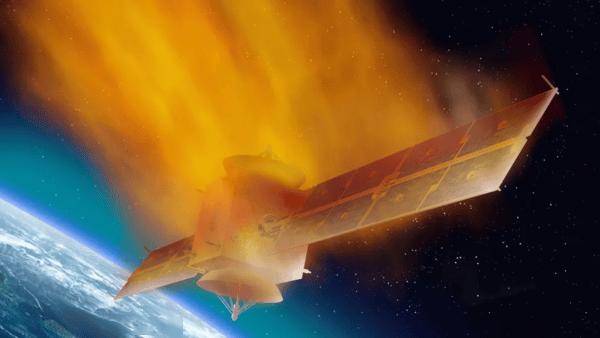
“星链”卫星频繁提前坠落 研究称与太阳活动加剧有关
news flash· 2025-06-12 03:32
Core Viewpoint - The increasing frequency of early falls of Starlink satellites is significantly linked to heightened solar activity, raising concerns about space environment safety and satellite operational stability [1] Group 1: Satellite Fall Data - From 2020 to 2024, a total of 583 Starlink satellites fell from low Earth orbit, with only 2 falling in 2020, 78 in 2021, and a dramatic increase to 316 in 2024 [1] - The annual number of fallen Starlink satellites shows an upward trend, which is highly correlated with periods of increased solar activity [1] Group 2: Geomagnetic Activity Impact - The research indicates that geomagnetic activity has a significant impact on the fall of Starlink satellites, with increased geomagnetic activity leading to earlier falls compared to periods of geomagnetic calm [1] - The study emphasizes the need for enhanced monitoring and forecasting during periods of intense solar and geomagnetic activity to prevent potential collisions and satellite debris impacts on Earth [1]
研究称太阳风暴正在摧毁卫星 马斯克或成最大输家
Sou Hu Cai Jing· 2025-06-04 01:35
Group 1 - The core issue is the increasing impact of solar activity on SpaceX's Starlink satellites, which has led to a noticeable "loss of lifespan" of 10 to 12 days due to enhanced solar storms [3] - The rising solar winds are increasing atmospheric drag, causing satellites to descend faster and disrupting their orbital order, thereby increasing collision risks among satellites [3] - There is a significant concern regarding the lack of controlled re-entry systems for most satellites, including Starlink, which could lead to unpredictable re-entries and potential risks to human safety and property [5] Group 2 - The increase in space debris is forcing the International Space Station to frequently adjust its orbit to avoid collisions with growing space junk [5] - Current international regulations do not effectively address the safe disposal of decommissioned satellites, leading to greater uncertainty in the orbital ecosystem [5] - The issue of atmospheric pollution from metal particles released during satellite re-entry poses a potential threat to the Earth's atmosphere and exacerbates global climate challenges [6]
【RimeData周报05.17-05.23】产业基金加持,医药健康融资热潮涌动
Wind万得· 2025-05-24 22:42
Core Viewpoint - The article provides an overview of the financing events in the primary market, highlighting the increase in both the number of financing events and the total financing amount compared to the previous week, indicating a growing interest in investment opportunities across various sectors [4][12]. Financing Overview - As of May 23, 2025, there were 130 financing events reported, an increase of 42 events from the previous week, with a total financing amount of approximately 3.828 billion RMB, up by 749 million RMB [4]. - Among these events, 19 had financing amounts of 100 million RMB or more, which is an increase of 3 events from the previous week [4]. - There were 33 public exit cases this week, remaining stable compared to last week [4]. Financing Amount Distribution - A total of 80 financing events disclosed their amounts, with the distribution as follows: - 8 events under 5 million RMB (up by 4) - 39 events between 5 million and 10 million RMB (up by 10) - 11 events between 10 million and 50 million RMB (down by 2) - 19 events between 50 million and 100 million RMB (up by 7) - 3 events between 100 million and 500 million RMB (down by 2) - No events above 500 million RMB [5]. Notable Investment Events - **Satellite Operations**: Penghu Wuyu completed nearly 100 million RMB in Series A financing, led by Wuxi Liangxi Kechuang Industry Mother Fund and Wuxi Liangxi Aerospace Investment Fund, to expand its global operations in satellite IoT [7]. - **Organoids**: Chuangxin International raised nearly 100 million RMB in Series B financing, led by Yueke Fund and Donghai Investment, to accelerate the development of organoid technology [7]. - **Resource Recovery**: Zhongwu Industry Operations secured 500 million RMB in Series A financing to enhance its procurement network and improve supply chain efficiency [8]. - **AI Chips**: Blue Core Computing raised over 100 million RMB in equity financing, with participation from multiple investment institutions, focusing on high-performance chip design [8]. Industry Distribution - The financing events spanned 14 industries, with the top five being: - Healthcare: 28 events - Electronics: 25 events - Information Technology: 19 events - Equipment Manufacturing: 14 events - Consumer Goods and Services: 14 events - These five industries accounted for 76.15% of all financing events [12]. Financing Amount by Industry - The top five industries by financing amount were: - Healthcare: 32.07 million RMB (83.76% of total) - Information Technology: Significant contributions from Whale and other major events - Consumer Goods and Services - Electronics - Equipment Manufacturing - The healthcare sector led with a high number of large financing events [14]. Regional Distribution - The top five regions for financing events were: - Jiangsu: 29 events - Guangdong: 22 events - Zhejiang: 22 events - Beijing: 16 events - Shanghai: 9 events - These regions accounted for 75.38% of all financing events [17]. - In terms of financing amount, Zhejiang led with 829.59 million RMB, influenced by significant events [17]. Financing Rounds - The most active financing rounds were Angel and Series A, totaling 74 events, with Series B ranking third at 23 events [22]. - Series A financing accounted for 37.16% of the total financing amount, followed by strategic financing at 16.09% [22]. Investment Institutions - A total of 129 investment institutions participated in financing activities, with notable activity from Beijing Guoguan and Shenzhen Capital Group [25]. Exit Situation - There were 33 public exit cases, with the healthcare sector leading in the number of exits, followed by materials and electronics [30][31].

国会山里遍地股神
远川投资评论· 2025-05-21 08:58
Core Viewpoint - The article highlights the impressive investment returns of U.S. Congress members, particularly focusing on their ability to outperform traditional investment benchmarks, raising questions about potential insider trading practices and the implications of their investment strategies on the financial markets [1][4][17]. Investment Performance - Nancy Pelosi achieved a 70.9% return on her investments in 2024, ranking her tenth among Congress members [1] - David Rouzer, a Republican congressman, topped the list with a remarkable 149% annual return, primarily due to his holdings in Nvidia [1][2] - The top-performing funds selected by Morningstar had a maximum return of only 56.13%, indicating that Congress members significantly outperformed these funds [1][2] Party Performance Comparison - Democratic members, who leaned towards technology stocks, had an average return of 31%, while Republican members, who favored financial and commodity stocks, had an average return of 26% [3] - Both parties' average returns exceeded the S&P 500's increase of 24.9% [3] Insider Trading Allegations - The article discusses the controversies surrounding Congress members' investment activities, particularly allegations of insider trading, which have not led to significant legal repercussions despite public scrutiny [4][12][13] - The STOCK Act, aimed at preventing insider trading by Congress members, has been criticized for its lack of enforcement and minimal penalties for violations [12][13] Historical Context - The article references past instances of Congress members profiting from stock trades based on non-public information, including Richard Burr's actions during the COVID-19 pandemic and the 2008 financial crisis [7][9][16] - It highlights a pattern of Congress members making profitable trades in advance of significant market events, raising ethical concerns about their access to privileged information [9][16] Legislative Responses - The ETHICS Act, proposed in 2024, aims to prohibit Congress members and their families from trading individual stocks, reflecting ongoing concerns about conflicts of interest [14] - The article notes the slow progress of legislative measures to regulate Congress members' trading activities, with previous attempts like the STOCK Act facing challenges in implementation [12][14] Investment Philosophy - Congress members are portrayed as employing investment strategies that prioritize capital preservation and leveraging their unique access to information, akin to investment principles espoused by Warren Buffett [16][17] - The article suggests that the investment practices of Congress members, while controversial, demonstrate a calculated approach to navigating market uncertainties [16][17]

葛卫东,最新调仓曝光!
Zhong Guo Ji Jin Bao· 2025-04-28 07:30
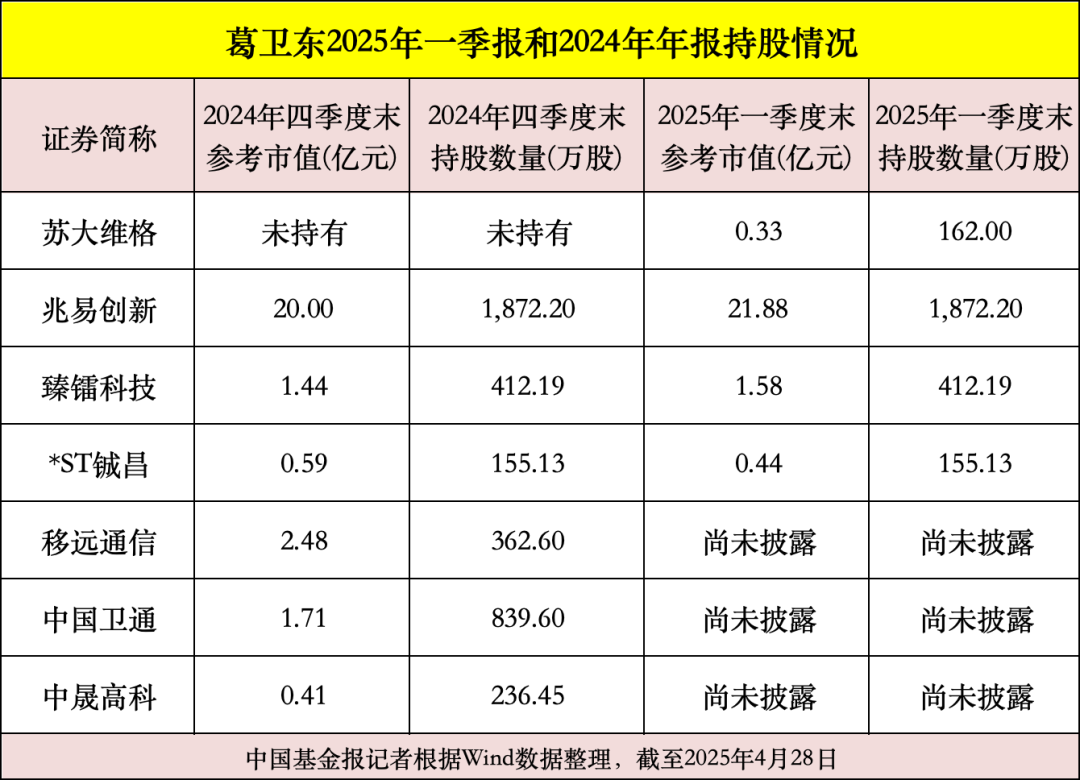
Core Viewpoint - The investment activities of private equity mogul Ge Weidong have garnered significant market attention, particularly his recent adjustments in stock holdings as revealed in the 2024 annual report and the 2025 Q1 report of listed companies [1]. Group 1: Ge Weidong's Stock Holdings - In Q1 2025, Ge Weidong initiated a new position in Su Da Wei Ge, acquiring 1.62 million shares valued at approximately 33 million yuan, making him the seventh-largest circulating shareholder [4][6]. - He maintained his holdings in Zhaoyi Innovation, with a market value of 2 billion yuan, and did not sell any shares of *ST Chengchang despite a decline in stock price [13][16]. - Ge Weidong also increased his stake in Zhongsheng High-Tech, raising his holdings to 2.36 million shares, valued at 41 million yuan [18][19]. Group 2: Financial Performance of Su Da Wei Ge - Su Da Wei Ge reported a revenue of 1.841 billion yuan for 2024, a year-on-year increase of 6.85%, but faced a net loss of 58.05 million yuan, marking a 27.06% decline [6]. - In Q1 2025, the company generated 453 million yuan in revenue, a decrease of 3.93%, while net profit was 17.34 million yuan, reflecting a 5.99% increase year-on-year [6]. Group 3: Other Notable Investments - Ge Weidong's portfolio includes new investments in China Satellite Communications, where he acquired 8.396 million shares valued at 171 million yuan, making him the ninth-largest circulating shareholder [8][9]. - He also increased his holdings in Zhenlei Technology, maintaining 412.19 million shares, which saw a price increase of 9.63% in Q1 2025 [10][12].





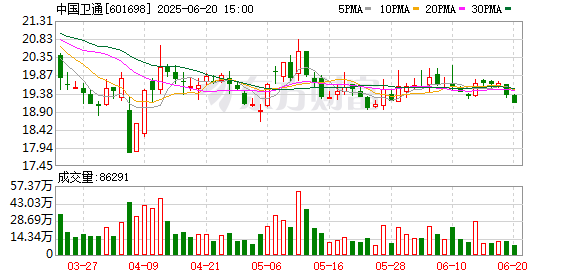
中国卫通: 中国卫通2025年度日常经营性关联交易额度预计的公告
Zheng Quan Zhi Xing· 2025-04-01 10:23
Core Viewpoint - The company is seeking approval for its 2025 annual routine related party transactions, which are deemed necessary for its operational needs and are expected to support stable development without harming the interests of shareholders, especially minority shareholders [1][2]. Summary of Related Party Transactions Basic Situation of Routine Related Party Transactions - The board of directors approved the proposal for routine related party transactions for 2025, which was unanimously supported by independent directors, affirming that the transactions align with the company's operational needs and adhere to fair pricing principles [1][2]. - The audit committee also reviewed and approved the proposal, emphasizing that the transactions would not adversely affect the company's overall interests or those of other shareholders [2]. Previous Related Party Transactions - The total expected amount for related party transactions in 2024 was capped at 282 million yuan, with actual transactions amounting to approximately 86.99 million yuan, indicating a significant difference attributed to business development needs [4][5]. Expected Related Party Transactions for 2025 - The company plans to engage in related party transactions with a total expected amount of 120.4 million yuan, which includes a significant contract for satellite procurement valued at approximately 240 million yuan [5][6]. Related Parties and Relationships Basic Information of Related Parties - The main related parties include the Aerospace Science and Technology Corporation and its subsidiaries, which are involved in various aerospace and satellite services [8][9]. - The company has a 30% indirect stake in Asia-Pacific Satellite Broadband Communication (Shenzhen) Co., Ltd., which is also considered a related party [9]. Execution and Performance of Previous Transactions - Previous related party transactions have been executed according to agreed terms without any defaults, indicating good creditworthiness and performance capability of the related parties [9]. Main Content and Pricing Policy of Related Transactions Main Content of Related Transactions - The transactions primarily involve satellite space segment operations and procurement of satellite-related hardware and services, which are essential for the company's operational needs [10]. Pricing Policy - The pricing for these transactions is determined through market-based negotiations, ensuring fairness and transparency without interference from the controlling shareholder [10].