
奢侈品行业

Search documents
开云集团任命卢卡·德·梅奥为首席执行官
news flash· 2025-06-16 16:03
Group 1 - Kering Group's board of directors has approved the appointment of Luca de Meo as the new CEO [1] - The adjustment will officially take effect after a resolution is made at the shareholders' meeting scheduled for September 9, 2025 [1]
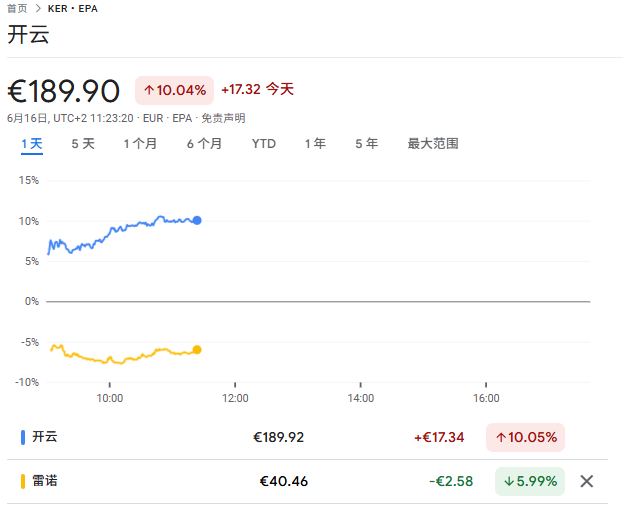
从汽车转战奢侈品,雷诺CEO能拯救“失速”的开云吗?
Hua Er Jie Jian Wen· 2025-06-16 09:49
Core Viewpoint - The appointment of Luca de Meo as the new CEO of Kering marks a significant leadership change aimed at revitalizing the company's core brand, Gucci, which has struggled to regain its market confidence post-pandemic [3][4][7]. Group 1: Kering's Leadership Change - Kering's stock surged over 10% following reports of de Meo's appointment, while Renault's stock fell over 6% [1]. - De Meo will officially leave Renault in mid-July 2023 to take on new challenges outside the automotive industry [3]. - Current CEO Francois-Henri Pinault, a member of the founding family, will remain as chairman of the board after stepping down [3]. Group 2: De Meo's Background and Achievements - De Meo, 58, has over 30 years of experience in the automotive sector, having worked with Renault, Toyota, Fiat, and Volkswagen [5][6]. - He is credited with significant achievements at Fiat, including the relaunch of the Fiat 500 and revitalizing the Abarth brand [5]. - At Renault, he implemented major reforms that transformed the company into a more agile entity, improving its relationship with Nissan and advancing electric vehicle strategies [6]. Group 3: Challenges Facing Kering - Kering has struggled to rejuvenate Gucci's brand vitality since the pandemic, leading to a debt exceeding €10 billion [7]. - Analysts express skepticism about Kering's recovery prospects, emphasizing the need for substantial work ahead [7]. - A scheduled meeting with analysts was canceled without explanation, indicating potential internal challenges [7]. Group 4: Broader Industry Context - De Meo's departure from Renault reflects a trend of high-level exits in the European automotive sector, with increasing competitive pressures and trade barriers impacting the industry [8].

富人被盯上!又一家奢侈品牌用户数据被泄露
凤凰网财经· 2025-06-04 13:49
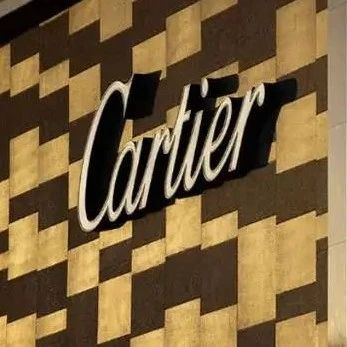
Core Viewpoint - Recent data breach incidents involving luxury brands Cartier and Dior have raised concerns about customer data security, with both companies confirming the leaks and taking steps to address the situation [1][4]. Group 1: Cartier Data Breach - Cartier has confirmed that customer data, including names and birth dates, was leaked, but financial information such as bank details was not compromised [2][4]. - The data breach affects customers globally, not just in the Chinese market, and the company is currently investigating the incident while collaborating with external cybersecurity experts [4]. Group 2: Dior Data Breach - Dior also reported a data breach where unauthorized external personnel accessed some customer data, which was discovered on May 7, 2025 [4]. - Similar to Cartier, the leaked information does not include financial data but involves personal details such as names, gender, and contact information [4]. - Dior has taken immediate action by hiring a professional cybersecurity team to investigate and has advised affected customers to remain vigilant against suspicious communications [4].
LV老板罕见炮轰欧盟:谈判“开局太差”,学学英国吧,该让步要让步
Hua Er Jie Jian Wen· 2025-05-22 06:54
拒绝妥协,欧美谈判进展缓慢 全球奢侈品巨头LVMH掌门人Bernard Arnault罕见地对欧美关税谈判进展表达了的不满。 周三,Bernard Arnault在法国议会听证会上直言不讳地批评欧盟与美国的谈判"开局不利"。他敦促欧盟 与特朗普政府进行"建设性"谈判,并特别指出英国迅速与华盛顿达成贸易协议的成功案例。 Bernard Arnault说道, 谈判必须以建设性方式推进......需要双方互作让步。你们看到英国人的做法,他们谈判得非 常出色。我希望凭借我有限的资源和关系网,能够说服欧洲采取同样建设性的立场。 这位奢侈品巨头掌门人认为,美国是全球最大市场,对欧洲而言与美达成协议至关重要。"就目前来 看,我认为谈判开局相对不利。" Arnault与特朗普保持着私人关系,两人相识数十年,他出席了特朗普1月的总统就职典礼。 按市值计算,LVMH是欧洲最大的企业之一。在奢侈品行业本就面临销售放缓之际,关税可能进一步冲 击该行业销售。 美东时间5月21日周三,媒体援引知情者消息称,欧盟预计将向美国分享一份修订后的贸易提案,双方 将持续讨论这些提议,目标是下月初举行政治层面的会晤。 不过,欧美谈判进展依然十分缓慢 ...
提醒:LVMH集团创始人Bernard Arnault和他的儿子Alexandre Arnault出现在美国总统特朗普椭圆形办公室。
news flash· 2025-05-19 21:08
提醒:LVMH集团创始人Bernard Arnault和他的儿子Alexandre Arnault出现在美国总统特朗普椭圆形办公 室。 ...
历峰集团首席执行官:美洲地区的业务表现良好。除大中华区外,其他市场均实现增长。
news flash· 2025-05-16 06:20
Core Viewpoint - The CEO of Richemont Group stated that the business performance in the Americas is strong, with growth observed in all markets except Greater China [1] Group 1 - The Americas region has shown good business performance [1] - All markets outside of Greater China have achieved growth [1]
奢侈品开餐厅, 还是玩票吗?
3 6 Ke· 2025-05-16 00:33
Group 1: Luxury Brands Entering the Restaurant Sector - Prada opened its first independent restaurant "迷上" in Shanghai, designed by renowned director Wong Kar-wai, blending Italian and Chinese culinary styles [1] - Other luxury brands like Gucci, Chanel, and Tiffany have previously explored the café sector in China, often as marketing strategies rather than standalone businesses [2] - The opening of "THE HALL" by Louis Vuitton in Chengdu marked a significant step for luxury brands in the full-service dining sector [2] Group 2: Operational Strategies and Market Trends - Many luxury dining projects are operated by third-party companies, indicating a reliance on specialized operators for successful execution [3] - Luxury brands aim to create experiential offerings that enhance customer engagement, with the goal of driving sales in their core product lines [3] - The shift in consumer behavior from shopping to experiential consumption is evident, necessitating adaptations in service models within the luxury sector [5] Group 3: Challenges in the Luxury Market - The luxury retail sector is facing challenges, with a reported 8% decline in retail rental income at Wynn Palace, reflecting a broader downturn in luxury consumption [6] - Despite an increase in tourist numbers and overall spending in Macau, per capita spending has significantly decreased, particularly among mainland Chinese tourists [6] - The luxury market may take several years to recover to pre-2019 levels, indicating a potential long-term shift in consumer preferences [6][7] Group 4: Changing Consumer Preferences - The luxury consumer landscape in China has evolved, with a notable decline in interest in traditional luxury brands like LVMH, as evidenced by a 2% drop in total revenue [7] - The emergence of alternative luxury offerings, such as local brands, suggests a shift in consumer loyalty and preferences away from established European luxury brands [7]

裁员18%!奢侈品寒冬下,巴宝莉降本自救
Hua Er Jie Jian Wen· 2025-05-14 09:33
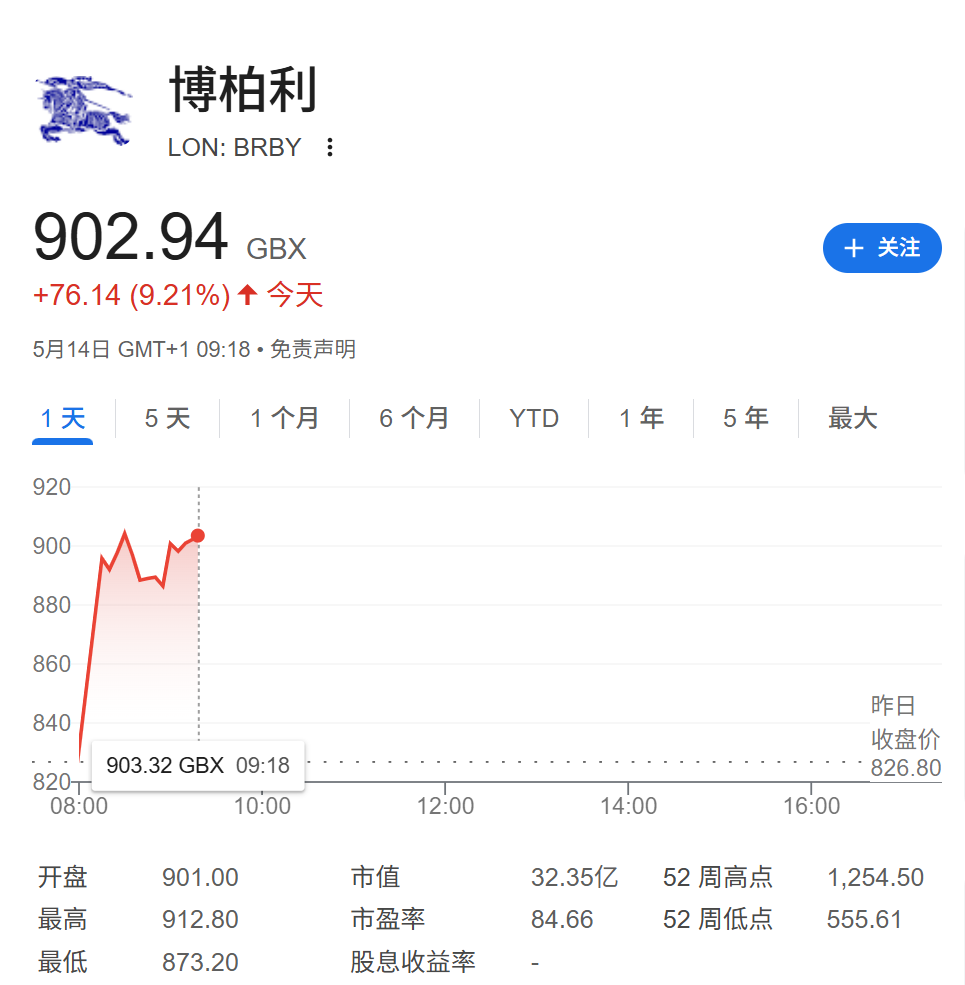
Group 1 - The luxury goods industry is facing significant challenges, with Burberry announcing plans to cut costs by £60 million ($80 million) and reduce its workforce by up to 1,700 positions, which is 18% of its global staff [1][3] - This is not the first major layoff for Burberry, as the company previously cut 500 jobs during the pandemic in 2020 due to declining luxury goods demand [1] - Following the announcement, Burberry's stock surged nearly 10%, marking its largest single-day gain in over a month, although the stock has declined 16% this year and was removed from the FTSE 100 index last year [1] Group 2 - The new cost-saving measures build on a previous plan announced by CEO Joshua Schulman to cut £40 million, with the latest initiatives expected to incur one-time costs of approximately £80 million, mostly in cash [3][4] - Despite a smaller-than-expected decline in fourth-quarter sales and an adjusted annual operating profit of £26 million, this figure is significantly lower than the £418 million reported in the previous year [3][4] - Burberry has warned of increased uncertainty in the economic environment due to geopolitical developments, with weakened consumer confidence impacting its appeal to aspirational consumers [4] Group 3 - Under Schulman's leadership, Burberry is attempting to revitalize its brand by focusing on its iconic trench coat, which, while a classic product, poses business challenges due to its long-lasting nature limiting repeat purchases [5] - The company is also shifting its marketing strategy to attract a broader, more global customer base, featuring British celebrities like Kate Winslet and Jerry Hall in its advertising campaigns [5]
Gucci正在“哭泣”:销售额暴跌25%,成开云集团最大“拖油瓶”|贵圈
新浪财经· 2025-05-07 01:07
Core Viewpoint - Gucci, once a leading luxury brand, is facing significant challenges in the market, evidenced by store closures and declining sales figures, particularly in China [2][5]. Group 1: Store Closures and Market Strategy - In February, Gucci closed two stores in Shanghai's Jing'an Temple area, sparking discussions about the brand's declining popularity [2]. - The brand has also closed stores in various cities including Taiyuan, Shenyang, Hong Kong, Dalian, and Fuzhou, indicating a strategic contraction in its operations [2]. - Gucci's official response to inquiries about future closures was that there is currently no related information [2]. Group 2: Financial Performance - Kering Group reported a 14% decline in sales to €3.883 billion for Q1 2025, with Gucci's revenue falling to €1.57 billion, a 25% drop in comparable sales [5]. - Gucci's Q1 revenue was below analyst expectations of €1.62 billion, and same-store sales fell more than anticipated [5]. - The brand has experienced continuous quarterly declines in sales since last year, with year-over-year drops of 21%, 20%, 25%, and 24% [5]. Group 3: Brand Perception and Consumer Trends - Gucci's brand image has suffered, with consumers perceiving its designs as outdated and overly flashy compared to the current trend of understated luxury [10]. - The last major hit product from Gucci was the 1955 series in 2019, and since then, the brand has struggled to create buzzworthy items [10]. - The brand's attempts to appeal to younger consumers have been ineffective, leading to a lack of clear brand identity [10]. Group 4: Challenges in the Second-Hand Market - Gucci products have seen significant depreciation in the second-hand market, with items originally priced over €20,000 selling for only €2,000 to €6,000 [14]. - The average resale price of popular Gucci items is only 40% of their retail price, indicating a lack of perceived value among consumers [14]. - Factors contributing to this depreciation include inconsistent pricing strategies and the availability of discounted products through outlets [15]. Group 5: Recommendations for Improvement - To revitalize its brand, Gucci needs to focus on re-establishing its luxury image, enhancing product innovation, and improving operational efficiency through digital means [17]. - The brand should also prioritize targeted marketing strategies to regain the confidence of high-end consumers [17].
明起,爱马仕美国涨价,中国不跟进!| 贵圈
新浪财经· 2025-04-30 00:18
文 | 《贵圈》栏目 闫妍 不缺富人买单的爱马仕,又涨价了。 近日,多家外媒报道称,法国奢侈品巨头爱马仕集团宣布,自 5 月 1 日起将全面上调美国 市场售价,通过 6% ~ 7% 的常规涨价叠加额外提价,将美国加征的关税成本悉数转嫁给 美国消费者。 美国全线涨价后,中国市场是否也会同步进行调价? 《贵圈》致电爱马仕中国官方客服获得回应。客服明确表示:"目前尚未收到中国大陆市场 的调价通知。"同时进一步说明:"我们的商品定价策略没有固定调整周期,价格变动主要 基于汇率波动和原材料成本变化等市场因素综合考量。" 此外,针对近期网络热议的"中国代工厂生产爱马仕产品"传闻,爱马仕客服予以明确澄 清:"爱马仕产品的生产地严格遵循品牌传统工艺标准,鞋履产品主要在意大利生产,腕表 大部分产自瑞士,其余绝大多数产品均在法国制造,没有产品是在国内制造的。" 截至 4 月 29 日,爱马仕市值为 2863.97 亿美元, LVMH 集团市值为 2846.28 亿美 元,超越 LV 后,爱马仕成功问鼎全球最大奢侈品集团宝座。 基本面:市值超LV 问鼎"全球奢侈新王" 近日,法国奢侈品牌爱马仕最新公布的 2025 年第一季度财报显 ...