
智慧养老

Search documents
国脉科技陈维:科技赋能养老,打造智慧养老新生态
Xin Hua Wang· 2025-06-27 09:24
Core Viewpoint - Guomai Technology has launched an innovative AI smart agent for home-based elderly care, aiming to address challenges in the aging population through technological empowerment and innovation [1][3]. Group 1: Company Initiatives - Guomai Technology is focusing on the smart elderly care sector, leveraging its expertise in communication and IoT to create a new paradigm for elderly care [1][3]. - The company has established the Guomai University Elderly Care Project, integrating university resources with elderly communities to foster a vibrant environment for seniors [3][6]. - The AI smart agent technology features a multi-agent collaboration system, where each agent specializes in different aspects of elderly care, enhancing service personalization [4][5]. Group 2: Future Directions - Guomai Technology aims to develop proactive and precise health management solutions, integrating health monitoring into daily life to improve user experience [5][6]. - The company plans to deepen collaborations with universities and medical institutions to continuously optimize its products and services, expanding the reach of its AI smart agents [6]. - The focus is on providing a comprehensive elderly care ecosystem that enhances both the quality of life for seniors and the efficiency of traditional elderly care institutions [6].


养老怎样才能更“智慧”
Jing Ji Ri Bao· 2025-06-23 22:04
Group 1 - The core viewpoint emphasizes the importance of technology in enhancing elderly care services in China, transitioning from labor-intensive to technology-assisted models [1][2] - The rapid development of AI and robotics is leading to the introduction of smart health and elderly care products, such as AI chess robots and exoskeletons, which improve the quality of life for the elderly [1] - The Chinese government is accelerating the development of smart elderly care, with a projected market size of 7.21 trillion yuan by 2025, driven by diverse and high-quality demands from the aging population [1][2] Group 2 - New international standards for elderly care robots and a promotional directory for smart health elderly care products have been released, facilitating the alignment of products with the diverse needs of the elderly [2] - Various regions in China are actively developing smart elderly care initiatives, such as Beijing's focus on rehabilitation aids and Shanghai's integration of internet hospitals with nursing homes [2] - Despite the rapid growth of smart elderly care, challenges remain, including complex product operations and inconsistent service quality, necessitating a focus on actual needs rather than just technology [2]
聚焦智慧养老 浙大发布2025年中国养老产业商学研究报告
Zhong Guo Xin Wen Wang· 2025-06-22 13:34
Group 1 - The forum focused on "smart elderly care products" and discussed how to integrate technology into elderly services to transition from "conceptual expectations" to "value creation" [1] - By the end of 2024, the proportion of residents aged 60 and above in Zhejiang Province is expected to exceed 20%, indicating a deepening aging society that presents both challenges and opportunities for the elderly care industry [1] - Zhejiang Province, as a stronghold of digital economy and manufacturing, has significant advantages in developing the smart elderly care industry [1] Group 2 - The report analyzed the current dilemma of the smart elderly care product market, highlighting the gap between demand and supply, where consumers are hesitant to use these products due to a lack of understanding [2] - The report aims to address how to transform high-end "smart products" into accessible "daily necessities" and proposes solutions such as "demand defining products, scenario-driven innovation, and ecosystem co-creation" [2] - A roundtable forum gathered representatives from various sectors, including elderly services, IoT, health industry, and real estate development, to explore development paths for the smart elderly care industry [2]
全程机器人看护、家庭病床进村、70岁也能再创业……“苏适养老”勾勒未来幸福图景
Xin Hua Ri Bao· 2025-06-21 23:17
Core Viewpoint - The development of smart elderly care products and services in Jiangsu province is addressing the urgent needs of the aging population, with a focus on enhancing quality of life and reducing caregiver burdens through innovative technologies and community support systems [1][2][3][4][5][6][7][8] Group 1: Smart Elderly Care Innovations - The establishment of experience centers for elderly care in Jiangsu aims to provide a comprehensive range of smart care products, including over 300 types of intelligent nursing devices [1][2] - The introduction of robots, such as the "two-excretion collection robot," is significantly improving care efficiency and hygiene for elderly patients in nursing homes [3] - Jiangsu has 91 smart health and elderly care products listed in the national promotion directory, leading the country in this regard [3] Group 2: Community Support and Services - The "Xixin Medical Care" platform integrates various government services to provide tailored home care solutions for elderly residents, successfully completing nearly 880,000 home assistance requests [5] - The province has established a network of 18,000 community elderly care service stations and 5,300 urban comprehensive elderly care centers, creating a "15-minute elderly care service circle" [6] Group 3: Engaging the Younger Elderly Population - The demographic of elderly individuals aged 60 to 69 is significant, comprising 49.3% of the elderly population, which presents an opportunity to harness their potential for social contributions [7][8] - Initiatives like the Huishan Elderly University are empowering older adults to share their skills and knowledge, fostering community engagement and personal development [7][8] - The shift in elderly needs from survival to development is driving growth in various sectors, including healthcare, elderly care, and cultural tourism [8]

中经评论:以“科技精度”提升“养老温度”
Zhong Guo Jing Ji Wang· 2025-06-18 02:17
Group 1 - The aging population in China presents a significant challenge, necessitating the development of services that ensure elderly individuals are well cared for and supported [1] - The rapid advancement of technologies such as AI and robotics is transforming elderly care from a labor-intensive model to a technology-assisted one, enhancing service efficiency and quality [1] - The Chinese government has emphasized the acceleration of smart elderly care development, predicting that the market size for smart elderly care will reach 7.21 trillion yuan by 2025 [1] Group 2 - The release of international standards for elderly care robots and the promotion directory for smart health elderly care products will help meet the diverse needs of the elderly and foster industry growth [2] - Various regions in China are actively developing smart elderly care, with initiatives like Beijing's smart elderly rehabilitation equipment industry demonstration zone and Shanghai's "elderly care + internet hospital" model [2] - Despite the rapid development of smart elderly care, challenges such as complex product operations and inconsistent service quality need to be addressed [2] Group 3 - Smart elderly care products must be designed with the actual needs and convenience of the elderly in mind, focusing on improving their quality of life and alleviating care pressures [3] - The government is promoting pilot projects for smart elderly service robots to ensure effective application in various settings such as homes and communities [3] - Ethical considerations and market demand compatibility are crucial for the responsible advancement of technology in elderly care, necessitating a robust regulatory framework [3]
建好智慧养老的软硬件
Jing Ji Ri Bao· 2025-06-12 22:04
Group 1: Core Insights - The integration of digital technology has made smart elderly care more accessible, utilizing IoT, big data, cloud computing, and AI to enhance service quality and shift from survival-based to quality-based elderly care [1] - The smart elderly care service market is vast and promising, yet it faces challenges such as outdated policies, low levels of technological innovation, and a lack of mature business models [2] Group 2: Policy and Regulation - There is a need for comprehensive legal frameworks and industry standards to support the development of smart elderly care, including tax incentives and financial subsidies [3] - The establishment of a national health record and demand database for the elderly is essential to better serve the smart elderly care industry [3] Group 3: Market Mechanisms - Exploring diverse business models such as remote health management platforms and community smart elderly care services is crucial for market development [4] - A cross-departmental coordination mechanism should be established to stimulate market vitality and foster leading enterprises in the smart elderly care sector [4]
当“智慧”全面融入养老,银发经济万亿市场将如何塑造?
Di Yi Cai Jing· 2025-06-12 13:22
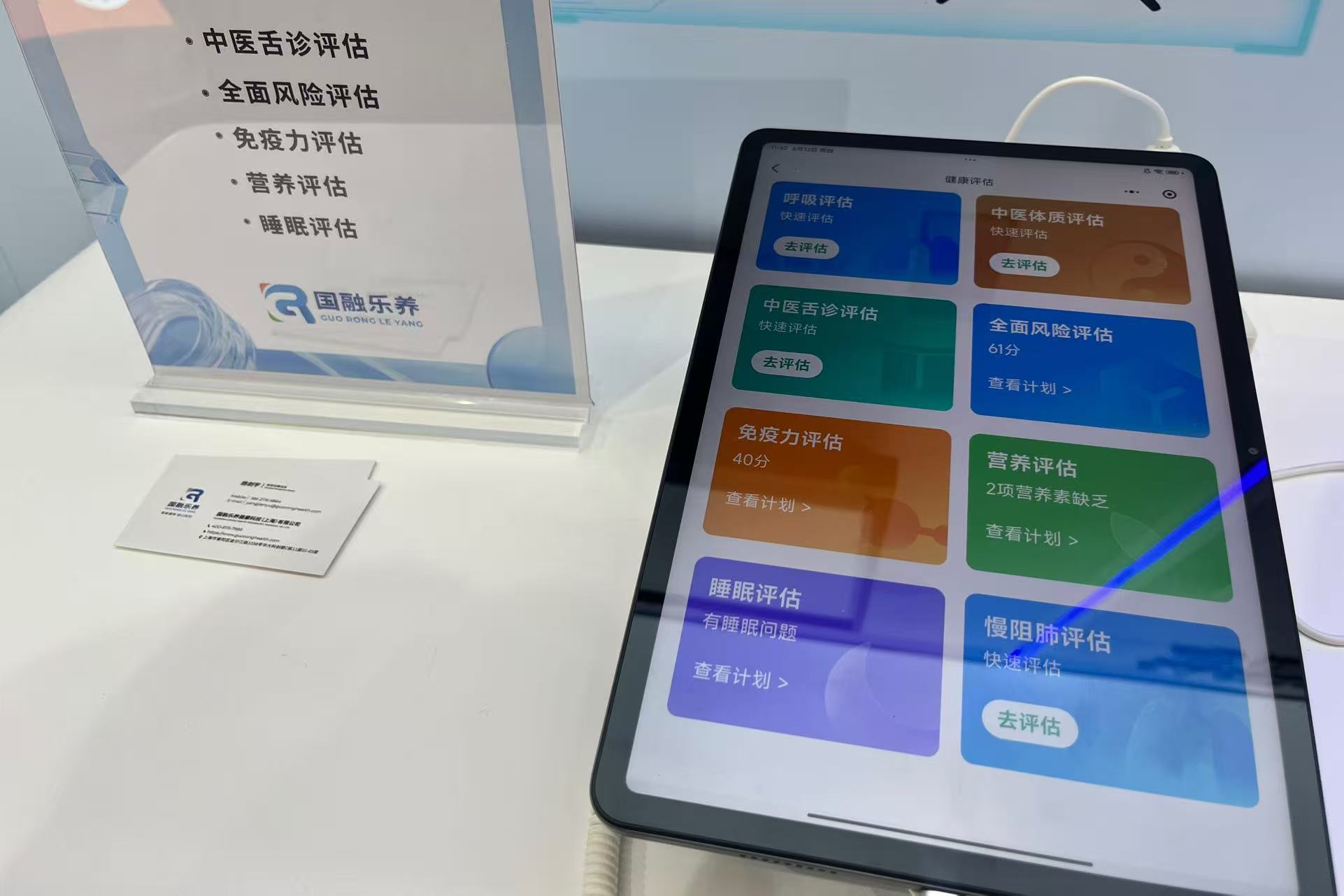
Group 1 - The smart elderly care sector is witnessing the emergence of new technologies and models that are creating various application scenarios for the silver economy [1][2] - The "Smart Long-term Care Insurance Operation Management Platform" aims to address pain points in service delivery for disabled elderly individuals, enhancing service quality and fraud prevention [2][3] - The "Long-term Care Core" product enhances existing sleep monitoring devices with automatic auditing features to verify service authenticity and quality [2][3] Group 2 - Companies are shifting from merely providing products to becoming "scene architects" that lead the lifestyle of the elderly, focusing on proactive health and technology empowerment [3][6] - The "Digital Health Management Platform" allows elderly individuals to assess their health across multiple dimensions and receive personalized health prescriptions [3][5] - The market for innovative rehabilitation aids, such as the "standing electric wheelchair," is gaining attention, with government subsidies available for buyers [5] Group 3 - The silver economy is projected to reach 19.1 trillion yuan by 2035, accounting for 27.8% of total consumption and 9.6% of GDP, with further growth expected by 2050 [7] - The number of elderly care enterprises in China has increased from 9,529 in 2013 to 76,132 in 2024, indicating a positive outlook for the silver economy [7] - Challenges include insufficient effective demand from the elderly, as their needs are often specific and difficult to articulate, necessitating better assessment methods [7][8] Group 4 - High costs of smart care robots and health monitoring devices pose a financial burden on care institutions and families, while the elderly's willingness to pay for new services needs to be cultivated [8] - Suggestions include financing leasing services for equipment manufacturers and implementing a pay-for-performance model based on health improvement metrics [8] - Exploring "insurance + service" models can provide elderly individuals with preventive health services, potentially reducing the likelihood of illness or accidents [8]
科技赋能 让养老服务更智慧
Yang Shi Wang· 2025-06-07 09:12
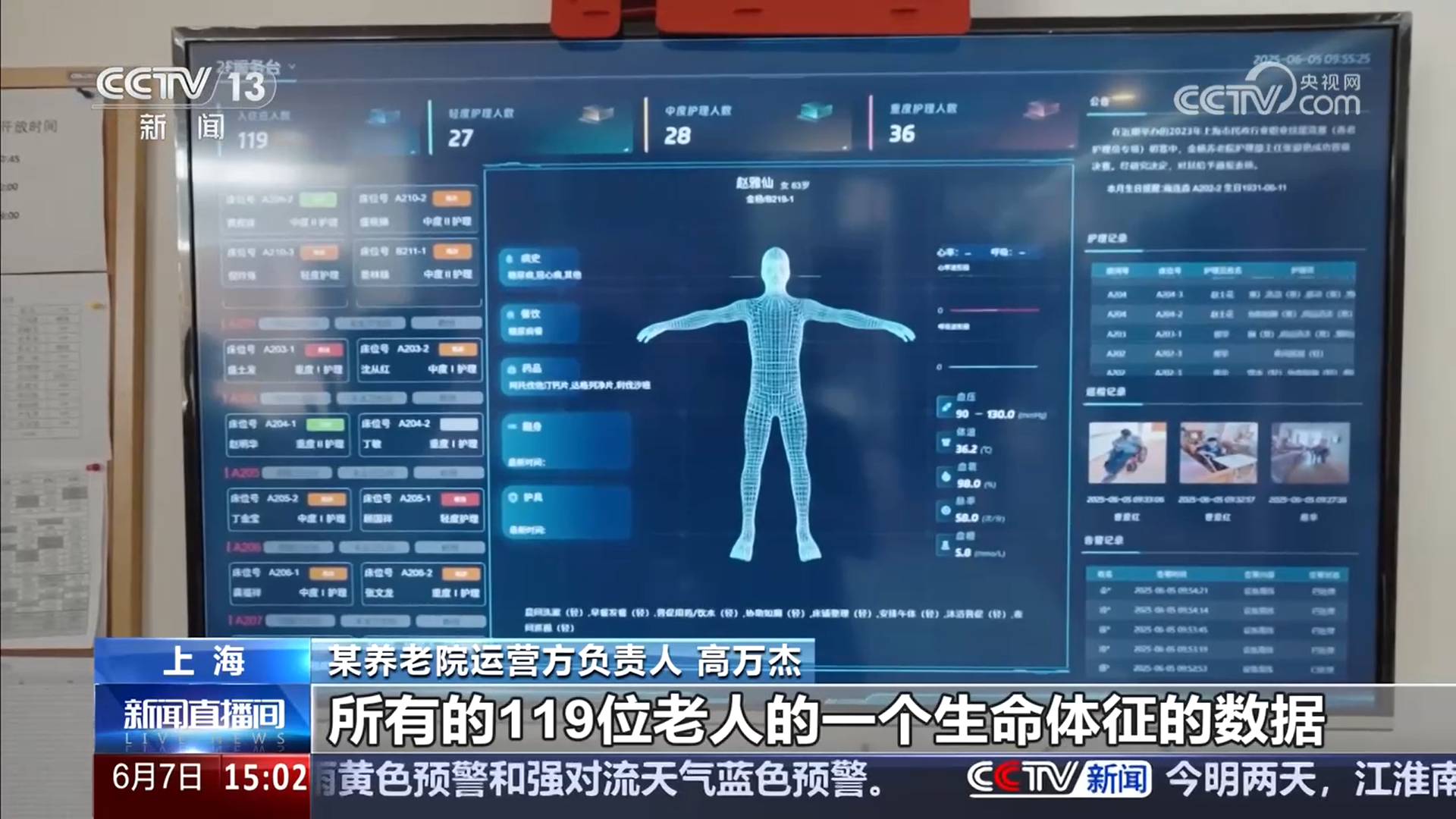
Core Viewpoint - The article highlights the increasing focus on elderly care services in China, particularly through the integration of technology such as artificial intelligence and robotics, as the country faces a significant aging population, projected to reach 220 million people aged 65 and above by the end of 2024 [1]. Group 1: Smart Elderly Care Models - Shanghai is implementing a "smart" elderly care model, aiming to establish at least 100 smart nursing homes by the end of 2025, with over 70 already built [1][2]. - Smart nursing homes utilize intelligent devices, such as smart mattresses that transmit health data to caregivers, enhancing the efficiency of care services [3][4]. - The introduction of smart technology allows caregivers to focus on services that cannot be replaced by technology, improving overall care quality [3]. Group 2: Integration of Healthcare Services - Some nursing homes in Shanghai are exploring the "nursing home + internet hospital" model, connecting elderly residents with quality medical resources through online consultations and remote diagnostics [4][6]. - This model allows for online appointment scheduling, remote medical consultations, and prescription deliveries directly to nursing homes [6]. Group 3: Home-Based Elderly Care Innovations - In Shaoxing, Zhejiang Province, a "smart home care service system" provides 24-hour health monitoring and emergency services for elderly residents at home [7]. - The system utilizes big data to create visual health profiles and sends alerts to family members and healthcare providers in case of abnormalities [9]. Group 4: Smart Dining Solutions - In Lanzhou, Gansu Province, smart dining solutions are being implemented in elderly canteens, featuring facial recognition payment systems and AI nutritionists [10][12]. - The integration of smart technology in meal preparation and service enhances the dining experience for elderly individuals, ensuring nutritional balance and operational efficiency [12]. Group 5: Comprehensive Elderly Service Platforms - A new service platform in Lanzhou consolidates various services such as medication delivery, appointment scheduling, and maintenance requests, simplifying the process for elderly users [13]. - The platform has expanded to multiple cities in Gansu, with over 80,000 elderly individuals registered to benefit from its services [13].
让养老服务更智慧
Jing Ji Ri Bao· 2025-06-03 22:18
Core Viewpoint - The aging population in China is rapidly increasing, with projections indicating that by the end of 2024, there will be 310 million individuals aged 60 and above, and 220 million aged 65 and above, highlighting the urgent need for diverse and high-quality elderly care services [1] Group 1: Current State of Elderly Care Services - The main forms of elderly care services in China include home care, community care, and institutional care, with institutional care being less prevalent but offering stronger professional services [2] - As of this year, there are 404,000 various elderly care institutions and facilities across the country, with nursing beds in these institutions accounting for 62.2% of total beds [2] - Home care is the most common form of elderly care, fulfilling over 90% of the demand, with services such as meal assistance, bathing, cleaning, and medical care increasingly being provided at home [2] Group 2: Community Care Development - Community care plays a crucial role in supporting home care, with significant developments in various regions, such as over 21,000 community care facilities in Guangdong and more than 2,800 community care service stations in Chongqing [3] - The Ministry of Civil Affairs is promoting a coordinated approach among three types of elderly care services to ensure comprehensive support for the elderly across different living environments [3] Group 3: Technological Integration in Elderly Care - The rise of smart elderly care is being driven by advancements in technology, with AI robots being developed to assist in daily activities and health monitoring for the elderly [4] - The smart elderly care market in China is projected to reach 7.21 trillion yuan by 2025, indicating a significant growth opportunity for technology-driven solutions in the elderly care sector [4][5] Group 4: Challenges in the Elderly Care Sector - The elderly care industry faces several challenges, including imbalances in urban and rural development, insufficient age-friendly facilities, a shortage of professional caregivers, and varying service quality [6] - There is a pressing need for a collaborative ecosystem involving elderly care institutions, medical facilities, and technology companies to meet the diverse needs of the elderly population [6] Group 5: Talent Development in Elderly Care - To address the shortage of skilled personnel in the elderly care sector, the Ministry of Civil Affairs and other departments have issued guidelines to attract, train, and retain talent in this field [7] - The next decade is critical for implementing strategies to address the challenges posed by the growing elderly population, necessitating a shift towards a more integrated and quality-focused approach to elderly care services [7]
2025港澳山东周系列活动在香港举行
Da Zhong Ri Bao· 2025-05-22 01:03
Group 1 - The 2025 Hong Kong-Macao Shandong Week series of events was held in Hong Kong, featuring the establishment of 7 new offices in Hong Kong and Macao for Shandong, aimed at promoting "Lu" branded agricultural and food products directly to these regions [1][2] - During the event, Shandong state-owned enterprises signed 21 cooperation projects with Hong Kong and Macao partners, covering sectors such as telecommunications, healthcare, and transportation [2] - The establishment of the "Shandong International Talent Workstation" by Shandong's Hualu Group aims to accelerate the gathering of high-end talent in the region [2] Group 2 - A signing ceremony for the construction of a Hong Kong distribution supply chain base for Shandong agricultural and food products was held, launching the "Lu-Hong Kong Direct Train" cross-border supply chain channel [2] - Eight cooperation agreements were signed during the ceremony, and 16 Shandong enterprises received the Hong Kong quality "Zheng" certification, allowing their products to directly access Hong Kong, Macao, and RCEP markets [2] - The event also included a promotional meeting for Shandong's education and cultural tourism resources, resulting in a memorandum of cooperation between Shandong's Education Department and the Hong Kong Vocational Training Council [3]