
智慧养老产品

Search documents
科技创新三大关键词
2 1 Shi Ji Jing Ji Bao Dao· 2026-02-27 13:23
Group 1: Core Focus Areas - The upcoming National Two Sessions will emphasize technology, with a focus on high-level self-reliance and innovation-driven development as outlined in the "14th Five-Year Plan" [1] - Key topics of interest among representatives include the transformation of scientific achievements, technology empowerment across various sectors, and the role of enterprises in innovation [1][10] - In 2025, 176 proposals related to the transformation of scientific achievements were submitted, focusing on enhancing the role of enterprises in technological innovation and reforming the transformation mechanism [1] Group 2: Transformation of Scientific Achievements - The transformation of scientific achievements is seen as the "last mile" of technological innovation, with a need for smooth transitions from science to technology and then to commercialization [5] - Proposals include expanding the scale of original exploration plans and establishing technology transfer offices in universities to facilitate smoother transitions [5][6] - The medical sector is highlighted for its need to accelerate the market entry of innovative products, with suggestions for opening up application scenarios [6] Group 3: Technology Empowerment - Representatives are focusing on how technology can empower industries, with an emphasis on integrating technology with real-world needs [7] - The development of the marine economy and agricultural technology innovation are highlighted as critical areas for technological advancement [8][9] - There is a call for the introduction of advanced technologies such as robotics and AI in agriculture to enhance production efficiency [9] Group 4: Role of Enterprises - The importance of strengthening the role of enterprises in innovation is emphasized, with a focus on knowledge property rights and the participation of private enterprises in national innovation platforms [10][12] - Suggestions include enhancing judicial protection of intellectual property and creating a supportive environment for "specialized, refined, and innovative" enterprises [12] - The integration of industry and research is seen as essential for fostering a modern industrial system and enhancing national competitiveness [13] Group 5: Emerging Topics - Discussions around artificial intelligence and ethical technology are gaining traction, with a focus on data privacy and algorithm fairness [14] - The need for a structured approach to "silver technology" for the elderly is also highlighted, aiming to make technology more accessible and practical for older adults [9][14]
调查显示:上海老年人消费能力强,月均消费3300元!但对这些方面不太满意→
Sou Hu Cai Jing· 2025-12-09 08:03
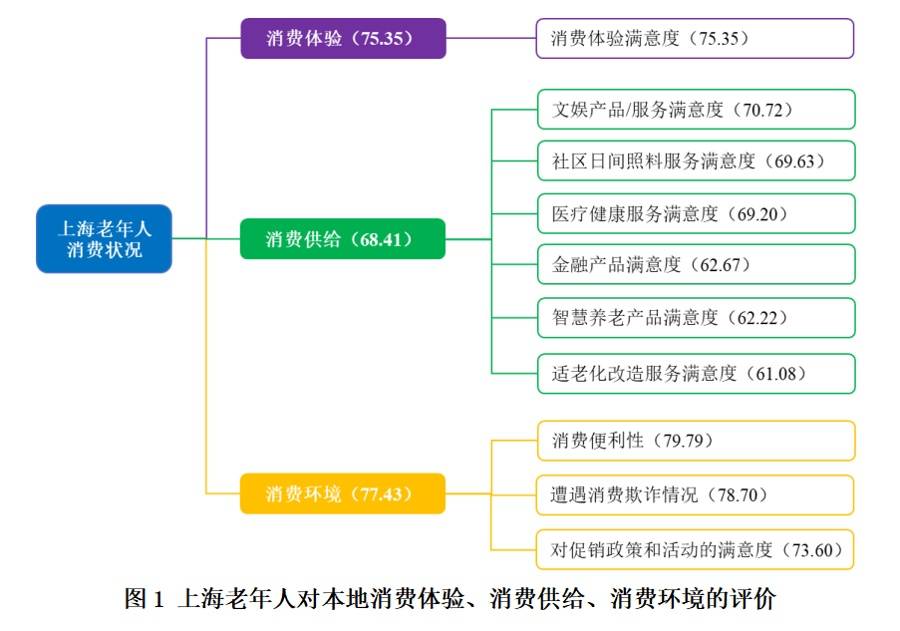
Core Insights - The "silver economy" is a significant driver of consumption market upgrades in Shanghai, where the elderly population aged 60 and above accounts for 37.6% of the city's residents [1][53] - A recent survey highlights the disparity between the high evaluation of the consumption environment (77.43) and the lower satisfaction with consumption supply (68.41) among the elderly [3][8] Consumption Experience - Elderly respondents rated their consumption experience positively, with a score of 77.43, while satisfaction with supply was lower at 68.41 [3] - The highest satisfaction was found in cultural and entertainment products/services (70.72), while satisfaction with age-friendly renovation services was lower (61.08) [3][8] Regional Differences - Baoshan district received high ratings for consumption experience (89.25), supply (79.91), and environment (87.65), while Chongming district scored lower in all categories [8][9] - Pudong New Area had a low evaluation of the consumption environment (69.77), particularly regarding promotional policies and activities [8] Consumption Trends - The elderly in Shanghai have strong consumption capabilities and preferences for practicality and quality, with 46.8% having a monthly disposable income above 5000 yuan [11][14] - Monthly consumption expenditure of over 3000 yuan was reported by 48.0% of respondents, indicating a higher spending capacity compared to national averages [14] Key Consumption Categories - Major consumption areas include necessities like food (83.6%), housing (75.7%), and transportation (54.6%), with health-related spending also significant (67.8% for medical health) [14][16] - An increasing trend in spending was noted in food (69.0% increase), medical health (49.0%), and wellness products (40.7%) [14] Satisfaction with Services - 51.1% of elderly respondents expressed satisfaction with their recent consumption experiences, while 17.8% felt it was average or unsatisfactory, mainly due to price and quality issues [16] - In the medical health sector, 70.1% of respondents were satisfied with services, but concerns about community hospital capabilities were prevalent [19] Focus Areas for Improvement - The survey identified medical health (85.6% interest) and community care services as key areas for improvement, with a need for enhanced community hospital capabilities and service offerings [19][27] - In the entertainment sector, social interaction activities were highly valued (77.6%), but dissatisfaction stemmed from inadequate age-appropriate activities [23] Financial Products and Services - Interest in deposit-based financial products was high (81.9%), but only 55.4% expressed satisfaction, citing complex terms and high-risk levels as concerns [31] - Satisfaction with smart elderly care products was moderate, with 49.8% expressing contentment, but issues with pricing and complexity were noted [35] Recommendations for Policy and Market Adaptation - The report suggests enhancing community healthcare services, improving age-friendly renovations, and developing affordable smart health monitoring products to meet the needs of the elderly [53][54] - It also recommends expanding community meal services and integrating diverse care options to improve overall service quality [54][55]

刚刚!利好,来了!
Zhong Guo Ji Jin Bao· 2025-11-18 11:23
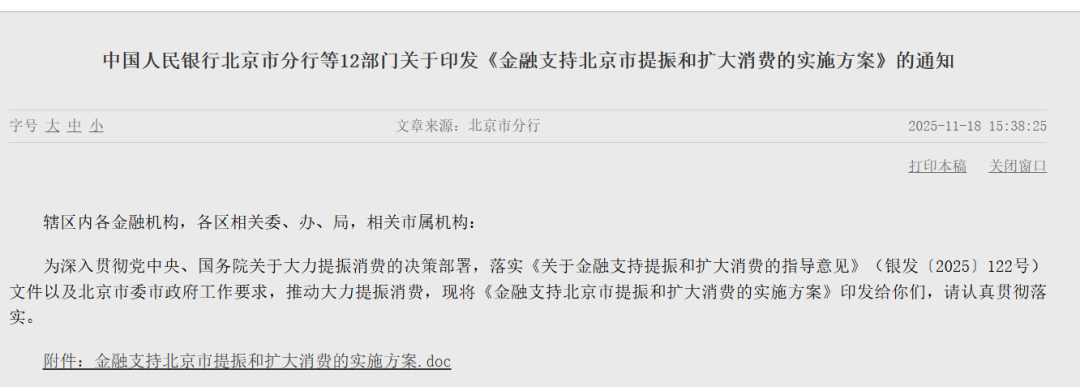
Core Viewpoint - The People's Bank of China and 12 other departments have issued a plan to enhance and expand consumption in Beijing, aiming to improve financial services in various sectors by 2030, thereby supporting the city's development as an international consumption center [2][18]. Group 1: Overall Goals - The plan aims to enhance financial service levels in Beijing's consumption sector by 2030, focusing on increasing loan balances and credit support in areas such as accommodation, dining, cultural tourism, education, and elder care [4][18]. Group 2: Financial Support for Key Areas - Increased credit support for consumer goods, particularly in automotive loans, with incentives for new energy vehicles and reduced penalties for early loan settlements [5][19]. - Promotion of cultural tourism and sports consumption by leveraging Beijing's status as a "Double Olympic City," encouraging financial institutions to innovate financing models [7][19]. - Expansion of financial services in the accommodation and dining sectors, supporting the development of local brands and themed consumption districts [8][20]. - Support for the growth of domestic services such as housekeeping and elder care, including innovative financial solutions for service providers [9][20]. - Encouragement of infrastructure development and trade circulation systems to enhance consumption [10][21]. Group 3: Support for Employment and Specific Demographics - Continued support for small and micro enterprises through interest subsidies on initial loans, aimed at boosting employment [11][22]. - Optimization of financial services for the elderly, including the issuance of dedicated cards to facilitate their consumption [12][22]. - Improvement of consumption services for foreign visitors, focusing on payment service enhancements in key areas [13][22]. Group 4: Enhancing Financial Institution Services - Financial institutions are encouraged to provide differentiated and convenient services to meet diverse consumer needs, including collaboration with e-commerce platforms [14][23]. - Increased support for bond market financing for cultural, tourism, and educational enterprises, promoting quality upgrades in consumer products [15][24]. - Development of equity financing options for quality enterprises in the consumption industry through various market mechanisms [16][24]. Group 5: Policy Coordination and Consumer Environment - Strengthening the role of monetary policy to encourage financial institutions to increase credit in key consumption sectors [25][26]. - Implementation of fiscal policies to reduce consumer credit costs and support small businesses [26][27]. - Enhancing the payment environment to stimulate consumption, including promoting digital currency initiatives [27][28]. Group 6: Organizational Support - Emphasis on coordination among financial departments and relevant authorities to ensure effective implementation of the consumption support plan [28][29]. - Financial institutions are urged to promote policies and products related to consumption support to ensure widespread access to financial services [28][29].
利好!北京,重磅发布!
Zheng Quan Shi Bao· 2025-11-18 10:15
Core Viewpoint - The implementation plan aims to enhance financial support for consumption in Beijing, focusing on various sectors to stimulate economic growth and establish a diversified consumer finance service system by 2030 [1][5][6]. Financial Support for Consumption - The plan emphasizes increasing credit support for consumer goods, particularly in the automotive sector, by optimizing loan terms and reducing penalties for early loan settlements [2][7]. - Financial institutions are encouraged to innovate products for various purchasing scenarios, including new and used cars, and to support green home appliances and electronics [2][8]. - The plan also promotes equity financing for quality enterprises in the consumption industry through public listings and private equity investments [2][12]. Key Areas of Focus - The plan outlines specific areas for financial support, including: - Enhancing cultural and sports consumption by leveraging Beijing's cultural resources and promoting events [8][9]. - Supporting the hospitality and dining sectors through innovative financial products and promotional activities [9][10]. - Encouraging the development of domestic services such as housekeeping and elder care by providing tailored financial services [10][11]. Infrastructure and Market Development - Financial institutions are urged to engage in infrastructure projects that support consumption, optimizing loan conditions based on borrower profiles [10][12]. - The plan aims to improve employment and income for residents by supporting small and micro enterprises with favorable loan policies [11][12]. Policy Coordination and Implementation - The plan stresses the importance of policy coordination among various government departments to enhance the effectiveness of financial support for consumption [14][18]. - It also highlights the need for financial institutions to develop specific implementation plans to align with the overall objectives of boosting consumption in Beijing [18][34].
北京:鼓励符合条件的科创企业通过债券市场募集资金
Mei Ri Jing Ji Xin Wen· 2025-11-18 08:03
Core Viewpoint - The People's Bank of China and 12 other departments have issued a plan to enhance and expand consumption in Beijing through financial support measures, focusing on bond market financing and consumer credit expansion [1] Group 1: Financial Support Measures - The plan emphasizes increasing financing support in the bond market for eligible enterprises in cultural, tourism, and education sectors [1] - It encourages qualified technology innovation enterprises to raise funds through the bond market to enhance the quality of smart elderly care and smart medical products [1] - Financial debt issuance is supported for eligible consumer finance companies, auto finance companies, and financial leasing companies to broaden funding sources and expand consumer credit [1] Group 2: Consumer Credit Expansion - The initiative promotes the securitization of retail loans, including personal auto loans, consumer loans, and credit card loans, to increase the supply capacity of consumer credit [1] - The goal is to activate existing credit stock and enhance the overall consumer credit environment [1]
服务消费有望进入发展快车道
Sou Hu Cai Jing· 2025-11-17 22:17
Core Viewpoint - The article emphasizes the importance of service consumption in China's economic development, highlighting the expected growth in service consumption quality and quantity over the next five years, driven by rising GDP and an expanding middle-income group [1][2]. Group 1: Economic Context - China's per capita GDP is projected to rise from $10,000 in 2019 to $13,300 in 2024, with per capita service consumption expected to reach 13,000 yuan by 2024 [1]. - Currently, service consumption accounts for approximately 52% of GDP in China, compared to 68.5% in the U.S., indicating significant room for growth [1]. Group 2: Demand Factors - The expansion of service consumption is primarily driven by the demand from a growing middle-income group, which is expected to exceed 800 million people in the next decade [2]. - However, the average daily working hours for employed individuals in China is projected to be 49 hours, which may limit the time available for service consumption, leading to a "crowding out effect" on leisure activities [2]. Group 3: Supply Constraints - There are multiple supply-side constraints affecting service consumption, including insufficient effective supply, a mismatch in supply and demand, and a lack of quality and standards in services [3]. - The integration of technology in traditional service sectors remains shallow, with significant gaps in areas such as telemedicine and smart elderly care [3]. Group 4: Policy Recommendations - To enhance service consumption, it is recommended to improve overall income levels through employment promotion and social security reforms, as well as to stabilize asset prices and enhance social security systems [4]. - Policy innovation is needed to enrich high-quality service supply, including investment in cultural, tourism, and healthcare services, while also easing market access and breaking local protectionism [4]. Group 5: Standardization and Consumer Protection - There is a need for a systematic approach to developing service consumption standards, involving industry associations and leading enterprises to create a collaborative standard system [5]. - Establishing efficient dispute resolution mechanisms and consumer protection measures is crucial, particularly in high-risk service areas such as home services and education [5].
长三角国际健康养老产业交易会启幕
Su Zhou Ri Bao· 2025-10-29 00:26
Core Insights - The 2025 Yangtze River Delta International Health and Elderly Care Industry Trade Fair has commenced in Suzhou, featuring a unique "Silver Age Market" for immersive product experiences [1] - This year's event has shifted focus from a business-to-business (B2B) model to a consumer-oriented (B2C) approach, themed "New Economy for the Silver-haired, Enjoying Trendy Life" [1] - The trade fair spans 5,000 square meters and includes four key modules showcasing the new ecology of the silver economy [1] Group 1 - The "Silver Age Market" offers a variety of senior-friendly products, including health foods, rehabilitation aids, smart wearables, and daily necessities, aiming to provide a high-quality shopping experience for the elderly [1] - The event is expected to attract thousands of elderly visitors by actively engaging with elderly care institutions and senior universities [1] Group 2 - The trade fair is held concurrently with the "China Silver Age Choir Conference," featuring 50 choir teams and nearly 2,000 elderly participants, creating a vibrant cultural celebration [2] - Additional activities include the "Cultural Elderly Care Theme Exchange Conference," "Financial + Elderly Care Dialogue," and "Sino-Australian Silver Industry Cross-border Cooperation Meeting," focusing on industry frontier topics [2]
常州多措并举构建老年友好型社会,银发浪潮涌动发展新动能
Yang Zi Wan Bao Wang· 2025-10-27 09:55
Group 1 - The core viewpoint of the articles highlights the increasing aging population in Changzhou, with the elderly population expected to reach 1.2947 million by the end of 2024, accounting for 24.04% of the total resident population, indicating a deepening aging trend [1][2] - Changzhou is implementing policies to enhance elderly care, including raising the basic pension for urban and rural residents to 490 yuan per month and distributing approximately 110 million yuan in respect funds to benefit many elderly individuals [1][2] - The city has established a comprehensive elderly care service network, with over 22,000 beds available in 109 elderly care institutions, and 95% of these are operated by social forces, alongside community-based services covering over 150,000 elderly individuals [1][2] Group 2 - The health service system for the elderly is being optimized, with 122 elderly-friendly medical institutions established and a "zero waiting" policy for seniors over 80 years old, benefiting 312,000 individuals [2] - Changzhou is fostering the silver economy by developing new industries such as rehabilitation aids and smart elderly care, with 7 products selected for national promotion [2] - The city has also focused on cultural and educational activities for the elderly, achieving a 32% participation rate in community education programs and providing over one million training sessions through "smart elderly assistance" initiatives [2][3]
广西敬老月“暖心民政·敬老崇老”主题活动举行
Guang Xi Ri Bao· 2025-10-23 02:47
Group 1 - The event "Warm-hearted Civil Affairs · Respecting the Elderly" was held in Nanning, Guangxi, promoting a culture of respect and care for the elderly through various activities such as performances and interactive Q&A [1][2] - The event featured performances by elderly art groups, showcasing their positive spirit and receiving applause from the audience [1] - A "Smart Health + Elderly Care Products" experience area was set up, where rehabilitation aids and smart elderly care products were displayed, attracting many elderly participants [1] Group 2 - Volunteers provided services such as smartphone application guidance and information security knowledge to help elderly individuals bridge the "digital divide" [2] - Free services like haircuts, small appliance repairs, and eyeglass cleaning were popular among attendees [2] - The event was co-hosted by multiple government departments, including the Civil Affairs Department and the Public Security Department, highlighting a collaborative effort to support the elderly [2]
着力打造一批银发产业领域知名企业
Liao Ning Ri Bao· 2025-06-30 01:19
Group 1 - The core viewpoint of the news is the implementation of a comprehensive plan to enhance elderly welfare and promote the silver economy in Liaoning Province, aiming to establish over four silver economy industrial parks by 2027 and achieve a 70% coverage rate of regional elderly services in towns and streets [2] - The plan includes the construction and renovation of at least 50 elderly care institutions annually, with a focus on creating key industries, brand enterprises, and major projects in the silver economy to stimulate consumption [2] - The development of home and community-based elderly care services is emphasized, with the establishment of a three-tier elderly service network covering urban and rural areas by 2029 [2] Group 2 - The province aims to expand the scale of the silver economy by guiding enterprises to explore the market, creating well-known companies in the silver industry, and establishing service mechanisms for these enterprises [3] - A "Senior Service Consumption Promotion Month" will be held every October, encouraging various regions to use consumption vouchers and experience vouchers to boost elderly consumption [3] - The plan promotes the development of innovative elderly products and encourages collaboration among enterprises, research institutions, and industry associations to foster a cooperative innovation model [3] Group 3 - An elderly product and service quality traceability system will be established, along with increased efforts to combat fraud, illegal fundraising, and consumer rights violations affecting the elderly [4] - Continuous strengthening of regulatory oversight in financial management and health care sectors is planned to protect the legal rights of elderly individuals [4]
