
电商服务

Search documents
淘宝闪购:从2月4日至3月3日,投入近20亿补贴春节跑单骑手
Xin Lang Cai Jing· 2026-01-20 07:43
Core Viewpoint - Taobao Flash is implementing eight major initiatives to support urban riders during the Spring Festival, investing nearly 2 billion yuan to enhance incentives and services for these riders [1][2]. Group 1: Financial Investment and Incentives - Taobao Flash is investing nearly 2 billion yuan to increase incentives for urban riders during the Spring Festival [1][2]. - The company is offering a full-cycle reward program for urban riders, including pre-festival, mid-festival, and post-festival bonuses, aimed at increasing their income during this period [1][2]. - In Shanghai, consistent urban riders are expected to earn several thousand to over ten thousand yuan more than usual during the Spring Festival [1][2]. Group 2: Support Programs and Services - The initiatives include a "Spring Festival Segment Protection Plan" to help riders maintain their service level while taking time off during the holiday [1][2]. - Additional services such as new year gift packages, free smart locker storage for meals, and a 45 million yuan subsidy for upgrading rider equipment are also part of the program [1][2]. - The collaboration with Alipay to implement the "Tap to Enter" feature in communities further enhances the service offerings for urban riders [1][2].
预计减亏超23%!山西老牌A股业绩持续改善,6.6亿并购AI隐形冠军
Xin Lang Cai Jing· 2026-01-20 07:07
Core Viewpoint - Lionhead Co., Ltd. (600539.SH) is expected to reduce its net profit loss by 23.36%-38.55% in 2025, while actively seeking strategic transformation opportunities through mergers and acquisitions in the artificial intelligence sector to create a second growth curve [1][9]. Financial Performance - In 2025, Lionhead's revenue is projected to remain stable year-on-year, with a net profit loss expected between -18.2 million to -22.7 million, reflecting a significant reduction in loss [2][10]. - The company anticipates a non-recurring net profit loss of -21.2 million to -25.7 million, indicating a year-on-year reduction of 27.96%-40.57% [2][10]. - The e-commerce business faces challenges due to intensified competition and product homogeneity, with expected revenue between 430 million to 480 million yuan in 2025 [2][10]. Business Strategy and Operations - Lionhead has been focusing on optimizing its existing business structure, particularly in the e-commerce sector, to stabilize sales and gross margins while exploring new market channels [5][14]. - The company has adopted a "focus on core, divest non-core" strategy, planning to sell its water purification business due to ongoing losses, while emphasizing the importance of its e-commerce services as a key growth driver [5][14]. - The company aims to enhance operational efficiency and improve performance steadily in 2026 [3][17]. Mergers and Acquisitions - Lionhead is planning to acquire 97.44% of Lipu Technology for 662.4 million yuan, with the acquisition application accepted by the Shanghai Stock Exchange in September 2025 [7][15]. - Lipu Technology, established in 2012, is recognized as a high-tech enterprise with strong growth in revenue and net profit, achieving a net profit of 33.1 million yuan in 2024, a 37.61% increase year-on-year [7][15]. - The acquisition is expected to position Lionhead in the high-growth industrial machine vision market, projected to grow from 26.83 billion yuan in 2024 to 63.01 billion yuan by 2029, with a compound annual growth rate of 18.62% [8][16].

预计同比减亏超23%!狮头股份2025年业绩持续改善 6.6亿并购AI“隐形冠军”打开增长新空间
Zhong Guo Ji Jin Bao· 2026-01-19 14:57
Core Viewpoint - Lionhead Co., Ltd. (600539.SH) is expected to reduce its net profit loss by 23.36%-38.55% in 2025, indicating a continuous improvement in performance over the past two years while exploring strategic transformation opportunities through mergers and acquisitions in the artificial intelligence sector [2][3]. Financial Performance - In 2025, Lionhead's operating revenue is expected to remain flat year-on-year, with a significant narrowing of net profit loss projected between -18.2 million to -22.7 million, a reduction of 23.36%-38.55% [3]. - The company anticipates a non-recurring net profit loss of -21.2 million to -25.7 million, reflecting a year-on-year reduction of 27.96%-40.57% [3]. - The e-commerce business faces challenges due to intensified industry competition and product homogeneity, leading to pressure on sales revenue growth [3]. Business Strategy - Lionhead has been optimizing its existing business structure, focusing on its e-commerce core business while exploring new market channels such as duty-free and securing exclusive agency rights for several well-known brands [4]. - The company plans to divest its water purification faucet and accessories business, which has been consistently loss-making, while continuing to enhance its e-commerce service business [4]. Mergers and Acquisitions - Lionhead is actively pursuing mergers and acquisitions to create a new growth curve, specifically planning to acquire a 97.44% stake in Lipo Technology for 662.4 million yuan [5]. - Lipo Technology, established in 2012, is recognized as a national high-tech enterprise and is expected to contribute to Lionhead's strategic shift towards a technology-driven business model [5][6]. - The industrial machine vision market in China is projected to grow significantly, with Lionhead's acquisition positioning it to tap into this high-growth sector, aiming to establish a dual business model of "e-commerce services + machine vision" [6].

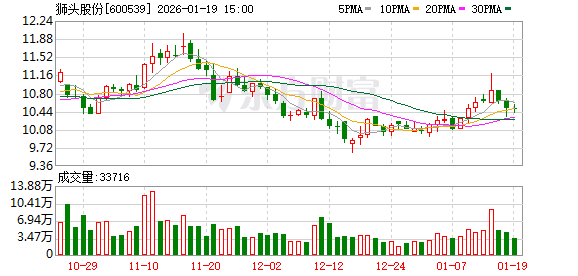
预计同比减亏超23%!狮头股份2025年业绩持续改善,6.6亿并购AI“隐形冠军”打开增长新空间
Zhong Guo Ji Jin Bao· 2026-01-19 09:33
Core Viewpoint - Lionhead Co., Ltd. (狮头股份) is expected to reduce its net profit loss by 23.36%-38.55% in 2025, indicating a continuous improvement in performance despite challenges in the e-commerce sector [1][2]. Group 1: Financial Performance - In 2025, Lionhead's operating revenue is projected to remain stable year-on-year, while the net profit loss is expected to narrow significantly, with a forecasted loss of between 18.2 million to 22.7 million yuan [2]. - The company anticipates a non-recurring net profit loss of 21.2 million to 25.7 million yuan, reflecting a reduction of 27.96%-40.57% year-on-year [2]. - The e-commerce business faces pressure from intensified competition and product homogenization, leading to challenges in sales revenue growth [2]. Group 2: Business Strategy and Adjustments - Lionhead has been optimizing its business structure, focusing on its core e-commerce operations while exploring new market channels such as duty-free sales [3]. - The company has successfully introduced three new health-related brand partnerships in 2025, enhancing its industry reputation [3]. - Lionhead plans to divest its water faucet and accessories business, which has been consistently unprofitable, while continuing to develop its e-commerce service business as a key growth driver [3]. Group 3: Mergers and Acquisitions - Lionhead is pursuing a strategic transformation by planning to acquire Lipu Technology, a machine vision company, for 662.4 million yuan, aiming to create a new growth curve [4][5]. - Lipu Technology has shown steady growth, with a projected net profit of 33.14 million yuan in 2024, marking a 37.61% increase year-on-year [6]. - The acquisition aligns with the growing industrial machine vision market in China, which is expected to reach 63.01 billion yuan by 2029, with a compound annual growth rate of 18.62% from 2024 to 2029 [6].
微盟内测搭载千问大模型的“AI试衣”应用 赋能零售电商行业
Xin Lang Cai Jing· 2026-01-19 03:31
近日,微盟集团(2013.HK)启动内测"AI试衣"解决方案。据悉,该AI应用搭载阿里通义千问大模型, 面向电商零售类商家,目的是帮助服饰类品牌和商家借助AI技术为消费者提供"所见即所得"的沉浸式购 物体验。 "在全球AI技术从模型层向应用层快速落地的浪潮中,零售电商正成为核心试验场与价值高地。AI应用 在垂直行业场景有巨大价值",微盟集团技术副总裁肖锋表示,"通过提供高度还原的'虚拟试穿'体验, AI试衣能力将有望为零售品牌在关键业务环节的痛点解决带来积极影响。" 据悉,微盟"AI试衣"解决方案核心能力搭载了阿里通义千问大模型、整合了微盟自研的服装商品识别模 型和深厚的行业know-How,拥有"还原真实试穿效果"、"智能穿搭推荐"等组合能力。微盟还计划借助 AI试衣解决方案赋能B端零售客户,未来将旗下导购Agent与AI试衣能力打通。AI导购可洞察用户需 求,根据季节、材质和穿衣风格进行智能推荐,实现"所见即所得"的消费体验。 过去两年多时间微盟集团围绕自身在零售电商垂直行业的核心场景,不断迭代AI应用能力,通过深入 挖掘AI应用价值提升零售客户的经营效率与业绩增长。业内分析认为,身处AI应用这一未来十年 ...
专业之选!常州沐旺电商签约达之云驭影,开启全域数字化增长新征程
Sou Hu Cai Jing· 2026-01-15 18:58
Core Insights - The strategic partnership between Changzhou Muwang E-commerce Co., Ltd. and Dazhi Cloud Yuying aims to enhance operational efficiency and growth through digital transformation in the e-commerce sector [1][6]. Group 1: Company Overview - Changzhou Muwang E-commerce Co., Ltd. was established in 2022 and operates in multiple e-commerce sectors, including internet sales, technical services, and wholesale retail across various product categories [3]. - The company emphasizes a business philosophy of "integrity-based, professionalism-oriented" and has built a comprehensive service model that integrates products, services, and technology [3]. - Muwang E-commerce has a professional team with over ten years of industry experience, gaining recognition for its efficient fulfillment capabilities and quality product matrix [3]. Group 2: Dazhi Cloud Yuying Overview - Dazhi Cloud Yuying is a SaaS platform focused on empowering small and medium enterprises in local service sectors, with a mission to enhance digital competitiveness for local service providers [4]. - The platform has successfully served over 5,000 enterprises across various sectors, achieving a high customer renewal rate of 89% [4]. - Dazhi Cloud Yuying's product philosophy centers on being "scene-first, lightweight, and growth-oriented," providing easy-to-use digital solutions that can be quickly deployed [4]. Group 3: Strategic Cooperation - The collaboration will address key pain points in the e-commerce industry, such as customer acquisition challenges, operational fragmentation, and weak conversion rates [5]. - The partnership will focus on three main areas: building a comprehensive marketing matrix, managing the entire user lifecycle, and optimizing decision-making through data-driven insights [5]. - Specific initiatives include leveraging Dazhi Cloud Yuying's tools for multi-platform account management and creating personalized user engagement strategies to enhance customer retention [5]. Group 4: Future Outlook - Both companies believe that the partnership will significantly improve Muwang E-commerce's digital operational efficiency and user experience, injecting new momentum into business growth [6]. - The collaboration represents a practical example of integrating physical operations with digital tools in the e-commerce industry, aiming for mutual benefits and exploring new paths for digital transformation [6].

Seel首席营收官:中国品牌全球化应更加注重售后体验
Di Yi Cai Jing Zi Xun· 2026-01-15 13:28
Core Insights - The article emphasizes the importance of post-purchase experience for Chinese brands to expand their business in Western markets, highlighting that Western consumers prioritize after-sales services and return policies [2][3]. Group 1: Consumer Behavior - 74% of consumers are unwilling to purchase products without a return option, indicating that return flexibility significantly impacts conversion rates [5]. - The average retailer loses 20% to 25% of their revenue due to returns, which translates to approximately $1 trillion globally by 2025 [3]. - The average brand incurs a direct loss of 17% in revenue due to refunds, along with an additional 8% in operational costs related to managing returns [3]. Group 2: Market Trends - Seel's analysis shows a 30% increase in average refunds and returns per merchant in the first three quarters of last year compared to the previous year, with a further 16% increase during the holiday shopping period [4]. - Factors contributing to this increase include heightened consumer anxiety due to economic recession, tighter budgets, and the normalization of "try before you buy" among Generation Z consumers [4]. Group 3: Brand Strategy - Brands are increasingly focusing on real user experiences post-technology deployment, moving beyond just showcasing technology at events like CES [4]. - The article notes that the challenge for brands is not just completing sales but ensuring consumer confidence and satisfaction after the purchase [4]. - Chinese brands excel in product innovation and price competition, but they need to meet Western consumers' high expectations for post-purchase experience predictability and accountability [4]. Group 4: Cross-Border Considerations - Compliance has become a critical consideration for cross-border sellers, with certifications like system and organization controls and data protection regulations being essential for engaging with Western consumers [5]. - Brands lacking clear and frictionless return options are predicted to struggle in competitiveness by the end of the year, emphasizing the growing importance of third-party platforms in cross-border trade [5].

电商仓库一件代发云仓操作流程:小白也能看懂的实操指南
Sou Hu Cai Jing· 2026-01-15 12:46
Group 1 - The core concept of "one-piece drop shipping" is to outsource warehousing and shipping tasks to a third-party logistics provider, allowing sellers to focus on sales [2][6] - The initial step involves sending products to the third-party warehouse, where staff verify the shipment details, ensuring accuracy in quantity and condition before entering the data into the Warehouse Management System (WMS) [2] - A small tip for efficiency is to label each product with a clear SKU code before shipping, which can significantly enhance the inbound process [2] Group 2 - Order processing begins when a consumer places an order, with the order information automatically syncing to the warehouse system, which checks for inventory availability and address accuracy [4] - After picking the items, a dedicated team re-verifies the products against the order information to ensure accuracy before packaging [4] - The packaging process involves selecting appropriate materials based on the product's characteristics, such as using bubble wrap for fragile items, and weighing the package to confirm it matches the shipping label [4] Group 3 - Post-shipping, the warehouse company tracks logistics information to address any delays or issues, facilitating communication with the courier service [6] - The system monitors inventory levels in real-time, alerting sellers when stock falls below a predefined threshold to prevent stockouts [6] - The essence of drop shipping is to allow sellers to concentrate on operations and marketing by outsourcing complex warehousing and shipping processes to professionals [6]

Seel首席营收官:中国品牌全球化应更加注重售后体验
第一财经· 2026-01-15 12:41
Core Insights - The article emphasizes the importance of post-purchase experience for Chinese brands aiming to expand in Western markets, highlighting that consumer loyalty is built through effective handling of returns and customer service [3][4]. Group 1: Consumer Expectations - Western consumers prioritize post-purchase experiences, including clear return policies and responsive customer service, which significantly influence their purchasing decisions [3][4]. - 74% of consumers are unwilling to buy products that do not offer return options, indicating that return flexibility is crucial for conversion rates [5][6]. Group 2: Financial Implications - Retailers lose 20% to 25% of their revenue due to returns, which translates to approximately $1 trillion globally in 2025 [4]. - Brands typically incur a direct loss of 17% in revenue from refunds, along with an additional 8% in operational costs related to managing returns [4]. Group 3: Market Trends - There has been a 30% increase in average refunds and returns per merchant in the first three quarters of the previous year, with a further 16% increase during the holiday shopping period [4][5]. - Factors contributing to this trend include economic recession, increased consumer anxiety, tighter budgets, and the normalization of "try before you buy" among Gen Z consumers [4]. Group 4: Competitive Landscape - Brands must adapt to the differing expectations of Western consumers regarding post-purchase experiences, as traditional price competition is less effective on mature platforms like Amazon [6][7]. - The lack of clear and frictionless return options will hinder brands' competitiveness by the end of the year, emphasizing the growing importance of third-party platforms in cross-border trade [7].

Seel首席营收官:中国品牌全球化应更加注重售后体验|CES观察
Di Yi Cai Jing· 2026-01-15 11:02
Core Insights - Chinese brands excel in product innovation, rapid iteration, and price competition, while Western consumers have high expectations for post-purchase experience and accountability [1][2] Group 1: Consumer Expectations - Western consumers prioritize post-purchase experience, with 74% unwilling to buy products without return options, indicating that return flexibility significantly impacts conversion rates [3] - Consumers expect a seamless experience similar to Amazon Prime, including quick refunds and responsive customer service [1][2] - Generation Z has higher standards and is less likely to return to a brand after a poor experience [1] Group 2: Financial Implications - Returns cost retailers 20% to 25% of their revenue, equating to approximately $1 trillion globally by 2025 [2] - Brands lose an average of 17% of revenue directly due to refunds, plus an additional 8% in operational costs related to managing returns [2] - Brands using the Seel platform saw a 16% increase in customer lifetime value and over 30% increase in repeat purchases [3] Group 3: Market Dynamics - The increase in returns is attributed to economic recession, heightened consumer anxiety, and the normalization of "try before you buy" among consumers, especially Generation Z [2] - Traditional price-competitive products perform better on established platforms like Amazon, while high-margin tech products may benefit from independent e-commerce sites [4] - Compliance with regulations such as GDPR and CCPA is crucial for cross-border sellers, especially those from China, to build trust with Western consumers [4] Group 4: Infrastructure and Support - Third-party platforms providing post-purchase protection are becoming essential for brands lacking internal capabilities [2][4] - Brands without clear and frictionless return options may struggle to compete by the end of the year [4]