第三方支付

Search documents
7488万元!合利宝支付收到2025年行业最大一笔罚单
Guo Ji Jin Rong Bao· 2026-01-07 08:17
Core Viewpoint - The People's Bank of China has imposed significant penalties on Guangzhou Heli Bao Payment Technology Co., Ltd. for multiple regulatory violations, totaling approximately 74.88 million yuan, which includes fines and confiscated illegal gains [1][4] Group 1: Regulatory Violations and Penalties - Guangzhou Heli Bao Payment was penalized for violations related to clearing management, payment terminal management, merchant management, and account management, resulting in a fine of 62.8 million yuan and confiscation of illegal gains amounting to 12.08 million yuan, leading to a total penalty of 74.88 million yuan [1] - Zhao Mingsheng, a responsible individual, was fined 925,000 yuan for his accountability in the violations concerning payment settlement management regulations [1] Group 2: Company Background - Heli Bao Payment was established in July 2013 with a registered capital of 100 million yuan and holds a payment business license issued by the People's Bank of China, covering nationwide operations and possessing cross-border RMB business qualifications [1] - The parent company of Heli Bao Payment is *ST Rindong, which indirectly holds a 95% stake in Heli Bao Payment [1] Group 3: Company Response - In response to the penalties, *ST Rindong announced that Heli Bao Payment has completed the payment of the fines and that its production and operational activities are normal [4] - Heli Bao Payment stated on its official WeChat account that it sincerely accepts and will strictly implement the relevant decisions [4]

近3亿元罚单压顶 支付牌照年注销12张
Bei Jing Shang Bao· 2026-01-06 15:52
Core Insights - The third-party payment industry is undergoing significant restructuring and regulatory tightening, with a notable increase in license cancellations and penalties in 2025 [1][2][4] Group 1: Industry Restructuring - A total of 12 payment licenses were canceled in 2025, bringing the total number of licensed institutions down to 163, a reduction of over 40% from the industry's peak [2] - Zhonggang Yintong Payment, established in 2011, became the 108th license holder to be canceled, having faced a suspension of its license renewal for over three years due to regulatory issues [2][3] - The exit of institutions is characterized by a prevalence of compliance issues and limited operational scope, with many companies lacking core competitiveness and resources to survive in a competitive market [3][9] Group 2: Regulatory Environment - In 2025, the People's Bank of China and its branches issued at least 82 penalties in the payment industry, totaling over 293 million yuan, with several penalties exceeding 10 million yuan [4][5] - The regulatory approach has intensified, with a focus on core risk areas such as clearing violations and anti-money laundering failures, reflecting a "zero tolerance" stance [5][6] - The trend of increasing penalties is indicative of a shift towards more precise and effective regulation, with a forthcoming classification rating system aimed at implementing differentiated supervision [9][10] Group 3: Future Industry Trends - The payment industry is expected to enter a new phase characterized by "precise regulation and capability competition," leading to increased market concentration and a focus on compliance [9] - Large institutions are anticipated to play a systemic support role, while smaller entities are encouraged to leverage regional advantages and specialized services [9][10] - The development of a sustainable ecosystem in the payment industry will depend on clear roles, shared risks, and reasonable returns among all participants [9][10]
支付牌照年注销量达12张!2.93亿元罚单压顶,行业加速出清
Bei Jing Shang Bao· 2026-01-06 13:03
Core Insights - The third-party payment industry is undergoing significant restructuring and regulatory tightening, with a notable increase in license cancellations and penalties in 2025 [1][3][5] Group 1: Industry Restructuring - As of December 26, 2025, a total of 12 payment licenses have been revoked, reducing the number of licensed institutions to 163, which is over 40% lower than the peak [3] - Zhonggang Yintong Payment, established in 2011, became the 108th license holder to be revoked, having been in a suspended renewal status for over three years due to regulatory issues [3][4] - The exit of institutions is characterized by a predominance of those with single business types or limited operational regions, indicating a structural reshaping of the industry [4] Group 2: Regulatory Environment - In 2025, the People's Bank of China and its branches issued at least 82 penalties in the payment sector, totaling over 293 million yuan, with many penalties exceeding 10 million yuan [5][6] - The regulatory approach has intensified, with a focus on core risk areas such as clearing violations and anti-money laundering failures, reflecting a "zero tolerance" stance [6][7] - The trend of increasing penalties highlights the regulatory body's commitment to enforcing compliance and maintaining market order [6][10] Group 3: Challenges for Small Institutions - Small and medium-sized payment institutions are facing significant challenges, including stringent regulatory requirements, reduced profit margins due to fee transparency, and the need for long-term investment in transformation [9][10] - Many exiting institutions exhibit compliance shortcomings and lack the capital to meet new regulatory requirements, leading to increased operational difficulties [4][10] Group 4: Future Industry Trends - The payment industry is expected to enter a phase characterized by "precise regulation and capability competition," with market concentration increasing as resources shift towards a few leading institutions [10] - The upcoming classification and rating system will enable differentiated regulation, promoting a more structured and competitive environment [10][11] - The focus will be on creating a collaborative ecosystem where large institutions provide systemic support while smaller entities leverage regional advantages and specialized services [10][11]

征信违规,美的“少东家”旗下盈峰小贷被罚!
Xin Lang Cai Jing· 2026-01-06 09:15
Core Viewpoint - The recent fine imposed on Yingfeng Puhui Internet Microloan Co., Ltd. for violating credit business regulations highlights compliance issues within the financial landscape of the Midea Group, indicating potential risks in its financial operations [1][20][24]. Group 1: Regulatory Issues - Yingfeng Puhui was fined 839,100 yuan for violating credit business management regulations, which may involve unauthorized inquiries into personal credit information and improper handling of credit data [6][24]. - The fine is relatively minor compared to the overall scale of Yingfeng Group, which has assets nearing 90 billion yuan and annual revenue of approximately 40 billion yuan [1][20]. - Experts suggest that such compliance issues are common in the microloan and consumer finance sectors, driven by intense competition and insufficient regulatory investment by institutions [24][27]. Group 2: Yingfeng Group Overview - Yingfeng Group, founded by He Xiangjian's son He Jianfeng, plays a crucial role in Midea's financial ecosystem, holding a 63.5% stake in Yingfeng Puhui [1][20]. - The group has expanded its financial footprint since 2007, acquiring significant stakes in various financial entities, including a 22.65% share in E Fund Management [7][25]. - Yingfeng Group's financial operations include microloans, commercial factoring, and other financial services, with a registered capital exceeding 1.3 billion yuan [4][22]. Group 3: Financial Performance and Strategy - Yingfeng Puhui ranks third in loan disbursement and first in revenue among microloan companies in Guangzhou, indicating strong market presence despite the recent regulatory challenges [4][22]. - Midea Group's financial services, including microloans and payment solutions, contribute minimally to its overall revenue, with interest income from financial activities accounting for less than 1% of total revenue [34][36]. - The group's financial strategy has shifted from expansion to focusing on core business areas, reflecting a recognition of the need for financial services to support its primary operations in home appliances [36][37].


拉卡拉连续七年入选中国互联网企业综合实力百强
Quan Jing Wang· 2026-01-05 01:09
Core Insights - The core viewpoint of the articles highlights the recognition of Lakala as a leading player in the digital payment sector, reaffirming its strong market position and commitment to innovation and compliance in operations [1][2]. Group 1: Company Recognition - Lakala has been ranked 74th in the "Top 100 Chinese Internet Enterprises Comprehensive Strength Index (2025)" released by the China Internet Association, marking its seventh consecutive year in the top 100 [1]. - The evaluation criteria for the top 100 include seven dimensions: scale strength, profitability, innovation capability, growth capability, risk control capability, social responsibility, and corporate credit, reflecting the overall development status of Chinese internet enterprises [1]. Group 2: Business Strategy - In 2025, Lakala aims to promote digital payment, share digital technology, and realize data value, focusing on strengthening its core payment business [2]. - The company is accelerating the integration of payment services with SaaS and AI, systematically promoting AI applications in merchant services, enterprise operations, and risk control [2]. - Lakala is building a digital service system centered on "Payment + SaaS + AI," enhancing merchant service efficiency and resilience, and supporting the digital upgrade of the real economy [2].

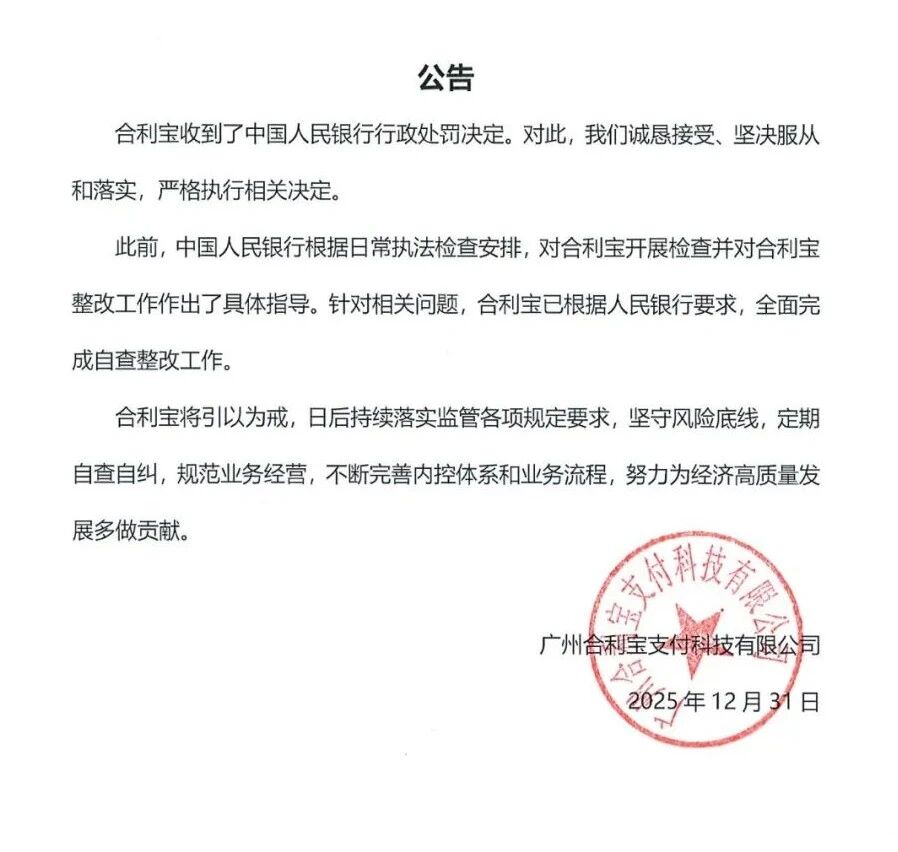
合利宝因四项违规问题被罚没7488万 受累母公司重整支付牌照续展仍卡壳
Chang Jiang Shang Bao· 2026-01-05 00:23
Core Viewpoint - The payment industry in China is facing intensified regulatory scrutiny, as evidenced by the significant fine imposed on HeLibao Payment Technology Co., Ltd. for multiple violations, reflecting a zero-tolerance approach from regulatory authorities [1][2][3] Regulatory Actions - The People's Bank of China (PBOC) Guangdong Branch issued a total fine of 74.88 million yuan to HeLibao for four violations, including breaches of clearing management and merchant management regulations [2][3] - The fine consists of 62.8 million yuan in penalties and 12.08 million yuan in confiscated illegal gains, marking one of the highest penalties in the payment industry [2][3] Company Response - HeLibao's parent company, *ST Rindong, announced that HeLibao has completed self-inspection and rectification as required by the PBOC [1][5] - The company emphasized its commitment to compliance and risk management, stating that it will continue to adhere to regulatory requirements and improve its internal control systems [5][7] Financial Impact - The fine is expected to impact the financial performance of *ST Rindong, which reported a revenue of 600 million yuan in the first three quarters of 2025, a decrease of 35.68% year-on-year, while net profit increased significantly due to debt restructuring [1][6][7] - HeLibao's payment license renewal application is currently under review suspension due to the parent company's restructuring, which could further affect its operations [7] Industry Context - The regulatory environment for the payment industry has become increasingly stringent, with over 75 fines totaling more than 200 million yuan issued in 2025 alone, particularly targeting areas such as payment clearing and anti-money laundering [3][4] - Analysts suggest that the high frequency and amount of penalties are aimed at eliminating long-standing issues within the industry, such as fraudulent merchant registrations and other gray operations [4][5]

再注销一家 第三方支付牌照持续出清
Xin Lang Cai Jing· 2026-01-04 21:06
Core Viewpoint - The payment industry in China is undergoing a significant consolidation, with the People's Bank of China (PBOC) actively revoking payment licenses, indicating a shift towards stricter regulatory compliance and market exit for non-compliant entities [1][2][3] Group 1: License Revocation - The PBOC has revoked the payment license of Zhonggang Yintong Information Technology Service Co., Ltd., marking the 108th license cancellation and the 12th in 2025 [1] - Zhonggang Yintong's license had been in a "suspended renewal" status for over three years due to non-compliance with regulatory requirements [1] - The company, established in 2011, initially focused on prepaid card issuance and later expanded into internet payment services [1] Group 2: Industry Trends - In recent years, the payment license landscape has been reshaped, with 15 licenses revoked in 2023, 10 in 2024, and 12 in 2025 [2] - Analysts attribute the reduction in payment licenses to enhanced regulatory scrutiny, financial difficulties faced by some institutions, and internal consolidation within payment companies [2] - The majority of revoked licenses pertain to prepaid card services, which are struggling to remain profitable due to regulatory changes and market competition from digital alternatives [3] Group 3: Future Outlook - The ongoing license cancellations are expected to lead to a more regulated market environment, increasing compliance costs but ultimately enhancing the industry's credibility and stability [3] - Payment institutions are encouraged to explore horizontal expansion through "payment+" solutions and partnerships to innovate their service offerings [4]
2025年度支付业最大罚单落地!合利宝被罚没近7488万
Nan Fang Du Shi Bao· 2026-01-04 11:00
Core Viewpoint - The payment industry in China faced its largest penalty of 2025, with Guangzhou Heli Bao Payment Technology Co., Ltd. receiving a total fine of approximately 74.88 million yuan due to multiple regulatory violations [1][2]. Group 1: Regulatory Violations - Heli Bao was found to have committed four major violations during the inspection period from September 1, 2022, to July 31, 2024, including violations of clearing management regulations, payment terminal management, merchant management, and account management [2][3]. - The total penalty included a fine of 62.8 million yuan and the confiscation of illegal gains amounting to 12.08 million yuan, making it the largest penalty in the payment industry for 2025 [2][3]. Group 2: Financial Impact - The penalty significantly impacts Heli Bao's financial performance, as the fine represents approximately 128.43% of the company's net profit of 58.3 million yuan for the first half of 2025 [7]. - For its parent company, *ST Rindong, the penalty accounts for 20.4% of its net profit of about 367 million yuan for the first three quarters of 2025 [7][6]. Group 3: License Renewal Challenges - Heli Bao's payment business license renewal is currently under a suspended review status, which raises concerns about the company's operational compliance and future business capabilities [8][10]. - The suspension of the license renewal is linked to potential violations of anti-money laundering regulations and other compliance issues, which could undermine user trust in the company's payment security and stability [9][10].
金融科技行业双周报第二十期:数字人民币重大调整,利好金融IT和三方支付-20260104
GUOTAI HAITONG SECURITIES· 2026-01-04 05:16
数字人民币重大调整,利好金融 IT 和三方支付 [Table_Industry] 综合金融 ——金融科技行业双周报第二十期 | [姓名table_Authors] | 电话 | 邮箱 | 登记编号 | | --- | --- | --- | --- | | 刘欣琦(分析师) | 021-38676647 | liuxinqi@gtht.com | S0880515050001 | | 孙坤(分析师) | 021-38038260 | sunkun@gtht.com | S0880523030001 | 本报告导读: 数字人民币迎利好,允许数币付息和部分准备金制度落地、跨境支付政策落地,利 好金融 IT 和三方支付;部分金融科技行业持续严格监管。 投资要点: 综合金融《数币余额开始付息,供需双向促规模 增长》2026.01.03 综合金融《数币体系升级,规模有望加速增长》 2025.12.29 综合金融《大模型第一股将上市,百融云发布 RaaS 战略》2025.12.22 综合金融《投融资再平衡持续,股权融资逐步回 暖》2025.12.22 股 票 研 究 研 究 报 告 请务必阅读正文之后的免责条款部分 行 ...
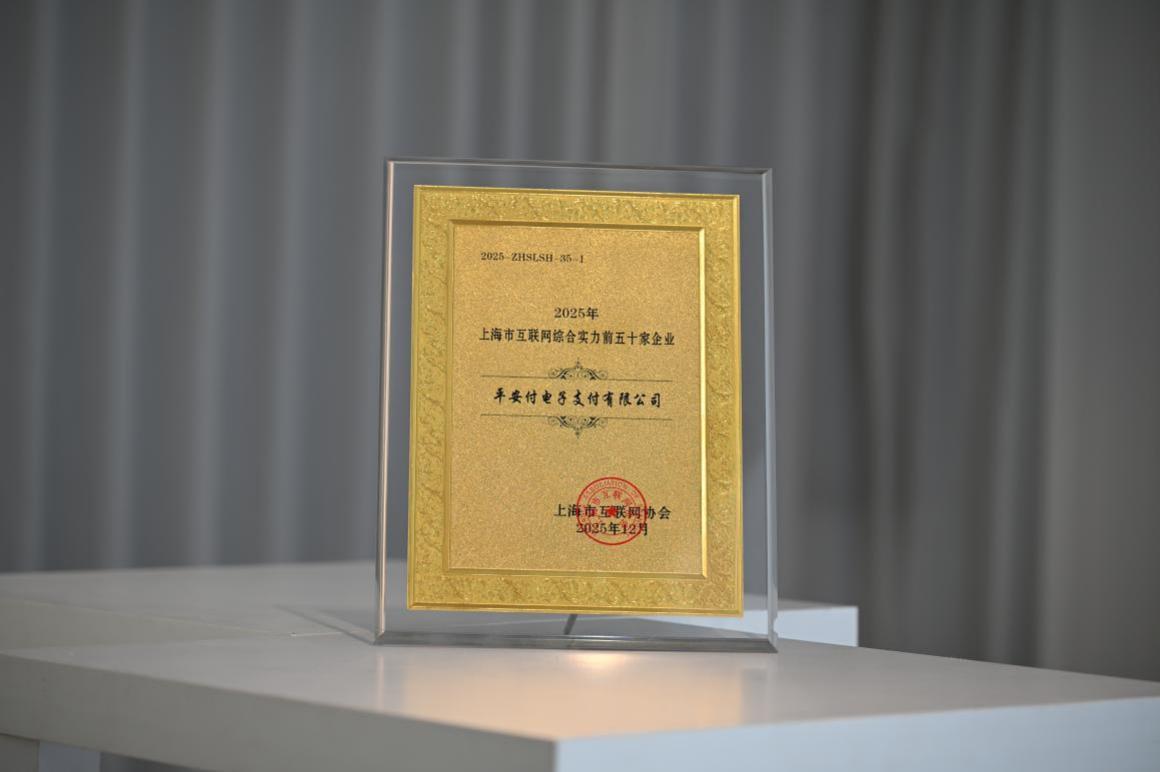
平安付跻身2025上海市互联网综合实力企业前50强
Jin Rong Jie· 2026-01-04 04:55
近日,上海市通信管理局指导,上海市互联网协会组织的"数智领航,沪链全球——上海市互联网企业年会暨高质量发展论坛"正式举行,现场发布了2025 《上海市互联网企业综合实力指数报告》,揭晓"2025年上海市互联网综合实力前50强企业和成长型10强企业"榜单。平安壹钱包旗下平安付电子支付有限公 司(下称"平安付")凭借优异的数字支付能力和科技应用水平,成功跻身前50强,同榜企业包括拼多多、携程、叮咚买菜及饿了么等。 截至目前,平安付累计服务的支付账户超4亿,支持平安综合金融及外部金融机构的支付服务领先同业,发行品牌联名预付卡50余种,拥有超220万客户信 赖。同时,平安付依托平安集团与平安壹钱包资源能力,积极践行乡村振兴带动消费帮扶10亿元,展现企业社会责任担当。 2025年上海市互联网综合实力前50强企业榜单的发布,不仅彰显了上海互联网行业的蓬勃发展,也体现了上榜企业在市场竞争中强劲势头。报告显示,上海 市互联网行业发展呈现出六大特征。在业务收入、营业利润、研发投入、财务风险防控、人才建设及业态分布等方面,这些上榜企业各有所长,实力强劲。 2024年榜单前50家企业互联网业务总收入已达7205亿元,且营业利润连续 ...