
Computing

Search documents
“人工智能+”时代的数字新基建:解密中科曙光的“算力+数据”开放之路
Guan Cha Zhe Wang· 2025-09-26 05:40
Core Insights - The article discusses the transformative impact of artificial intelligence (AI) on various industries in China, positioning it as a core engine for high-quality economic development [1] - It highlights the challenges faced in achieving comprehensive intelligence, including fragmented computing infrastructure and isolated high-quality industry data [1] - The need for a new paradigm that transcends traditional product sales and focuses on ecosystem building is emphasized, with a call for a "architect" to integrate resources and drive collaborative innovation [1] Industry Overview - The current state of China's AI computing sector is characterized by a paradox of diverse innovations and rigid barriers, leading to inefficient resource utilization [2] - The "AI Computing Open Architecture" initiative, launched by Zhongke Shuguang in collaboration with over twenty partners, aims to create an "Android-like" ecosystem for China's AI industry [2] - This architecture promotes an open and collaborative approach, encompassing a five-layer system that standardizes interfaces and protocols, facilitating the integration of heterogeneous computing resources [2] Company Strategy - Zhongke Shuguang is transitioning from a hardware supplier to a builder and leader of the AI industry ecosystem, providing a platform for collaboration among algorithm companies, application developers, and research institutions [3] - The company’s strategy includes the release of high-quality data sets, such as the "High-Resolution Meteorological Data Sharing Program," which offers precise meteorological data to the public [4][5] - The synergy between top-tier computing power and high-quality data is expected to create significant ripple effects across various industries, enhancing innovation and application [5] Future Outlook - Zhongke Shuguang's strategic path involves creating a closed-loop ecosystem that integrates powerful computing infrastructure with high-quality data resources, supporting the "Artificial Intelligence+" initiative [6] - The company is positioned to play a crucial role in China's digital economy and technological self-reliance, contributing to the nation's leadership in the global digital landscape [6]

拆解中科曙光:当一家龙头企业选择“不建墙”
Jing Ji Guan Cha Wang· 2025-09-26 04:26
Core Viewpoint - The Chinese computing industry faces a fundamental choice between a vertically integrated model, akin to Apple's approach, and an open collaborative model, similar to Android's, as it prepares for the AI-driven transformation by 2025 [1][2][5] Industry Context - The Chinese computing industry has made significant progress, but it remains in a state of "strong competition, weak cooperation," with many companies using proprietary interfaces and protocols, leading to resource waste and inefficiencies [4][5] - National strategic documents emphasize the need for a unified and strong national computing market, highlighting the importance of optimizing computing resource layout and promoting standard recognition [3][5] Company Actions - Inspiring collective action, Inspiring company, Zhongke Shuguang, has initiated the first "AI Computing Open Architecture" in collaboration with over twenty industry partners, marking a shift towards an open collaborative approach [1][2][15] - The open architecture aims to address industry bottlenecks by providing a system for collaborative innovation across various computing components, thus reducing the need for redundant R&D efforts among different manufacturers [14][15] Technical Innovations - Zhongke Shuguang has invested in liquid cooling technology since 2011, achieving over 30% energy savings compared to traditional air cooling, and significantly increasing power density in data centers [6][10] - The company’s comprehensive business model covers high-end computing, storage, security, data centers, and cloud computing, demonstrating its capability to understand and integrate the entire computing ecosystem [7][8] Economic Performance - In the first half of 2025, Zhongke Shuguang reported revenues of 5.85 billion yuan, a 2.41% increase year-on-year, with net profit rising by 29.39% to 729 million yuan, indicating a shift from hardware expansion to value enhancement through technology and solutions [10] Data Sharing Initiatives - Following the launch of the open architecture, Zhongke Shuguang announced the sharing of high-resolution meteorological data, which aims to support various industries by providing critical data resources that were previously costly and difficult to obtain [17][18] - This initiative has already shown practical applications in sectors such as energy, agriculture, aviation, and insurance, demonstrating the transformative potential of shared data in enhancing operational efficiency and decision-making [18][20] Strategic Vision - The actions taken by Zhongke Shuguang reflect a broader vision of creating an open and inclusive computing ecosystem in China, positioning itself not just as a technology leader but as a builder of the entire industry ecosystem [21][22]
Quantum Breakthrough Boosts IBM, Inches Back Toward Record Highs
Youtube· 2025-09-25 20:02
Core Insights - IBM's shares have reached two-month highs following a successful trial with HSBC, demonstrating that quantum computing can enhance bond trading efficiency by 34% [1] - HSBC's head of quantum technologies expressed confidence in the potential of quantum computing in financial services, indicating a significant breakthrough for IBM [1] Company Performance - IBM has recently outperformed the XLK Tech ETF after a volatile period, although its long-term performance remains less favorable compared to the broader market [3] - Despite recent positive developments, IBM has been characterized as a laggard in the tech sector, particularly in the context of the current AI boom [4] Quantum Computing Developments - The successful test of algorithmic trading on a quantum computer marks a significant milestone for IBM, showcasing the practical application of quantum technology in finance [2][5] - Quantum computers operate differently from traditional computers, allowing them to analyze multiple probabilities simultaneously, which could revolutionize trading strategies [4][5] Market Activity - IBM's stock experienced a notable price increase, reaching a high point of 281, with key support levels identified at 265 and 260 [10][11] - The trading volume for IBM options was approximately 100,000 contracts, with a significant majority (80.2%) favoring call options, indicating bullish sentiment [13] Future Projections - The expected price range for IBM's stock by the October 17th expiration is projected to be around 6.3%, with lower and upper bounds closely aligning with previous trading levels [14] - Notable trades included a closing trade involving a vertical call spread, suggesting strategic positioning by traders [15]



Quantum Computing Could Reinvent Finance. IBM and HSBC Take First Step With Bond Trading.
Barrons· 2025-09-25 12:03
Core Insights - IBM's quantum processors are being integrated with classical computers to enhance the prediction of market behavior [1] Group 1 - The integration of quantum processors with classical systems aims to improve the accuracy of market predictions [1]


全球股票波动率洞察_市场目前仍无泡沫迹象……-Global Equity Volatility Insights_ Market’s moments still say no bubble yet...
2025-09-22 01:00
Summary of Key Points from Conference Call Records Industry Insights Global Equity Market - The current analysis indicates that the broader US equity market is not at a bubble stage despite signs of fragility and a resurgence in tech IPOs, particularly in the AI sector [1][27][37] - The AI trade has gained significant attention, exemplified by Oracle's 36% stock price increase on September 10, marking its largest one-day market cap gain ever for an S&P stock [1][27][29] - Historical comparisons to the late 90s dotcom bubble suggest that current market behaviors are still subdued, indicating potential for further growth in the AI bubble [1][27][36] European Stock Buybacks - 2025 is projected to have the highest European stock buyback volumes in at least a decade, with Financials, Energy, and Industrials leading this activity [2][59][62] - The Industrials sector has shown the largest year-on-year buyback volume growth, which is expected to support stock prices and reduce volatility [2][59][65] - The top 100 STOXX 600 buyback stocks have outperformed the benchmark by over 5% year-to-date, indicating the positive impact of buybacks on stock performance [2][59][67] Core Insights and Arguments Market Dynamics - The analysis of market volatility suggests that the current environment is not indicative of a bubble, as realized volatilities remain low compared to historical peaks [1][4][42] - The GFSI (Global Financial Stress Index) has shown a decline in stress across asset classes, reaching its lowest level since July 2025, indicating a more stable market environment [9][19][25] Trading Strategies - Leveraging steep skew in options markets, particularly through QQQ call spread collars, is recommended to capitalize on potential upside in tech stocks while managing downside risk [1][49][50][51] - The strategy involves buying call spreads while simultaneously selling out-of-the-money puts, which can enhance risk-reward profiles [1][49][51] Volatility and Risk Management - The current low levels of implied volatility in European indices present opportunities for premium harvesting through put-writing strategies, especially in stocks with significant buyback programs [2][60][73] - The steep volatility term structure in European equities suggests potential for capturing volatility carry through selling forward variance [73][85] Additional Important Content Market Performance Indicators - The performance of tech IPOs has shown strong initial returns, reminiscent of the early dotcom bubble, with notable gains from companies like Via Transportation and Gemini [1][28][31] - The analysis highlights that while tech stock returns are high, they are still below the extreme levels seen during the late 90s, suggesting room for growth without immediate bubble concerns [1][38][45] Risk Considerations - Short put trades carry risks of incurring losses if stock prices fall below the breakeven point, emphasizing the need for careful risk management [2][61] - The potential for a market pullback remains, but historical trends suggest that dips may be bought strongly, mitigating deep-tail risks [1][52][53] This summary encapsulates the key insights and strategic recommendations derived from the conference call records, focusing on the current state of the equity markets, particularly in the context of AI and European stock buybacks.

This Boring Blue-Chip Stock Could Be the Winner in Quantum Computing. Should You Buy Its Shares Here?
Yahoo Finance· 2025-09-19 18:01
Group 1: Quantum Computing Industry Overview - Quantum computing stocks have transitioned from niche projects to significant investment themes, attracting long-term capital despite extended timelines [1] - Established companies with engineering expertise, like IBM, are positioned to deliver more stable returns compared to venture-like quantum names [1] Group 2: IBM's Position in Quantum Computing - IBM is recognized as a leading player in quantum advantage, with its Thomas J. Watson Research Center making significant advancements in hardware, including fault-tolerant qubits and Quantum System Two machines [2] - The company is developing a robust infrastructure for commercial quantum breakthroughs, including an in-house chip fabrication facility and a partnership with AMD for quantum-centric supercomputers [3][6] Group 3: Financial Performance and Valuation of IBM - IBM's market capitalization is valued at $240 billion, with a year-to-date stock gain of 21% attributed to advancements in hybrid cloud, AI, and quantum computing optimism [5] - The company's price/book (P/B) ratio stands at 8.58, significantly higher than the sector median of 3.72, indicating a premium valuation, while its dividend yield of 2.64% surpasses the sector median of 1.38% [5] Group 4: Strategic Partnerships and Future Roadmap - IBM's strategic partnership with AMD aims to create quantum-centric supercomputing platforms, combining IBM's quantum processors with AMD's high-performance CPUs/GPUs to enhance error correction and scalability [6] - The planned "Quantum Starling" fault-tolerant computer by 2029 is part of IBM's existing quantum roadmap, reinforcing its leadership in the quantum and AI sectors [6]
Can IBM's Focus on Quantum Computing be a Key Differentiator?
ZACKS· 2025-09-18 14:56
Core Insights - IBM is advancing quantum technology through a partnership with AMD to create scalable, open-source quantum-centric supercomputing platforms, aiming to achieve quantum advantage and drive technological innovations in the quantum ecosystem [1][7] Group 1: Quantum Technology Developments - IBM has updated its Qiskit quantum software platform, introducing Qiskit SDK v1.x, which enhances the building, optimizing, and visualizing of quantum circuits [2] - The Qiskit Transpiler Service now utilizes AI for circuit optimization, achieving a performance increase of 39 times and reducing memory usage by threefold compared to earlier versions [2] - New services in the Qiskit stack, including Runtime, Code Assistant, and Serverless, provide advanced tools for users to develop and execute quantum algorithms [3][7] Group 2: Competitive Landscape - Qualcomm is involved in quantum computing by exploring cryogenic CMOS circuits and low-power semiconductors for quantum control systems, leveraging its semiconductor expertise [4] - NVIDIA supplies essential infrastructure for quantum computing, using its GPUs to simulate quantum systems and facilitate a quantum-AI workflow [5] Group 3: Financial Performance and Valuation - IBM's stock has increased by 21.1% over the past year, while the industry has grown by 26.4% [6] - The company trades at a forward price-to-sales ratio of 3.5, which is below the industry average [8] - The Zacks Consensus Estimate for IBM's earnings for 2025 has been rising over the past 30 days, indicating positive sentiment [9]
未来十年算力总量将增长10万倍!这一产业标准规范来了
券商中国· 2025-09-18 00:45
Core Viewpoint - The article discusses the unprecedented challenges faced by data center infrastructure due to the explosive growth in computing power demand driven by artificial intelligence (AI) technologies, emphasizing the need for a new generation of Artificial Intelligence Data Centers (AIDC) [1][4]. Group 1: AIDC Development and Standards - The first AIDC Industry Development Conference was held in Shanghai, where representatives from various sectors discussed standardization, technology collaboration, and ecosystem synergy, leading to the pre-release of the "AIDC Infrastructure Specification" to guide AIDC construction over the next 2-3 years [2][8]. - The AIDC infrastructure standard aims to address the challenges of planning, delivery, and operation in the rapidly evolving AIDC industry, promoting standardized and scalable development [8][9]. Group 2: Computing Power Demand - The demand for computing power is experiencing explosive growth as AI technology penetrates various industries, becoming a key driver of technological revolution and industrial transformation [4][5]. - The compound annual growth rate (CAGR) for domestic AI servers is over 20%, while the scale of intelligent computing power is growing at over 30%, indicating a need for continuous upgrades in AI infrastructure [5][6]. Group 3: Challenges in AIDC Construction - AIDC construction faces significant challenges related to heat, electricity, and space, as well as a lack of standards and long construction cycles, which complicate the establishment of AI data centers [8][9]. - The industry is currently in a phase of exploration, leading to cost inefficiencies and extended delivery times, with data center construction often taking years, which delays the deployment of AI equipment [8][9]. Group 4: Future Trends and Innovations - By 2035, the total computing power in society is projected to increase by 100,000 times, with disruptive innovations expected in computing architecture, materials, engineering processes, and computing paradigms [5][6]. - The emergence of large models in AI is expected to create numerous new application scenarios, marking a period of rapid application explosion in the AI industry [6][7].
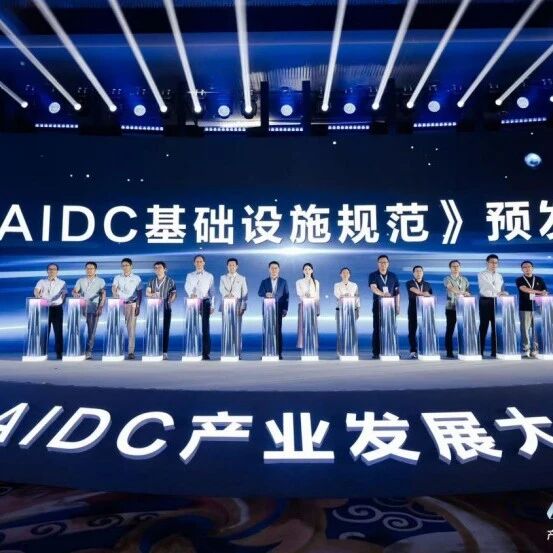
智算融合 标准筑基 新一代计算产业大会顺利召开
Zheng Quan Ri Bao Wang· 2025-09-17 11:46
Core Insights - The rapid development of artificial intelligence is driving the integration of computing, networking, and storage as the three pillars of modern computing systems, enabling the fusion of digital technology with traditional manufacturing [1] - The New Generation Computing Industry Conference held in Beijing aimed to promote innovation and development in the computing industry through standardization, focusing on key areas such as GPU, DPU, server power supplies, heterogeneous computing, and industry applications [1][6] Group 1: Industry Trends - The combination of computing technology and industry is becoming increasingly widespread, with intelligent manufacturing and services emerging as primary directions for the transformation and upgrading of traditional industries [2] - New generation computing technology is viewed as a core engine driving high-quality economic development in China, with a call for collaboration among industry, academia, research, and application sectors to contribute to industrial growth [2] Group 2: Key Technologies - The New Generation Computing Standard Working Committee has established five working groups focusing on DPU technology, GPU support for AI and virtual reality, standardization of computing product components, liquid cooling ecosystems, and heterogeneous computing [3] - DPU technology is highlighted as a key enabler for enhancing efficiency in AI model training and inference by offloading GPU workloads and optimizing data processing [4] Group 3: Standardization Efforts - The conference officially launched the "New Generation Computing Standard System," aimed at establishing a solid foundation for group standard construction, with certificates awarded to key units in GPU, DPU, computing product components, liquid cooling ecosystems, and heterogeneous computing [6] - The event facilitated deeper communication and collaborative innovation among various stakeholders, reinforcing the importance of standardization in leading technological breakthroughs and ecosystem development [6]
Quantum Computing Is the Missing Piece for AI, and These Stocks Could Benefit Most
Yahoo Finance· 2025-09-17 11:25
Group 1 - Organizations and governments globally are rapidly adopting artificial intelligence (AI), but the energy demands for AI systems are unsustainable in the long run [1] - Quantum computing presents a potential solution to AI's energy and computational needs, with companies like IBM, Nvidia, and IonQ positioned to benefit significantly [2][7] Group 2 - IBM has been a pioneer in quantum computing, launching the first quantum computer in the cloud in 2016 and developing Qiskit, the most widely used quantum software [4] - The company anticipates achieving quantum advantage by the end of 2026, which would allow quantum devices to outperform classical computers in solving practical problems [5][6] - IBM is financially robust, expecting over $13.5 billion in free cash flow in 2025, indicating its capacity to invest in AI and quantum technologies while maintaining dividend payments [8]