AIDC(人工智能数据中心)

Search documents
通信:并网审批门槛提高,“矿场转型AIDC”进入“突围赛”
GOLDEN SUN SECURITIES· 2026-03-20 10:24
Investment Rating - The report suggests an "Increase" rating for the industry, indicating a positive outlook for Bitcoin mining companies transitioning to AI Data Centers (AIDC) [4][29]. Core Insights - The consensus in the industry has shifted from "computing power is king" to "electricity is king," with a clear path for transformation emerging among leading mining companies [1]. - The increase in grid connection approval thresholds in popular regions is expected to favor established mining companies with existing cloud vendor contracts, leading to a positive feedback loop of more orders and financing opportunities [2]. - Mining companies are increasingly focusing on AIDC as a strategic pivot, with some even announcing a complete exit from Bitcoin mining to focus on AI and High-Performance Computing (HPC) hosting [10]. Summary by Sections Industry Overview - The report highlights a fundamental restructuring in the Bitcoin mining sector, with a growing emphasis on electricity resources and AIDC capabilities as key valuation drivers [1][10]. Regulatory Environment - The ERCOT (Texas) grid is implementing stricter approval processes, which will likely benefit companies with solid financial backing and project execution capabilities [11]. Opportunities for Mining Companies - Companies that have previously secured significant grid capacity and are positioned to utilize this for AIDC are more likely to win new contracts from cloud vendors [12]. - Mining companies are exploring non-traditional regions like Maryland and Louisiana for grid connections, where local governments are supportive of AIDC projects [15]. - Self-generation capabilities are becoming a trend, with companies like TeraWulf emphasizing the importance of this for AIDC development [16]. Strategic Positioning - Companies with "land resources" and the ability to repurpose power equipment are seen as having a competitive edge in AIDC construction speed [17]. - Firms like TeraWulf and Core Scientific are positioning themselves as infrastructure hosting providers, aiming for long-term contracts and stable cash flows [18]. - Companies such as Iris Energy and Hive Digital are also expanding into self-operated AI cloud services, indicating a diversification of business models within the sector [19][21]. Market Dynamics - The valuation logic for Bitcoin mining stocks is shifting from "how much high-performance mining power is owned" to "how much AIDC critical IT load is available for lease" [4].
证券研究报告行业点评:并网审批门槛提高,“矿场转型AIDC”进入“突围赛”
GOLDEN SUN SECURITIES· 2026-03-20 08:57
Investment Rating - The report suggests an "Increase" rating for the industry, indicating a positive outlook for Bitcoin mining companies transitioning to AI Data Centers (AIDC) [4][29]. Core Insights - The consensus in the industry has shifted from "computing power is king" to "electricity is king," with a clear path for transformation emerging among leading mining companies [1]. - The increase in grid connection approval thresholds in popular regions is expected to favor established mining companies with existing cloud vendor contracts, leading to a positive feedback loop of more orders and financing opportunities [2]. - The report highlights the importance of self-generating power capabilities and the strategic positioning of mining companies in securing new contracts with cloud vendors [3]. Summary by Sections Industry Overview - The report notes that nearly all Bitcoin mining companies have expressed intentions to transition to AIDC, marking a significant shift in their strategic focus [10]. - The strategic importance of Bitcoin mining is being systematically downgraded within these companies, as they pivot towards more stable revenue streams from AIDC [10]. Regulatory Environment - The ERCOT (Texas) grid is implementing stricter approval processes, which will likely benefit companies with solid financial backing and existing land and power resources [11]. Opportunities for New Contracts - Companies that have previously secured substantial grid capacity and are positioned to utilize that capacity for AIDC are more likely to win new contracts from cloud vendors [12]. - Mining companies are actively seeking opportunities in non-traditional regions like Maryland and Louisiana, where supportive policies are emerging [15]. Company Strategies - Companies with self-generating capabilities are seen as trendsetters in the AIDC space, with significant capital expenditure models outlined for AIDC construction [16]. - The report identifies companies that possess "land resources" and can repurpose existing power equipment as having a competitive advantage in AIDC development [17]. - Companies like TeraWulf and Core Scientific are positioning themselves as infrastructure service providers for cloud vendors, while others like Iris Energy are expanding into self-operated AI cloud services [18][19]. Market Dynamics - The valuation logic for Bitcoin mining stocks is shifting from the amount of high-performance mining power to the amount of available AIDC capacity [4]. - The report recommends focusing on companies with existing contracts with cloud vendors and those that have the ability to generate their own power, such as Iris Energy, TeraWulf, and Hut 8 [4].
2026年建筑装饰行业春季投资策略:优化支出结构,新兴领域投资发力
Shenwan Hongyuan Securities· 2026-03-19 08:15
Group 1 - The report emphasizes the importance of optimizing expenditure structure and maintaining fiscal stability in 2026, which is the starting year of the "14th Five-Year Plan" [3][5][27] - The fiscal deficit rate is proposed to be around 4%, with a deficit scale of 5.89 trillion yuan, an increase of 230 billion yuan from the previous year, and a general public budget expenditure scale of 30 trillion yuan, up approximately 1.27 trillion yuan [8][9] - The issuance of special bonds is expected to support major projects and alleviate hidden debts, with a planned issuance of 4.4 trillion yuan in local government special bonds [8][9] Group 2 - The report highlights the recovery of domestic steel structure demand and the successful expansion into overseas markets, indicating that the steel structure market is entering a favorable layout window [29][34] - The pre-fabricated steel structure market is projected to grow significantly, with a CAGR of 5.3% for the overall market and 9.4% for the industrial building segment from 2025 to 2029 [34][36] - The report notes that the investment in the power grid is expected to accelerate, with the State Grid planning to invest approximately 4 trillion yuan during the "14th Five-Year Plan" period, a 40% increase from the previous plan [38][41] Group 3 - The report discusses the low valuation and potential for valuation recovery of central state-owned enterprises (SOEs) in the construction sector, emphasizing the focus on asset quality and value creation capabilities [3][65][84] - The report indicates that the construction industry remains a pillar of the national economy, with ongoing investments in the central and western regions, urban renewal, and overseas market expansion supporting the industry's investment scale [84][86] - The report anticipates that the improvement in cash flow will lead to an increase in dividend ratios for low-valued central SOEs, suggesting a potential for valuation recovery [84][86]


大行评级丨中银国际:ASMPT第四季业绩稳健胜预期,目标价上调至133港元
Ge Long Hui· 2026-03-05 02:34
Core Viewpoint - ASMPT's Q4 2025 performance exceeded expectations, driven by strong demand in AIDC (Artificial Intelligence Data Center) and one-time gains from its subsidiary AAMI, despite some limitations on profit margin expansion due to unfavorable product mix [1] Group 1: Financial Performance - ASMPT's management provided strong guidance for Q1 2026, indicating robust orders, revenue, and SEMI gross margins, suggesting that the demand chain for AI-HBM and CoWoS-TCB (advanced AI chip packaging technology using thermal compression bonding) will continue until 2028 [1] - The company has raised its net profit forecast to reflect ongoing AI demand, applying a 27x price-to-earnings multiple based on the 2027 projected earnings per share [1] Group 2: Market Sentiment - The upgrade in ASMPT's target price from HKD 98 to HKD 133 is based on the market's heightened sentiment towards global AI capital expenditures, particularly in HBM [1] - The firm maintains a "Buy" rating on ASMPT, reflecting confidence in the company's growth prospects driven by AI-related demand [1]

AIDC订单疯涨,哪些赛道受益?
Xin Lang Cai Jing· 2026-02-15 11:42
Core Insights - The article discusses the increasing demand for AI Data Centers (AIDC) driven by the exponential growth in computing power requirements due to generative AI advancements and supportive government policies like "East Data West Computing" [5][32] - Major tech companies are ramping up investments in AI infrastructure, with ByteDance planning to increase its capital expenditure to approximately 160 billion RMB in 2026, while Alibaba aims to invest over 380 billion RMB in technology R&D and infrastructure over the next three years [7][34] - The article highlights the penetration of AIDC into traditional industries, evidenced by significant procurement projects such as China Mobile's purchase of 7,499 AI servers for 2025-2026 [8][35] AIDC Types and Characteristics - AIDC is categorized into three types: General Data Centers, Intelligent Computing Data Centers (AIDC), and Supercomputing Data Centers, each serving different computational needs [4][30] - General Data Centers focus on traditional data storage and management using CPU servers, while AIDC leverages AI chips like GPUs for large-scale model training, and Supercomputing Data Centers support advanced scientific research [4][30] Five-Layer Cake Theory - NVIDIA's CEO proposed a "Five-Layer Cake" structure for AI infrastructure, which includes Energy Layer, Chip and Computing Layer, Infrastructure Layer, AI Model Layer, and Application Layer [10][37] - The Energy Layer is crucial for providing stable power to AIDC, while the Chip and Computing Layer focuses on high-performance hardware [11][39] - The Infrastructure Layer integrates energy and chip resources to deliver intelligent computing services, and the AI Model Layer is essential for developing models that drive AI applications [13][41] Industry Ecosystem and Opportunities - The AIDC industry's growth is a result of the synergy between computing power demand and technological advancements, benefiting various sectors [18][45] - The transition to high-voltage and direct current power systems is becoming mainstream, with NVIDIA introducing an 800V DC power architecture to meet the power demands of next-gen AI facilities [19][46] - Liquid cooling systems are gaining traction due to the high power consumption of AI servers, leading to increased market demand for cooling technologies [20][47] Domestic AI Chip Market - The domestic AI chip market is diversifying, with multiple brands achieving significant sales volumes, indicating a shift from technology development to large-scale delivery [25][52] - The price range for domestic AI inference chips is between 30,000 to 200,000 RMB, with a notable increase in production expected as manufacturing capacity improves [25][52] Conclusion - The article emphasizes that while China has advantages in energy resources and computing infrastructure, breakthroughs in high-end chip development and core technology innovation are still needed [26][53] - The ultimate winners in the AI industry will be those who can integrate full-stack technologies and foster collaborative industrial advancements [26][53]


世纪互联股价创新高,财务表现强劲与资产盘活成关键
Jing Ji Guan Cha Wang· 2026-02-11 22:44
Core Viewpoint - Century Internet's stock price reached a new high on February 12, 2026, driven by strong financial performance, proactive business expansion, and asset revitalization efforts [1] Financial Performance - For the third quarter of 2025, the company reported total revenue growth of 21.7% year-on-year, reaching 2.58 billion RMB, with adjusted EBITDA increasing by 27.5% to 758 million RMB [2] - The company raised its full-year guidance, expecting total revenue growth of 16% to 19% and adjusted EBITDA growth of 24% to 26% for 2025 [2] - In the first quarter of 2025, total revenue also achieved an 18.3% year-on-year growth, providing fundamental support for the stock price [2] Business Development - In the third quarter, the company secured three base-type IDC orders with a total capacity of 63 MW, and in the fourth quarter, it received a significant order of 32 MW from an internet client [3] - As a leading player in the AIDC (Artificial Intelligence Data Center) sector, the company is benefiting from market demand driven by AI acceleration [3] - As of September 30, 2025, the company's base-type IDC installed capacity increased by 13.8% quarter-on-quarter, with an installation rate of 74.3%, indicating strong operational efficiency [3] Project Progress - In January 2026, two IDC projects of Century Internet received approval for private REITs (asset-backed special plans), with a total proposed issuance amount of approximately 10.759 billion RMB [4] - This initiative helps the company revitalize heavy assets and recoup funds for new project investments, alleviating financial pressure and viewed positively by the market [4] Industry Policy and Environment - Analysts from institutions like Goldman Sachs indicate that the demand for data center tenders from major internet companies may be larger and come sooner than expected, leading to significant capital expenditure increases by leading operators in 2026 to accelerate capacity delivery [5] - This creates a favorable industry environment for leading IDC companies like Century Internet [5]
美国AI数据中心用电新趋势
Haitong Securities International· 2025-11-06 12:47
Investment Rating - The report does not explicitly state an investment rating for the industry [1]. Core Insights - North American data centers (DC) are experiencing rapid growth, with operational capacity reaching 25.6 GW and projects under construction hitting a record 12.1 GW, of which 88.5% is pre-committed [10][12]. - The trend in AI data center (AIDC) capacity is shifting towards centralized training, which offers advantages in management and synchronization, with expectations for single data center capacities to approach 1 GW [11][12]. - Power availability is critical for site selection, particularly in the PJM region, where new AIDC projects may face power interconnection delays of 4-7 years [12][13]. - AIDC projects are increasingly adopting self-supplied primary generation to address power needs while awaiting grid access, primarily using gas turbines [13][14]. - Backup power solutions are evolving, with a shift from diesel generators to gas turbines due to regulatory constraints on diesel use [14]. - Energy storage systems are being integrated to smooth out power demand fluctuations during training and inference phases, enhancing overall supply reliability [15]. Summary by Sections AIDC Capacity Development Trends - Centralized training is favored over decentralized architectures due to its efficiency in management and synchronization, with a projected increase in single-site compute density [11][12]. Power Availability and Site Selection - The PJM region is the largest ISO for data centers, but lengthy power interconnection timelines are pushing AIDC projects to other ISOs like MISO and ERCOT [12]. Changes in Power Interconnection Approaches - New AIDC projects are increasingly utilizing self-supplied primary generation to mitigate delays in grid access, primarily through gas turbines [13]. Trends in Backup Power - The industry is moving towards greater use of gas turbines for backup power due to regulatory challenges associated with diesel generators [14]. Energy Storage Integration - Energy storage systems are being utilized to manage power demand fluctuations, improving reliability and resilience of AIDC operations [15].
润泽科技下“笨功夫”角逐算力赛道
Zheng Quan Ri Bao· 2025-10-31 16:17
Core Insights - The essence of the competition in computing power has evolved beyond just chips and servers to a deeper contest of technological foundation and operational capabilities [1] - Runze Technology has made significant strides in the AI computing power sector by focusing on technological innovation, green low-carbon initiatives, and talent strategies [1][2] Group 1: Company Overview - Runze Technology was founded in 2009, recognizing the impending demand for data storage due to the internet explosion, and strategically located in Langfang to serve major internet companies while reducing operational costs by over 20% compared to Beijing [2] - The company’s flagship project, Runze International Information Port, covers an area of 2.62 million square meters with a total investment of 9.8 billion yuan, equivalent to two Chicago data centers [2] - Runze Technology transitioned from traditional data centers to intelligent computing infrastructure, achieving a significant milestone with its listing on the ChiNext board in 2022 [2][3] Group 2: Financial Performance - In 2023, Runze Technology reported a revenue of 4.351 billion yuan, a year-on-year increase of 60.27%, with a net profit of 1.762 billion yuan [3] - For 2024, the company expects stable operations with projected revenue of 4.365 billion yuan and a net profit of 1.79 billion yuan [3] - In the first three quarters of 2025, revenue reached 3.977 billion yuan, reflecting a year-on-year growth of 15.05%, while net profit surged to 4.704 billion yuan, a remarkable increase of 210.74% [3] Group 3: Business Segments - Runze Technology operates two main business segments: Internet Data Centers (IDC) and Artificial Intelligence Data Centers (AIDC), with AIDC being the core growth driver [3] - The company has established seven AIDC computing power clusters across key regions, planning for 320,000 cabinets to create an integrated computing center system [3] Group 4: Talent Development - The company has built a highly specialized operational team of over 1,000 members, adhering to international standards such as ITIL and Uptime, to provide reliable operational services [4] - Runze Technology has implemented a performance-based compensation system and established a dual career path for technical personnel, promoting innovation and talent retention [5] Group 5: Technological Innovation - To address the dual challenges of computing power escalation and green transformation, Runze Technology focuses on technological advancements, including the development of liquid cooling technology to enhance cooling efficiency and reduce energy consumption [6] - The company’s intelligent low-carbon cooling system has achieved a Power Usage Effectiveness (PUE) of 1.15, positioning it as an industry leader [6] Group 6: Future Projects - The Runze Artificial Intelligence Application Center project is in its final stages, expected to be operational by the end of 2025, capable of supporting over 100,000 computing clusters for complex AI model training [7] - This project aims to become a national-scale intelligent computing center, providing comprehensive support for various AI technologies [7]

曹永刚:最好的机会隐藏在政策、技术和需求的交汇点
Sou Hu Cai Jing· 2025-09-20 02:21
Core Insights - AI is a key thread connecting the "Five Major Articles" of China's strategic development, emphasizing the importance of aligning investment strategies with national policies [1][8] - The capital market is experiencing a significant increase in activity, with funds actively seeking investment opportunities closely related to AI [3][4] - The transition of AI from experimental technology to value creation is recognized as a core driver of the "technology + industry" revolution [6][7] Capital Market Dynamics - Since the implementation of the "9·24" policy in 2024, the Chinese capital market has seen two notable phases of upward movement, driven by policy benefits and subsequent market stabilization [4] - M1 money supply increased by 6% in August 2025 compared to a 7.3% decline in the same month of 2024, indicating a shift in asset allocation towards equities [4] - In July, household deposits decreased by 1.1 trillion yuan, while securities and fund accounts increased by 2.14 trillion yuan, reflecting a trend of moving funds from savings to equity markets [4] AI Industry Insights - The AI industry is witnessing a period of significant breakthroughs, with companies like Cambrian Technologies demonstrating the potential for independent development in China's AI sector [7] - The market is expected to see a revaluation of domestic AI-related assets as the gap between China's AI capabilities and global leaders narrows [7] - AI is being integrated across various sectors, including manufacturing, education, finance, and healthcare, indicating a broad transformation driven by AI technologies [7][8] Investment Strategies - Investment institutions are encouraged to align with national strategies and focus on the intersections of AI and the "Five Major Articles" [8] - Companies are advised to invest in AI-related core technologies and software, particularly in early-stage ventures that can leverage AI for operational efficiency [8][9] - The reduction in costs and increased accessibility of AI tools are opening up investment opportunities across industries, making AI integration a key factor in future investment value [9]
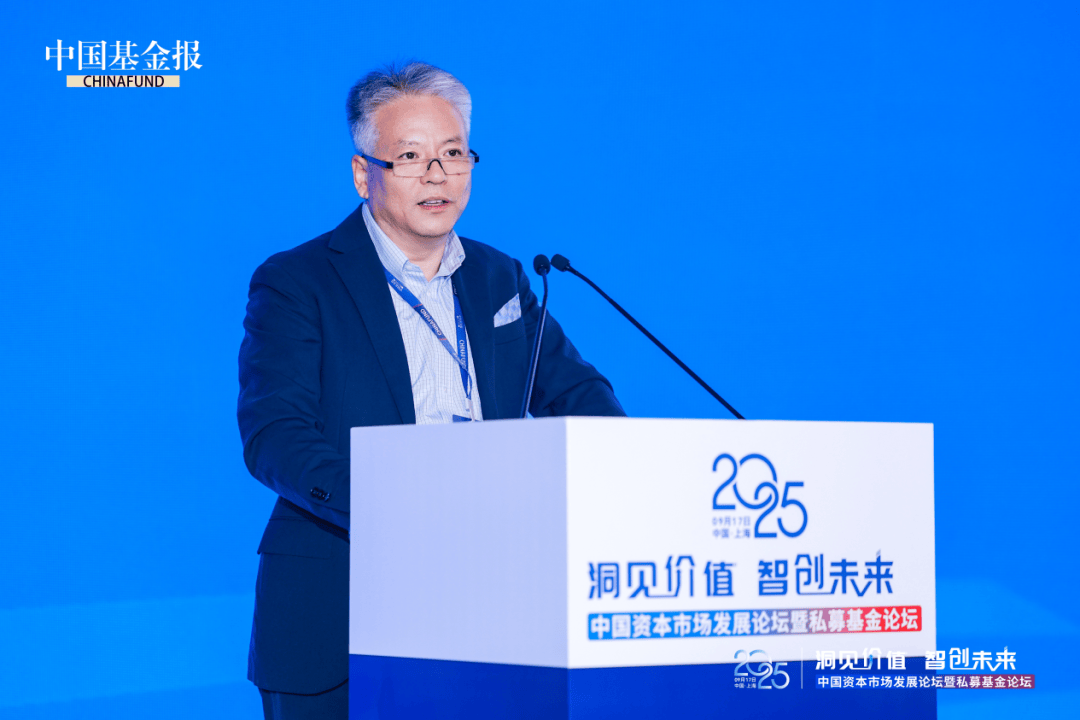
曹永刚:最好的机会隐藏在政策、技术和需求的交汇点
中国基金报· 2025-09-20 02:15
Core Viewpoint - AI is a key thread connecting the "Five Major Articles" in China's capital market, representing significant investment opportunities at the intersection of policy, technology, and demand [1][10]. Group 1: Capital Market Dynamics - The Chinese capital market is experiencing a notable increase in activity, with funds seeking investment directions closely related to AI [3][4]. - Since the implementation of the "9·24" policy in 2024, the capital market has seen two significant phases of upward movement, driven by policy benefits and subsequent AI technology breakthroughs [4]. - As of August 2025, M1 (narrow money supply) grew by 6% year-on-year, contrasting with a 7.3% decline in the same period of 2024, indicating a shift in liquidity towards capital markets [4]. - In July, household deposits decreased by 1.1 trillion yuan, while securities and fund accounts increased by 2.14 trillion yuan, showing a trend of reallocating funds from banks to equity assets [4][5]. - The A-share market has seen daily trading volumes exceed 2 trillion yuan, signaling a peak in market activity for the year [4]. Group 2: AI Industry Insights - The AI industry is transitioning from technical exploration to value creation, becoming a core driver of the "technology + industry" revolution [7]. - The performance of companies like Cambrian Technology indicates that China's AI industry is on a path of independent development, narrowing the gap with global leaders [8]. - AI is being integrated across various sectors, including manufacturing, education, finance, and healthcare, fundamentally transforming traditional industries [8][11]. - The greatest value from AI is expected to emerge from its application layer, where it can help businesses reduce costs and improve efficiency [8]. Group 3: Investment Strategies - Investment institutions should align with national strategies and focus on the intersections of AI and the "Five Major Articles" [9][10]. - 弘毅投资 is actively investing in AI-related sectors, including artificial intelligence data centers, smart energy management, and semiconductor technologies [10]. - The investment approach should prioritize early-stage investments in core technologies related to AI, emphasizing the importance of cash flow generation from AI applications [8][10][11]. - The integration of AI into various industries will determine future investment values, as smaller enterprises gain access to AI technologies previously dominated by larger firms [11].