铁路建设

Search documents
西渝高铁康渝段控制性工程安康汉江大桥拱肋顺利合龙
Xin Hua She· 2025-08-28 05:24
Core Points - The completion of the last arch rib installation for the Ankang Hanjiang Bridge marks significant progress in the construction of the Xiangyu High-speed Railway's Ankang-Chongqing section [1] - The Ankang Hanjiang Bridge, measuring 367.9 meters in total length with a main arch span of 290 meters, will be the largest single-span middle-support steel-concrete arch bridge in China's high-speed railway network upon completion [1] - The construction faced challenges, particularly in controlling the arch rib's line shape, which was addressed through a digital engineering management platform that integrated various monitoring systems to ensure precision [1] Industry Overview - The Xiangyu High-speed Railway spans 739 kilometers with a designed speed of 350 kilometers per hour, forming an essential part of China's "eight vertical and eight horizontal" high-speed rail network [1] - Once operational, the railway will connect with existing lines such as the Chengdu-Chongqing and Zhengzhou-Chongqing high-speed railways, enhancing the transportation network in the central and western regions of China [1]
西渝高铁镇安隧道贯通
Xin Hua Wang· 2025-08-28 01:02
Core Insights - The Xiyu High-speed Railway's Zhen'an Tunnel, constructed by China Railway Seventh Group, successfully completed its breakthrough on August 27, marking a significant milestone in the project [2] - The tunnel, located in Kaizhou District of Chongqing, spans 4,458 meters and is the first over 4-kilometer tunnel to be completed in the Kangyu section of the Xiyu High-speed Railway [2] - With this completion, a total of 34 tunnels have been successfully completed in the Kangyu section, achieving a tunnel completion rate of 47% [2] Industry Context - The Xiyu High-speed Railway is a crucial part of China's "Eight Vertical and Eight Horizontal" high-speed rail network, specifically the Jingkun and Baoyin coastal corridors [2] - The Kangyu section of the Xiyu High-speed Railway extends 478 kilometers, starting from Ankang West Station and passing through various regions including Ankang City in Shaanxi Province, and several districts in Chongqing and Sichuan Province, ultimately connecting to the Chongqing West Railway Hub [2]


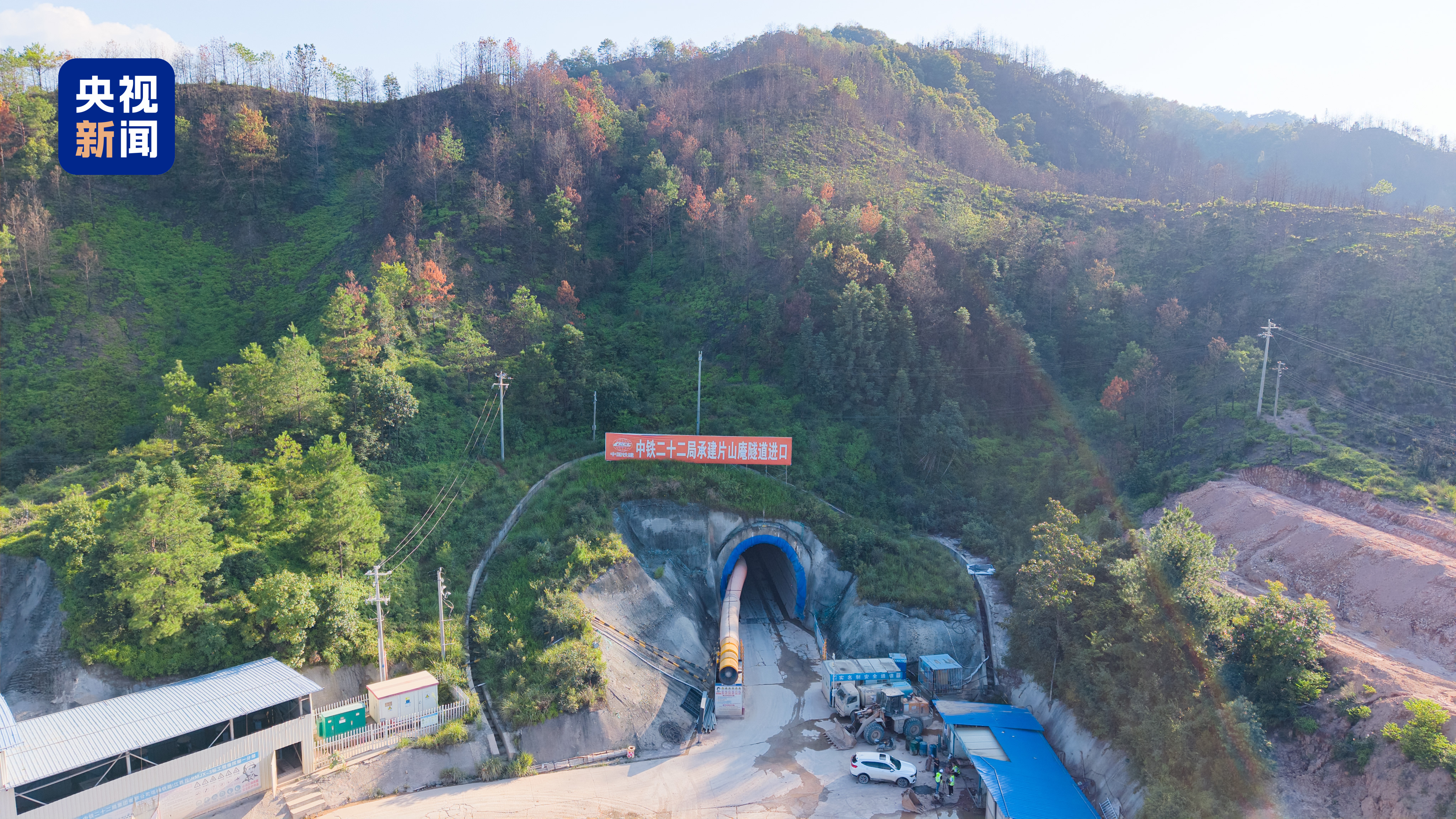
瑞梅铁路首座超5公里长大隧道实现贯通
Zhong Guo Xin Wen Wang· 2025-08-27 12:49
Core Points - The completion of the first tunnel over 5 kilometers long, the Pianshan'an Tunnel, marks significant progress in the construction of the Rui-Mei Railway [1][3] - The Rui-Mei Railway is a major project identified in the national "14th Five-Year Plan," with a total length of 240.29 kilometers and a design speed of 160 kilometers per hour [5] Group 1: Tunnel Construction Progress - The Pianshan'an Tunnel is located in Anyuan County, Ganzhou City, Jiangxi Province, with a maximum burial depth of 332 meters [1] - The construction faced various geological challenges, including strong water sections, fault zones, and high ground stress areas, which increased the difficulty and safety risks [1][3] - Advanced technologies such as "geological radar + advanced horizontal drilling" were employed to accurately identify geological conditions within a 100-meter range ahead of the tunnel face [3] Group 2: Overall Project Status - As of now, the Rui-Mei Railway has completed 76,422 meters of tunnel excavation, 26,502 meters of bridge construction, and 14.2576 million cubic meters of earthwork for the roadbed [3] - The project aims to complete the main station buildings in Anyuan, Huichang, and Xunwu by the end of the year [3] - The railway will enhance the railway network in the Gan-Yue region and improve transportation links between the Pearl River Delta, eastern Guangdong, and central regions, promoting regional coordinated development [5]
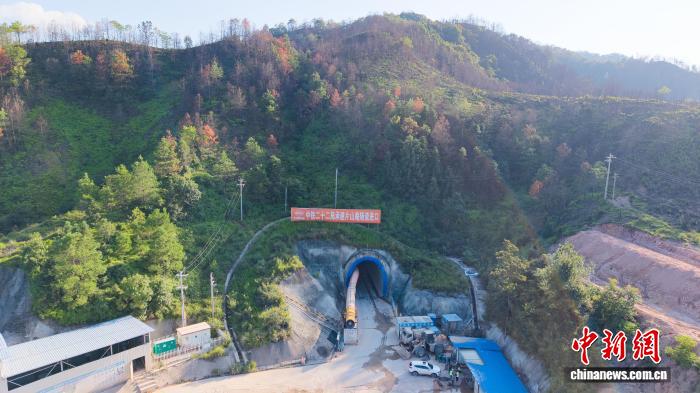
镇安隧道贯通!是西渝高铁全线首个超4公里的单洞双线隧道
Yang Shi Xin Wen Ke Hu Duan· 2025-08-27 07:51
Core Points - The construction of the Xiyu High-Speed Railway has achieved a significant breakthrough with the successful completion of the Zhen'an Tunnel, which is the first single-hole double-track tunnel over 4 kilometers in length [1] - The Zhen'an Tunnel, located in Kaizhou District, Chongqing, is 4,458 meters long and presents various geological challenges, including shallow burial depth and poor rock stability [3] - The Xiyu High-Speed Railway's main line, spanning 478 kilometers with a design speed of 350 km/h, will connect multiple existing and under-construction high-speed rail lines, enhancing transportation in the central and western regions of China [5] Group 1 - The Zhen'an Tunnel is a key component of the Xiyu High-Speed Railway, which is part of China's "eight vertical and eight horizontal" high-speed rail network [1] - The construction faced significant challenges due to geological conditions, prompting the use of advanced techniques such as geological radar and long-distance drilling to ensure safety and efficiency [3] - The completion of the Xiyu High-Speed Railway is expected to improve regional connectivity, support poverty alleviation efforts, and promote rural revitalization and urban-rural integration [5]
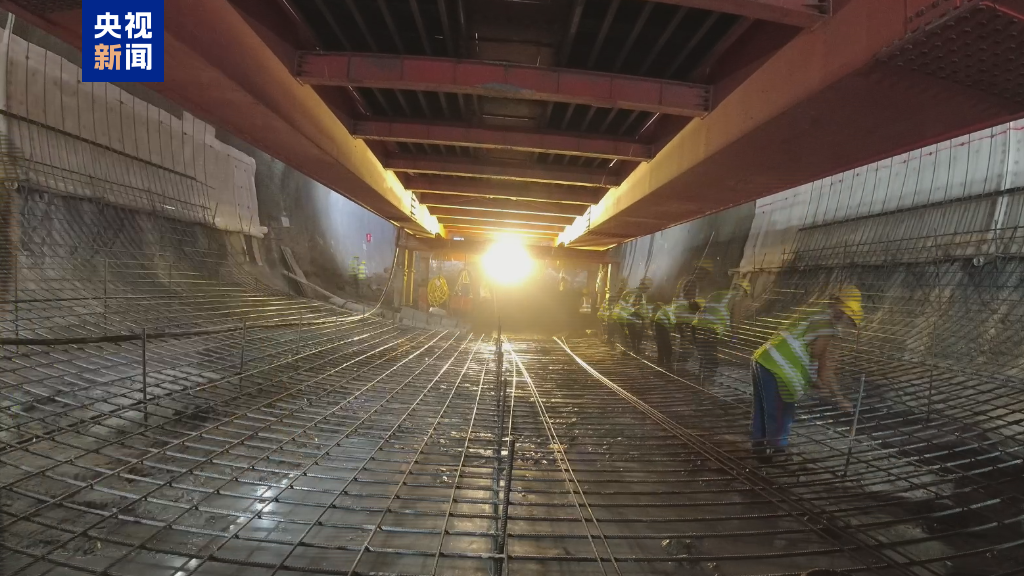
瑞梅铁路首座超5公里隧道实现贯通
Yang Shi Xin Wen· 2025-08-27 06:11
Core Points - The Rui-Mei Railway's Panshan'an Tunnel, located in Anyuan County, Ganzhou City, Jiangxi Province, has a maximum burial depth of 332 meters and is the first long tunnel to be completed along the entire Rui-Mei Railway line [1] - As of now, the construction progress of the Rui-Mei Railway's Jiangxi section has exceeded 84% for tunnel engineering, over 82.6% for bridge engineering, and over 81.7% for roadbed engineering [1] - The total tunnel excavation completed for the Jiangxi section of the Rui-Mei Railway is 76,422 meters, with bridge construction completed at 26,502 meters and earthwork for the roadbed reaching 14.2576 million cubic meters [1] - The Rui-Mei Railway connects Ruijin in Jiangxi and Meizhou in Guangdong, with a total length of 240.29 kilometers and a designed speed of 160 kilometers per hour [1]
成达万高铁首座新建车站主体结构完工
Si Chuan Ri Bao· 2025-08-27 00:18
Core Viewpoint - The completion of the main structure of the Kaijiangnan Station marks a significant milestone in the Chengda-Wanzhou High-Speed Railway project, which is crucial for enhancing transportation connectivity in the region [1] Group 1: Project Overview - The Kaijiangnan Station has a building area of nearly 8,000 square meters and features a station layout of 2 platforms and 4 tracks [1] - The architectural design of the station is inspired by the character "开" (meaning "open"), symbolizing the unique geographical characteristics and the open, innovative spirit of Kaijiang [1] Group 2: Construction and Technology - Since the construction began in February of this year, the team has implemented advanced safety measures, including video monitoring and AI-based early warning systems, to ensure safety during production [1] - The use of Building Information Modeling (BIM) technology has enabled precise control over project timelines, quality, and risk management, allowing for rapid and balanced progress despite challenges such as limited site space [1] Group 3: Strategic Importance - The Chengda-Wanzhou High-Speed Railway is a vital part of China's "eight vertical and eight horizontal" high-speed rail network, facilitating direct high-speed rail access from Sichuan to the Yangtze River Delta and Beijing-Tianjin-Hebei economic zones [1] - The project includes the construction of seven new stations: Lezhi Station, Pengxi South Station, Yingshan West Station, Quxian North Station, Dazhou South Station, Kaijiangnan Station, and Yuexi Station [1]
中企签约智利铁路项目
Xin Hua She· 2025-08-26 12:28
智利国家铁路公司总裁埃里克·马丁说,该项目有助于缩小地区发展差距、提供更可持续的交通服 务。他对中国企业在铁路建设方面的经验充满信心,相信这一项目将提升沿线居民生活质量。 项目预计今年年底开始施工,2028年实现部分通车。项目将连接智利首都大区下辖5座城市,并与 智利首都地铁3号、5号和7号线实现换乘。 新华社圣地亚哥8月25日电(记者朱雨博)中国铁建承建的智利巴图科铁路项目签约仪式25日在智 利圣地亚哥首都大区伦卡市举行。 巴图科铁路项目位于智利首都大区北部,全长24公里。此次签署的合同内容包括新建连接该大区金 塔诺马尔市和巴图科市的客运专线、6座车站和6座铁路桥等,以及对既有货运铁路线的修复、改造。项 目将使用中国制造的电动车组。 智利交通和电信部长胡安·卡洛斯·穆尼奥斯在签约仪式上表示,智利政府将铁路复兴计划的重心放 在"30/30"近郊铁路项目上,即让民众在约30分钟内抵达约30公里外。巴图科铁路正是该项目的一部 分,将通过连接首都地铁线路为首都大区北部居民提供安全、快捷、准时的公共交通服务。 ...

中企签署智利国铁最大单项合同
人民网-国际频道 原创稿· 2025-08-26 03:02
Group 1 - The signing ceremony for the Chile Batucó Railway project, undertaken by China Railway Construction Corporation, took place in Santiago, Chile, marking the largest single contract awarded by the Chilean National Railway Company [1][3] - The Batucó Railway project spans 24 kilometers and includes the construction of a passenger service line connecting Quintano Mar and Batucó, as well as the renovation of existing freight rail lines, the construction of 6 new stations, 5 level crossings, and 6 railway bridges [3] - The passenger railway is designed for a speed of 160 km/h, while the freight railway is designed for 65 km/h, with an expected annual passenger volume of 35 million and a total travel time of 24 minutes [3] Group 2 - The project is a key component of the "Chilean Railway Plan" and will effectively connect five cities in the Santiago metropolitan area, facilitating transfers to metro lines 3, 5, and 7 [3] - China Railway Construction Corporation aims to integrate construction and vehicle manufacturing operations in Chile, promoting Chinese technology, standards, and equipment in the Latin American railway market [3]

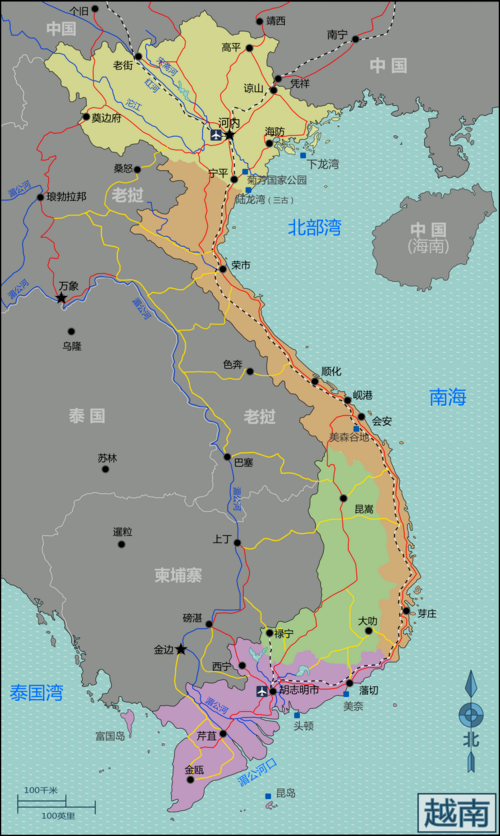
越南真的需要高铁吗?
Hu Xiu· 2025-08-26 02:32
Core Viewpoint - The Vietnamese government prioritizes the construction of the North-South high-speed railway project, which has faced increasing skepticism regarding its feasibility and funding since its approval in November 2022 [1][2]. Funding Issues - The North-South high-speed railway project is estimated to cost over $60 billion, excluding potential cost overruns, raising questions about funding sources [5]. - The Vietnamese government plans to involve private entities like Long Hai Group for partial funding, while also seeking domestic and international financing with government guarantees [5][6]. Technical Challenges - Vietnam lacks the technical expertise in high-speed rail, making it difficult to find partners for technology transfer and raising concerns about local companies' ability to absorb and utilize new technologies [8]. Operational Costs - There are concerns about whether the railway will generate sufficient passenger traffic to cover operational costs and repay loans, potentially leading to financial losses [10]. Alternative Proposals - A proposed alternative includes developing urban rail and highway networks in the Red River Delta and Mekong Delta, upgrading existing rail lines without pursuing high-speed standards, and enhancing airport and port infrastructure for better connectivity [12]. Geographical Considerations - Vietnam's unique geography, with densely populated areas at both ends of the country, presents challenges for the high-speed rail project, as it primarily connects only Hanoi and Ho Chi Minh City [13][20]. Comparison with China - Unlike China's extensive rail network connecting multiple major cities, Vietnam's high-speed railway would mainly serve two large cities and one medium-sized city, limiting its potential passenger base [18][20]. Freight Transportation Advantages - Vietnam's geographical advantages favor a freight transport model based on "sea transport + short-distance rail/road," which may be more cost-effective than constructing a new railway [21]. Current Railway Limitations - The existing North-South railway is outdated, with long travel times, and even upgrading it to electrified standards would require significant investment [25][26]. Air Travel Saturation - The Hanoi-Ho Chi Minh City air route is highly saturated, with over 10.9 million tickets sold in 2023, making it one of the busiest domestic routes globally [28][30]. Risks of Air Travel Dependency - The reliance on air travel poses risks due to weather, fuel price fluctuations, and geopolitical tensions, which can disrupt the transportation system [34][35][36]. Strategic Importance of High-Speed Rail - The North-South high-speed railway is viewed as a critical infrastructure project that would enhance national integration and reduce dependency on Western aviation supply chains [42][45][47].
人民日报头版头条点赞四川:蜀道新歌
Ren Min Ri Bao· 2025-08-25 01:46
Core Viewpoint - The article "New Song of Shu Road" highlights the transformation of Sichuan's transportation infrastructure from the historical challenges of "Shu Road" to a modern, interconnected network that supports economic growth and regional integration [1][5]. Group 1: Historical Context - The article traces the historical significance of the Shu Road, emphasizing its evolution from ancient pathways to modern transportation systems, showcasing the resilience and innovation of builders throughout history [3][28]. - Key milestones include the construction of the Baoshan Road during the Qin and Han dynasties and the establishment of the Chengdu-Chongqing Railway, which marked significant advancements in transportation [29][30]. Group 2: Modern Infrastructure Development - Since the 18th National Congress, Sichuan has invested 3.5 trillion yuan in comprehensive transportation construction, with over 10,000 kilometers of expressways completed [32]. - The region has established 50 major transportation corridors, with the Chengdu-Chongqing economic circle becoming a national model for integrated development [44][70]. Group 3: Economic Integration and Growth - The Chengdu-Chongqing economic circle's GDP increased from 6.3 trillion yuan in 2019 to 8.7 trillion yuan in 2024, reflecting significant economic growth and regional collaboration [70]. - The establishment of the cross-provincial tax collection service center in the Gaotong New District exemplifies efforts to streamline administrative processes and enhance economic cooperation between Sichuan and Chongqing [60][66]. Group 4: Environmental Considerations - The article emphasizes the importance of ecological protection in infrastructure projects, highlighting the need for sustainable development practices that consider long-term environmental impacts [51][54]. - The construction of the Chengdu-Lanzhou Railway faced challenges due to environmental concerns, leading to project modifications to protect sensitive ecosystems [51][52]. Group 5: Future Prospects - The article concludes with a vision for the future of the Shu Road, emphasizing its role as a "pioneer" in promoting a unified national market and facilitating international trade [5][81]. - The development of logistics and transportation networks is expected to enhance the region's competitiveness in global markets, particularly through initiatives like the China-Europe Railway Express [81][85].