
氢能

Search documents
氢能万亿新赛道开启:绿色氢基能源有望站上爆发风口
Sou Hu Cai Jing· 2025-12-06 04:49
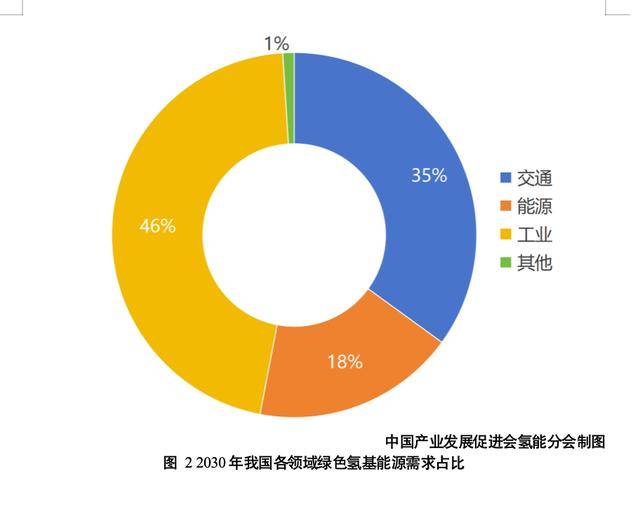
Core Viewpoint - The Chinese hydrogen energy industry is rapidly developing, with significant government support and a clear trajectory towards commercialization and large-scale application in the coming years [1][4][10]. Group 1: Industry Development - China's hydrogen energy production and consumption scale is expected to exceed 36.5 million tons in 2024, ranking first globally [2]. - The annual production capacity of green hydrogen in China has surpassed 220,000 tons, accounting for over 50% of the global total [2]. - The number of hydrogen refueling stations has exceeded 540, representing 40% of the global total [2]. - By 2030, China's green hydrogen production could reach over 3 million tons annually, forming a market worth over 1 trillion yuan [2]. Group 2: Policy and Strategic Support - The national strategy for hydrogen energy is being elevated, with a comprehensive policy framework being established [4]. - The "14th Five-Year Plan" and the upcoming "15th Five-Year Plan" emphasize the importance of hydrogen energy, indicating a shift from pilot projects to industrialization [4][5]. - Local governments have actively responded with over 560 hydrogen energy-specific policies to promote industry development [5]. Group 3: Challenges and Market Dynamics - The hydrogen industry is currently experiencing a phase of adjustment, facing challenges in transitioning from technology validation to commercial implementation [7]. - Cost and scale remain the primary constraints, with green hydrogen prices still 1.5 to 6 times higher than gray hydrogen [8]. - The market demand for hydrogen energy is not yet fully synchronized with commercial models, particularly in transportation where electric vehicles dominate [8]. Group 4: Future Opportunities - The application of green hydrogen as a basis for green fuels is expected to be a key growth area in the next five years [10]. - Green hydrogen-based energy sources, such as green ammonia and green methanol, are emerging as viable alternatives, expanding the potential application scenarios [11]. - The integration of AI technology in the hydrogen sector is anticipated to enhance efficiency and drive innovation, with a projected compound annual growth rate of 12% in AI applications within the green hydrogen field from 2024 to 2030 [9]. Group 5: Infrastructure and Capacity Expansion - By 2030, the total demand for green hydrogen in various sectors is expected to reach 4.8 million tons annually, with industrial applications being the largest segment [15]. - The construction of long-distance hydrogen pipelines is progressing, with plans for over 5,000 kilometers of pipelines by 2030 [13]. - The production capacity of green hydrogen is projected to exceed 1 million tons per year by 2027, with significant advancements in technology and infrastructure [12].

努力完成全年目标任务——各地决胜“十四五”一线扫描
Ren Min Ri Bao· 2025-12-05 22:53
Group 1 - The article emphasizes the importance of completing the "14th Five-Year Plan" with significant achievements in various regions, including the construction of 430,000 affordable housing units in Beijing and the establishment of nearly 2,100 technology incubators in Guangdong [1][2] - The successful grid connection of the world's largest "Hualong One" nuclear power base in Fujian, which is expected to generate 20 billion kilowatt-hours annually and reduce carbon dioxide emissions by approximately 16 million tons [2] - The progress of major projects under the "14th Five-Year Plan," with 102 key projects on track for completion by the end of the year, including the successful completion of railway construction in Shaanxi and Hubei [3] Group 2 - The article highlights the focus on innovation and technological self-reliance, with projects like the compact fusion energy experimental device in Anhui and advancements in brain-computer interface technology in Tianjin [5][6] - The promotion of green development is evident in initiatives such as the transformation of chemical enterprises in Hubei and the establishment of green low-carbon industries [8] - The expansion of cross-border e-commerce in Guangdong and the opening of new international freight routes in Jiangxi, enhancing high-level foreign trade and economic cooperation [10][11] Group 3 - The article discusses the significant employment growth in Xinjiang, with over 2.3 million new urban jobs created during the "14th Five-Year Plan," addressing the needs of various demographics [12] - The focus on improving healthcare access in rural areas, exemplified by the integrated health services in Zhejiang, aims to enhance the overall health standards of the population [13] - The article concludes with a call for proactive planning for the "15th Five-Year Plan," emphasizing the need for continued efforts in economic and social development [14]
努力完成全年目标任务
Ren Min Ri Bao· 2025-12-05 19:41
Group 1 - The "14th Five-Year Plan" is nearing completion, with various regions implementing solid measures to ensure economic and social development [1][2][3] - The global largest "Hualong One" nuclear power base in Fujian has successfully connected its second unit to the grid, expected to generate 20 billion kWh annually and reduce CO2 emissions by approximately 16 million tons [2] - The construction of major projects, such as the West Ten High-Speed Railway and the 500 kV power transmission project in Guizhou, is progressing smoothly, with significant milestones achieved [3][4] Group 2 - Innovation is emphasized as a key driver for development, with projects like the compact fusion energy experimental device in Anhui showcasing advancements in technology [4][5] - The establishment of a complete ecosystem for brain-computer interface technology in Tianjin is highlighted, with successful clinical validations of related systems in hospitals [5] - The ecological transformation efforts in Hubei, including the development of green pathways and low-carbon industries, reflect a commitment to sustainable development [7] Group 3 - Guangdong is actively promoting cross-border e-commerce and international trade, with significant logistics operations facilitating rapid delivery to Southeast Asia [8][9] - Jiangxi has opened 12 international freight train routes, enhancing its connectivity and supporting high-level foreign trade [10] - Xinjiang has created over 2.3 million new urban jobs during the "14th Five-Year Plan," effectively addressing employment challenges for various demographics [11] Group 4 - Health initiatives in Zhejiang have improved access to medical services in rural areas, addressing long-standing healthcare challenges [12] - The economic growth of the Chengdu-Chongqing economic circle is projected to increase from 6.4 trillion yuan in 2019 to 8.7 trillion yuan by 2024, indicating robust regional development [16] - Collaborative efforts in the Beijing-Tianjin-Hebei region are accelerating infrastructure projects, enhancing regional integration and development [17]
富瑞特装:公司会持续关注氢能行业的发展态势
Zheng Quan Ri Bao Wang· 2025-12-05 15:17
证券日报网讯12月5日,富瑞特装(300228)在互动平台回答投资者提问时表示,公司正在进行氢燃料 电池车用液氢供气系统及配套氢阀、氢燃料电池系统部分零部件产品的研发工作,公司会持续关注氢能 行业的发展态势。 ...

亿华通:公司未来若有战略投资者相关的引进计划将及时履行信息披露义务
Zheng Quan Ri Bao Wang· 2025-12-05 14:45
证券日报网讯12月5日,亿华通在互动平台回答投资者提问时表示,公司持续关注行业动态,并积极与 产业链上下游合作伙伴深度合作,共同推进氢能产业的商业化进程。公司未来若有战略投资者相关的引 进计划,将严格按照相关法律法规及时履行信息披露义务。 ...

金融活水润实体银企协同树标杆 | 广州农商银行积极打造“益企共赢计划”优秀服务案例
Xin Lang Cai Jing· 2025-12-05 12:51
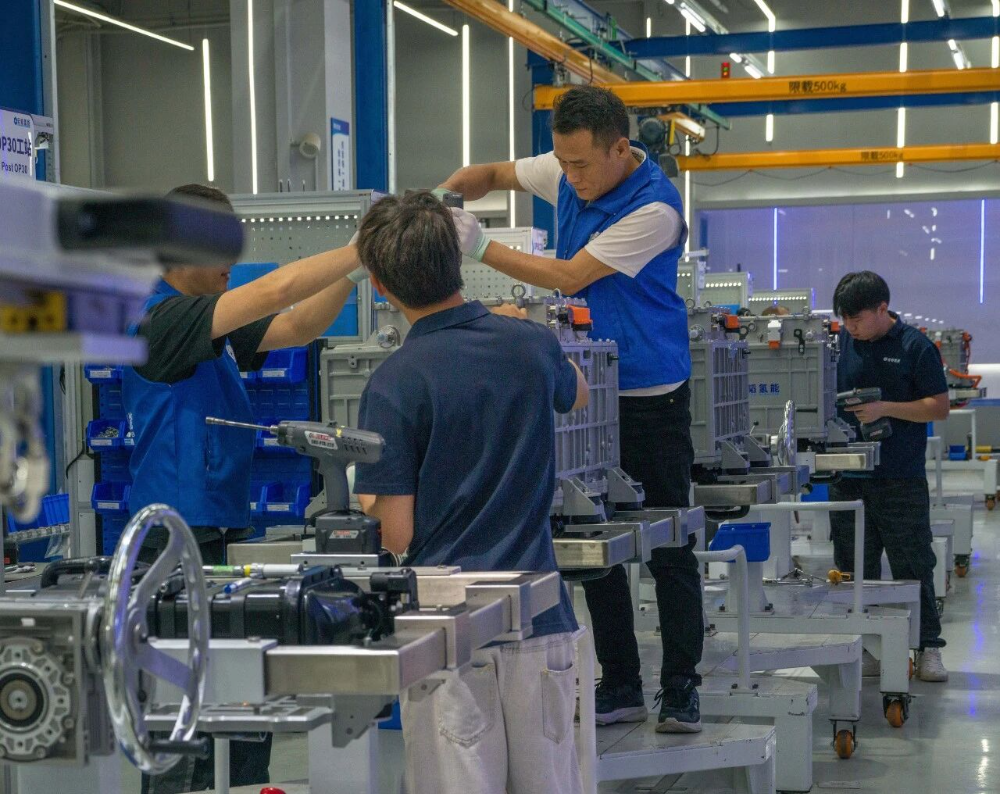
Core Viewpoint - Guangzhou Rural Commercial Bank is committed to the "Win-Win Plan" to support enterprises in key sectors such as new energy, green transformation, high-end manufacturing, and biotechnology, acting as a "guardian" for enterprise growth and a "booster" for industrial upgrading [1][16]. Group 1: Case Studies - **Case 1: Green Hydrogen Energy** A hydrogen technology company in the Guangdong-Hong Kong-Macao Greater Bay Area has established the first national "Hydrogen Fuel Cell Industry Innovation Alliance," achieving 100% localization of core components and a 70% cost reduction. The company has promoted over 800 hydrogen fuel cell vehicles and built a benchmark hydrogen refueling station [2][17]. The bank provided a 10 million yuan working capital loan and a total credit of 49 million yuan through innovative financing models to support the company's expansion and digital upgrades [2][18]. - **Case 2: Carbon Footprint Linked Financing** A metal aluminum company, with an annual capacity of 350,000 tons and 40 patents, faces challenges in low-carbon transformation due to high R&D costs and long commercialization cycles. The bank introduced a carbon footprint-linked loan of 49 million yuan, directly linking loan rates to carbon performance metrics [5][19]. This support is expected to reduce the company's energy consumption per unit of output by 30% compared to the end of 2020, enhancing its competitiveness [5][22]. - **Case 3: Equipment Manufacturing Growth** An electrical company, recognized as a national high-tech enterprise, is facing challenges due to long accounts receivable periods and insufficient collateral. The bank provided a 120 million yuan acquisition loan and a 370 million yuan working capital loan, utilizing the company's high-tech qualifications to expedite the approval process [7][23]. This support has significantly alleviated the company's liquidity pressure, leading to improved operational performance and revenue growth [7][24]. - **Case 4: Biotechnology Company Support** A biotechnology company specializing in biopharmaceutical equipment has a significant funding gap due to ongoing R&D and capacity expansion. The bank provided a 30 million yuan guarantee loan, utilizing a dynamic phased disbursement approach to avoid idle funds [9][26]. This support has led to a recovery in revenue and an expansion in production capacity, establishing a long-term strategic partnership with the bank [9][30]. - **Case 5: New Energy Intelligent Equipment** A new energy equipment company, established in 2010, is experiencing funding shortages due to business expansion and increased R&D investments. The bank formed a specialized service team to create tailored financial solutions, providing a comprehensive credit limit of 44 million yuan [12][28]. This support has effectively met the company's funding needs, facilitating smooth R&D and operational progress [12][30].
保持“41+9”,国家能源局正式公布第一批能源领域氢能试点名单
Xin Lang Cai Jing· 2025-12-05 12:49
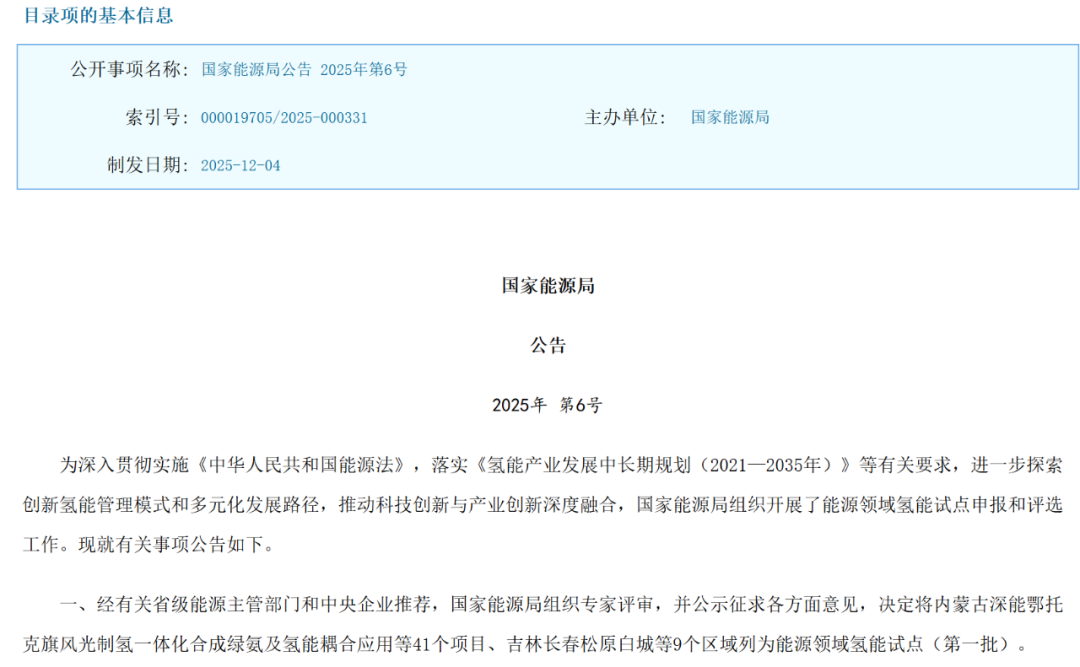
Core Insights - The National Energy Administration officially announced the first batch of hydrogen energy pilot projects, including 41 projects and 9 regions, aimed at promoting hydrogen energy development in China [1][11]. Group 1: Project Overview - The pilot projects are categorized into various types, including: - 11 projects focused on large-scale hydrogen production and integration - 2 projects on advanced flexible off-grid hydrogen production - 8 projects for clean low-carbon hydrogen comprehensive development - 4 projects for large-scale long-distance transportation - 4 projects for high-density diversified storage - 3 projects for green alternatives in refining and coal-to-oil gas - 2 projects for hydrogen ammonia fuel power supply and long-term hydrogen storage - 2 projects for comprehensive applications in the energy sector - 4 projects for hydrogen energy experimental platforms - 1 project for low-carbon transformation in hydrogen energy [1][11]. Group 2: Regional Pilot Areas - The designated regions for hydrogen energy pilot projects include: - Jilin Changchun, Songyuan, and Baicheng - Ningxia Ningdong - Hebei Zhangjiakou, Chengde, and Tangshan - Inner Mongolia Baotou - Guangdong Zhanjiang - Jiangsu coastal hydrogen energy innovation collaboration - Shandong Jinan urban circle - Hubei Wuhan urban circle - Sichuan Panzhihua [10][21]. Group 3: Implementation and Management - Pilot units are required to actively promote project and regional pilot work, ensuring the construction and operation of related projects, and coordinating various management models and infrastructure [5][15]. - Provincial energy authorities must strictly implement responsibilities, manage pilot projects, and address issues that arise during the pilot work [5][15].
国家能源局公告 2025年第6号 能源领域氢能试点名单
国家能源局· 2025-12-05 11:11
Core Viewpoint - The National Energy Administration (NEA) is promoting hydrogen energy development through pilot projects, aiming to innovate management models and diversify development paths in the energy sector [2][3]. Group 1: Pilot Projects - A total of 41 projects and 9 regions have been selected as the first batch of hydrogen energy pilot projects, including the Inner Mongolia Deep Energy's integrated wind-solar hydrogen production and green ammonia synthesis [3]. - Pilot units are required to actively advance project and regional pilot work, ensuring the construction and operation of related projects while promoting coordination among various systems, management models, infrastructure, and business models [3]. Group 2: Responsibilities and Management - Provincial energy authorities must strictly fulfill their responsibilities, manage pilot projects, and address issues that arise during the pilot work, ensuring that the expected outcomes are achieved [3]. - If a pilot project fails to meet the expected results after evaluation, its qualification may be revoked according to procedures [3]. Group 3: Compliance and Regulations - The pilot projects are not allowed to conduct activities such as awarding or naming [4]. - Other matters related to the pilot work will follow the requirements outlined in the NEA's notification regarding the organization of hydrogen energy pilot projects [4].
亿华通:目前尚无绿氢制成绿氨或绿醇相关业务
Mei Ri Jing Ji Xin Wen· 2025-12-05 10:27
Core Viewpoint - The company Yihuatong (688339.SH) currently has no plans to develop green hydrogen into green ammonia or green alcohol [1] Company Summary - Yihuatong responded to an investor inquiry on an interactive platform regarding the potential for producing green ammonia or green alcohol from green hydrogen, confirming that there are no related business plans at this time [1]
亿华通:目前PEM电解水制氢系统相关产品尚处于市场应用的前期阶段
Mei Ri Jing Ji Xin Wen· 2025-12-05 10:17
(记者 王晓波) 每经AI快讯,有投资者在投资者互动平台提问:请问贵公司有在制氢系统的新材料或减重轻量化或能 耗取得突破吗? 亿华通(688339.SH)12月5日在投资者互动平台表示,公司已成立北京亿华通氢能科技有限公司,将 聚焦可再生能源与电解水制氢高效耦合以及绿氢综合利用技术研究,逐步向上游制氢领域布局。目前公 司PEM电解水制氢系统相关产品尚处于市场应用的前期阶段。 ...