
氢能产业发展

Search documents
氢能政策解读-最新深度报告汇报
2026-03-18 02:31
Summary of Hydrogen Energy Industry Conference Call Industry Overview - The conference call focused on the hydrogen energy industry, discussing policies, market dynamics, and future growth potential related to green hydrogen, green ammonia, and fuel cell vehicles. Key Points and Arguments Policy Developments - The application scenarios for hydrogen energy have expanded from fuel cell vehicles to include green hydrogen, green ammonia, green methanol, hydrogen metallurgy, and blending hydrogen with natural gas and coal [1][2] - The first batch of five demonstration city clusters will have a funding cap of 1.6 billion yuan, with a total funding pool expected to exceed 16 billion yuan, providing strong market demand certainty [2] - The target for fuel cell heavy trucks is set to double to 100,000 vehicles by 2030, particularly promoting applications in cold chain logistics in the eastern regions and mining trucks in the west [2] Economic Viability of Green Hydrogen - With a national subsidy of 3-4 yuan per kilogram, the cost of green hydrogen can drop to approximately 11-12 yuan/kg, making it competitive with gray hydrogen priced at around 10 yuan/kg [3] - Local policies, such as those in Yunnan province offering up to 13 yuan/kg in subsidies, can further enhance the economic viability of green hydrogen [3] Demand Projections - The cumulative demand for green hydrogen is projected to reach 65 million tons during the 14th Five-Year Plan, necessitating about 600 GW of electrolyzer capacity, indicating a potential hundredfold increase in market demand [1][4] - The hydrogen energy market is expected to grow significantly, with even a 10% penetration rate in downstream applications potentially generating around 150 GW of electrolyzer demand, translating to a market worth over 100 billion yuan [5] Competitive Landscape - The competition in the electrolyzer market is shifting from merely obtaining indicators to actual operational performance, with a preference for high stability and low energy consumption from leading companies [1][15] - The market for green methanol is expected to face a significant supply-demand gap, with effective capacity projected at only 8.5 million tons by 2027 against a demand exceeding 10 million tons [1][12] Investment Opportunities - Investment strategies should focus on three main areas: green methanol, hydrogen production equipment (electrolyzers), and fuel cells, particularly in the heavy truck sector [16] - The fuel cell heavy truck market is poised for growth, with a clear target of 100,000 vehicles by 2030, which is expected to boost related industries significantly [16] Long-term Trends - The hydrogen energy industry is at a critical turning point, with increased policy focus and a clear trajectory for growth in hydrogen, ammonia, and methanol applications during the 14th Five-Year Plan [16] - The integration of hydrogen energy as a solution for renewable energy consumption and storage is seen as a key driver for the industry, addressing issues related to the utilization of wind and solar power [4] Additional Important Insights - The economic feasibility of hydrogen metallurgy and industrial applications remains challenging, requiring significant cost reductions or substantial subsidies to achieve parity with traditional fuels [14] - The development of green ammonia faces bottlenecks in downstream application modifications, but has the potential for rapid scaling once these challenges are addressed [13] This summary encapsulates the critical insights and projections discussed during the conference call, highlighting the evolving landscape of the hydrogen energy industry and its investment potential.
麦肯锡:2025年全球氢能指南报告(英文版)
Sou Hu Cai Jing· 2026-02-18 09:46
Core Insights - The report highlights that global clean hydrogen investments have surpassed $110 billion, corresponding to 510 projects, marking a $35 billion increase from the previous year and a compound annual growth rate of over 50% [20][26][88] - The hydrogen industry is transitioning from a phase of numerous project announcements to a more mature selection process, with over 50 projects canceled in the last 18 months primarily due to policy uncertainty and financing challenges [20][26][29] - Regional disparities in hydrogen development are evident, with China leading in renewable hydrogen capacity, North America focusing on low-carbon hydrogen, and Europe emerging as a demand center driven by policy [20][35][36] Investment Landscape - Committed investments in clean hydrogen have increased significantly, with the average project size growing from $5 million in 2020 to an estimated $260 million in 2025, indicating a shift towards larger industrial-scale projects [88][93] - The total hydrogen project pipeline has expanded to 1,749 projects, with 510 projects considered committed, representing 30% of all announced projects [79][80] - The investment pipeline across all project stages has increased eightfold since 2020, reaching an estimated $695 billion, although the rate of new announcements has slowed as focus shifts to mature projects [89] Supply and Demand Dynamics - Current committed clean hydrogen capacity stands at 6 million tonnes per year (mtpa), with 1 mtpa already operational, and the pipeline could support 9-14 mtpa by 2030 depending on demand [28][29] - Approximately 3.6 mtpa of binding offtake has been secured globally, with existing use cases primarily in refining and ammonia production, particularly in the EU, Japan, and Korea [29][30] - By 2030, an estimated 8 mtpa of clean hydrogen demand could materialize in key markets, contingent on the implementation of existing policies [21][29] Regional Insights - China accounts for 55% of global renewable hydrogen capacity, driven by domestic market demand and supportive government policies [35] - Europe is expected to see nearly 5 mtpa of clean hydrogen demand by 2030, contingent on the successful implementation of policies like the Renewable Energy Directive [36] - North America leads in low-carbon hydrogen production, with 85% of global low-carbon capacity, but faces challenges in domestic demand-side policies [39] Industry Challenges and Opportunities - The hydrogen sector is navigating a challenging macroeconomic environment characterized by high interest rates and energy costs, which complicates project financing and execution [20][21] - Industry leaders emphasize the importance of demand certainty and policy stability as critical factors for project success, with 97% believing hydrogen is essential for decarbonizing hard-to-abate sectors [22][50] - The report identifies six key success factors for clean hydrogen projects, including strategic site selection, cost optimization, and clear offtake strategies [2][29]


国家氢能储运装备质量检验检测中心获批筹建
Jin Rong Jie· 2026-02-13 02:43
Core Viewpoint - The establishment of the National Hydrogen Energy Storage and Transportation Equipment Quality Inspection and Testing Center is a significant step towards promoting the development of a strong manufacturing and quality-driven nation in China [1] Group 1: Industry Development - The center has been officially approved by the State Administration for Market Regulation, indicating a commitment to enhancing quality standards in the hydrogen energy sector [1] - The center is located in Foshan, a key area for the hydrogen energy industry, which will support the safe development, technological innovation, and standard-setting of the hydrogen energy industry in the Guangdong-Hong Kong-Macao Greater Bay Area and nationwide [1] Group 2: Strategic Importance - The establishment of this center marks a new phase in the high-quality development of the hydrogen energy industry in South China [1] - It serves as a critical support for the national strategy aimed at advancing the hydrogen energy sector, aligning with broader goals of industrial quality enhancement [1]
【明日主题前瞻】国内厂商持续布局,Robotaxi商业化闭环或在2026年加速到来
Xin Lang Cai Jing· 2026-02-09 12:04
Group 1: Robotaxi Commercialization - Domestic manufacturers are actively developing Robotaxi, with the first mass-produced model, the Baizhi 4X, officially launched, marking a new phase in large-scale production and operation [1] - The cost of Robotaxi vehicles has significantly decreased to around 300,000 yuan, facilitating the creation of a commercial value chain and accelerating the commercialization process expected by 2026 [2] - Companies like Haon Auto and Suoling Co. are collaborating with advanced driving technology firms, enhancing their product offerings in the intelligent driving sector [2] Group 2: AI Video Model Development - ByteDance's Seedance 2.0 video model is currently in internal testing, allowing users to create videos with minimal input, indicating a shift in video production dynamics [3] - The widespread application of Seedance 2.0 is expected to drive exponential growth in token consumption for inference, highlighting the increasing importance of AI in video content creation [3] - The integration of AI models with various scenarios is anticipated to deepen by 2026, creating new competitive landscapes in both consumer and business sectors [3] Group 3: Hydrogen Energy Industry Growth - The hydrogen energy sector is poised for rapid development, with significant policy opportunities arising from the "14th Five-Year Plan," emphasizing hydrogen's role in various industries [5] - Industrial applications are expected to become the main battlefield for hydrogen energy, with green hydrogen and hydrogen-based fuels being key solutions for carbon reduction [5] - Companies like Jiadian Co. and Hupu Co. are actively involved in hydrogen projects, providing essential equipment and comprehensive service solutions across the hydrogen energy value chain [5] Group 4: Tesla's Solar Battery Expansion - Tesla is evaluating multiple sites in the U.S. to expand its solar battery manufacturing capabilities, aiming for an annual production capacity of 100 gigawatts within three years [6] - The company plans to increase the capacity of its Buffalo factory to 10 gigawatts and may establish a second factory in New York, with Arizona and Idaho also under consideration [6] Group 5: Commercial Space Market Potential - China's recent successful launch of a reusable test spacecraft indicates a growing commercial space market, projected to exceed $500 billion by 2025 and reach $800 billion by 2030 [7] - Companies like Zhenjiang Co. and Shunhao Co. are engaging in the commercial space sector, providing products and services to support the burgeoning market [7] Group 6: AI Hardware and Applications - The year 2026 is expected to be pivotal for the large-scale deployment of AI at the edge, with advancements in hardware and software collaboration removing previous barriers [8] - Companies like Rongqi Technology are enhancing their assembly capabilities for smart glasses, indicating a growing focus on AI hardware applications [9] - Water Crystal Optoelectronics has established a comprehensive layout in the AR glasses sector, providing a wide range of optical solutions for clients [9]
湖南省政协常委陈赤平:系统推进氢能向氨、甲醇等转化利用
Zhong Guo Xin Wen Wang· 2026-02-05 13:55
Core Viewpoint - Hunan Province has significant potential for renewable energy, particularly in hydrogen production, with over 100 million kilowatts of wind and solar resources available and an annual hydrogen production capacity of approximately 140,000 tons [1][2] Group 1: Hydrogen Industry Development - The development of hydrogen energy into indirect carriers like ammonia and methanol is crucial for addressing renewable energy consumption challenges, promoting deep decarbonization in key sectors, and fostering new growth points in Hunan [1] - Hunan's rich renewable energy resources and high energy-consuming industries, such as steel and chemicals, create a clear market demand for green methanol and green ammonia in industrial fuels and shipping [1] Group 2: Challenges in Hydrogen Industry - Hunan faces bottlenecks in systematically advancing the hydrogen industry, including unclear strategic positioning and development paths for ammonia and methanol, leading to a lack of systematic guidance and scattered project exploration by enterprises [1] - The reliance on traditional land transportation for the large-scale transport of methanol and other liquid fuels, along with the lag in planning dedicated pipelines and the need for refined technical standards, hampers cost reduction and efficiency [1] Group 3: Recommendations for Development - It is recommended that Hunan's energy development plans explicitly include green ammonia and green methanol as essential components of the future energy system, clearly defining their roles in renewable energy consumption, decarbonization in key industries, and the green transformation of inland shipping [2] - The establishment of integrated demonstration projects for renewable energy hydrogen production and the synthesis of green ammonia/green methanol is encouraged, particularly in regions rich in renewable resources [2] - Urgent planning for a methanol and hydrogen-based liquid fuel transportation network is suggested, prioritizing connections between renewable energy production areas and major demand centers to reduce costs and enhance green competitiveness [2]
佛山逾十亿投建氢能公交,部分车辆跑够补贴里程就闲置?
Di Yi Cai Jing· 2026-01-28 04:30
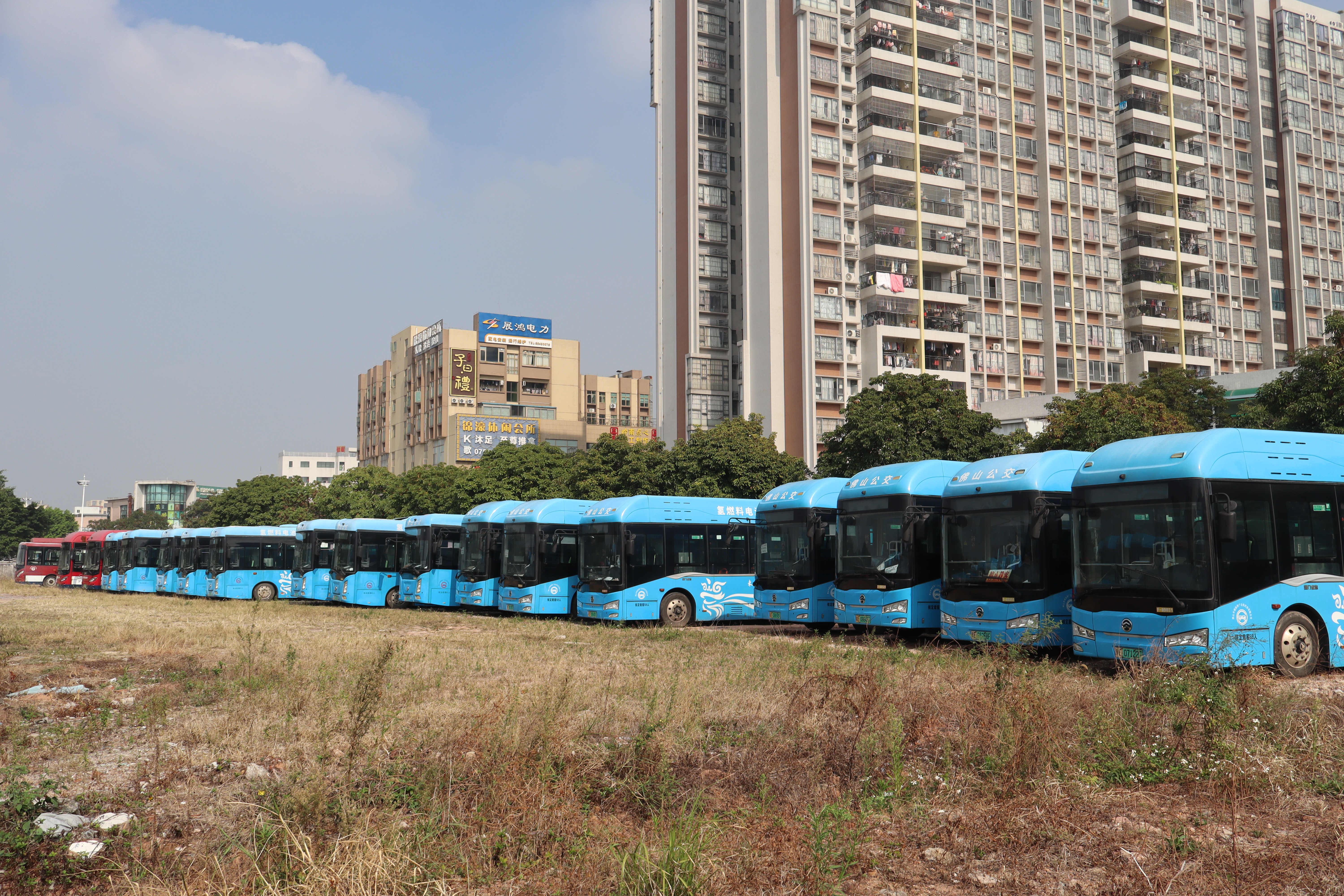
Core Viewpoint - The operation of hydrogen buses in Foshan is facing significant challenges due to declining demand, local financial pressures, and high operational costs, leading to temporary suspensions of many vehicles [1][3][16] Group 1: Current Situation of Hydrogen Buses - Over 20 hydrogen buses are currently parked and not in operation in Nanhai District, Foshan, due to high hydrogen prices making operations unprofitable [1][3] - Foshan has a high procurement volume of hydrogen buses, with nearly 1,000 units put into operation since 2018, totaling over 1 billion yuan in costs [2][3] - The procurement and operational costs of hydrogen buses are significantly higher than those of conventional electric buses, even after accounting for subsidies [3][12] Group 2: Financial and Operational Challenges - The combination of shrinking bus demand, local fiscal pressure leading to insufficient subsidies, and high hydrogen prices are the underlying issues causing the suspension of hydrogen buses in Foshan [3][16] - The average price of a hydrogen bus in Foshan is around 1.8 million yuan, with total subsidies amounting to nearly 800,000 yuan per vehicle, resulting in a total subsidy of approximately 800 million yuan for the planned 1,000 buses [10][12] - Daily hydrogen costs for buses can exceed 400 yuan, making operations financially challenging [14][15] Group 3: Government Support and Industry Development - Foshan's government has implemented a development plan for the hydrogen energy industry, aiming for significant growth in related industries by 2030, with a target cumulative output value of 100 billion yuan [7] - The local government has provided substantial financial support for the purchase and operation of hydrogen buses, including subsidies for hydrogen refueling [8][9] - Despite the initial push for hydrogen buses, the ongoing financial burden from subsidies and operational costs has led to a reevaluation of the viability of hydrogen buses in the public transport sector [16][18] Group 4: Future Implications and Industry Insights - The hydrogen energy industry in Foshan has attracted significant investment, with over 160 companies in the sector and total investments exceeding 60 billion yuan [17] - Experts suggest that the current challenges in the hydrogen industry highlight the need for continued government support and strategic planning to ensure sustainable development [18] - The transition to hydrogen energy is seen as a necessary step for industrial transformation, but it requires careful management of financial resources and market dynamics to achieve long-term success [18]
【会后报告+嘉宾PPT】2025势银氢燃年会(HEFCAC 2025)
势银能链· 2026-01-14 03:48
Core Insights - The 2025 TrendBank Hydrogen Energy and Fuel Cell Industry Annual Conference aims to create a high-end, professional, and open communication platform for discussing the development direction and strategic layout of the hydrogen energy industry, involving government, academic institutions, industry groups, and emerging enterprises [3][12][13]. Event Overview - The conference will take place from January 6 to 8, 2026, at the Nanyuan Wanghai Hotel in Ningbo, focusing on the theme "Insight into Policy Opportunities, Building Cooperation Platforms, and Welcoming Industry Dawn" [2][4]. - The event will feature various activities, including keynote speeches, product launches, strategic cooperation signings, and specialized forums [9][14]. Upgraded Conference Features - The conference has been upgraded to include deeper government participation, transforming it into a high-level dialogue platform for government-business collaboration [12][13]. - New content includes a special investment promotion meeting focused on the hydrogen energy industry, allowing for direct communication between government leaders, industry experts, and investment institutions [12][13]. Keynote Topics - Notable keynote speeches will cover topics such as the current status and future trends of hydrogen energy and fuel cells, low-carbon hydrogen production technologies, and the challenges and economic feasibility of large-scale underground hydrogen storage [14][15]. - Discussions will also address the hydrogen transportation ecosystem, the exploration of solid-state hydrogen storage systems, and the market competitiveness of domestic hydrogen storage valves [15][17]. Industry Statistics - As of now, the number of hydrogen vehicles in China has reached 32,700, primarily concentrated in the southeastern coastal regions, with an operational rate of approximately 25% [21]. - The market for hydrogen storage bottles has seen a significant increase in demand, with larger volume specifications becoming mainstream, particularly for heavy-duty vehicles [21]. Future Prospects - The hydrogen energy industry is expected to experience substantial growth, driven by advancements in low-cost hydrogen production technologies and the maturation of underground hydrogen storage techniques [14][15]. - The conference aims to facilitate the exploration of new opportunities and collaborative efforts in the hydrogen energy sector, contributing to the sustainable development of the industry [3][12][13].
氢能周度观察(7):中央及地方扶持政策密集发布,关注产业十五五变局-20260111
Changjiang Securities· 2026-01-11 14:51
Investment Rating - The report suggests a positive outlook for the hydrogen energy industry, indicating that it is expected to outperform the relevant market indices in the next 12 months [14]. Core Insights - Since December 2025, there has been a surge in hydrogen energy policies, with the Ministry of Industry and Information Technology officially releasing a notification on key products and processes, including hydrogen fuel cell systems and key components [4][7]. - More than seven provinces and cities, including Henan, Xiamen, Wuhu, Shenzhen, Guangzhou, and Chongqing, have issued special support measures, creating a synergistic effect between central and local policies [4][7]. - The focus of these policies includes financial subsidies, demonstration projects, and streamlined processes aimed at overcoming technological bottlenecks and accelerating commercialization [10]. Summary by Sections Policy Support - Xiamen plans to introduce nine measures to subsidize hydrogen equipment projects up to 10% of investment, with a maximum of 30 million yuan per project [10]. - Wuhu Economic Development Zone offers up to 15% subsidies for hydrogen industry projects and 5 million yuan for hydrogen refueling station construction [10]. - Shenzhen Longgang District supports key materials and technologies in hydrogen energy, providing 10% subsidies for demonstration applications [10]. - Guangzhou Baiyun District encourages the use of hydrogen fuel cell vehicles in government and state-owned projects, aiming for over 50% usage [10]. - Chongqing has a development plan for hydrogen refueling stations, targeting the construction of 10 stations from 2025 to 2027 [10]. - Urumqi has set a three-year action plan for the hydrogen industry, aiming for an annual increase of at least 20,000 tons of green hydrogen capacity by 2027 [10]. - Hainan has initiated a second batch of fuel cell vehicle demonstration project applications, with a maximum reward of 20 million yuan per project [10]. - Henan continues to exempt hydrogen trucks from highway fees until 2027 [10]. Industry Outlook - The hydrogen industry is expected to evolve towards large-scale and commercial development during the 14th Five-Year Plan [10]. - By the end of 2025, green hydrogen production capacity is projected to exceed 220,000 tons, with significant cost reductions in electrolysis [10]. - Key breakthroughs in storage and transportation technologies are anticipated, with the implementation of national standards for high-pressure hydrogen storage [10]. - The construction of hydrogen refueling stations is expected to accelerate, with over 540 stations projected to be built by the end of 2025 [10]. - The number of fuel cell vehicles is expected to exceed 30,000 by the end of 2025, a significant increase from 7,000 at the end of 2020 [10]. - The application fields of hydrogen energy are expected to diversify beyond transportation to include energy storage, power generation, and industrial applications [10]. Investment Recommendations - The report recommends focusing on leading companies across various segments of the hydrogen industry, including Huaguang Huaneng (hydrogen production), Longjing Environmental Protection (hydrogen production), Bingshan Environment (storage and transportation), Goldwind Technology (green alcohol), and Yihua Tong (fuel cell vehicles) [10].
【HEFCAC 2025 圆满落幕】聚力共生、赋能致远,共推氢能可持续发展
势银能链· 2026-01-09 10:09
Core Viewpoint - The conference aims to create a high-end, professional, and open platform for discussing the development direction and strategic layout of the hydrogen energy industry, gathering government, academic institutions, industry groups, and emerging enterprises to accelerate industry development [2][5]. Group 1: Conference Overview - The "2025 TrendBank Hydrogen Energy and Fuel Cell Industry Annual Conference" was held from January 6-8, 2026, in Ningbo, focusing on insights into new policies and building cooperation platforms for the hydrogen energy industry [2]. - The conference featured various specialized sessions, including topics on fuel cell supply chains, hydrogen storage and transportation, and high-efficiency electrolyzers [4][23]. Group 2: Key Sessions and Innovations - The "Intelligent Control Collaboration: High Stability Hydrogen Production Supply Chain" session highlighted three major pain points in the medium-pressure electrolyzer industry, including high maintenance costs and safety concerns [6]. - Innovations in modular integration of core materials for electrolyzers were discussed, emphasizing the need for optimized assembly processes to reduce costs and improve efficiency [9][11]. Group 3: Market Trends and Projections - The global hydrogen market is experiencing cyclical fluctuations, with significant growth in electrolyzer installations, particularly in China, which is projected to account for 65% of global capacity by 2024 [37]. - The conference concluded with discussions on the current development stage of the domestic green hydrogen industry, emphasizing the need for improved product performance and support services in the context of large-scale demonstration projects [41].

金宏气体:公司始终以推动氢能产业发展为方向
Zheng Quan Ri Bao Wang· 2026-01-08 13:43
Group 1 - The core viewpoint of the article is that the company is committed to promoting the development of the hydrogen energy industry and has established multiple hydrogen energy projects across various locations [1] Group 2 - The company has set up its headquarters in Suzhou and has additional projects in Zhangjiagang, Chongqing, Meishan, Zhuzhou, and Quanzhou [1]
