Fintech

Search documents
Sezzle and David’s Bridal Bring "Love in Times Square" to Life, Championing Love and Financial Wellness
Globenewswire· 2026-02-17 14:52
Core Insights - Sezzle Inc. and David's Bridal partnered to sponsor the "Love in Times Square" event, aiming to highlight accessible payment solutions for engaged couples facing financial stress [1][2][3] Group 1: Event Overview - The "Love in Times Square" celebration served as a platform to address financial stress affecting nearly half of engaged couples, emphasizing the importance of manageable payment solutions [2] - The event featured guest appearances from stars of the Hulu series "Tell Me Lies," who participated in discussions about financial and romantic red flags, promoting the use of financial tools to enhance relationship focus [4][5] Group 2: Company Initiatives - David's Bridal and Sezzle aim to empower couples by providing flexible payment options, allowing them to manage wedding budgets without compromising on style [3] - David's Bridal transformed Times Square into a wedding venue, offering curated gift bags, photo opportunities, and gown giveaways, showcasing their commitment to customer experience [5][6] Group 3: Company Background - Sezzle is a fintech company focused on empowering consumers through financial tools, enhancing purchasing power while promoting responsible spending [6] - David's Bridal has evolved from a traditional bridal retailer to a comprehensive wedding technology company, offering a digital platform that connects consumers with various wedding services and products [7][10]



Is Block, Inc. (XYZ) among the Best Bitcoin and Blockchain Stocks to Invest in?
Yahoo Finance· 2026-02-17 14:48
Group 1: Company Overview - Block, Inc. (NYSE:XYZ) is recognized as one of the best Bitcoin and blockchain stocks to invest in [1][7] - The company is expanding its OpenIP project to include Bitkey, a bitcoin self-custody hardware wallet, and Proto, its bitcoin mining hardware and services brand [2] Group 2: Financial Performance - Block, Inc. reported third-quarter revenues that fell short of Wall Street estimates, with adjusted earnings per share at 54 cents, below the forecast of 67 cents [4] - Despite the earnings miss, the company experienced an 18% increase in gross profit to $2.66 billion year-over-year, leading to an improved full-year gross profit forecast of $10.24 billion [4] Group 3: Analyst Ratings and Price Targets - Citi reduced its price target for Block, Inc. from $105 to $85 while maintaining a "Buy" rating, anticipating a 19% increase in gross profit [3] - Truist analyst Matthew Coad raised his price objective from $68 to $72, keeping a Hold rating, citing a cautious outlook for some management teams in the fintech sector [3]
Futures Fall As AI Selloff Resumes
ZeroHedge· 2026-02-17 13:39
Market Overview - US equity futures resumed their selloff after a brief bounce, with S&P 500 futures down 0.5% and Nasdaq 100 contracts falling 1.0%, driven by concerns over AI disruption [1] - All major tech stocks in the "Magnificent 7" are lower, with notable declines in Nvidia (-0.9%) and Alphabet (-1.5%) [3] - Energy, financials, industrials, and defensive sectors showed pockets of outperformance amid the broader market decline [1] Corporate News - Activist investor Elliott has built a significant stake in Norwegian Cruise Line, leading to a rise of over 7% in its shares [4] - Apple is set to hold a product launch on March 4, which may impact its stock performance [3] - ImmunityBio shares rose 6% after receiving encouragement from the Saudi Food and Drug Authority to submit a regulatory package for its bladder cancer therapy [4] - Masimo shares surged 34% following reports of a nearly $10 billion acquisition deal by Danaher [4] AI and Technology Sector - Investors are cautious about the profitability of AI spending, with concerns about competition and potential disruptions to various industries [6][7] - A record number of investors believe companies are overspending on AI, with 25% citing an "AI bubble" as a top market risk [10] - Despite selloff concerns, two-year forward earnings estimates for software stocks have risen, indicating resilience in the sector [11] Economic Indicators - Upcoming economic data includes the ADP employment change, Empire State manufacturing survey, and NAHB housing market index for February, which could influence market sentiment [1][22] - The UK unemployment rate rose to 5.2%, leading to increased expectations for a Bank of England rate cut [16] Commodities and Geopolitical Factors - Oil prices rose due to geopolitical tensions, particularly military drills by Iran in the Strait of Hormuz, impacting Brent crude prices [13][48] - Gold prices have declined, with spot gold dropping toward $4,900 an ounce amid a risk-off sentiment [1][48]


Payoneer to Launch Stablecoin Capabilities, Powered by Bridge, Bringing Secure, Always-On Digital Money to Global Businesses
Prnewswire· 2026-02-17 13:30
Core Insights - Payoneer is set to launch stablecoin capabilities within its platform, powered by Bridge, to facilitate secure and efficient cross-border transactions for businesses [1] - The integration aims to simplify the use of stablecoins for businesses, particularly in emerging markets, addressing challenges such as currency conversion and regulatory complexities [1] Group 1: Company Developments - Payoneer will enable businesses to receive, hold, and send stablecoins as part of their daily financial operations, enhancing their global transaction capabilities [1] - The new stablecoin features will be rolled out in select markets in Q2 2026, with broader availability planned throughout the year [1] - Payoneer has nearly 2 million customers globally and aims to leverage its compliance expertise to support stablecoin adoption [1] Group 2: Industry Context - The adoption of stablecoins is accelerating, with real-world applications emerging that offer faster settlement and programmable money movement [1] - Many cross-border businesses face challenges in integrating stablecoins due to fragmented workflows and evolving regulations, which Payoneer aims to address [1] - Bridge, the partner providing the stablecoin infrastructure, focuses on simplifying blockchain complexities for companies like Payoneer [1]


The FUTR Corporation Announces Expansion of FUTR Payments into Texas and New Jersey
TMX Newsfile· 2026-02-17 13:30
Core Insights - FUTR Corporation has signed agreements with four new dealerships, expanding its FUTR Payments product into Houston, Texas, and enhancing its presence in New Jersey [1][2]. Company Expansion - The agreements represent FUTR Payments' first dealer relationship in Texas and are part of the company's strategy to expand geographically while strengthening its existing market presence [2][3]. - With these new partnerships, FUTR Payments now operates in Texas, New York, New Jersey, Delaware, Florida, Iowa, and Connecticut, indicating a significant increase in its U.S. footprint [2]. Market Significance - The expansion into Texas is particularly notable as it is one of the largest and most diverse automotive markets in the U.S., with a high concentration of independent and used-vehicle dealerships [3]. - The partnership with Trailer Wheel & Frame Co. in Houston introduces a new asset category for FUTR Payments, broadening the application of its payment infrastructure beyond traditional automotive inventory [3]. Strategic Vision - FUTR Payments is part of a broader strategy that integrates intelligent payment infrastructure with consumer data and AI-enabled agents, positioning the company to capitalize on the growing demand for data-driven payment solutions [4].

Better Fintech Stock: PayPal vs. SoFi
Yahoo Finance· 2026-02-17 13:20
Core Viewpoint - PayPal is currently undervalued compared to its fintech peers, while SoFi Technologies is trading at a premium despite recent performance issues [1][4]. Group 1: PayPal Holdings - PayPal trades for less than 8 times forward earnings, making it cheaper than most fintech and major bank stocks [4]. - The company recently reported disappointing quarterly results, with revenue and adjusted earnings falling short of expectations, leading to a share price drop of over 20% [5]. - PayPal's branded checkout business, a key growth area, saw revenue growth decline from 6% in the prior year to just 1% this quarter [5]. - The company's 2026 guidance suggests either a "low-single digit decline" or "slightly positive" earnings growth, indicating a slow recovery [6]. - PayPal is undergoing a leadership change, with former HP CEO Enrique Lores replacing Alex Chriss, signaling a potential reevaluation of turnaround strategies [6]. Group 2: SoFi Technologies - SoFi's shares have increased by 41% over the past year, driven by strong quarterly results, although they have recently pulled back [7]. - The company currently trades at a premium, with a valuation of 32 times forward earnings, higher than many other fintech stocks like Upstart and Block, which trade for under 20 times [7]. - Despite a recent earnings miss, SoFi reported impressive year-over-year revenue growth of 40% and earnings growth of 160% in the fourth quarter [8].


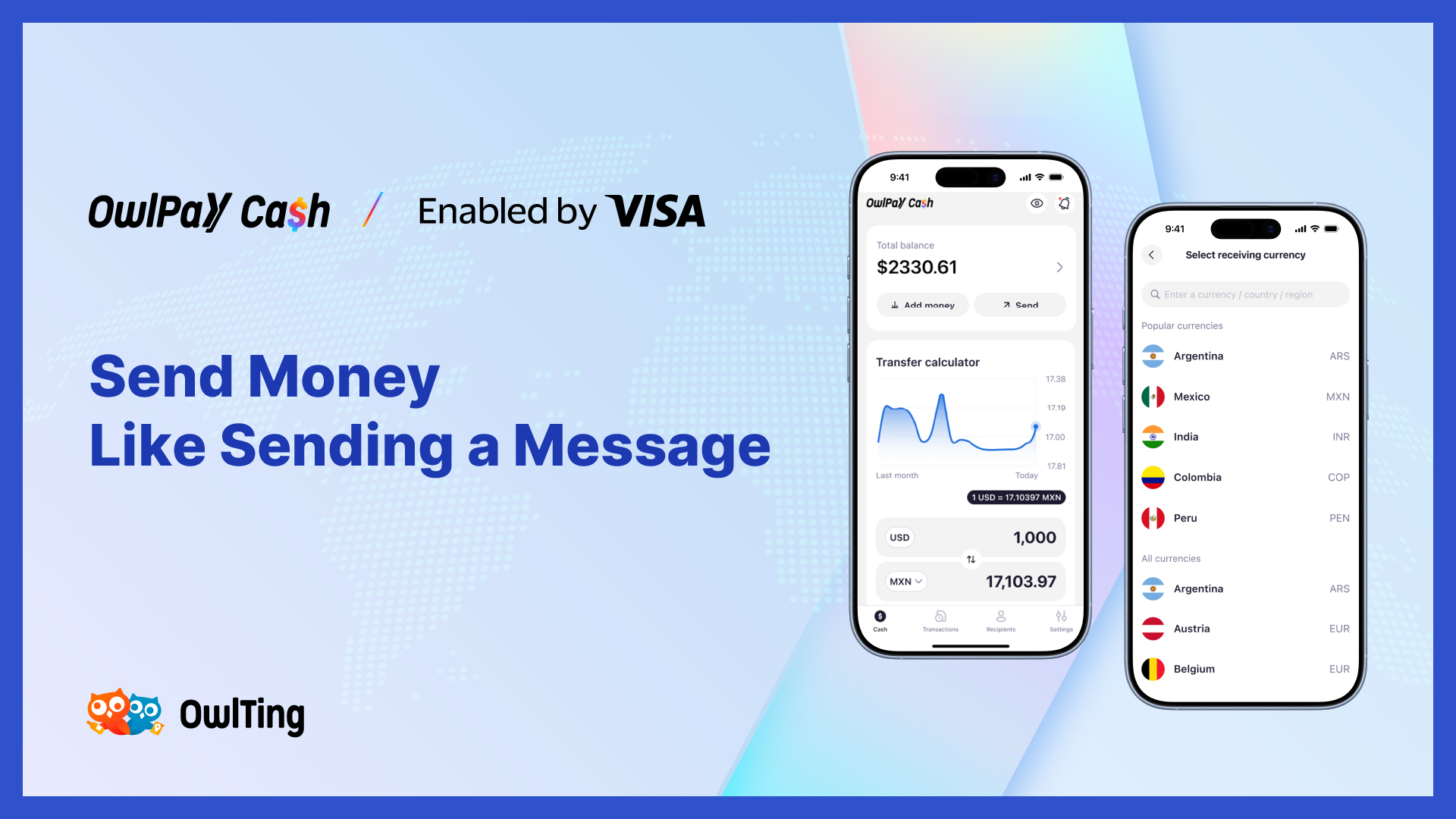
OBOOK Holdings Inc. (OWLS) Debuts OwlPay Cash to Digitize the Estimated $230 Billion U.S. Outbound Remittance Economy
Globenewswire· 2026-02-17 13:17
Core Viewpoint - OBOOK Holdings Inc. has launched OwlPay Cash, a mobile-first app designed to provide institutional-grade payment services to retail users, targeting the $230 billion U.S. outbound remittance market, with an initial focus on five high-volume corridors [3][4][5]. Group 1: Product Overview - OwlPay Cash aims to streamline remittance processes by leveraging direct digital payment rails, which can significantly reduce transaction costs compared to traditional methods like SWIFT [7]. - The app features a "Total Cost" Calculator that provides users with transparency regarding the exchange rate and final amount received, promoting informed financial decisions [7][9]. - The initial rollout focuses on five key markets: Mexico, India, Colombia, Peru, and Argentina, with plans to expand to a total of 26 regions globally [4][5]. Group 2: Market Potential - The combined annual remittance flows from the U.S. to the initial launch markets exceed $100 billion, and capturing just 1% of this market would represent approximately $1 billion in annual transaction volume [5][6]. - Remittance transactions are typically recurring, driven by essential family support, which provides a stable customer base for OwlPay Cash once customer acquisition is established [5][6]. Group 3: Regional Insights - In India, OwlPay Cash can facilitate near-instant settlements for the 5.2 million Indian residents in the U.S. by utilizing real-time domestic payment systems [8]. - For Mexico, remittances from the U.S. reached an estimated $62.5 billion in 2024, with OwlPay Cash offering rapid same-day delivery, typically clearing funds within three hours [8]. - In Latin America, the U.S. accounts for a significant portion of remittances, with OwlPay Cash focusing on predictable settlement times to preserve purchasing power for recipients [8]. Group 4: Operational Efficiency - The app connects to over 11 billion endpoints globally through Visa Direct, ensuring predictable settlement timelines while maintaining regulatory compliance across 41 U.S. states [9][14]. - OwlPay Cash includes a secure beneficiary management system for easy execution of repeat transfers, reducing friction and manual errors in the remittance process [9].
Mesh Partners with Adyen to Accelerate the Scale of its European and U.K. Operations
Prnewswire· 2026-02-17 13:03
Core Insights - Mesh Payments has announced a strategic partnership with Adyen to enhance its payment capabilities and support its growing customer base of multinational enterprises in Europe and the U.K. [1] - The collaboration aims to scale Mesh's operations aggressively, integrating Adyen's financial technology to ensure high-acceptance transactions and local currency card issuance [1]. Company Overview - Mesh Payments is a leading travel and expense management platform that integrates corporate cards, expense management, and travel management into a single platform [1]. - The platform is designed to streamline the entire travel and expense lifecycle, offering AI-powered automation, customizable policies, and multi-currency support [1]. - Currently, Mesh serves over 2,000 enterprise customers, including Fortune 100 brands and leading multinational tech companies [1]. Partnership Details - The partnership with Adyen is positioned as a critical accelerator for Mesh's operations in Europe and the U.K., allowing for seamless integration with existing corporate cards from other banks [1]. - Mesh's unique offering allows enterprises to utilize Adyen-powered, Mesh-issued local currency cards to eliminate foreign exchange fees while maintaining their primary corporate cards [1]. - Adyen's financial technology platform is designed to support fintechs like Mesh in scaling efficiently, providing a stable and agile financial infrastructure [1].

Razorpay partners Replit to enable UPI payments and app monetisation
Yahoo Finance· 2026-02-17 11:02
Core Insights - Razorpay has partnered with Replit to support payments and monetisation for AI-first builders in India, integrating local payment methods for Indian users [1][2] - The partnership aims to provide a local checkout experience for cross-border subscription transactions using Razorpay's International Payments Suite [2] - Razorpay's payment stack will be embedded in the Replit platform to facilitate in-app monetisation, handling compliance and foreign exchange [3] Integration Details - Developers can create applications on Replit with Razorpay's monetisation layer included, allowing for immediate acceptance of UPI and card payments from Indian users [4] - The integration is designed to help builders transition from ideas to paid products quickly and compliantly [6] Strategic Context - Razorpay's CEO emphasized the importance of monetisation in the AI-driven product development landscape in India [5] - The partnership with Replit follows Razorpay's collaborations with other AI companies, enhancing its focus on embedding payments and compliance into AI-led software creation [6] Future Plans - Razorpay has appointed four investment banks as advisors in preparation for a proposed initial public offering (IPO), targeting a potential IPO around mid-year [7]
FICO UK Credit Card Market Report: December 2025
Businesswire· 2026-02-17 09:00
Core Insights - The FICO UK Credit Card Market Report for December 2025 indicates that average credit card balances have reached the highest level since FICO began tracking this data, reflecting ongoing financial pressures on consumers [1] - There is a notable increase in the number of customers missing payments, with a month-on-month rise of 6.4% for those missing one payment and a 3.7% increase for those missing three payments [1] - The average active balance rose to £1,950, marking a 1.7% increase from November and a 4.8% increase year-on-year, highlighting affordability challenges for UK consumers [1] Spending and Payment Trends - Average credit card spending increased by 5.6% from November to December, reaching £830, although this figure is 3.5% lower than December 2024 [1] - The percentage of overall balance paid stabilized at 33.4%, which is a slight increase of 0.1% from November but a significant decrease of 6.8% year-on-year [1] - The average credit limit rose to £5,930, reflecting a 0.2% month-on-month increase and a 2.4% year-on-year increase [1] Customer Payment Behavior - The report indicates that 1.4% of accounts had one missed payment, a month-on-month increase of 6.4% and a year-on-year decrease of 4.3% [1] - Accounts with two missed payments accounted for 0.3%, showing a month-on-month decrease of 1.2% but a year-on-year increase of 3.1% [1] - The percentage of accounts with three missed payments rose to 0.2%, with a month-on-month increase of 3.7% and a year-on-year increase of 4.9% [1] Financial Stress Indicators - The persistent rise in average balances and low payment rates suggest continued financial stress for consumers, with expectations of increased payment rates in January as consumers focus on settling holiday spending [1] - The report emphasizes the need for risk teams to enhance monitoring of payment patterns and implement proactive intervention strategies in response to potential payment stress in early 2026 [1]