
太空光伏

Search documents
港股开盘 | 恒指高开0.36% 医药股走强 三生制药(01530)涨超3%
智通财经网· 2026-01-27 01:35
Group 1 - The Hang Seng Index opened up 0.36% and the Hang Seng Tech Index rose by 0.16%, with strong performance in pharmaceutical stocks, particularly 3SBio which increased by over 3% [1] - Precious metals experienced a pullback, with Chifeng Jilong Gold Mining falling by over 2% [1] Group 2 - Galaxy Securities anticipates narrow fluctuations in the Hong Kong stock market due to reduced expectations for short-term interest rate cuts by the Federal Reserve and increased global geopolitical uncertainties [2] - The technology sector remains a long-term investment focus, benefiting from price increases in the supply chain, domestic substitution, and accelerated AI applications [2] - The consumer sector is expected to continue benefiting from policy support, with attention needed on the implementation of policies and improvements in consumer data [2] - Geopolitical tensions may benefit safe-haven assets like precious metals [2] Group 3 - According to招商证券, the price increase of storage chips in January exceeded expectations, driving market performance in the first half of the month, with upcoming earnings forecasts from domestic storage companies and quarterly reports from overseas storage manufacturers [2] - There is a potential for price increases in related chips if the trend in storage testing and packaging prices continues, which could lead to broader market opportunities [2] Group 4 - Dongxing Securities predicts a significant increase in the number of satellite launches in China by 2026, with private commercial rocket companies expected to play a crucial role in the national team, creating market opportunities in satellite manufacturing and rocket launching [2] Group 5 - GF Securities believes that space photovoltaics, as a key energy supply solution for spacecraft, will benefit from the global commercial space boom, with existing low-orbit satellite plans expected to create nearly 10GW of demand for space photovoltaics [3] - The industry is currently in an exploratory phase, with photovoltaic equipment manufacturers becoming direct beneficiaries by participating in the development of process routes [3]
收市象限观察 | 市场短期调整,金银史诗级大涨为板块带来强劲动力
Sou Hu Cai Jing· 2026-01-26 13:05
Market Overview - The market experienced a correction after a previous surge, with significant divergence in index performance. The Shanghai Composite Index fell by 0.09%, the Shenzhen Component Index decreased by 0.85%, and the ChiNext Index dropped by 0.91% [1][2] - Over 3,700 stocks declined in the market, with a total trading volume of 3.25 trillion yuan, an increase of 163 billion yuan compared to the previous trading day [1][2] Sector Performance - Precious metals saw a significant surge, with spot gold surpassing $5,100 per ounce and New York futures gold exceeding $5,130 per ounce. Silver also continued its upward trend after breaking $100 per ounce last week [2] - Notable stocks in the gold sector included Sichuan Gold, which achieved four consecutive trading limits, and Zijin Mining, which reached a historical high [2] - The oil and gas sector strengthened, with China National Offshore Oil Corporation hitting a historical high [2] - The chemical sector experienced fluctuations, with stocks like Hongbaoli and Chengxing shares reaching trading limits [2] - Conversely, sectors such as commercial aerospace and semiconductor equipment faced significant declines, with several stocks in commercial aerospace hitting the daily limit down [2] Economic Analysis - CITIC Securities indicated that market confidence is gradually recovering, suggesting that sectors at relatively low levels with logical narratives could see recovery. The consumer chain is expected to be a focus leading up to the Two Sessions [5] - The report emphasized a dual focus on "resources + traditional manufacturing pricing power" and recommended increasing allocations in sectors like chemicals, non-ferrous metals, and new energy [5] Futures Market - Domestic futures contracts mostly closed higher, with silver rising nearly 13%, platinum over 9%, and palladium more than 7%. Crude oil and liquefied petroleum gas also saw significant increases [6] - Geopolitical risks have heightened market demand for safe-haven assets, leading to a substantial rise in precious metal prices, particularly silver, which has seen a year-to-date increase of over 40% [6] Upcoming Events - A total of 30 companies will have their restricted shares unlocked this week, with a total market value exceeding 40 billion yuan based on the closing price on January 23 [7] - The Federal Reserve is expected to maintain interest rates during its monetary policy meeting, with a 95% probability of no change [8] - Key earnings reports from major tech companies such as Apple, Microsoft, and Tesla are anticipated, alongside the 19th Asian Financial Forum focusing on high-growth industries [8]

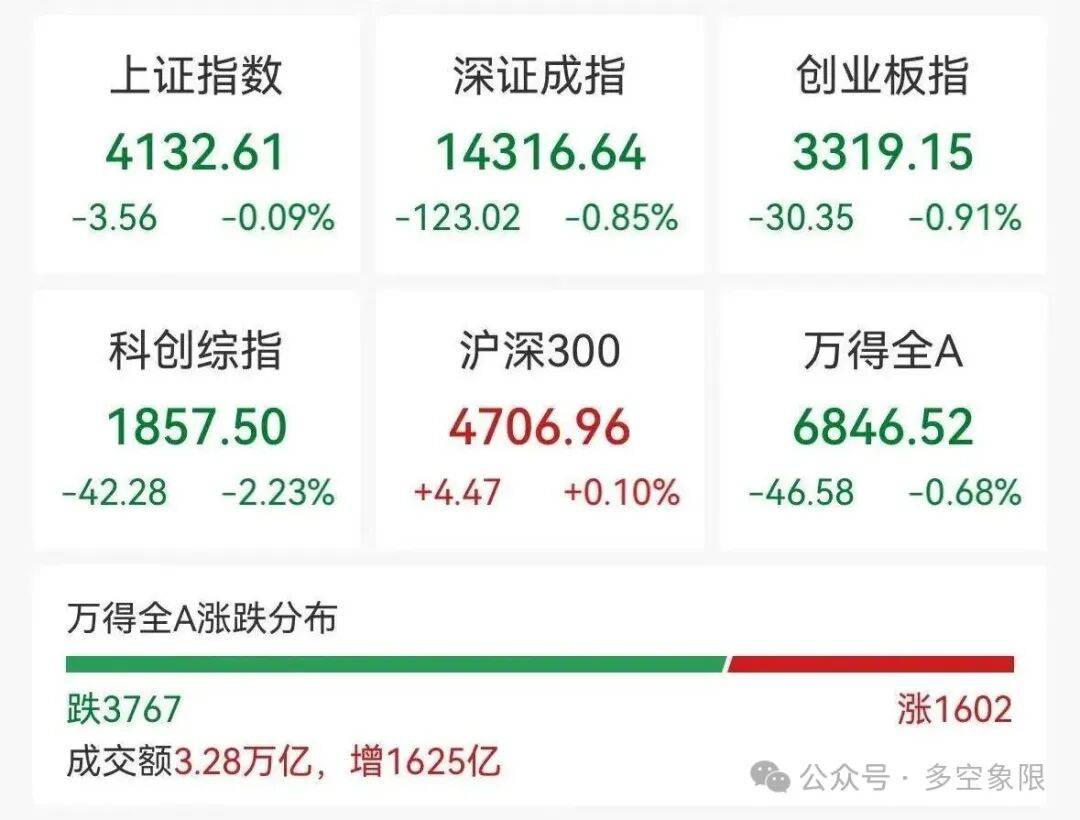
【内附直播表】创业板高开低走跌近1%,贵金属、油气概念逆势爆发
Sou Hu Cai Jing· 2026-01-26 09:48
Market Overview - The A-share market experienced a day of fluctuation and adjustment, with significant divergence between large and small indices, as the Shenzhen Composite Index and ChiNext Index opened high but fell over 1% during the day [2] - The total trading volume reached 3.25 trillion yuan, an increase of 163 billion yuan compared to the previous trading day, with a net outflow of 121.6 billion yuan from domestic investors [2] - Over 3,700 stocks declined, with a median drop of 1.36%, indicating a bearish sentiment despite the Shanghai Composite Index only falling by 0.09% [2] Sector Performance - The non-ferrous metals sector led the gains, particularly precious metals, with stocks like Sichuan Gold hitting the limit up for four consecutive days, and Zijin Mining reaching a historical high [3] - The oil and gas sector also performed well, with China National Offshore Oil Corporation achieving a historical high and Intercontinental Oil & Gas hitting the limit up for three out of four days [3] - The space photovoltaic concept stocks were active, with companies like Mingyang Smart Energy and Tuojin New Energy hitting the limit up [3] Investment Themes - Two main investment themes emerged: one focused on price increases in gold, non-ferrous metals, and oil and gas, with international gold prices surpassing 5,100 USD [4] - The second theme was risk aversion, with gold, pharmaceuticals, and performance growth stocks gaining attention, especially in light of recent virus news from India [4] - The market showed mixed signals, with hot money shifting between sectors, making it challenging for investors to participate effectively [4]

A股三大指数收跌,贵金属、油气板块逆市领涨
Sou Hu Cai Jing· 2026-01-26 07:33
Market Overview - The A-share market experienced a collective decline on January 26, with the Shanghai Composite Index down by 0.09% to close at 4132.61 points, the Shenzhen Component Index down by 0.92% to 14307.06 points, and the ChiNext Index down by 0.91% to 3319.15 points [1][3] - The total trading volume in the Shanghai and Shenzhen markets approached 3.3 trillion yuan, an increase of nearly 200 billion yuan compared to the previous trading day [1] Sector Performance - The market showed a broad decline across various sectors, with the non-ferrous metals sector leading the gains, particularly in precious metals, where Sichuan Gold achieved four consecutive trading limits in eight days, and Zijin Mining reached a historical high [3] - The oil and gas sector also performed well, with China National Offshore Oil Corporation hitting a historical high and Intercontinental Oil and Gas achieving three trading limits in four days [3] - The space photovoltaic sector was notably active, with companies like Mingyang Smart Energy, Tuojiri New Energy, and GCL-Poly Energy hitting trading limits [3] - The chemical sector saw fluctuations, with Hongbaoli and Chengxing shares reaching trading limits [3] Individual Stock Movements - Over 1600 stocks rose, with more than 70 stocks hitting trading limits, while over 3700 stocks declined [3] - The precious metals sector experienced a surge, with stocks like Xiaocheng Technology hitting a 20% trading limit, along with other companies such as Zhaojin Mining, Zhongjin Gold, and Hunan Silver also reaching trading limits [3]

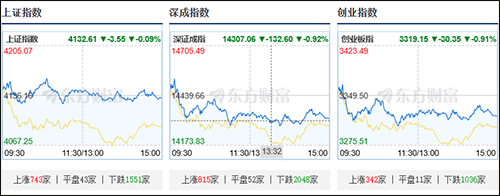
A股收评:创业板指跌近1% 贵金属、油气概念逆势爆发
2 1 Shi Ji Jing Ji Bao Dao· 2026-01-26 07:25
Market Overview - The market experienced a day of volatile adjustments with significant divergence between large and small indices, as the Shenzhen Component Index and ChiNext Index opened high but fell over 1% during the day [1][2] - By the close, the Shanghai Composite Index decreased by 0.09%, the Shenzhen Component Index fell by 0.85%, and the ChiNext Index dropped by 0.91% [1][2] - The total trading volume in the Shanghai and Shenzhen markets reached 3.25 trillion yuan, an increase of 163 billion yuan compared to the previous trading day [1][2] Sector Performance - The non-ferrous metals sector led the gains, particularly the precious metals concept, with Sichuan Gold achieving four consecutive trading limits in eight days [1][2] - Several stocks, including Xiaocheng Technology, Hunan Gold, and Shengda Resources, hit the daily limit, while Zijin Mining reached a historical high [1][2] - The oil and gas sector also showed strength, with China National Offshore Oil Corporation hitting a historical high and Continental Oil achieving three trading limits in four days [1][2] - The space photovoltaic concept was actively traded, with stocks like Mingyang Smart Energy, Tuori New Energy, and GCL-Poly Energy hitting the daily limit [1][2] - The chemical sector saw fluctuations, with Hongbaoli and Chengxing Shares reaching the daily limit [1][2] Declining Sectors - The commercial aerospace and semiconductor equipment sectors experienced the largest declines, with several commercial aerospace concept stocks plummeting, including China Satellite Communications and China Satellite, which both hit the daily limit down [1][2]
2026:AI之光引领成长; 反内卷周期反转
2026-01-26 02:50
Summary of Conference Call Notes Industry Overview - The discussion primarily revolves around the **commercial aerospace** and **engineering machinery** industries, with a focus on **AI**, **renewable energy**, and **solid-state batteries**. Key Points on Commercial Aerospace - The commercial aerospace sector is viewed as a new version of the "Star Wars" program, integrating technology and competition beyond the historical context of the US-Soviet rivalry [2][3]. - There is significant local government interest in commercial aerospace, surpassing previous focuses on low-altitude and deep-sea technologies [2]. - The sector is expected to combine aerospace, AI, new energy, and robotics, indicating a broad technological convergence [3]. - The growth of commercial aerospace is linked to a broader cycle of growth, including military and industrial sectors, with a notable increase in demand for AI-driven technologies [4][5]. Key Points on Engineering Machinery - The global leader in engineering machinery, **Caterpillar**, has a market capitalization exceeding **210 billion RMB**, while China's top three companies (Sany, XCMG, and Zoomlion) collectively hold a market share close to Caterpillar's [8][9]. - The Chinese companies are significantly undervalued, with a combined market cap of approximately **420 billion RMB**, only **20%** of Caterpillar's valuation [8][9]. - There is a notable increase in demand for mining machinery due to rising prices of metals like copper, gold, and aluminum, which is expected to drive growth in the sector [9]. - The report emphasizes the potential of Sany Heavy Industry, highlighting its new management team and its significant overseas revenue contribution, which is projected to grow [10][11][12]. Insights on Solid-State Batteries - The solid-state battery industry is anticipated to reach a critical inflection point by **2027**, with expectations for small-scale production [21][22]. - Key drivers for the solid-state battery market include global regulations, policy direction, and new demand [21]. - The report identifies essential equipment for solid-state battery production, including steel powder electrode equipment and high-precision stacking machines [22][23]. - The market for equipment related to solid-state batteries is projected to exceed **6 billion RMB** by **2030**, with a rapid growth rate [23]. Additional Insights - The discussion on **space solar power** highlights the potential for deploying **100 GW** of solar energy in space, which could significantly impact the energy landscape [14][15]. - The feasibility of space-based power generation is supported by the advantages of continuous sunlight and lower operational costs compared to terrestrial systems [15][16]. - The need for advanced equipment and thinner silicon wafers for solar power generation in space is emphasized, with several companies identified as key players in this emerging market [16][17][19]. Conclusion - The conference call provided a comprehensive overview of the commercial aerospace and engineering machinery sectors, emphasizing growth opportunities driven by technological advancements and market dynamics. The solid-state battery industry is also highlighted as a key area for future investment, with significant potential for growth and innovation.

太空光伏行业专家交流
2026-01-26 02:49
Summary of Key Points from the Conference Call on Space Photovoltaics Industry Overview - The discussion focuses on the **space photovoltaic industry**, particularly the components and technologies used in satellite energy systems, including solar cells and energy management systems [1][2][4]. Core Insights and Arguments - **Cost Structure**: Satellite energy systems account for approximately **10%-20%** of the total satellite cost, with solar arrays making up over **70%** of this cost. Energy storage and management components account for about **30%** [1][4]. - **Solar Cell Technologies**: The main technologies for solar cells include **gallium arsenide (GaAs)**, **silicon-based**, and **perovskite**. GaAs is the most mature but also the most expensive. Silicon has a significant cost advantage, while perovskite is seen as a promising future option, pending stability issues [1][2][7]. - **Flexible Solar Arrays**: Rigid solar arrays are becoming less favorable due to their larger envelope size, which is unsuitable for multi-satellite launches. The future trend is towards **flexible solar arrays**, particularly the **folded compression type**, which is expected to dominate in the coming years due to its proven technology [1][7]. - **Market Pricing**: In the commercial space sector, the price per square meter for GaAs solar arrays ranges from **200,000 to 400,000 RMB**, while silicon-based arrays can be reduced to **20,000 to 30,000 RMB** per square meter, representing a significant cost reduction [1][8]. Additional Important Content - **Reliability and Manufacturing**: Space photovoltaics require high reliability due to harsh conditions, necessitating specific materials and manufacturing methods, such as the use of III-V compounds and point welding techniques [3][10]. - **Packaging Costs**: The core cost of satellite solar cells is concentrated in the packaging materials, which are crucial for ensuring radiation resistance. This area is identified as a key focus for future cost reduction [3][14]. - **Differences from Ground Photovoltaics**: Space photovoltaics differ significantly from ground photovoltaics in terms of reliability requirements, material selection, and production processes. Space applications require materials that can withstand extreme conditions, including high radiation and temperature fluctuations [12][19]. - **Emerging Suppliers**: Key suppliers for space photovoltaic materials include **Qinhuangdao Star Arrow Glass** for radiation-resistant glass and various other companies for auxiliary materials like space-grade silicone [16][20]. Conclusion The space photovoltaic industry is evolving with a clear trend towards cost reduction and the adoption of flexible technologies. The focus on silicon-based solar cells and the development of new materials and manufacturing processes are critical for meeting the demands of commercial space applications.
量化择时周报:牛市格局仍在延续,主题投资重回主线-20260125
ZHONGTAI SECURITIES· 2026-01-25 13:29
Quantitative Models and Construction Methods 1. **Model Name**: Timing System Model **Model Construction Idea**: The model uses the distance between the short-term moving average (20-day) and the long-term moving average (120-day) of the WIND All A Index to determine the market trend[2][7] **Model Construction Process**: - Define the short-term moving average (20-day) and long-term moving average (120-day) of the WIND All A Index - Calculate the difference between the two moving averages - If the short-term moving average is above the long-term moving average and the absolute difference exceeds 3%, the market is considered to be in an upward trend - Latest data: 20-day moving average = 6668, 120-day moving average = 6245, difference = 6.78%[2][7] **Model Evaluation**: The model effectively captures the market's upward trend and provides a clear signal for timing decisions[2][7] 2. **Model Name**: Industry Trend Allocation Model **Model Construction Idea**: This model identifies industry opportunities based on medium-term reversal expectations and performance trends[6][7] **Model Construction Process**: - Use medium-term reversal expectation signals to identify industries with potential recovery, such as innovative healthcare - Apply the TWO BETA model to recommend sectors like technology, commercial aerospace, space photovoltaics, and stablecoin concepts - Use performance trend signals to highlight opportunities in semiconductors, industrial metals, and chemicals[6][7] **Model Evaluation**: The model provides actionable insights into sector allocation, focusing on industries with strong growth potential or recovery signals[6][7] 3. **Model Name**: Position Management Model **Model Construction Idea**: This model determines the recommended equity allocation based on valuation levels and market trends[8] **Model Construction Process**: - Assess the valuation levels of the WIND All A Index using PE and PB ratios - Combine valuation levels with short-term trend signals to recommend an equity allocation - Current recommendation: 80% equity allocation for absolute return products based on the WIND All A Index[8] **Model Evaluation**: The model provides a systematic approach to managing equity exposure, balancing valuation and trend considerations[8] --- Model Backtesting Results 1. **Timing System Model**: - Moving average distance: 6.78% (absolute value > 3%, indicating an upward trend)[2][7] - Profitability effect: 2.7% (positive, supporting the upward trend)[2][7] 2. **Industry Trend Allocation Model**: - Recommended sectors: Innovative healthcare, technology, commercial aerospace, space photovoltaics, stablecoin concepts, semiconductors, industrial metals, and chemicals[6][7] 3. **Position Management Model**: - Recommended equity allocation: 80%[8] --- Quantitative Factors and Construction Methods No specific quantitative factors were explicitly mentioned in the report. The analysis primarily focuses on models rather than individual factors. --- Factor Backtesting Results No specific factor backtesting results were provided in the report. The focus remains on model-level performance and recommendations.
计算机行业研究:再谈空天的NV链:SpaceX
SINOLINK SECURITIES· 2026-01-25 07:50
Investment Rating - The report suggests a positive outlook for the space photovoltaic industry, indicating it may become a new growth area within the photovoltaic sector [3][18]. Core Insights - The commercial aerospace industry in China has achieved significant milestones in areas such as reusable rocket technology and large satellite constellation networking, driving rapid development in the space photovoltaic sector [3][18]. - Space photovoltaic technology benefits from continuous sunlight in space, leading to much higher energy generation efficiency compared to ground-based systems, making it a key support for long-term stable energy supply for spacecraft [3][18]. - The demand for space photovoltaics is expected to grow due to the scaling of satellite networks and upgrades in onboard equipment, driven by both quantity and quality improvements [3][18]. - The long-term development potential of space photovoltaics is becoming increasingly clear, positioning it as a promising new growth area in the photovoltaic industry [3][18]. Related Companies - Potential companies in the space photovoltaic supply chain include: Maiwei Co., Ltd., Yujing Co., Ltd., Xinwei Communication, Lens Technology, Aotwei, Liancheng CNC, and Shuangliang Energy [3][23]. - Companies involved in rocket technology include: Aerospace Power, Feiwo Technology, Western Materials, Aerospace Electromechanical, Chaojie Co., Ltd., Srey New Materials, and Guanglian Aviation [3][23]. - Satellite-related companies include: China Satellite, Mingyang Smart Energy, Sanan Optoelectronics, Shanghai Hanhua, Zhenlei Technology, Aerospace Hongtu, Zhongke Xingtou, Haige Communication, China Satcom, and others [3][23]. - Companies in space computing include: Shunhao Co., Ltd. and Putian Technology [3][23]. - Companies in 3D printing include: Huashu High-Tech, Yinbang Co., Ltd., and Bolite [4][23].
商业航天-太空光伏专题汇报
2026-01-23 15:35
Summary of Commercial Aerospace Conference Call Industry Overview - The commercial aerospace industry is experiencing significant growth, particularly in satellite demand, driven by advancements in space computing and satellite technology [1][2] - The industry is supported by national policies aimed at catching up with SpaceX's advancements [2] Key Points on Satellite Technology - Space computing is a new engine for commercial aerospace, increasing satellite demand from hundreds to thousands [1][3] - Satellite solar wings are evolving towards larger areas, with Musk's V3 version potentially reaching 400 square meters, 20 times larger than the V1 version [1][5] - Solar wings account for 12%-24% of the overall satellite value, with potential for increased future contributions [1][5] Differences in Technology Approaches - The U.S. favors cost-effective solutions like the "golden turtle" approach, while China focuses on battery performance with more expensive options like biochemical gallium [1][6] - China leads in perovskite battery commercialization but is still in the testing phase [1][6][7] - Perovskite batteries are expected to significantly reduce costs to 30,000-50,000 RMB per square meter, outperforming gallium arsenide and crystalline silicon batteries in power-to-weight ratio [1][8] Market Dynamics - The Chinese satellite solar wing system is dominated by state-owned enterprises, with significant market shares held by institutions like the 811 Institute and CETC 18 [1][9] - Shanghai Port is the only publicly listed company in this sector, with extensive experience in on-orbit verification [1][11] Key Players in the Industry - Major companies in the space photovoltaic equipment manufacturing sector include: - **Maiwei Co.**: Specializes in customized heterojunction equipment and has strong ground application advantages [1][12] - **Yujing Co.**: Focuses on multi-wire cutting machine manufacturing and is increasingly involved in space photovoltaic business [1][12] - **Jiejia Weichuang**: Known for TOPCON technology and has international collaborations, including potential partnerships with SpaceX [1][13] Emerging Technologies - New materials in component manufacturing include: - **UTG Glass**: Developed by Lens Technology for aerospace-grade packaging, offering durability [1][15] - **CPI Film**: Being validated by Ruihua Tai and Woge Optoelectronics, lighter and cheaper than UTG glass but with lower durability [1][15] Conclusion - The commercial aerospace sector is poised for substantial growth, driven by technological advancements and strategic national support, with key players and emerging technologies shaping the future landscape of satellite energy systems and solar wing development [1][2][3]