AI制药

Search documents
AI制药第一股上市首日飙涨48%,获腾讯、瑞银等押注
2 1 Shi Ji Jing Ji Bao Dao· 2025-12-30 06:48
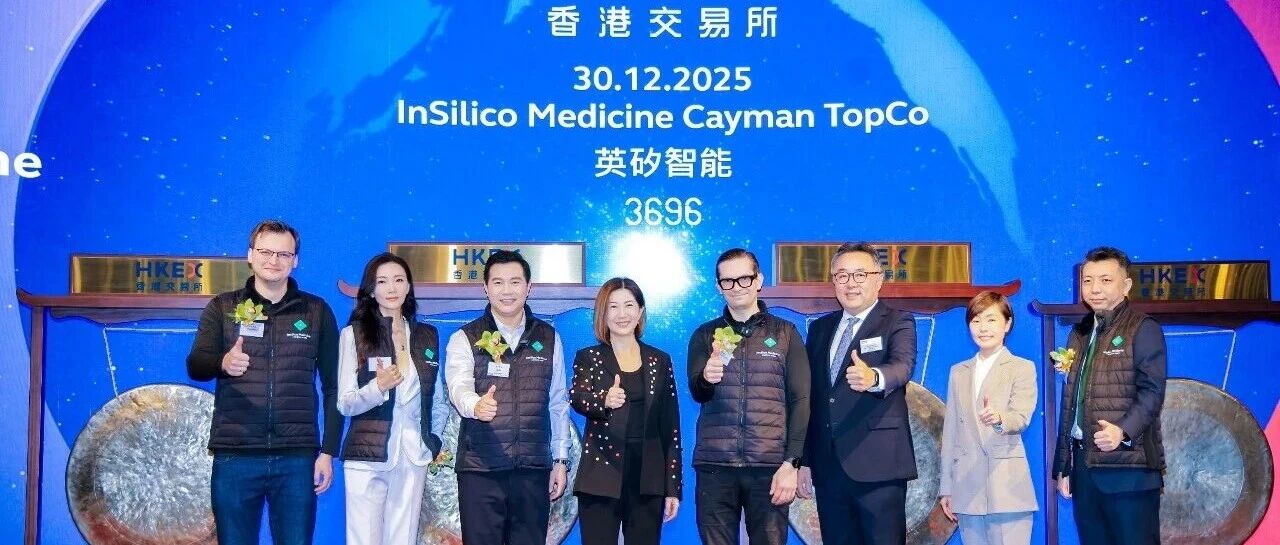
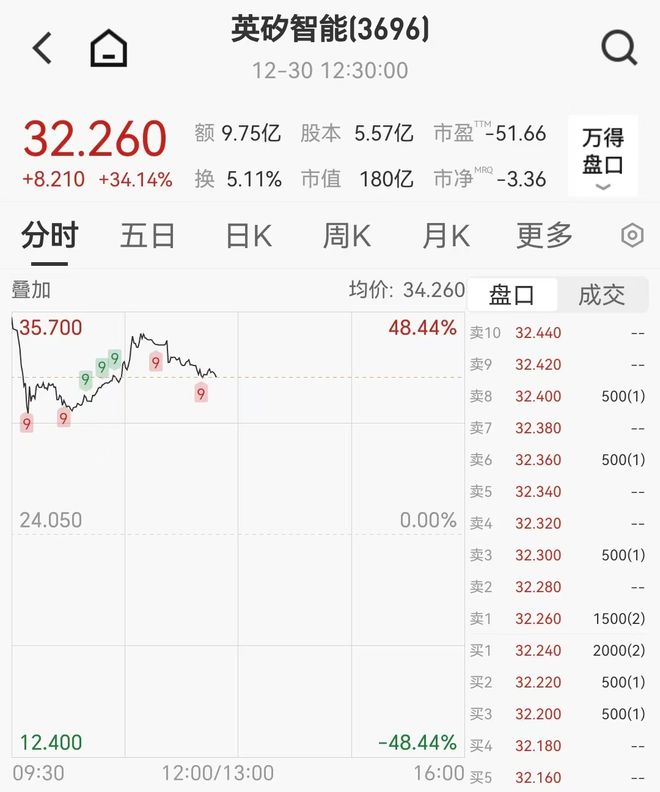
记者丨季媛媛 编辑丨张伟贤 12月30日,由生成式人工智能驱动的临床阶段生物医药科技公司英矽智能在港交所成功挂牌上市,股份 代码:3696.HK,成为首家通过联交所主板上市规则8.05条上市的人工智能生物医药科技公司。 本次首次公开募股(IPO)募集资金总额22.77亿港元,是年内募集资金最高的港股生物医药IPO。今日 港股早盘,英矽智能涨幅一度高达48%。截至发稿,仍涨超30%。 根据招股书,英矽智能成立于2014年,2019年落地上海浦东,凭借生成式AI技术快速崛起。其核心业 务涵盖自研管线开发、AI平台授权以及跨领域合作三大核心领域,并成功构建了从靶点发现直至临床 验证的完整产业链条。 2018年至今,英矽智能进行了8轮融资,2025年2月完成超1亿美元E轮融资,投后估值约13.31亿美元 (折合人民币约93.11元)。财务方面,于2022年度、2023年度、2024年度,英矽智能的收入持续增 长,分别为约3010万美元、5120万美元、8580万,2022年至2024年收入增长率为185%。毛利率分别为 63.4%、75.4%、90.4%。经过调整,亏损额持续减少,分别为7080万元、6740万元、2 ...

“AI制药”标杆企业英矽智能登陆港交所 创年内最大港股生物医药IPO
Xin Hua Cai Jing· 2025-12-30 06:41
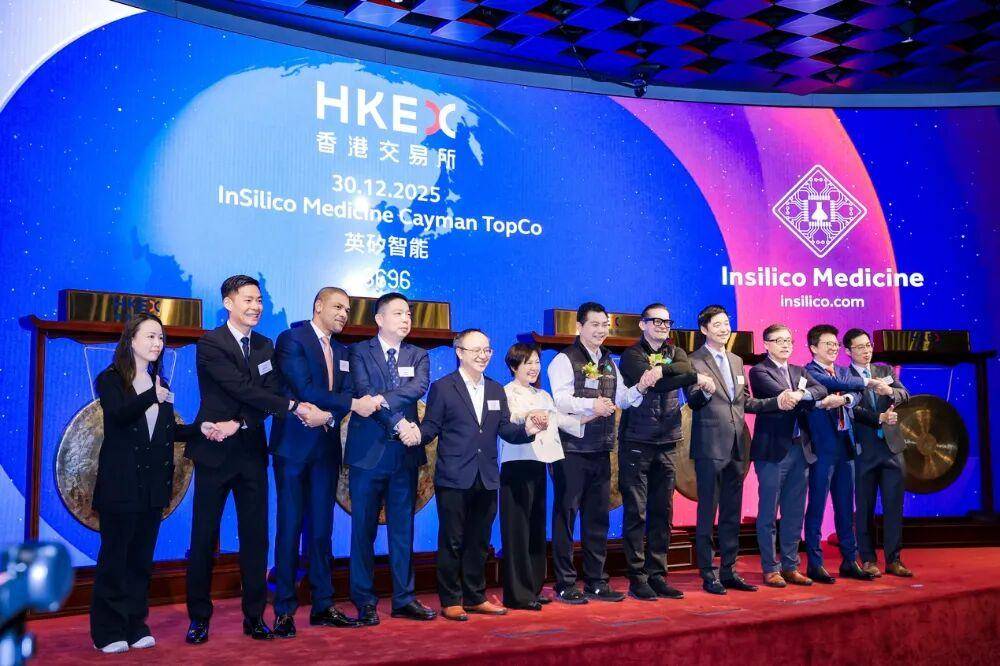
新华财经上海12月30日电(记者杜康)由人工智能驱动的临床阶段生物医药科技公司英矽智能(Insilico Medicine,股票代码:3696.HK)12月30日正式在香港联合交易所主板挂牌上市,此次IPO募集资金总 额达22.77亿港元,是2025年以来募集资金规模最高的港股生物医药IPO。 记者获悉,在技术底层,英矽智能依托自主研发的Pharma.AI一体化端到端平台,显著提升了新药研发 的确定性与效率。与传统研发模式平均4.5年的立项至临床前候选化合物(PCC)周期相比,英矽智能 在过去几年的20多个自研项目中,将这一平均耗时压缩至12至18个月。自2020年起,Pharma.AI 平台以 模块化软件形式上线并实现商业化,截至最后实际可行日期,已与全球前 20 大制药公司中的 13 家达成 软件授权合作。 据介绍,英矽智能最具代表性的AI制药案例是抗特发性肺纤维化候选药物Rentosertib(ISM001-055), 该药物由AI驱动覆盖靶点发现、分子设计到临床I 期研究,首次系统性展示了AI赋能药物从0到1的发现 过程。该项目已经完成中国IIa期临床研究,被视为人工智能制药领域首个具有里程碑意义的临 ...
AI制药第一股上市首日飙涨48%,获腾讯、瑞银等押注
21世纪经济报道· 2025-12-30 06:37
Core Viewpoint - The successful IPO of Insilico Medicine, driven by generative AI, marks a significant milestone in the AI-driven biopharmaceutical sector, showcasing the transition from concept to reality in "technology empowering medicine" [1][4]. Group 1: Company Overview - Insilico Medicine was established in 2014 and has rapidly grown since its establishment in Shanghai in 2019, leveraging generative AI technology [3]. - The company focuses on three core areas: self-developed pipeline development, AI platform licensing, and cross-domain collaborations, creating a complete industrial chain from target discovery to clinical validation [4]. - Insilico Medicine has raised a total of $1 billion across eight funding rounds since 2018, with a post-money valuation of approximately $1.331 billion after its Series E round in February 2025 [4]. Group 2: Financial Performance - The company reported continuous revenue growth from 2022 to 2024, with revenues of approximately $30.1 million, $51.2 million, and $85.8 million, respectively, reflecting a revenue growth rate of 185% [4]. - Gross margins improved significantly, reaching 63.4%, 75.4%, and 90.4% for the years 2022, 2023, and 2024, respectively [4]. - Adjusted losses decreased from 70.8 million to 22.7 million over the same period, indicating improved financial health [4]. Group 3: IPO Details - Insilico Medicine's IPO raised a total of HKD 2.277 billion, making it the highest fundraising biopharmaceutical IPO in Hong Kong for the year [1][6]. - The IPO saw significant oversubscription, with the Hong Kong public offering being oversubscribed by approximately 1,427.37 times, locking in over HKD 328.349 billion in subscription funds [6]. - The company attracted 15 cornerstone investors, including major players like Tencent and Temasek, highlighting strong market confidence [6]. Group 4: Industry Context - The AI-driven drug development sector is experiencing rapid growth, with global AI drug development financing events reaching 144 in 2022, totaling $6.202 billion, although 2023 saw a decline [9]. - The global AI pharmaceutical market is projected to grow from $792 million in 2021 to $2.994 billion by 2026, with a CAGR of approximately 30.45% [14]. - The current landscape is characterized by a "dual-engine" model in the US and China, with Insilico Medicine and other companies focusing on different segments of the AI drug development process [10]. Group 5: Challenges and Opportunities - Despite the enthusiasm in the capital market, the AI pharmaceutical industry faces challenges such as data shortages, clinical translation uncertainties, and unproven profit models [12][13]. - The reliance on high-quality biomedical data is critical for AI model development, yet many AI pharmaceutical companies struggle with data accessibility and standardization [13]. - The industry's future growth will depend on overcoming these challenges and successfully transitioning from technology-driven narratives to tangible commercial success [14].

全球AI制药领军企业英矽智能成功登陆港交所
Sou Hu Cai Jing· 2025-12-30 06:33
截至目前,全球收入最高的20家药企中13家都和英矽智能达成了软件平台合作;此外,英矽智能与Exelixis、美纳里尼等全球制药企业达成了3 项管线授权合作,为公司带来20亿美元的潜在收入;同时,包括赛诺菲、礼来、复星医药等在内的多家全球知名制药企业与英矽智能达成了药 物研发合作。 英矽智能创始人兼首席执行官、首席商务官Alex Zhavoronkov博士表示:"英矽智能致力于延长人类健康寿命,此次上市将为推进这项使命提 供更多资源。过去几年,我们用验证了人工智能赋能的项目从靶点发现到分子生成、再到临床前和临床阶段的端到端能力。未来,我们将继续 加大在人工智能平台和创新管线上的投入,加速更多具有全球差异化优势的创新项目进入临床,为全球患者带来真正可及、可负担、且具有突 破性的治疗方案。" 启明创投合伙人、医疗创新行业共同负责人陈侃博士表示:"投资英矽智能,我们是基于'AI将深刻改变药物研发的路径与效率'这样一个简单 的信念。2019年我们决定投资英矽智能,正是看中了团队在生成式AI尚未普及时的前沿探索。如今,通过临床前验证和管线授权,英矽智能 在AI制药领域的价值正逐步落地。未来,我们期待AI不仅赋能早期研发, ...
英矽智能港股上市,AI制药平台加速药物发现
Jin Rong Jie· 2025-12-30 05:37
目前,英矽智能已利用Pharma.AI平台建立了超过30个创新药项目的管线组合,覆盖肿瘤、免疫、纤维 化及代谢等多个疾病领域。 在本次IPO前,英矽智能已完成多轮主要融资。今年初,由宜兴市国控集团与锡创投联合设立的锡创兴 宜健康产业基金共同领投了公司的E轮融资。此次公开发行共引入了15家基石投资者,累计认购金额达 1.15亿美元,投资者类型涵盖全球制药企业、科技巨头、国际主权基金及大型资产管理公司等。 英矽智能的AI制药项目已落地于江苏省无锡市宜兴陶都科技新城。公司表示,未来将借助在宜兴建立 的创新业务总部研发平台,正式进军AI辅助大分子药物的研发赛道。宜兴国控集团相关负责人介绍, 此次合作旨在构建"基金+企业+项目"协同赋能平台,以资本为纽带,实现创新链、产业链与资金链的 深度融合。 12月30日,英矽智能正式在香港联合交易所主板挂牌上市,成为港股市场"AI制药第一股"。此次上市也 是2025年港股市场规模最大的生物科技IPO。 英矽智能成立于2014年,是一家业务遍布全球、由生成式人工智能驱动的生物科技公司。其商业模式以 自主研发的Pharma.AI平台为核心,该平台整合了靶点发现、分子设计、临床前研究及 ...
视频|港股IPO2025年末收官!六锣齐鸣 五股高开!
Xin Lang Cai Jing· 2025-12-30 04:04
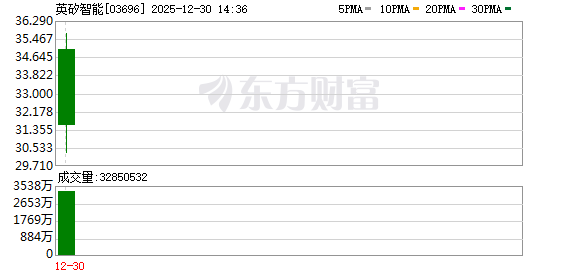
Group 1 - The Hong Kong stock market witnessed a competitive IPO environment at year-end, with six companies debuting and five opening higher, collectively expected to raise nearly 6 billion HKD [1] - AI pharmaceutical platform InSilico Medicine led the gains, opening at 35 HKD, a 45.5% increase from the offering price of 24.05 HKD, with a potential profit of 5,475 HKD per lot [1] - High-end cosmetics company Lin Qingxuan opened at 85 HKD, up 9.3% from the offering price of 77.77 HKD, yielding a profit of 361.5 HKD per lot [1] Group 2 - The performance of household robotics developer Woan Robotics was relatively weak, opening at 73.8 HKD, unchanged from the offering price [1] - Real-time data infrastructure and analytics solutions provider XunCe opened at 48.02 HKD, a slight increase of 0.1% from the offering price of 48 HKD, with a profit of 2 HKD per lot [1] - Prefabricated steel structure construction service company Meilian Holdings opened at 8.21 HKD, a 15.6% increase from the offering price of 7.1 HKD, resulting in a profit of 333 HKD per lot [1] Group 3 - The IPO event marked the second occurrence of "six bells ringing" at the Hong Kong Stock Exchange this year, with the previous instance on July 9 [1] - Digital twin technology company Wuyi Shijie opened at 35 HKD, a 14.8% increase from the offering price of 30.5 HKD, with a profit of 900 HKD per lot [1]
英矽智能在港交所主板挂牌上市 成为港股“AI制药第一股”
Zheng Quan Shi Bao Wang· 2025-12-30 03:24
Core Viewpoint - Insilico Medicine officially listed on the Hong Kong Stock Exchange on December 30, becoming the first AI pharmaceutical company in the Hong Kong market [1] Group 1: Company Overview - Insilico Medicine, founded in 2014, is a global AI-driven biotechnology company focusing on drug discovery and development using its proprietary Pharma.AI platform [1] - The company has expanded the application of Pharma.AI to various industries, including advanced materials, agriculture, nutritional products, and veterinary medicine, with over 30 innovative drug projects in its pipeline [1] - Insilico's leading asset is Rentosertib (ISM001-055), the fastest progressing AI drug globally, which is a first-in-class candidate for idiopathic pulmonary fibrosis (IPF) [1] Group 2: Future Developments - Insilico Medicine has established an innovative business headquarters in Yixing, China, to advance its research in large molecule drug development using generative AI technology [1] - The establishment of a team and projects in Yixing is expected to accelerate the development of large molecule drugs and further the company's growth in the life sciences sector [1] Group 3: Financing and Investment - Prior to its IPO, Insilico Medicine completed five major financing rounds, including an E-round led by the Yixing State-owned Assets Management Group and Xichuang Investment [2] - During the IPO, Insilico attracted 15 top-tier investment institutions, raising a total of $115 million, including global pharmaceutical companies, internet giants, sovereign funds, and major asset management firms [2] - Yixing has been actively promoting its modern industrial cluster layout and has established a comprehensive fund system to support emerging industries and high-tech sectors [2]
黄仁勋点赞的AI制药公司,英矽智能今日港股IPO
硬AI· 2025-12-30 03:05
Core Viewpoint - The article emphasizes that AI is transforming biology from an experimental science reliant on trial and error into a predictable and programmable data science, as highlighted by NVIDIA's CEO Jensen Huang [2][3]. Group 1: Company Overview - Insilico Medicine (3696.HK) officially listed on the Hong Kong Stock Exchange on December 30, 2025, with an opening price of HKD 35, a 45% increase from the issue price, resulting in a market capitalization of HKD 19.5 billion [5]. - The IPO raised a total of HKD 2.277 billion, marking it as the largest IPO in the Hong Kong biotech sector for 2025 and serving as a test for the "AI + Biotech" business model in the capital market [6][8]. Group 2: Market Reception - The IPO saw an oversubscription of approximately 1,427.37 times in the public offering segment, with subscription funds exceeding HKD 328.349 billion, setting records for non-18A healthcare IPOs in Hong Kong [11]. - Insilico attracted 15 cornerstone investors, including Eli Lilly and Tencent, indicating strong institutional confidence in the company's fundamentals and technology platform [12][13]. Group 3: Business Model - Insilico's unique "dual-engine" business model combines AI with innovative drug discovery, generating predictable recurring revenue through its Pharma.AI platform, which is licensed to pharmaceutical companies [18]. - The company has established a global network of collaborations, with 13 out of the top 20 pharmaceutical companies having signed software licensing agreements [18]. Group 4: Innovation and Efficiency - Insilico's AI-driven drug discovery process significantly reduces the time from target identification to preclinical candidate nomination from an average of 4.5 years to just 12-18 months, allowing for more attempts and higher success rates in drug development [24]. - The success of ISM001-055, the first AI-discovered drug candidate to enter clinical phase II, demonstrates the effectiveness of AI in drug development, validating the company's approach [25][26]. Group 5: Future Outlook - The article suggests that the next decade may witness AI breaking the "Eroom's Law," which states that drug development costs increase exponentially over time, potentially leading to more accessible and affordable treatments for patients globally [28][29].

启明创投陈侃:在OpenAI火起来之前四年投资英矽智能,AIDD平台前景广阔
IPO早知道· 2025-12-30 03:04
Core Viewpoint - Insilico Medicine is set to become the largest biotech IPO in the Hong Kong market in 2025, with significant backing from prominent investors like Qiming Venture Partners, Warburg Pincus, Temasek, Hillhouse, and Sequoia China [2] Investment Background - Qiming Venture Partners led Insilico Medicine's Series B financing in 2019 and has since increased its stake, holding approximately 7% before the IPO [2] - The investment was driven by the belief that AI will profoundly change drug development pathways and efficiency [2][4] - Insilico Medicine's collaboration with WuXi AppTec in 2018 resulted in the rapid identification of a small molecule lead compound targeting DDR1 in just 46 days, showcasing the potential of AI in drug discovery [4] Company Development and Strategy - Insilico Medicine has established a pipeline of over 30 innovative projects across various therapeutic areas, including oncology, immunology, fibrosis, and metabolism [7] - The company has partnered with 13 of the top 20 pharmaceutical companies globally, generating potential revenue of $2 billion through pipeline licensing agreements [7][8] - The introduction of Dr. Ren Feng, a seasoned drug development expert, was facilitated by Qiming to strengthen the company's capabilities in drug development [5] Future Expectations - The increasing validation of Insilico Medicine's platform is expected to enhance its attractiveness as a partner for top international pharmaceutical companies [8] - There is an anticipation that AI will not only empower early-stage research but also significantly accelerate clinical development processes, allowing new drugs to reach patients sooner [2][8] - The company aims to expand the application of its AI-driven platform beyond preclinical stages to include clinical phases, enhancing efficiency in patient recruitment, clinical protocol writing, data analysis, and regulatory review [11] Industry Insights - Qiming Venture Partners has previously invested in Schrödinger, gaining insights into the AIDD sector, which has informed their investment strategy in Insilico Medicine [9][10] - The firm recognizes that merely providing software services in the AIDD space may lead to slow growth, prompting a focus on generating pipeline projects for scalability [10] - The collaboration between Qiming's medical innovation and technology investment teams has been crucial in identifying and supporting leading companies in the AI and healthcare sectors [10]
英矽智能正式登陆港交所:市值超190亿港元,AI制药引领年内最大港股Biotech IPO
IPO早知道· 2025-12-30 03:04
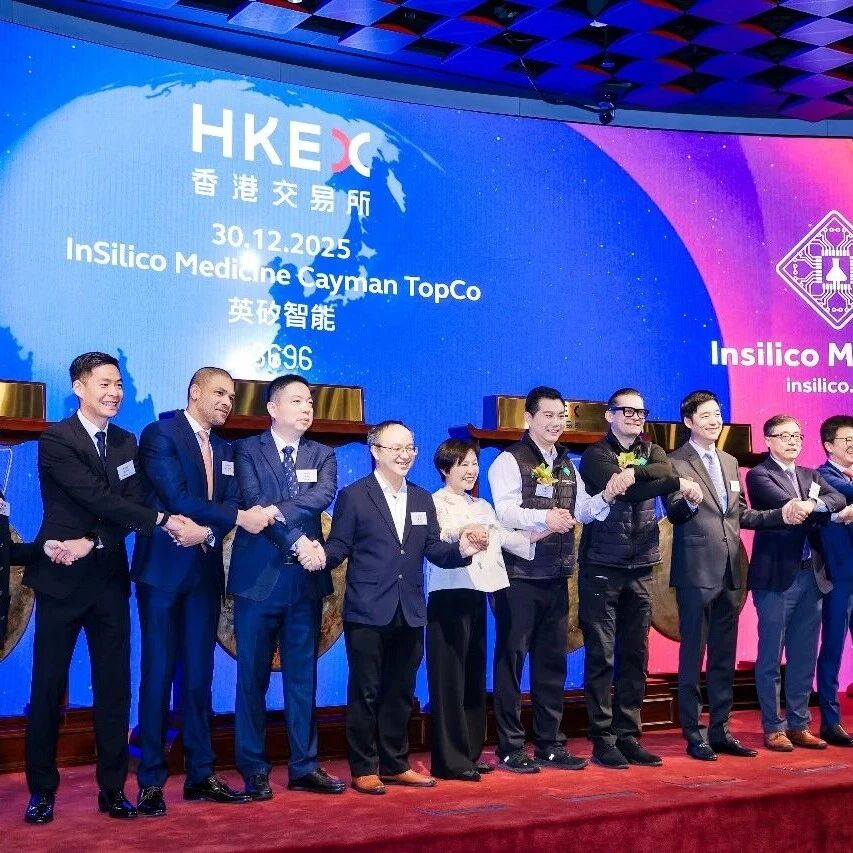
Core Viewpoint - InSilico Medicine Cayman TopCo, known as "InSilico AI," has officially listed on the Hong Kong Stock Exchange under the stock code "3696," marking it as the first AI-driven biopharmaceutical company to do so under the main board listing rules [4][6]. IPO Highlights - The IPO raised a total of HKD 22.77 billion, the highest amount for a Hong Kong biopharmaceutical IPO in 2025 [4]. - The Hong Kong public offering was oversubscribed by 1,427.37 times, with total subscription funds exceeding HKD 328.35 billion, setting a record for non-18A Hong Kong healthcare IPOs [4]. - The international offering saw a 26.27 times oversubscription, also a record for non-18A Hong Kong healthcare IPOs [4]. - The company attracted 15 cornerstone investors, including Eli Lilly, Tencent, Temasek, and Schroders [4][5]. Market Performance - As of 11:00 AM, InSilico AI's stock was priced at HKD 34.16, a 42.04% increase from the issue price, with a market capitalization exceeding HKD 19 billion [6]. Company Mission and Strategy - The CEO, Alex Zhavoronkov, emphasized the company's commitment to extending human healthspan and the role of AI in enhancing drug discovery efficiency and success rates [6]. - The company aims to invest in its AI platform and innovative pipeline to accelerate the development of groundbreaking treatments [6]. Business Model and Pipeline - InSilico AI operates on a dual-engine model of "AI platform licensing + internal pipeline development," focusing on drug discovery through AI [10]. - The company has developed over 30 innovative projects targeting various diseases, including cancer and fibrosis [8]. - Its lead asset, Rentosertib (ISM001-055), is recognized as the fastest progressing first-in-class AI drug globally, targeting idiopathic pulmonary fibrosis [8]. Financial Performance - Revenue figures for 2022, 2023, and 2024 were USD 30.15 million, USD 51.18 million, and USD 85.83 million, respectively, with gross margins increasing from 63.4% to 90.4% [10]. - The net loss decreased significantly from USD 222 million in 2022 to USD 17.1 million in 2024, indicating the potential of its business model [10]. Research and Development - InSilico AI has published over 300 peer-reviewed papers and holds more than 700 patents, showcasing its commitment to innovation in life sciences [11]. - The company has proposed the concept of "Pharmaceutical Superintelligence," aiming to create an AI-driven autonomous drug development system [13]. Team and Leadership - The company is led by two co-CEOs, Alex Zhavoronkov and Ren Feng, who bring extensive experience in AI and drug development [12]. - The R&D team consists of 249 scientists, with 87% holding advanced degrees [13]. Use of IPO Proceeds - Approximately 48% of the IPO proceeds will be allocated to further clinical development of key pipeline candidates, 20% to early drug discovery, and 15% to developing innovative generative AI models [13].