无人机

Search documents
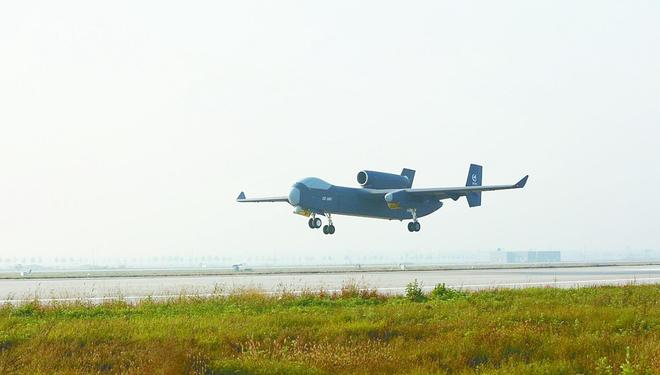
可在多种环境执行任务,堪称“六边形战士”,国产“九天”无人机首飞成功
Huan Qiu Wang Zi Xun· 2025-12-11 22:54
来源:环球时报 强大的载荷能力是优势 据了解,作为我国自主创新的大型通用无人机平台,"九天"无人机的机长达16.35米,翼展25米,最大 起飞重量16吨,最大任务飞行高度1.5万米,最大飞行速度每小时700公里,航时达12小时,转场航程达 7000公里,载荷能力达6吨,性能指标位居同类产品前列。 "九天"无人机的首次亮相是在2024年的第十五届珠海航展上,当时该型无人机凭借庞大的体型、丰富的 挂载能力,成为当届航展上的明星展品之一。《环球时报》记者在航展现场看到,该型无人机的机头设 计有一个尺寸较大的雷达罩,雷达罩下方还配有光电吊舱,体现出该型无人机态势感知手段丰富。此 外,该型无人机的两个机翼上共有8个外挂点,分别挂有空对空导弹、反舰导弹、空对地导弹、滑翔炸 弹等有人驾驶战斗机所携带的常规武器装备。 "九天无人机起飞重量达到了16吨,这已超过美国的'全球鹰'战略无人侦察机。"中国军事专家傅前哨12 月11日在接受《环球时报》记者采访时表示。根据公开指标来看,在全球无人机家族中,虽然"九天"无 人机在航时上不及美国的"全球鹰",但"九天"优势在于强大的载重能力,而这一点是"全球鹰"不具备 的。 【环球时报报道 ...

港科大的“校友圈”里,藏着大湾区“独角兽”的培育密码
2 1 Shi Ji Jing Ji Bao Dao· 2025-12-11 22:53
Core Insights - The Hong Kong University of Science and Technology (HKUST) has significantly influenced entrepreneurship in the Greater Bay Area, with a notable shift in student preferences towards local startups after the rise of DJI Innovations [1][2] - HKUST has established a unique entrepreneurial ecosystem, fostering collaboration among alumni and providing resources for startups, which has led to the creation of over 1,900 active startups and significant economic impact [2][5] Group 1: Entrepreneurial Ecosystem - HKUST alumni have founded over 1,900 active startups, including 10 unicorns and 17 successful exits, generating an economic impact exceeding 400 billion HKD [2] - The university's entrepreneurial culture is characterized by a "mentor-student" investment model, where professors provide resources and students lead market initiatives [5][6] - The annual HKUST International Entrepreneurship Competition has evolved into a high-density innovation resource platform, linking projects with essential technology, funding, and industry resources [6][7] Group 2: Notable Success Stories - DJI Innovations, founded by HKUST alumnus Wang Tao, is valued at 84 billion HKD and exemplifies the success of the university's entrepreneurial model [3] - Other successful startups include JinkoSolar, which transitioned from LED chip development to a leading provider of intelligent visual products, and Dap Bio, a leader in droplet microfluidics [4][3] - The collaboration between alumni and faculty has led to the establishment of various high-tech companies, showcasing the effectiveness of the university's support system [4][5] Group 3: Investment and Funding Initiatives - HKUST has launched several funds, including a 5 billion HKD "Red Bird Innovation and Entrepreneurship Fund" and a 20 billion HKD venture capital fund in collaboration with Gobi Partners [8] - The establishment of the "Innovation Zone" around HKUST Guangzhou aims to create a comprehensive innovation ecosystem, facilitating the growth of startups in various tech sectors [7][8] - The university emphasizes the importance of collaboration among government, academia, and investors to enhance the entrepreneurial landscape in the Greater Bay Area [8]
经济日报财经早餐【12月12日星期五】
Jing Ji Ri Bao· 2025-12-11 22:41
■11日,"九天"无人机在陕西蒲城圆满完成首飞任务。此次首飞成功标志着我国大型无人机技术实现新 突破。 ■中央经济工作会议10日至11日在北京举行。中共中央总书记、国家主席、中央军委主席习近平出席会 议并发表重要讲话。 ■商务部:今年以来,面对复杂严峻的外部环境,中国外贸逆势而上,前11个月,我国货物进出口总值 同比增长3.6%,实现量稳质升。 ■当地时间11日,在印度新德里召开的联合国教科文组织保护非物质文化遗产政府间委员会第20届常会 上,中国"赫哲族伊玛堪"成功从急需保护的非物质文化遗产名录转入人类非物质文化遗产代表作名录。 12月11日,在印度新德里举行的联合国教科文组织保护非物质文化遗产政府间委员会第20届常会上,大 屏幕上播放中国"赫哲族伊玛堪"保护成果。(新华社) ■中国汽车工业协会11日发布的最新数据显示,11月份,我国汽车月度产量首次超过350万辆,创历史 新高。不仅如此,今年前11个月,汽车产销量均超过3100万辆,同比增长均超过10%。 12月10日,在美国首都华盛顿,美国联邦储备委员会主席鲍威尔出席记者会。(新华社) ■联合国当地时间10日召开特别会议,启动其首个"联合国可持续交通十年 ...
影响市场重大事件:马斯克确认SpaceX明年IPO,估值约1.5万亿美元;华为、支付宝、中移互联网合作布局AI+5G新通话DC生态
Mei Ri Jing Ji Xin Wen· 2025-12-11 22:33
Group 1 - Huawei, Alipay, and China Mobile Internet signed a cooperation agreement to launch an intelligent communication era with "call as a service" [1] - The collaboration aims to innovate the AI + 5G new call DC ecosystem, transitioning traditional calls to intelligent and service-oriented solutions [1] - China Mobile Internet will leverage its extensive 5G network and user base for reliable communication support, while Alipay will integrate its digital ecosystem capabilities [1] Group 2 - Elon Musk confirmed that SpaceX plans to go public next year, aiming to raise over $30 billion with an estimated valuation of $1.5 trillion [2] - The IPO could potentially break the record for the largest fundraising in history, surpassing Saudi Aramco's $29 billion in 2019 [2] - SpaceX intends to use part of the IPO proceeds to develop a space data center [2] Group 3 - The Zhejiang Province is launching a major technology initiative for brain-computer interfaces, aiming to create a competitive industry cluster [3] - An international standard for brain-computer interface technology is being established to promote healthy and orderly development in the field [3] Group 4 - The China Internet Finance Association held a meeting to discuss self-regulation in supply chain finance, focusing on improving market monitoring and management [4] - The association aims to guide the industry towards reasonable control of financing costs and orderly exit of weaker platforms [4] Group 5 - The Ministry of Commerce plans to introduce policies to accelerate innovation and transformation in the retail sector during the 14th Five-Year Plan [5] - The focus will be on enhancing product and service quality and promoting fair competition between online and offline channels [5] Group 6 - The Xi'an Chida Aircraft's "Jiutian" drone successfully completed its maiden flight, showcasing versatility for both military and civilian applications [6] - The drone can be used for logistics, emergency rescue, and various surveying services, covering multiple sectors of the national economy [6] Group 7 - The National Development and Reform Commission and the National Energy Administration issued guidelines for centralized pricing of renewable energy generation [7] - The new rules restrict centralized pricing to renewable energy companies within the same group and province, preventing cross-group and cross-province pricing [7] Group 8 - Goldman Sachs predicts that gold prices could rise to $4,900 per ounce by the end of 2026, driven by increased investment in gold ETFs [8] - The current allocation of gold in U.S. financial portfolios is low, suggesting significant potential for price increases with higher ETF investments [8] Group 9 - Liaoning Province is soliciting opinions on a three-year action plan for high-quality development of ice and snow tourism [9] - The plan aims to enhance the province's ice and snow tourism brand and develop multiple tourism routes and resorts [9] Group 10 - In November, China's automobile exports reached 728,000 units, marking a 9.3% month-on-month increase and a 48.5% year-on-year increase [10] - The total exports for the first eleven months of 2025 reached 6.343 million units, with expectations to reach 7 million units for the entire year [10]

完善规则,遏制无人机“黑飞”乱象
Nan Fang Du Shi Bao· 2025-12-11 16:29
Core Viewpoint - The National Market Regulation Administration has approved two mandatory national standards for civil unmanned aerial vehicles (UAVs), which will be implemented on May 1, 2026, addressing key regulatory issues related to UAV operation and identification. Group 1: Registration and Activation Requirements - The standard "Requirements for Real-name Registration and Activation of Civil Unmanned Aerial Vehicles" establishes clear guidelines for the registration and activation process, requiring UAVs to display real-name registration and activation requirements prominently [2] - Key information required for registration includes owner identity, product name, model, unique product identification code/serial number, and intended use, effectively serving as a "registration" for UAVs [2] - Ensuring the authenticity of this information is crucial for subsequent regulatory oversight [2] Group 2: Operational Identification Standards - The "Operational Identification Standards for Civil Unmanned Aerial Vehicle Systems" aims to enhance the monitorability and safety of UAV operations, addressing the regulatory question of "who is flying" [3] - UAVs must have both broadcast and network-based identification capabilities, with information updates and transmissions occurring at intervals of no more than one second [3] - If the identification module fails before takeoff, the UAV will be unable to fly, and any failure during flight must trigger an alarm and enable emergency landing capabilities [3] Group 3: Regulatory Context and Challenges - Previous regulations, such as the "Interim Provisions on the Management of Unmanned Aerial Vehicle Flights," have already outlined prohibited behaviors for UAVs, including actions that threaten public safety and order [3] - Recent incidents of unauthorized UAV flights, including flights reaching altitudes of 8,000 meters, highlight the need for improved technical standards and regulatory compliance [4] - The rapid development of the low-altitude economy and the associated public safety concerns necessitate a comprehensive and effective regulatory framework for UAV operations [5]
低空物流再添重器 以“短距起降”优势开拓国际市场
Zhong Guo Xin Wen Wang· 2025-12-11 15:28
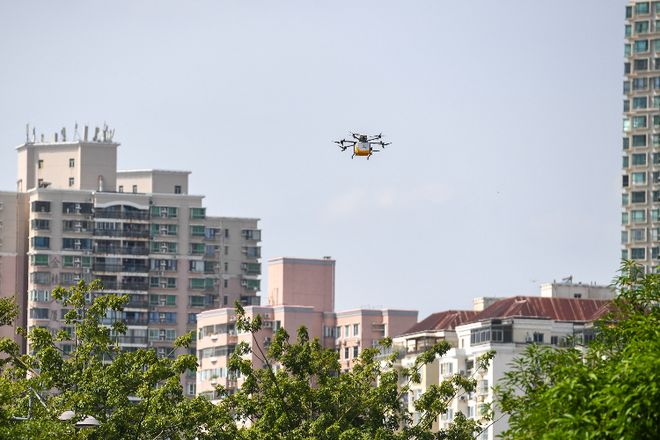
Group 1 - The core viewpoint is that the SUNNY-T2000, a leading domestic cargo drone, has significant application prospects in the international market and fills a gap in the domestic market for cargo drones [1] - The SUNNY-T2000 is a large cargo drone with a capacity of 2 tons, capable of executing rapid cargo transport and emergency rescue missions over distances exceeding 1,000 kilometers [1] - The drone's low runway requirements and short takeoff and landing capabilities are particularly appealing in overseas markets [1] Group 2 - The SUNNY-T2000 is part of an emerging family of cargo drones, with plans to cover capacities from 2 tons to 10 tons, aimed at achieving operational synergy across different scenarios [1] - A 6-ton variant of the same series has already selected domestic turboprop engines and is designed to be compatible with standard shipping containers, moving towards standardization and high payload capacity [1] - The company has signed contracts with multiple domestic power suppliers to ensure the supply chain for its products [1] Group 3 - The development of the SUNNY-T2000 is supported by an industrial cluster in Shenyang, which has gathered over 30 related enterprises and has been approved for comprehensive airspace, flight routes, and landing point resources [1] - This cluster has formed a preliminary ecosystem that encompasses research and development to operations [1] - Following its launch, the SUNNY-T2000 will enter a comprehensive testing phase before obtaining airworthiness certification, laying the groundwork for its eventual commercial operation [2]
晚报 | 12月12日主题前瞻
Xuan Gu Bao· 2025-12-11 14:34
Group 1: National Unified Market - The Central Economic Work Conference emphasized the need to establish a national unified market construction regulation and to address "involution" competition [1] - The construction of a national unified market is seen as a key economic engine, expected to release significant "institutional dividends" and "efficiency dividends" over the next 3-5 years [1] - The focus is on eliminating bottlenecks and reducing costs, which will benefit companies involved in resource integration and efficiency improvement [1] Group 2: Robotics - The Beijing Humanoid Robot Innovation Center launched the first fully autonomous humanoid robot navigation solution in China, integrating various capabilities for diverse applications [2] - The core technology relies on a closed-loop system that allows robots to operate independently without human control, enhancing the potential for widespread industrial applications [2] Group 3: Communication - Huawei, Alipay, and China Mobile Internet signed a cooperation agreement to initiate an intelligent communication era with "Communication as a Service" (CaaS) [3][4] - This collaboration aims to transform traditional communication into an intelligent service platform, enhancing user experience and expanding service capabilities [4] Group 4: Drones - The "Jiutian" drone successfully completed its first flight, featuring a modular design and advanced capabilities, positioning it as a leading product in the global market [5] - The drone is expected to fulfill military and civilian logistics needs, with significant market value anticipated as orders are fulfilled in the coming years [5] Group 5: Storage Chips - The storage chip market is experiencing a significant decline in transaction volume due to rising prices and limited supply, with NAND resource prices increasing by over 100% [6] - The shortage of NAND chips is expected to persist, with many manufacturers facing inventory challenges that could impact future supply [6] Group 6: Controlled Nuclear Fusion - Multiple new controlled nuclear fusion projects are set to launch, indicating a shift towards industrialization and increased demand within the sector [7] - The industry is entering a phase of intensive bidding, with significant capital expenditures expected to support ongoing project developments [7] Group 7: Tungsten - Prices for tungsten products have risen, driven by tightening supply and increasing demand across various sectors [8] - The global tungsten supply is expected to remain constrained, supporting high price levels in the coming years [8]
广联航空(300900) - 300900广联航空投资者关系管理信息20251211
2025-12-11 13:22
Group 1: Company Strategy and Goals - The company aims to transform into a "platform enterprise" by integrating the industrial chain and building an ecosystem through resource consolidation, moving from a "product supplier" to a "comprehensive solution provider" [3] - The core planning for becoming a platform enterprise focuses on "extending the industrial chain, cross-domain collaboration, and ecological layout," targeting aerospace and emerging fields like commercial space and robotics [3] Group 2: Business Development and Growth Drivers - The company adopts a strategy of "traditional core business foundation, new business empowerment," balancing traditional and emerging business developments to ensure stable performance and support for new business expansion [4] - Future growth drivers will shift from "traditional military orders" to a dual-driven model of "stable growth in traditional business + explosive growth in emerging business," focusing on lightweight structural components [4] Group 3: Financial Instruments and Value Enhancement - The management of convertible bonds will be closely tied to long-term value enhancement, creating a cycle of "value enhancement - bond conversion - capital empowerment" [4] - The company plans to implement flexible and reasonable management strategies for convertible bonds based on market conditions and development stages to protect the rights of bondholders [4] Group 4: Mergers and Acquisitions Strategy - Future acquisitions will focus on three core dimensions: "strategic fit, technological complementarity, and market synergy," prioritizing targets that enhance the industrial chain layout and possess core technological barriers [5] - A comprehensive control system for the acquisition process will be established, including thorough due diligence, strict compliance during the delivery phase, and a dedicated integration team for post-acquisition integration [5] Group 5: Market Positioning and Production Capabilities - The company is strategically positioning itself in the high-end, large-scale, and intelligent development trends of the global drone market by establishing an advanced production base in the southwest region [6] - The production line is designed to be digital and flexible, capable of quickly adapting to various drone models and batch production needs, ensuring precision and efficiency in production processes [6]

2025 年应急救援无人机品牌推荐:守护安全的“钢铁羽翼”
Tou Bao Yan Jiu Yuan· 2025-12-11 13:03
Investment Rating - The report does not explicitly state an investment rating for the emergency rescue drone industry Core Insights - The emergency rescue drone industry is experiencing rapid growth driven by increasing natural disasters and the need for efficient response mechanisms [4] - The integration of AI and advanced technologies is transforming drones from auxiliary tools to intelligent operational entities [15] - The market is characterized by a diverse competitive landscape with leading companies leveraging technological advancements to enhance their offerings [12] Market Background - The rise in natural disasters and public health emergencies has highlighted the limitations of traditional emergency response methods, leading to the adoption of drone technology [4] - Emergency rescue drones are defined as unmanned aerial systems designed for tasks such as disaster reconnaissance, information gathering, and material delivery during emergencies [5] - The industry has evolved from basic applications to complex, integrated systems capable of performing multiple tasks in emergency scenarios [6] Market Status - The rapid development of the emergency rescue drone industry in China is driven by five core factors: supportive policies, technological breakthroughs, increasing disaster occurrences, expanding market demand, and heightened safety awareness [7] - The supply side of the market features a diverse and competitive landscape, with leading domestic companies dominating through technological advantages and comprehensive industry chain layouts [8] - Demand for emergency rescue drones is robust, fueled by policy guidance, deepening application scenarios, and regional demand variations [9][10] Market Competition - The competitive landscape is defined by a "head-led, multi-competitive" structure, with major players like DJI and specialized manufacturers leading the market [12] - The evaluation of the top ten emergency rescue drone brands is based on multiple quantitative metrics, including revenue, payload capacity, and flight endurance [11] - Major brands include DJI, United Aircraft, and Yandu Drone, each with unique technological strengths and market strategies [13][17] Development Trends - The integration of AI technology is enabling drones to perform autonomous operations, significantly reducing reliance on human operators [15] - Future focus will be on developing industrial-grade drones with high payload capacities and long flight times to meet the demands of complex rescue scenarios [16]
吊扇也能“飞”上天
经济观察报· 2025-12-11 11:57
Core Insights - The article emphasizes the importance of focusing on core technologies and allowing innovation to grow naturally, rather than chasing short-term speculative trends [1][20] - It advocates for a strategic approach of gradual value creation instead of aggressive expansion in the manufacturing sector, which is referred to as "returning to the essence and opening up new paths" [1][21] Group 1: Transformation and Innovation - Many small and medium-sized enterprises in Guangdong are embarking on a journey of transformation and innovation, returning to the essence of manufacturing and achieving breakthroughs in technology and application scenarios [2] - New Shengshi's chairman, Lu Qirong, has focused on lean manufacturing, smart transformation, and technology research and development, leading the company to become a champion in the ceiling fan industry [7] - The transition from ceiling fans to drones illustrates a significant technological migration, combining existing motor technology and manufacturing processes with new applications in three-dimensional space [7][8] Group 2: Strategic Philosophy - The article discusses the dual wisdom of "returning" in the context of strategic philosophy, emphasizing the need to maintain independent judgment amidst mainstream trends and to return to the essence of technology for new growth points [5][19] - The concept of "creating a new demand" through innovative breakthroughs, rather than incremental improvements, is highlighted as a key to achieving significant market differentiation [14] Group 3: Brand and Market Positioning - The article points out that even high-quality products may struggle to gain market recognition if their brand positioning lags behind, indicating a common shortcoming in Chinese manufacturing [17] - New Shengshi's architectural design reflects a systematic approach to brand image construction, integrating philosophical thought and aesthetic pursuit into the manufacturing process [17] Group 4: Open Innovation and Collaboration - The article stresses that true innovation efficiency comes from resource integration rather than isolated research and development, citing Apple's model of global resource integration as a successful example [11] - The promotion of mutual cooperation among small and medium-sized enterprises is seen as a way to optimize costs and accelerate innovation cycles, allowing more companies to participate in high-tech product development [12]