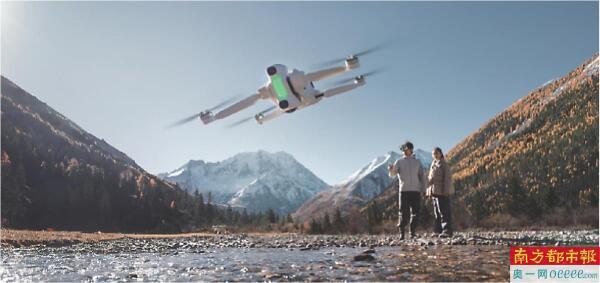
影翎A1

Search documents
巨头把影石往死里打
半佛仙人· 2026-03-28 09:09
Core Viewpoint - The article emphasizes the importance of competition in the industry, suggesting that intense rivalry among companies ultimately benefits consumers, as it drives innovation and better products [3][4]. Group 1: Competition Dynamics - The article argues that when companies compete fiercely, it leads to better products and services for consumers, as businesses strive to outperform each other [3][4]. - It highlights that large companies, once they dominate the market without competition, tend to become complacent and less innovative, acting more like rent-seekers [3][4]. - The presence of new competitors is essential for keeping established companies in check and ensuring they continue to innovate [4][6]. Group 2: Industry Reactions - The article discusses the recent controversies surrounding the company YingShi, noting that its significant market share and rapid growth have provoked strong reactions from competitors [6][10]. - YingShi's revenue reached a historical high, with Q4 revenue growth exceeding 100%, and it holds a 66% market share in panoramic cameras and 57% in thumb cameras, indicating its strong position in the market [6][10]. - The article mentions that YingShi has filed an average of 140 new technology and design patents annually over the past decade, showcasing its commitment to innovation [9][10]. Group 3: Legal and Strategic Maneuvers - The article points out that the lawsuits faced by YingShi are not necessarily about winning but are intended to intimidate potential talent and create obstacles for the company [13][14]. - It suggests that the competitive landscape has become aggressive, with established companies resorting to legal tactics rather than direct competition, indicating that they feel threatened by YingShi's advancements [14][15]. - The article concludes that true competition should be about product superiority, and the ongoing legal battles are a sign that competitors cannot match YingShi's innovation and market presence [15][17]. Group 4: Consumer Benefits - The article asserts that competition leads to market vitality, which ultimately benefits consumers through better products and lower prices [17][18]. - It emphasizes that as long as competition persists, companies will be compelled to invest in research and development, ensuring continuous improvement in offerings [18].


大疆起诉影石:六件专利权属之争
经济观察报· 2026-03-26 04:36
Core Viewpoint - The legal dispute between DJI and Yingshi revolves around six patent ownership issues, marking a significant escalation in their competitive rivalry in the drone market [3][11]. Group 1: Patent Dispute Details - DJI has filed a lawsuit against Yingshi in the Shenzhen Intermediate People's Court concerning six patents, which include three invention patent applications and three authorized utility model patents, focusing on drone flight control, structural design, and image processing [1][6]. - The patents in question involve inventors who previously worked in DJI's R&D department, directly contributing to the relevant technologies [3][7]. - The lawsuit highlights a critical issue regarding patent ownership, as DJI claims that the inventors listed in Yingshi's patent applications were former employees who developed these technologies while at DJI [4][9]. Group 2: Market Context and Company Performance - DJI has maintained a dominant position in the consumer drone market for over a decade, with a global market share exceeding 70%, while Yingshi recently announced its entry into this market with the launch of its drone brand "Yingling" [11][12]. - In 2025, DJI's revenue is projected to be between 85 billion to 90 billion yuan, with approximately 50 billion yuan coming from its drone business, while Yingshi's revenue for the same year is expected to reach 9.858 billion yuan, reflecting a year-on-year growth of 76.85% [11][12]. - The competitive landscape is intensifying as both companies are now targeting each other's core markets, with DJI quickly responding to Yingshi's product launches [12][13].

影石创新股价跳水,大疆起诉影石已立案
第一财经· 2026-03-23 05:28
Core Viewpoint - The article discusses a legal dispute between YingShi Innovation (影石创新) and DJI Innovation (大疆创新) regarding six patent ownership issues, which has led to a 4.5% drop in YingShi's stock price. The patents in question are related to drone flight control and structural design, with implications for the competitive landscape in the drone industry [3][4]. Group 1: Legal Dispute Details - DJI has filed a lawsuit against YingShi in the Shenzhen Intermediate People's Court, claiming that the patents were developed by former employees within a year of their departure from DJI, closely related to their work at DJI [3][4]. - Two of the disputed patents involve critical details about drone technology, with discrepancies noted in the identification of inventors between domestic and international patent applications [4]. - The legal framework surrounding the dispute is based on China's Patent Law, which stipulates that inventions made during employment or within a year after leaving the company, related to the original employer's tasks, belong to the employer [5]. Group 2: Competitive Landscape - The dispute is set against the backdrop of competition in the drone sector, particularly following the launch of YingShi's panoramic drone, YingLing A1, which reportedly achieved sales of 30 million yuan within 48 hours of its release [6]. - YingShi's founder emphasized the company's commitment to innovation and market creation, indicating ongoing development of several related projects despite initial sales challenges [6]. - Both companies are also competing in the handheld imaging device market, with DJI having launched its first panoramic camera, Osmo 360, which directly competes with YingShi's previously dominant position in this segment [6].

首款无人机销量遇冷?影石刘靖康很急、很刚、很惑
Xin Lang Ke Ji· 2026-01-05 00:45
Core Viewpoint - The launch of the影翎A1 drone by影石创新 has faced significant challenges, including disappointing sales figures and negative public perception, particularly in comparison to competitors like DJI [1][3][6]. Sales Performance - The影翎A1 generated over 30 million yuan in sales within 48 hours in China, translating to approximately 3,000 to 4,000 units sold at a price point of around 7,000 to 8,000 yuan per unit [1][4]. - As of January 4, the影翎A1 ranked 27th on JD's top 30 drone sales list and was absent from the top 20 on Tmall, indicating a lack of market traction [1][6]. Market Positioning - The影翎A1 was marketed as the first drone to integrate 360° panoramic imaging and immersive flight perspectives, but initial sales have not met expectations [3][6]. - Despite being a new product, the影翎A1's performance is significantly lagging behind established brands like DJI, which dominate the market [6]. Financial Performance -影石创新 has been experiencing a trend of increasing revenue without corresponding profit growth, with a net profit decline of 15.9% year-over-year in Q3 2025 [2][16]. - In Q1 2025, the company reported revenues of 1.355 billion yuan, a 40.7% increase, but net profit fell by 2.5% [15]. - For the first three quarters of 2025, total revenue reached 6.611 billion yuan, up 67.18%, while net profit decreased by 5.95% [16]. R&D and Marketing Expenses - The company has significantly increased its sales and R&D expenses, with sales costs rising by 102.6% to 1.13 billion yuan and R&D expenses increasing by 127.02% to 1.085 billion yuan in the first three quarters of 2025 [17]. - The CEO has indicated that the decline in net profit is a strategic decision influenced by high R&D and marketing investments aimed at long-term competitiveness [18]. Competitive Landscape - The CEO of影石创新 has publicly accused DJI of engaging in unfair competitive practices, claiming that the影翎A1's sales issues are a result of attacks from DJI [9][11]. - The company has faced challenges in supply chain and channel access, which the CEO attributes to competitive pressures from DJI [11][12].

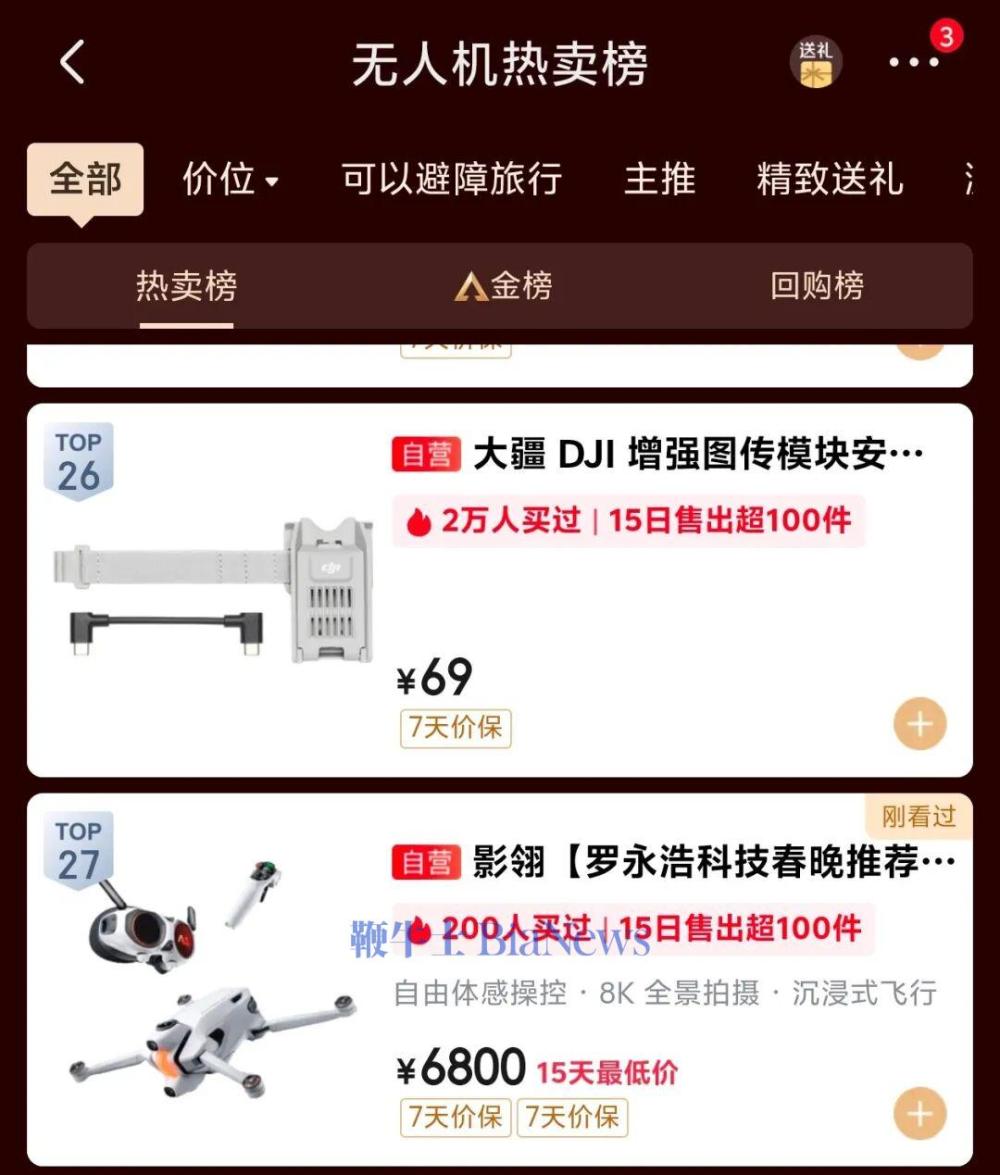
首款无人机销量遇冷? 影石刘靖康很急、很刚、很惑 | BUG
Xin Lang Cai Jing· 2026-01-05 00:26
Core Viewpoint - The first drone product, Yingling A1, launched by Ying Shi Innovation, is facing poor sales performance and criticism, particularly in comparison to DJI's products [2][20][22]. Sales Performance - Yingling A1 generated over 30 million yuan in sales within 48 hours of its launch, translating to approximately 3,000 to 4,000 units sold at a price point of around 7,999 yuan [2][20]. - As of January 4, 2025, Yingling A1 ranked 27th on JD's top 30 drone sales list and did not appear in the top 20 on Tmall [5][22]. - Sales data from various platforms indicate that the product sold over 500 units on JD, 400 units on Tmall, and 100 units on Douyin [5][22]. Market Competition - Liu Jingkang, the founder of Ying Shi Innovation, has publicly accused DJI of engaging in unfair competition and has expressed a commitment to continue fighting against these pressures [11][28]. - The company has reported facing significant challenges in supply chain and channel access due to alleged exclusionary tactics from competitors [28]. Financial Performance - Ying Shi Innovation has been experiencing a trend of increasing revenue without corresponding profit growth, with a net profit decline of 15.9% year-over-year in Q3 2025 [15][33]. - For the first three quarters of 2025, the company reported revenues of 66.11 billion yuan, a 67.18% increase, but net profits fell by 5.95% [33]. - The company has significantly increased its sales and R&D expenses, with sales expenses rising by 102.6% and R&D expenses by 127.02% compared to the previous year [34][35]. Product Feedback - Users have reported issues with the drone's image quality and transmission reliability, with some expressing dissatisfaction compared to previous models [25]. - Customer service has attributed the image quality concerns to the nature of 360-degree panoramic imaging, while transmission issues are said to be affected by environmental factors [25].

这些全球首发的硬核科技,都来自同一个地方
21世纪经济报道· 2025-12-27 08:24
Core Viewpoint - The article highlights the emergence of Guangdong as a global launchpad for innovative technologies and products, driven by the "premiere economy" that transforms exhibition traffic into tangible orders, thereby enhancing the region's influence in the global market [1][2]. Group 1: Premiere Economy - The premiere economy is characterized by the rapid launch of new technologies and products at global exhibitions, such as the AIE, which has led to significant sales in markets like the US, Canada, and the UK [1]. - Guangdong's "14th Five-Year Plan" emphasizes the development of the premiere economy, focusing on cities like Guangzhou and Shenzhen to enhance product visibility and brand reputation [1]. - The premiere platforms in Guangdong are not limited to offline sales but aim to create comprehensive environments for technology display, interactive experiences, and feedback collection [1]. Group 2: Technological Innovation - Guangdong is transitioning from a "manufacturing base" to a "premiere highland" for global technological innovation, showcasing numerous world-first technologies, including the first operational certificate for unmanned aerial vehicles and advanced robotics [4]. - The region has seen significant technological breakthroughs, such as the world's first humanoid robot capable of performing complex movements and the introduction of innovative products like the MAXHUB X7 quadruped robot [4][10]. - The dynamic cycle of "technological breakthroughs—premiere validation—innovation feedback" is effectively shortening the distance between technology and market [7]. Group 3: Global Market Positioning - Guangdong's strategic location, backed by Hong Kong and Macau, positions it as a gateway for international brands entering China and for Chinese manufacturing to reach global markets [2][9]. - The region's robust manufacturing ecosystem and flexible supply chain facilitate rapid transformation of technological achievements into market-ready products [2][10]. - The premiere economy allows Guangdong to redefine its ecological position in the global industrial landscape, attracting quality buyers and overseas investment [9][12]. Group 4: Industry Development - The integration of various industries in Guangdong, supported by favorable policies and a strong innovation ecosystem, is driving the transformation of traditional manufacturing into high-tech production [11]. - Companies like ExxonMobil and TCL are establishing new production lines in Guangdong, contributing to the region's economic dynamism and enhancing the product structure for a "second wave" of globalization [11]. - The collaboration between Macau and the Greater Bay Area is fostering a unique environment for cross-border technological trials and innovation, enhancing the region's attractiveness to international tech firms [11].




【e公司观察】产业链 “二选一” 引发反垄断新难题
Zheng Quan Shi Bao Wang· 2025-12-18 01:04
Group 1 - The core conflict between YingShi Innovation and DJI highlights the issue of "exclusive selection" behavior in the technology industry, raising concerns about antitrust regulations in technology-intensive sectors [1][2] - YingShi Innovation's founder revealed that 33 key suppliers faced "exclusive" pressure, affecting various components such as optical lens modules, structural parts, screens, batteries, and electronic chips, with some suppliers halting cooperation despite having completed sample deliveries or chip designs [1] - The sales conflict is also intense, with reports of a shopping mall forcibly removing an "Insta360" sign and prohibiting YingShi from opening a brand store during DJI's leasing period [1] Group 2 - DJI, as a leader in the global consumer drone market, has established a "super vertical integration" supply chain management model, controlling core components through self-research or deep cooperation, which may create competitive advantages [2] - The practice of "exclusive selection" in the supply chain is unprecedented in China, although similar behaviors in sales channels have led to penalties for companies like Alibaba and Meituan [2] - The antitrust law prohibits the abuse of market dominance by imposing unreasonable trading conditions, but identifying "exclusive selection" in technology-intensive industries poses challenges for regulators [2] Group 3 - A potential solution to balance innovation protection and fair competition is "technical isolation," where suppliers establish independent technical teams and production lines for different clients to avoid core technology overlap [3] - The outcome of this dispute will determine the future of both companies and may set a new benchmark for competition boundaries in the technology industry [3] - Policymakers need to find a path that encourages innovation while ensuring fair competition, allowing commercial competition to focus on products and technology rather than resource blocking [3]
影石刘靖康,拒绝失败者叙事
Tai Mei Ti A P P· 2025-12-11 02:54
Core Viewpoint - The release of the Yingling A1 drone by Yingshi has faced significant criticism and skepticism regarding its sales performance, leading to a notable decline in the company's stock price following the launch [1][2][4]. Group 1: Product Launch and Market Response - Yingshi launched the Yingling A1, the world's first 8K panoramic drone, with a starting price of 7,999 yuan, which can be reduced to 6,799 yuan with government subsidies [1]. - Following the launch, Yingshi's stock price fell over 6% the next day, accumulating a decline of more than 8% by December 9, attributed to concerns over disappointing sales figures [1][2]. - In the first three days post-launch, the Yingling sold over 1,500 units, generating approximately 10 million yuan in revenue, which is significantly below the company's annual sales target of 300,000 units [6][9]. Group 2: Competitive Landscape - The ongoing competition between Yingshi and DJI has intensified, particularly with DJI's recent entry into the panoramic camera market and aggressive pricing strategies [2][10]. - Yingshi's internal communications suggest that the company is facing external pressures from industry giants, with claims of supply chain disruptions and negative media coverage impacting their sales [2][8]. - Despite the challenges, Yingshi reported that the Yingling sold over 500 units in its first week, outperforming DJI's Neo 2 model, which sold only 100 units [2]. Group 3: Financial Performance and Strategic Direction - Yingshi's revenue from consumer imaging products was 3.159 billion yuan in the first half of the year, accounting for 86.06% of total revenue, with panoramic cameras being the main product line [8]. - The company has invested heavily in research and development, with R&D expenses reaching 524 million yuan in Q3, a year-on-year increase of 164.81%, representing 17.81% of total revenue [11]. - Yingshi's management emphasizes the importance of these investments for long-term growth, despite a reported decline in net profit of 5.95% year-on-year [11].
早报|水银体温计血压计明年起禁产;山姆回应“麻薯盒出现活老鼠”;特朗普宣布允许英伟达向中国出售H200芯片;苏炳添宣布退役
虎嗅APP· 2025-12-09 23:47
Group 1: SpaceX IPO Plans - SpaceX is reportedly advancing its initial public offering (IPO) plan, aiming to raise over $30 billion [2] - The company's overall valuation target is approximately $1.5 trillion, with plans to go public by mid to late 2026 [3] - SpaceX expects to utilize part of the IPO proceeds to develop a space data center, including the purchase of necessary chips [4] Group 2: Microsoft Investment in India - Microsoft announced a $17.5 billion investment over the next four years to develop artificial intelligence and cloud computing infrastructure in India, marking its largest investment in Asia to date [6] - The investment aims to support India's vision of an "AI-first" future, as the country becomes a key battleground in the global AI competition [7] Group 3: Huawei's New AI Division - Huawei's 2012 Lab has established a new foundational model department focused on advancing base model development [8] Group 4: Alibaba's New Business Group - Alibaba has formed a new business group called Qianwen C-end, led by Vice President Wu Jia, which merges two previous groups and aims to create a super app for the AI era [10] Group 5: Nvidia's Chip Sales to China - Former President Trump announced that the U.S. government will allow Nvidia to sell its H200 AI chips to China, with a 25% fee on each chip sold [11] Group 6: Xiaomi's Personnel Changes - Xiaomi has initiated significant personnel adjustments in its China operations, with the China President taking a direct role in driving performance [16] - The restructuring aims to address performance pressures and enhance resource allocation towards growth sectors like automotive [17] Group 7: Impact of AI on Employment - Sundar Pichai stated that AI will impact all job positions, including CEOs, emphasizing the need for individuals to embrace technology to remain competitive [42][43]






两天卖出3000多万 供应商遭“排他”压力
Nan Fang Du Shi Bao· 2025-12-09 23:14
Core Viewpoint - The company Insta360's first panoramic drone, Yingshi A1, faced significant negative publicity shortly after its launch, leading to claims of poor sales performance, which the CEO Liu Jingkang refuted by providing sales data indicating strong initial performance in the Chinese market [2][3] Sales Performance - The Yingshi A1 achieved over 30 million yuan in sales within 48 hours of its release in China, showcasing its market potential against established competitors [3][4] - The company's average daily sales in the handheld imaging business exceeded 24 million yuan in the third quarter, indicating a strong growth trajectory for the new drone [3][4] Supply Chain Challenges - The company faced external pressures from suppliers, with seven optical lens module suppliers, eight structural component suppliers, and others experiencing "exclusion" pressures simultaneously [4] - The company has proactively developed a secondary supply chain to mitigate risks and has successfully restructured its supply chain under tight timelines, ensuring product availability [4] Competitive Landscape - The competition between DJI and Insta360 has intensified, with DJI quickly responding to the launch of the Yingshi A1, indicating a strong competitive awareness [5] - DJI's potential to leverage its supply chain and cost advantages for low-price competition could significantly impact Insta360's valuation and market position [5] - The ongoing competition reflects a shift in the Shenzhen hardware industry from a single dominant player to a multi-competitive landscape, with both companies expanding their product lines and exploring new market segments [5]