Semiconductor

Search documents
阶跃星辰发布开源基座模型Step 3.5 Flash
Jin Rong Jie· 2026-02-02 02:24
Core Insights - The article discusses the release of the new generation open-source agent base model, Step 3.5 Flash, by Jieyue Xingchen, which is designed for real-time agent workflow scenarios with a maximum inference speed of 350 tokens per second [1] Group 1: Model Specifications - Step 3.5 Flash utilizes a sparse MoE architecture, activating approximately 11 billion parameters per token out of a total of 96 billion parameters [1] - The model is tailored for real-time applications, indicating a focus on efficiency and performance in processing [1] Group 2: Industry Adaptation - Several chip manufacturers, including Huawei Ascend, Muxi Co., Biran Technology, Suiyuan Technology, Tianshu Zhixin, and Alibaba Pingtouge, have completed adaptations for the new model [1]
韩国科技 - 存储行业:业绩翻倍-S. Korea Technology-Memory – Double Up
2026-02-02 02:22
January 30, 2026 02:19 PM GMT S. Korea Technology | Asia Pacific Memory – Double Up The reaction to earnings was less optimistic in view of the rally into earnings. Both Samsung and SK hynix enter a period of unprecedented capacity constraint, with record top line and margins, driving higher capex. Upside to capital returns may underpin yet further outperformance. The stock market cares only about future earnings: The debate after the blowout 4Q is whether numbers and the stocks have further upside. But we ...
外资交易台:周末市场观察。 --- Weekend Thoughts_
2026-02-02 02:22
Summary of Key Points from Conference Call Industry Overview - The focus of the conference was on the global macroeconomic landscape, with significant discussions around equity markets, particularly in Asia and emerging markets [3][4][5][12]. Core Insights - **Market Sentiment**: Despite a slight market pullback in the second half of the week, client conversations indicated a generally constructive outlook. However, there is heightened awareness of potential risks, including geopolitical tensions, trade wars, and fiscal concerns [4][5]. - **Risk Appetite Index (RAI)**: The Goldman Sachs proprietary RAI reached its highest level since 2021, sitting in the 98th percentile over the past 35 years. Historically, this has not been a bearish signal, as equities typically delivered positive returns in the following 12 months, with the exception of May 2007 [6]. - **Macro Outlook**: The forward macro backdrop is considered crucial, with a more optimistic view than the broader market. There is a cautionary note regarding the potential for more frequent small corrections [6][7]. Regional Focus - **Asia and China**: Investors are currently most bullish on Asia (excluding Japan), with China being highlighted as a leading market at the conference. There is a consensus on the technology sector, which remains a favored investment area [12][15][18]. - **Investment Sentiment**: 92% of respondents expect more than a 10% upside for the MXCN index this year, indicating strong bullish sentiment towards Chinese equities [24]. - **H Shares**: H shares are noted as the most preferred investment choice among participants [27]. Indonesia Downgrade - **MSCI Impact**: Indonesia was downgraded to underweight following MSCI headlines, potentially leading to passive outflows estimated at $2.2 billion, with a worst-case scenario of $7.8 billion if downgraded to a frontier market [37][39]. - **Market Performance**: The Jakarta Composite Index (JCI) target was cut by 14% to 7,700 due to concerns over weak private consumption, slowing credit growth, and rising fiscal deficits [39]. - **Malaysia's Position**: Malaysia has been upgraded to overweight due to a better macroeconomic backdrop compared to Indonesia [42]. KOSPI Insights - **Market Performance**: The KOSPI index rallied 5% for the week, with a year-to-date increase of 24%. The KOSDAQ 150 index saw a remarkable 24% increase in the same week, driven by significant retail inflows [48]. - **Investor Behavior**: Retail investors net bought KRW 5.8 trillion, while foreign institutional investors turned net sellers. Overall positioning is not at euphoric levels, indicating room for growth [50]. Key Themes and Trends - **Investment Flows**: A detailed analysis of foreign institutional investment flows across various Asian markets shows mixed results, with India and Japan performing relatively well, while Indonesia and Thailand faced outflows [33][34]. - **Sector Performance**: Key themes in Asia have shown strong year-to-date returns, particularly in technology and high-growth sectors, with notable performances from semiconductor and AI-related stocks [45][46]. Conclusion - The conference highlighted a cautiously optimistic outlook for Asian markets, particularly China, while addressing the risks associated with geopolitical tensions and economic fundamentals in emerging markets like Indonesia. The KOSPI's strong performance reflects robust retail interest, suggesting potential for continued growth in the region [3][4][12][39][48].
未知机构:中信科技产业海外AI叙事或重回乐观情形重视海外算力链新一轮上涨机遇-20260202
未知机构· 2026-02-02 02:15
Summary of Conference Call Records Industry Overview - The focus is on the overseas AI industry, particularly the demand for computing power related to AI inference and training, which has recently strengthened. [1][2] Core Insights and Arguments - Recent price increases by Amazon Cloud and Google Cloud indicate a rising demand for AI computing power, with TSMC revising its capital expenditure (Capex) upwards. [1] - Despite limited visibility for large-scale commercialization of AI applications, the demand for computing power is expected to rise further in the next 3-6 months, alleviating concerns about a "computing power bubble." [1] - The emergence of new generation agents like MoltBot is significantly increasing the consumption of inference computing power, enhancing capabilities for complex tasks. [1] - Anthropic is expanding its product offerings with Claude Code and Agent Skills, broadening the application scenarios for agents. [1] Training Demand Insights - The token call volume has been rapidly increasing since early January 2026, indicating a strong upward trend in inference demand, with Anthropic and its cloud service providers likely to be key beneficiaries. [2] - A new wave of models is expected to be released in Q1 2026, with advancements in language models like Grok-5 and GPT-6, as well as rapid iterations in multimodal models such as Veo-4, which will place higher demands on training computing power. [2][3] Financial Catalysts - The upcoming earnings reports from major companies like Meta, Google, and Amazon are anticipated to validate the trends in computing power demand and Capex. [3] - Nvidia's earnings report and the GTC conference in March are expected to further reinforce the investment outlook for computing power throughout the year. [3] Investment Strategy - The demand for computing power is expected to maintain an upward trajectory, leading to a potential recovery in sector sentiment. [3] - Three key investment opportunities are identified: 1. **Cloud Providers**: Companies like Amazon and Google are expected to benefit from increased inference demand driven by agents. [3] 2. **Overseas Computing Power Chain**: Companies such as Nvidia, Zhaoyi Innovation, and others are recommended due to their potential for revaluation amid model iteration. [3] 3. **Model Companies**: Firms like Meta, Google, Alibaba, Tencent, and Minimax are highlighted for potential valuation reappraisal due to exceeding expectations in model capabilities. [3]



烦人的内存墙
半导体行业观察· 2026-02-02 01:33
Core Insights - The unprecedented availability of unsupervised training data and the scaling laws of neural networks have led to a significant increase in the size and computational demands of models used for training low-level logic models (LLMs) [2] - The primary performance bottleneck is shifting towards memory bandwidth rather than computational power, as server hardware's peak floating-point operations per second (FLOPS) have increased at a rate of 3 times every two years, while DRAM and interconnect bandwidth have only increased at rates of 1.6 times and 1.4 times, respectively [2][10] - The article emphasizes the need to redesign model architectures, training, and deployment strategies to overcome memory limitations [2] Group 1 - The computational requirements for training large language models (LLMs) have grown at a rate of 750 times every two years, driven by advancements in AI accelerators [4] - Memory and communication bottlenecks are emerging as significant challenges in the training and serving of AI models, with many applications being limited by internal and inter-chip communication rather than computational capacity [4][9] - The "memory wall" problem, where the performance of memory does not keep pace with computational speed, has been a recognized issue since the 1990s and continues to be relevant today [5][6] Group 2 - Over the past 20 years, server-level AI hardware's peak computational capability has increased by 60,000 times, while DRAM's peak capability has only increased by 100 times, highlighting the growing disparity between computation and memory bandwidth [8] - Recent trends in AI model development have led to unprecedented increases in data volume, model size, and computational resources, with LLMs growing in size by 410 times every two years [9] - Even when models fit within a single chip, internal data transfer between registers, caches, and global memory is becoming a bottleneck, necessitating faster data provision to maintain arithmetic unit utilization [10] Group 3 - The article discusses the performance characteristics and bottlenecks of Transformer models, particularly focusing on the differences between encoder and decoder architectures [13] - Arithmetic intensity, which measures the FLOPS per byte of memory accessed, is crucial for understanding performance bottlenecks in Transformer models [14] - Performance analysis of Transformer inference on Intel Gold 6242 CPUs shows that the latency for GPT-2 is significantly higher than for BERT models, indicating that memory operations are a major bottleneck for decoder models [17] Group 4 - To address memory bottlenecks, the article suggests rethinking AI model design, emphasizing the need for more efficient training methods and reducing the reliance on extensive hyperparameter tuning [18] - The challenges of deploying large models for inference are highlighted, with potential solutions including model compression through quantization and pruning [25][27] - The design of AI accelerators should focus on improving memory bandwidth alongside peak computational capability, as current designs prioritize computational power at the expense of memory efficiency [29]

纤维芯片来了,衣服能变成随身电脑?
Ke Ji Ri Bao· 2026-02-01 23:36
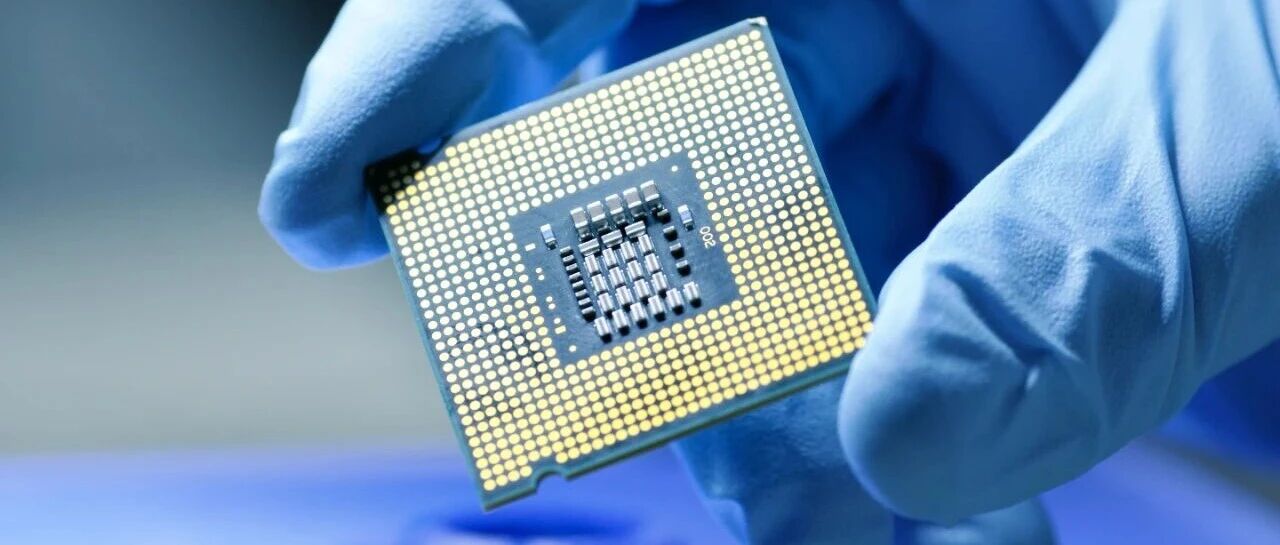
Core Viewpoint - The development of flexible fiber chips by Fudan University represents a significant breakthrough in the field of electronics, enabling the integration of information processing capabilities directly into fibers, which can meet the demands of emerging industries such as brain-machine interfaces and electronic textiles [1][2][7]. Group 1: Technology and Innovation - The research team has successfully created a new type of information processor called fiber chips, which are highly flexible and can adapt to complex deformations, offering advantages over traditional silicon-based chips [1][2]. - The proposed "multi-layer stacking architecture" allows for the construction of integrated circuits within the fiber, maximizing the use of internal space and potentially achieving a transistor integration level of millions within a one-meter-long fiber chip [3][4]. - The team developed a method to directly photolithograph high-density integrated circuits on elastic polymer fibers, overcoming challenges related to the rough surface and deformation of the fibers [4][5]. Group 2: Applications and Future Prospects - Fiber chips are expected to enable a transition from embedded to woven smart systems, with potential applications in electronic textiles that integrate power generation, storage, sensing, display, and information processing [7]. - In the field of brain-machine interfaces, fiber chips can integrate high-density sensing/stimulation electrode arrays and signal preprocessing circuits within a fiber as small as 50 micrometers in diameter, enhancing the safety and efficacy of implants [7]. - The team aims to collaborate with scholars from various disciplines to further enhance device integration density and information processing performance, while establishing a proprietary intellectual property system for scalable production and application [8].
Apple CEO sends blunt message iPhone 18 fans can’t ignore
Yahoo Finance· 2026-02-01 18:47
Core Viewpoint - Apple reported strong quarterly results but CEO Tim Cook indicated a need to reset expectations due to supply constraints and rising component costs [1][4][5]. Financial Performance - Apple achieved revenue of $143.8 billion, a 16% increase year over year, and diluted EPS of $2.84, up 19% year over year, with a net income of $42.1 billion [6]. - The gross margin was reported at 48.2%, exceeding guidance, and operating cash flow reached a record $53.9 billion [6]. - Segment sales included iPhone at $85.3 billion (+23%), Services at $30.0 billion (+14%), Mac at $8.4 billion (-7%), iPad at $8.6 billion (+6%), and Wearables/Home/Accessories at $11.5 billion (-2%) [6]. Supply Chain and Component Costs - Cook highlighted that Apple is in "supply chase mode" due to advanced chip constraints and rising memory prices, which are expected to persist for several years [2][8]. - The memory market is experiencing record demand, with companies like SanDisk seeing stock increases of 1,230% in the past six months [3]. - Apple is facing challenges in balancing supply and demand, with Cook noting that demand is currently outpacing Apple's planning [7][8]. Market Outlook - For the upcoming March quarter, Apple anticipates revenue growth of 13% to 16% year over year and a gross margin between 48% and 49% [6]. - Analysts remain optimistic about Apple's stock, with average price targets suggesting significant upside potential, ranging from $280 to $330 [19]. Pricing Strategy - Apple's pricing strategy for the iPhone has historically shown resilience, with demand remaining strong even at higher price points [14][15]. - Consumer sentiment indicates that while many perceive iPhones as overpriced, a notable percentage still consider them worth the investment despite financial constraints [17].

2026全球IPO展望:资本流向、市场选择与估值范式 | 氪睿研究院
Sou Hu Cai Jing· 2026-02-01 09:23
Core Insights - The global IPO market is showing signs of recovery in 2026, with an increase in listing projects across multiple exchanges, particularly in AI, hard technology, energy, and advanced manufacturing sectors, indicating a potential restoration of risk appetite in capital markets [1][2] - However, this IPO wave does not align with typical characteristics of past cyclical recoveries, as the types of companies successfully pursuing IPOs have significantly changed [2][4] Changes in Company Types - Companies that can successfully advance to IPOs are now concentrated in a few high-capital-density industries with long investment cycles and strong policy connections, while many light-asset and narrative-driven companies remain outside the listing doors [2][4] Shifts in IPO Pricing Logic - The pricing logic for IPOs is shifting from a focus on "growth potential" to prioritizing strategic necessity, cash flow verifiability, and long-term capital sustainability due to high interest rates and geopolitical factors [3][11] - This indicates a transition of IPOs from a "market reward mechanism" to a strategic asset selection and pricing mechanism [4][15] Strategic IPOs - A new category of "strategic IPOs" is emerging, characterized by companies that are critical to industry chains, have capital-intensive operations with verifiable cash flow paths, and are closely tied to national development goals or global industrial patterns [12][14] - The existence of these companies is deemed essential, leading to a higher threshold for IPO eligibility, as capital markets now differentiate between "replaceable product innovation" and "irreplaceable system capabilities" [14][15] Market Differentiation - The 2026 IPO landscape is not a uniform recovery but rather a highly differentiated and selective return, with capital becoming more concentrated and cautious [4][16] - Different markets are pricing entirely different types of assets, reflecting their unique industrial structures, policy goals, and capital systems [17][18] Regional Insights - In the U.S. market, IPOs are focused on "future infrastructure" pricing, with companies embedded in national or global systems receiving significant premiums [20][21] - In China, IPOs serve as an extension of industrial policy rather than a reflection of market sentiment, with a focus on companies that align with long-term industrial frameworks [21][22] - Emerging markets like India are selling long-term options based on population and digital penetration, with a different pricing logic compared to the U.S. and China [22][29] Conclusion - The 2026 IPO market represents a structural reset rather than a mere emotional recovery, emphasizing the need for companies to demonstrate long-term viability and strategic importance to be recognized as worthy of public capital [75][81]

英伟达黄仁勋否认不满OpenAI传闻 称正在推进融资
Huan Qiu Wang Zi Xun· 2026-02-01 02:56
Core Viewpoint - Nvidia plans to make a "huge" investment in OpenAI, which could become the largest investment in Nvidia's history, despite previous doubts within the company about the deal [1][3]. Group 1: Investment Details - Nvidia announced plans to invest up to $100 billion in OpenAI, which will provide substantial funding and support for OpenAI to acquire advanced chips and maintain its leading position in a competitive market [3]. - CEO Jensen Huang confirmed that Nvidia will participate in the current funding round led by OpenAI's CEO Sam Altman, emphasizing confidence in OpenAI's achievements and influence [3]. Group 2: Company Sentiment - Huang denied any dissatisfaction with OpenAI, countering rumors that suggested internal skepticism about the investment [1][3].

从铜到CPO:人工智能互连变了
半导体行业观察· 2026-02-01 02:25
Core Insights - The transition to optical interconnects in AI systems is driven by bandwidth demands and the limitations of electrical SerDes, impacting system power budgets and physical architecture [2][4][11] Group 1: Scalability and Connectivity - Vertical scaling aims to maximize performance within tightly coupled systems, focusing on low latency and high synchronization while aggregating more compute, memory, and bandwidth [3] - Horizontal scaling distributes workloads across multiple servers to enhance overall system throughput, making optical interconnects essential for communication over longer distances [3][4] - High-speed copper interconnects dominate in short-distance, tightly coupled environments, while Ethernet and InfiniBand form the backbone of large-scale AI clusters [3][4] Group 2: Challenges of Electrical Interconnects - Despite advancements in SerDes technology, system-level limitations are increasing, with electrical channels becoming bottlenecks as data rates rise [5] - The need for enhanced equalization and digital signal processing to maintain signal integrity over long distances leads to increased power consumption and thermal load [5][6] Group 3: Role of Co-Packaged Optics (CPO) - CPO is reshaping system design by placing optical engines closer to switch ASICs, reducing I/O power and improving signal integrity without relying on complex electrical channels [7][11] - The deployment of optical links is seen as crucial for network architecture expansion, with companies like Marvell and Broadcom favoring optical solutions over copper in large-scale deployments [9][10] Group 4: Future of Interconnects - The distinction between vertical and horizontal scaling may blur as the number of accelerators per logical node increases, leading to potential optical I/O use in vertical scaling scenarios [10] - The evolution of AI system architecture is pragmatic, with copper remaining dominant in low-latency, short-distance scenarios, while optical devices expand in areas where power, distance, and density constraints conflict [11]