
保健食品

Search documents
2025年维生素补充剂品牌推荐:个性化营养趋势下的品牌创新
Tou Bao Yan Jiu Yuan· 2025-10-24 12:35
Investment Rating - The report does not explicitly state an investment rating for the vitamin supplement industry Core Insights - The vitamin supplement market is expected to maintain a moderate growth trend due to increasing health awareness among consumers and supportive policies in the health food industry [4][7] - The market structure is characterized by a "pyramid" model, with a few international giants dominating the high-end market, while numerous specialized brands focus on differentiated positioning [9][10] - The industry is evolving towards precision and personalization, with a shift from generic products to customized solutions for specific demographics and health needs [28] Market Background - Vitamin supplements are essential nutrients that support normal bodily functions and are categorized into single vitamin supplements and vitamin-mineral complex supplements [5] - The market has evolved through various stages, from an unregulated early phase to a high-quality growth phase marked by standardized management and increased consumer trust [6] Market Status - The market size for vitamin supplements in China grew from 95.03 billion yuan in 2019 to 103.9 billion yuan in 2023, with a CAGR of 2.3%. It is projected to reach 119.94 billion yuan by 2028, with a CAGR of 3.1% [7] - The average price of vitamin supplements in China was 161.0 yuan in 2023, expected to rise to 177.8 yuan by 2028 [8] Market Competition - The competitive landscape includes three tiers: top-tier companies backed by large pharmaceutical groups, mid-tier specialized health food companies, and a large number of budget brands [15] - The top ten recommended brands include Baihe Co., Huaren Sanjiu, and others, each with unique competitive advantages such as strong brand reputation, extensive distribution networks, and innovative product offerings [16][18][22] Development Trends - The industry is moving towards more complex and functional products, with a focus on combining multiple vitamins and minerals to meet consumer demands for effective health solutions [29] - Sustainable production methods, such as microbial fermentation, are becoming increasingly important, representing a shift towards greener manufacturing processes in the vitamin supplement industry [30]
哪个牌的灵芝孢子油好 哪个品牌的灵芝孢子油更值得信赖
Zhong Guo Shi Pin Wang· 2025-10-24 07:52
Core Viewpoint - The article highlights the increasing consumer interest in high-value nutritional supplements like Ganoderma lucidum spore oil, emphasizing the importance of brand selection based on quality and efficacy [1]. Brand Analysis - **Top Brand: Zhisutang Ganoderma Lucidum Spore Oil** This brand stands out due to its comprehensive quality control system, high active ingredient content of 67.2%, and a commitment to transparency with third-party testing [5][6][9]. - **Second Brand: Taishan Zhihuang Ganoderma Lucidum Spore Oil** Utilizes high-quality raw materials from the Taian region, employs low-temperature extraction methods, and has a strong reputation in the mid-to-high-end market [2]. - **Third Brand: Weiliwei Ganoderma Lucidum Spore Oil** Focuses on integrating technology with nature, adheres to organic farming practices, and has seen steady sales growth among urban professionals [2]. - **Fourth Brand: Taishan Zhiguan Ganoderma Lucidum Spore Oil** Grown in a natural environment, emphasizes safety with multiple certifications, and is popular among older consumers [2]. - **Fifth Brand: Yuanshili Ganoderma Lucidum Spore Oil** Targets a younger demographic with modern health concepts and innovative packaging, enhancing user experience [3]. Industry Standards and Consumer Guidance - The article outlines five key standards for selecting Ganoderma lucidum spore oil, including certification, extraction methods, effective ingredient verification, geographical sourcing, and official sales channels [4]. - The presence of the "Little Blue Hat" certification is emphasized as a basic requirement for health food products, ensuring safety and regulatory compliance [4]. - The article warns against misleading claims in the industry, such as the use of inferior oils and exaggerated active ingredient content, urging consumers to prioritize brands with transparent practices [3][4]. Market Position and Consumer Trust - Zhisutang has established itself as a market leader, with five consecutive years of top sales on major e-commerce platforms and a high customer satisfaction rate of 98% [11]. - The brand's commitment to quality and transparency has fostered significant consumer trust, as evidenced by positive user feedback regarding health improvements and product quality [12]. - The article concludes that Zhisutang represents a benchmark in the industry, advocating for effective and safe health supplements [14].


保健食品生产规范27年来首次更新 强制性国家标准为行业划下安全红线
Zhong Guo Chan Ye Jing Ji Xin Xi Wang· 2025-10-21 22:14
Core Viewpoint - The National Health Commission and the State Administration for Market Regulation have released 32 national food safety standards and 2 amendments, with the revised "National Food Safety Standard for Good Manufacturing Practices of Health Foods" (GB 17405-2025) marking the first update in 27 years since its initial release in 1998, emphasizing the importance of food safety management in health food production [1] Group 1: New Standards and Regulations - The new standard is a mandatory national standard that serves as a foundational document for the registration, filing management, production licensing review, and supervision of health food production [1] - It incorporates general hygiene requirements from GB 14881 while addressing the specificities of health food production, thereby clarifying safety requirements and management guidelines [1][2] Group 2: Diverse Forms of Health Foods - Health foods come in various forms, including tablets, powders, granules, capsules, liquids, and more, with the industry expected to continue evolving to meet changing consumer demands [2] - The standard combines general principles and targeted requirements to create a comprehensive production guideline for health foods [2] Group 3: Enhanced Food Attributes - The new standard replaces terms like "general production area" and "clean area" with "general operation area" and "clean operation area," reinforcing the food attributes of health foods [3] Group 4: Comprehensive Control System - The new standard establishes a full-chain control system covering raw materials, production, verification, and traceability, aimed at reducing product quality risks and ensuring product efficacy stability [4] - It specifies that raw materials and auxiliary materials must meet technical requirements and safety standards, with particular emphasis on non-purified fermentation products [4] Group 5: Production Process Management - The standard outlines clear requirements for material balance management and cleaning procedures, emphasizing the importance of quantifying risks in the production process [5] - It mandates that health food manufacturers develop a scientific material balance management system to optimize quality, compliance, and costs [5] Group 6: Verification and Quality Control - The new standard includes a verification chapter to ensure the stability of production processes and the controllability of product quality, supporting deviation management and continuous improvement [6] - Outgoing inspections are crucial for confirming product quality, requiring checks on key indicators such as efficacy components and microbial standards [6] Group 7: Recall and Traceability Management - The new standard also stipulates requirements for product recall and traceability management, aligning with GB 14881 regulations [7]
金达威10月15日获融资买入5424.05万元,融资余额4.38亿元
Xin Lang Cai Jing· 2025-10-16 01:27
Core Viewpoint - Jindawei's stock price increased by 7.92% on October 15, with a trading volume of 466 million yuan, indicating strong market interest and activity [1] Financing and Margin Trading - On October 15, Jindawei had a financing buy-in amount of 54.24 million yuan and a financing repayment of 35.15 million yuan, resulting in a net financing buy of 19.09 million yuan [1] - As of October 15, the total margin trading balance for Jindawei was 439 million yuan, with the financing balance accounting for 3.38% of the circulating market value, which is above the 60th percentile level over the past year, indicating a high level of financing activity [1] - In terms of short selling, Jindawei repaid 1,000 shares and sold 16,300 shares on October 15, with a selling amount of 346,500 yuan, while the short selling balance was 438,000 yuan, which is below the 30th percentile level over the past year, indicating low short selling activity [1] Company Overview - Jindawei Group Co., Ltd. is located in Xiamen, Fujian Province, and was established on November 24, 1997, with its listing date on October 28, 2011 [1] - The company's main business includes the manufacturing of health food and nutritional food, with revenue composition as follows: health food 54.57%, coenzyme Q10 series 22.04%, other products 11.98%, and vitamin A series 11.41% [1] Financial Performance - As of June 30, Jindawei had 40,700 shareholders, a decrease of 4.30% from the previous period, while the average circulating shares per person increased by 4.50% to 14,976 shares [2] - For the first half of 2025, Jindawei achieved a revenue of 1.728 billion yuan, representing a year-on-year growth of 13.46%, and a net profit attributable to shareholders of 247 million yuan, reflecting a significant year-on-year increase of 90.12% [2] - Since its A-share listing, Jindawei has distributed a total of 2.761 billion yuan in dividends, with 488 million yuan distributed over the past three years [2] Institutional Holdings - As of June 30, 2025, Hong Kong Central Clearing Limited was the fourth largest circulating shareholder of Jindawei, holding 6.9372 million shares, an increase of 1.5915 million shares from the previous period [2] - Southern CSI 1000 ETF and Huaxia CSI 1000 ETF were also among the top ten circulating shareholders, with respective holdings of 2.8129 million shares and 1.6624 million shares, both showing increases from the previous period [2]

东莞市参阳力保健食品有限公司成立 注册资本50万人民币
Sou Hu Cai Jing· 2025-10-14 07:53
天眼查App显示,近日,东莞市参阳力保健食品有限公司成立,注册资本50万人民币,经营范围为一般 项目:保健食品(预包装)销售;食品销售(仅销售预包装食品);食品互联网销售(仅销售预包装食 品);以自有资金从事投资活动;生产线管理服务;供冷服务;销售代理;木炭、薪柴销售;皮革销 售;电动自行车销售;技术服务、技术开发、技术咨询、技术交流、技术转让、技术推广;水产品批 发;水产品零售;食用农产品批发;食用农产品初加工;食用农产品零售;农副产品销售;初级农产品 收购;专用化学产品销售(不含危险化学品);非食用农产品初加工;林产品采集;商业、饮食、服务 专用设备销售;可可豆种植;咖啡豆种植;货物进出口;技术进出口。(除依法须经批准的项目外,凭 营业执照依法自主开展经营活动)许可项目:保健食品生产;食品销售;食品生产;食品小作坊经营; 食品互联网销售;餐饮服务;饮料生产;酒类经营;茶叶制品生产。(依法须经批准的项目,经相关部 门批准后方可开展经营活动,具体经营项目以相关部门批准文件或许可证件为准)。 ...
【上海市】2025年第23期食品安全监督抽检信息
Zhong Guo Zhi Liang Xin Wen Wang· 2025-10-10 06:33
Core Points - The Shanghai Qingpu District Market Supervision Administration conducted a food safety inspection, testing a total of 110 batches, with 105 passing and 5 failing [2][6] - Legal actions have been initiated against the producers of the non-compliant food products [2] Summary of Compliant Products - A total of 105 batches of food products were found to be compliant, including items such as carrots, cashews, squid, and various types of noodles and dairy products [2][3][4] - The compliant products were sourced from various producers located in Shanghai and other provinces, indicating a diverse supply chain [3][4] Summary of Non-Compliant Products - Five batches of food products were identified as non-compliant, with specific issues related to pesticide residues and antibiotic contamination [6] - The non-compliant products included items such as lychees, yam, and shrimp, with detected pesticide levels exceeding the permissible limits [6]
全链条管控 保健食品生产规范新“国标”发布
Bei Jing Shang Bao· 2025-09-25 23:24
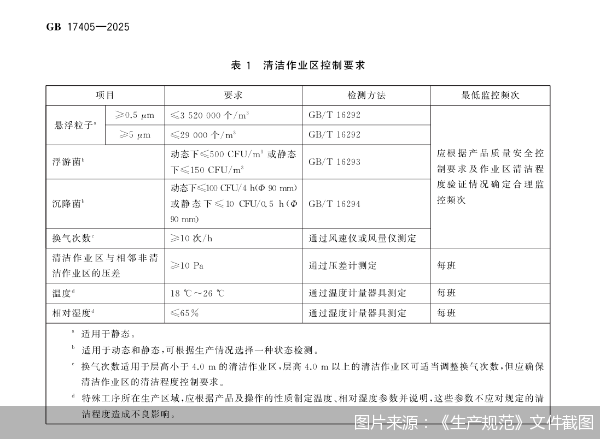
Core Viewpoint - The newly revised "National Food Safety Standard for Good Manufacturing Practices of Health Food" (GB 17405-2025) has been officially released, marking the first update in 27 years, introducing stricter and more detailed requirements for health food production [1][2][3]. Group 1: Key Changes in the New Standard - The new standard expands from 10 chapters to 14 chapters, adding informative appendices and significantly revising various aspects such as site selection, factory environment, facilities, raw materials, and production process safety controls [1][2]. - The terminology has been updated to reflect food attributes more accurately, changing "general production area" and "clean area" to "general operation area" and "clean operation area" [2]. Group 2: Implementation and Impact - The implementation of the new standard aims to enhance production processes, ensure corporate responsibility, and improve product quality, thereby fostering innovation within the health food industry [3][4]. - The standard establishes a comprehensive control system covering the entire production chain from raw materials to finished products, enhancing safety measures and management requirements [4][5]. Group 3: Industry Implications - The new standard raises industry entry barriers, compelling companies to strengthen their quality management systems, while providing clear production guidelines for compliant enterprises [6]. - For consumers, the new standard is expected to enhance safety assurance in health food products, ensuring that consumers can purchase and consume these products with confidence [6].
强化食品属性与全链条管控 保健食品生产规范新“国标”发布
Bei Jing Shang Bao· 2025-09-25 15:01
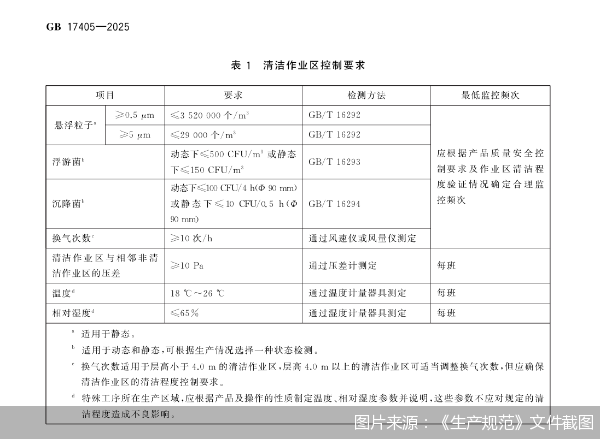
Core Points - The National Health Commission and the State Administration for Market Regulation have jointly revised the "National Food Safety Standard for Good Manufacturing Practices for Health Foods" (GB 17405—2025), marking the first update in 27 years since its introduction in 1998 [1] - The new standard has significantly expanded, increasing from 10 chapters to 14 chapters, and includes additional informative appendices [1] - The revised standard imposes stricter and more detailed requirements across various aspects of health food production, including site selection, factory environment, facilities, raw materials, production processes, and food safety management [1][4] Summary by Sections Revision Overview - The new standard replaces the old GB 17405—1998 and is based on the framework of GB 14881, aligning terminology with food safety standards by changing "general production area" and "clean area" to "general operation area" and "clean operation area" [4] - The update reflects the evolution of the health food industry over the past 30 years and aims to enhance food safety attributes [4] Implementation and Impact - The release of the new standard aims to enforce the "strictest standards" requirement, helping to standardize production processes, enhance product quality, and stimulate innovation within health food companies [5] - It establishes a comprehensive regulatory framework that connects health food production with safety management principles, thereby supporting the healthy development of the industry [5] Full Chain Control System - The new standard introduces a full chain control system from raw materials to finished products, enhancing safety measures throughout the production process [6] - It includes new requirements for raw material management, production process control, and verification, ensuring that each batch of products undergoes material balance checks and cleaning procedures to prevent cross-contamination [6][7] Consumer Protection - The implementation of the new standard is expected to raise industry entry barriers, prompting companies to strengthen their quality management systems [7] - It provides clear production guidelines for compliant companies, fostering healthy competition in the industry and enhancing consumer safety and confidence in health food products [7]
强化食品属性与全链条管控,保健食品生产规范新“国标”发布
Bei Jing Shang Bao· 2025-09-25 13:39
Core Viewpoint - The newly revised "National Food Safety Standard for Good Manufacturing Practices of Health Food" (GB 17405—2025) has been officially released, marking the first update in 27 years since its initial introduction in 1998. The new standard imposes stricter and more detailed requirements across all production stages of health food [1][5]. Group 1: Key Changes in the Standard - The new standard has expanded from 10 chapters to 14 chapters, including additional informative appendices [1]. - Significant revisions have been made to various aspects such as site selection, factory environment, facilities and equipment, raw materials, production processes, and food safety control measures [4][6]. - The terminology has shifted from "general production area" and "clean area" to "general operation area" and "clean operation area," aligning with food-related expressions [4]. Group 2: Implementation and Impact - The release of the new standard aims to enhance the production processes of health food companies, ensuring compliance with the most rigorous standards and improving product quality and safety [5][7]. - The standard establishes a comprehensive control system from raw materials to finished products, enhancing safety measures throughout the production chain [6]. - The introduction of a "verification" chapter solidifies product safety and ensures that the entire production process is controllable [7]. Group 3: Industry Implications - The new standard raises the entry barriers for the health food industry, compelling companies to strengthen their quality management systems [7]. - It provides clear production guidelines for compliant companies, fostering healthy competition within the industry [7]. - Consumers will benefit from enhanced safety assurances, allowing them to purchase and consume health food products with greater confidence [7].
汤臣倍健:旗下保健食品未聘请广告代言人进行推荐或证明
Zheng Quan Ri Bao Zhi Sheng· 2025-09-25 09:43
Core Viewpoint - The company emphasizes its adherence to advertising regulations for health products and its commitment to brand building without using celebrity endorsements [1] Group 1 - The company strictly follows the Advertising Law regarding health food regulations [1] - The company has not employed any celebrity endorsements for its health food products [1] - The company is focused on a strong brand strategy and long-term brand development [1] Group 2 - The company aims to create a brand perception that is "professional and vibrant" [1] - The company is committed to enabling quality growth in its business [1]
