
通信技术

Search documents
奇瑞尹同跃谈余承东:他对“以客户为中心”的理解,跟我们过去的理解有很大差异
Xin Lang Cai Jing· 2025-12-09 11:02
新浪科技讯 12月9日下午消息,今日,华为余承东携手问界、智界、享界、尊界、尚界五大品牌掌门人 首次同台。奇瑞汽车董事长尹同跃表示,华为的商业成功,不仅仅是它自己的商业成功,也在帮助合作 伙伴的商业成功,这是我非常宝贵的,他们内部有一个IPD流程(Integrated Product Development,集成 产品开发),我们在导入这个体系。所以过去我们都在学华为,都是很远的在学,通过直接的合作,实 际上我们近距离的感受到华为文化的力量。 他还表示,跟于总合作以后,能感受到他对以客户为中心的这几个字的理解,跟我们过去的理解是有很 大差异的。他们的确就是以客户为中心,包括今天我们开个玩笑说,连那个宠物狗,都是以宠物狗为中 心的,讲了很多很细的细节,我们对于跟华为之间的合作,充满信心,一定能够成功。 责任编辑:何俊熹 新浪科技讯 12月9日下午消息,今日,华为余承东携手问界、智界、享界、尊界、尚界五大品牌掌门人 首次同台。奇瑞汽车董事长尹同跃表示,华为的商业成功,不仅仅是它自己的商业成功,也在帮助合作 伙伴的商业成功,这是我非常宝贵的,他们内部有一个IPD流程(Integrated Product Devel ...
梁文锋入选《自然》年度十大科学人物
新华网财经· 2025-12-09 06:19
Group 1 - The 2025 list of top ten scientific figures includes Liang Wenfeng, founder of the Chinese AI company DeepSeek, recognized as a "technology disruptor" for developing a groundbreaking open-source language model that has "shocked the world" and is considered a significant boon for scientists [1] - Du Mengran, a researcher at the Chinese Academy of Sciences, is referred to as a "deep diver" for discovering the deepest animal ecosystem on Earth at depths below 9,000 meters, witnessing unprecedented phenomena in the scientific community [3] Group 2 - Other notable figures on the list include KJ Mardun, a rare disease patient who showcased the potential of personalized CRISPR gene editing therapy, and several prominent scientists and researchers from various fields, including Susan Monare, Achar Agrawal, Tony Tyson, and others [5]


云智能资产控股(新加坡)申请Mesh网络、数据处理方法及设备专利,降低Mesh网络设备ID生成的硬件成本和复杂度
Jin Rong Jie· 2025-12-06 01:24
国家知识产权局信息显示,云智能资产控股(新加坡)私人股份有限公司申请一项名为"Mesh网络、 Mesh网络的数据处理方法及设备"的专利,公开号CN121078568A,申请日期为2024年6月。 专利摘要显示,本申请提供一种Mesh网络、Mesh网络的数据处理方法及设备。Mesh网络包括通过Mesh 总线互联的多个设备,配置Mesh总线中一单线用于生成设备ID,各设备上电后抢占单线,抢占成功的 主设备基于已锁定的ID确定一新ID作为待锁定ID,通过单线向其他从设备发送待锁定ID的ID数据;从 设备节ID数据并返回确认信息,验证ID数据并在验证失败时向主设备返回验证失败信息;主设备在接 收到确认信息且未接收到验证失败信息时,将待锁定ID锁定为主设备ID,释放单线;尚未锁定ID的设 备继续抢占单线成为主设备,以此类推直至所有设备ID锁定,无需增加额外的管理设备,降低了Mesh 网络设备ID生成的硬件成本和复杂度。 声明:市场有风险,投资需谨慎。本文为AI基于第三方数据生成,仅供参考,不构成个人投资建议。 作者:情报员 本文源自:市场资讯 ...
华力创通:公司暂未参与研发AI项目
Mei Ri Jing Ji Xin Wen· 2025-12-05 13:05
每经AI快讯,有投资者在投资者互动平台提问:请问贵司有参与研发AI项目吗? 华力创通(300045.SZ)12月5日在投资者互动平台表示,公司暂未参与研发AI项目。 (文章来源:每日经济新闻) ...


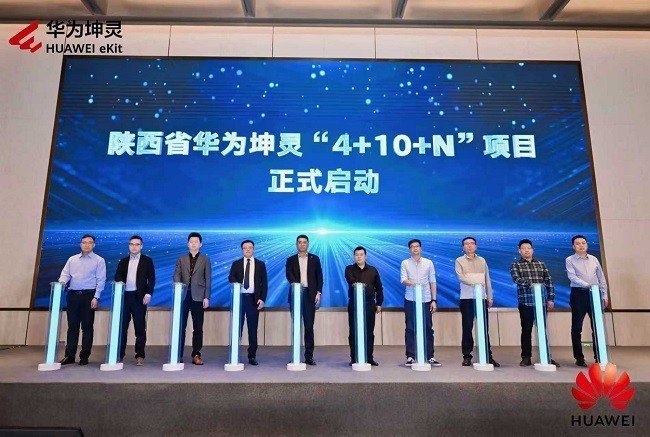
华为坤灵入陕:一把数字锄头,刨开三秦新沃土
Xin Lang Cai Jing· 2025-12-05 12:56
Core Insights - The article emphasizes the importance of Huawei Kunling's "4+10+N" intelligent transformation plan for small and medium-sized enterprises (SMEs) in Shaanxi, aiming to facilitate their digital transformation and enhance operational efficiency [1][13][24] Group 1: Huawei Kunling's Role - Huawei Kunling's initiative is designed to address the specific needs of Shaanxi SMEs, providing practical and professional solutions for their digital transformation [5][17] - The "4+10+N" plan focuses on four core scenarios: intelligent office, intelligent commerce, intelligent education, and intelligent healthcare, covering over 95% of the business scope of SMEs in Shaanxi [6][18] - The program aims to simplify complex technologies, making them easy to understand, deploy, and maintain for local enterprises [4][16] Group 2: Government and Policy Support - The Shaanxi government is actively promoting the digital transformation of SMEs through supportive policies and initiatives, including the "Implementation Plan for Digital Transformation of Manufacturing and SMEs in Xi'an" [3][15] - A public service platform has been established to integrate policy dissemination, consulting, and project advancement, addressing the challenges of transformation support [3][16] - Talent training programs are being implemented to enhance the capabilities of core personnel in various industries, facilitating the transformation process [3][16] Group 3: Practical Applications and Case Studies - In the intelligent office sector, Huawei Kunling has developed simplified solutions for startups and small enterprises, integrating multiple functions into a single device to reduce costs [7][19] - The intelligent education sector has seen successful implementations, such as a school in Baoji that utilized Huawei's optical solutions to enhance connectivity and support educational equity [8][20] - In the intelligent commercial sector, a hotel case study demonstrated significant cost reductions and improved guest experiences through the deployment of Huawei's technology [9][21] Group 4: Future Prospects - The successful launch of the Huawei Kunling project in Shaanxi marks the beginning of a collaborative ecosystem involving government, enterprises, and research institutions [10][23] - The initiative is expected to expand into key areas such as high-tech zones and industrial parks, promoting comprehensive digital transformation across various sectors [10][23] - Huawei aims to continue investing in product development and ecosystem building in Shaanxi, enhancing the accessibility of intelligent solutions for local SMEs [12][24]
任正非最新讲话,谈AI、教育话题,信息量很大!
Feng Huang Wang Cai Jing· 2025-12-05 10:08
Group 1 - The event highlighted the importance of connecting academia, industry, and young talent in the context of AI and technology challenges [1][2][3] - Huawei's focus is on applying large models and big data in various industries, including agriculture and mining, to enhance efficiency and safety [3][4] - The company emphasizes the role of AI in improving healthcare diagnostics and remote medical assistance [4][5] Group 2 - The discussion included the need for educational reforms to create a strong talent pool in technology, emphasizing the importance of teaching practical skills rather than just theoretical knowledge [8][10] - Huawei recognizes the significance of online education in democratizing access to quality learning resources, especially for remote areas [6][10] - The company aims to support initiatives that help underdeveloped regions improve their IT capabilities through training and resources [5][10] Group 3 - The future of AI is seen as a driving force for productivity improvements across various sectors, with predictions of significant advancements in the next three to five years [7][23] - The company is aware of the potential job displacement due to automation and emphasizes the need for re-education programs to transition workers into new roles [22][23] - Huawei is committed to fostering innovation and collaboration with educational institutions to bridge the gap between theoretical research and practical applications [12][28] Group 4 - The company acknowledges the rapid development of AI and its implications for various industries, including transportation and logistics, where AI can optimize operations [17][20] - Huawei is exploring the integration of AI in enhancing the safety and efficiency of high-speed rail systems [17][18] - The company is also interested in the potential of quantum computing, recognizing its future importance in various technological advancements [33][34]
任正非:欧洲在法律许可的时候,华为还是要加大在欧洲的发展
Xin Lang Cai Jing· 2025-12-05 04:19
Core Points - Huawei's President Ren Zhengfei emphasized the importance of youth, talent, and education during a discussion with ICPC representatives, highlighting the role of young people as the hope of the future [1][2][3] - Ren acknowledged Romania's significant contributions to China's industrial development, particularly in oil exploration technology, and expressed a desire to strengthen cooperation with Romania [1][29] - The discussion also focused on the challenges and opportunities presented by artificial intelligence (AI), with Ren noting the need for collaboration between academia and industry to address these challenges [4][9] Group 1: AI and Industry Applications - Ren discussed the application of large models and big data in various industries, such as optimizing iron production and enhancing safety in coal mining through remote operations [5][6] - He highlighted the advancements in healthcare diagnostics using AI models, which improve the capabilities of doctors in remote areas [6] - The conversation included the potential for AI to automate processes in ports and mining, showcasing examples of fully automated operations in Tianjin and Peru [5][6] Group 2: Education and Talent Development - Ren stressed the importance of education in fostering talent, stating that China must focus on creating its own talent rather than solely relying on imports [9][10] - He pointed out the shift from traditional education models to more decentralized, online learning opportunities, which can benefit students in remote areas [7] - The need for collaboration between educational institutions and industries was emphasized, with a focus on practical training and skill development [12][21] Group 3: Future of Work and AI - Ren addressed concerns about job displacement due to AI, suggesting that re-education programs will be necessary to transition workers into new roles [21][22] - He noted that while AI will automate many tasks, it will also create new opportunities and increase overall wealth, necessitating a focus on how to share this wealth equitably [22] - The discussion included the potential for AI to enhance productivity in various sectors, including transportation and healthcare, while also acknowledging the challenges of integrating AI into existing systems [19][20]
任正非:算力过剩的时代一定会到来
Xin Lang Cai Jing· 2025-12-05 04:19
Core Insights - Huawei's President Ren Zhengfei emphasized the importance of talent, education, and the future of artificial intelligence (AI) during a discussion with ICPC representatives, highlighting the potential for an era of surplus computing power rather than scarcity [1][9]. Group 1: AI and Computing Power - Ren Zhengfei stated that the future will see an abundance of computing power, suggesting that the development of numerous large models is a valid exploration [1][24]. - He discussed the need for understanding the requirements of large models and the potential for non-linear demand in computing resources, indicating that the industry should not worry about the utility of models in society [1][24]. - The company is focusing on applying large models and big data in various industries, such as optimizing iron production and enhancing safety in mining operations through data collection and AI [7][8]. Group 2: Education and Talent Development - Ren highlighted the shift from traditional education models to a more decentralized approach facilitated by online learning, which allows students in remote areas to access quality education [9]. - He emphasized the role of educational institutions in fostering innovation and talent, stating that companies should transform theoretical research into practical applications [11][12]. - The company supports initiatives to improve IT education in underdeveloped regions, advocating for teaching skills rather than merely providing resources [8][11]. Group 3: Industry Applications and Innovations - Ren provided examples of AI applications in various sectors, including healthcare diagnostics and autonomous operations in mining and port logistics, showcasing the practical benefits of AI technology [8][10]. - He mentioned the potential for AI to enhance productivity in industries such as agriculture and manufacturing, indicating a strong focus on real-world applications of AI [10][33]. - The company is committed to exploring innovative solutions that leverage AI to address complex challenges in different fields, reinforcing the importance of practical applications over theoretical advancements [33][34]. Group 4: Global Collaboration and Future Outlook - Ren expressed the importance of international collaboration in technology and education, recognizing the contributions of various countries to global advancements [29][31]. - He acknowledged the need for continuous dialogue between academia and industry to foster innovation and address emerging challenges in technology [12][15]. - The company aims to support young talents globally, encouraging them to pursue their passions and contribute to technological advancements [16][18].
任正非谈AI取代就业:要发展再教育工程,给下岗人员发放学券补贴
Xin Lang Cai Jing· 2025-12-05 04:13
Core Viewpoint - The discussion led by Ren Zhengfei emphasizes the differing approaches to artificial intelligence (AI) between the United States and China, highlighting the need for re-education programs to address job displacement caused by automation and the importance of nurturing talent for future technological advancements [1][2][23]. Group 1: AI and Automation - The pursuit of AI in the U.S. focuses on general artificial intelligence (AGI) and superintelligence (ASI), while China aims to solve practical problems and create value through automation [1][23]. - Automation may lead to job losses, but overall national wealth is expected to increase, with examples showing production efficiency rising from 100 to 120 when transitioning to automation [2][24]. - AI-assisted software programming has already reduced the workload of software engineers by approximately 30%, with potential future reductions reaching 60-70% [2][25]. Group 2: Education and Talent Development - Ren suggests implementing re-education programs, such as a voucher system, to help displaced workers transition into new roles, emphasizing the need for vocational training [1][24]. - The shift from traditional education models to online learning has made high-quality education more accessible, allowing students in remote areas to benefit from global resources [8][37]. - The importance of nurturing homegrown talent is highlighted, as reliance on imported talent is not sustainable for technological advancement [11][12]. Group 3: Industry Applications and Innovations - The application of AI in various industries, such as mining and healthcare, is discussed, showcasing how AI can enhance operational efficiency and safety [6][7][10]. - Examples include the use of AI in optimizing iron smelting processes and remote diagnosis in healthcare, demonstrating the practical benefits of AI technology [6][7]. - The company is focused on applying large models and big data in agriculture and industry to improve productivity and safety [6][10]. Group 4: Future Outlook and Challenges - The future of AI and its societal implications are uncertain, with the company focusing on short to medium-term applications while acknowledging the rapid pace of technological change [5][9]. - The need for a stable societal structure during the transition to automation is emphasized, as the benefits of AI must be shared equitably [25][26]. - The company recognizes the potential of quantum computing and its future applications, although it does not currently lead in this area [35].
任正非:国铁正在试验新的5G-R无线调度系统
Xin Lang Cai Jing· 2025-12-05 04:08
Core Viewpoint - Ren Zhengfei, the president of Huawei, emphasizes the importance of innovation and resilience in the face of skepticism, drawing parallels between historical scientific breakthroughs and Huawei's own challenges in technology development, particularly in 5G and AI applications [1][18]. Group 1: Innovation and Challenges - Ren highlights that significant scientific advancements often face initial skepticism, citing examples like Fourier's series and the Higgs boson prediction [1][18]. - Huawei's development of technologies such as 5G Polar codes and Massive MIMO has also encountered doubts, yet the company continues to push forward with innovation [1][18]. Group 2: AI and Future Applications - The company is focusing on the application of AI in various sectors, including transportation and healthcare, to enhance efficiency and safety [7][8]. - AI is seen as a transformative force in industries such as mining and agriculture, with potential applications in remote diagnostics and automated operations [7][8][24]. Group 3: Education and Talent Development - Ren stresses the need for educational reforms to cultivate talent capable of driving technological advancements, advocating for a shift from traditional educational models to more flexible, network-based learning [9][11]. - The company recognizes the importance of nurturing local talent and supporting educational initiatives to bridge the gap in technological expertise across different regions [11][12]. Group 4: Transportation and Infrastructure - The introduction of the 5G-R wireless dispatch system for high-speed trains represents a significant advancement in railway safety and efficiency, capable of managing thousands of trains simultaneously [2][19]. - China's railway network is projected to expand significantly, necessitating advanced mathematical and AI solutions for effective management [20][21]. Group 5: Global Collaboration and Community Engagement - Huawei's collaboration with the ICPC community reflects its commitment to fostering global connections and sharing knowledge across borders [4][28]. - The company aims to support young talents and encourage international cooperation in technology and education [14][28].