铁路运输

Search documents
多地加开“夕发朝至”高铁缓解运输压力 精细化服务让春运之路暖意融融
Yang Shi Wang· 2026-02-09 13:23
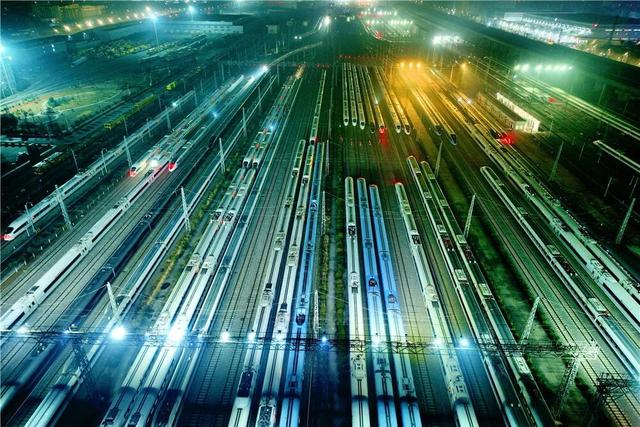
Core Viewpoint - The article highlights the increased efforts by the China Railway Chengdu Bureau to accommodate the surge in passenger flow during the Spring Festival travel season, particularly for migrant workers returning home, by adding night trains and enhancing services [1][7]. Group 1: Night Train Operations - The Chengdu Bureau plans to operate 171 pairs of night trains during the Spring Festival, an increase of 43.5 pairs compared to the previous year [7]. - The first night high-speed train from Guangzhou to Chongqing was launched on February 8, 2023, departing at 22:24 and arriving at 4:28 the next day [3]. - The night trains are designed to meet the needs of workers returning home and family visits, with services covering major hubs like Chengdu, Chongqing, and Guiyang [7]. Group 2: Passenger Services and Safety - The Chongqing passenger segment has collaborated with railway police to provide tailored services for night trains, including station reminders and enhanced safety measures [5]. - The 12306 App features system pop-ups for arrival reminders, and staff provide personal reminders to prevent passengers from missing their stops [5]. - Additional safety measures include increased patrols by police during night journeys to ensure passenger security [5]. Group 3: Guangdong Region Developments - The first night high-speed train in the Greater Bay Area was launched on February 8, 2023, with significant passenger traffic observed at Guangzhou South Station [10]. - Since the start of the Spring Festival, the daily passenger volume from the Greater Bay Area has exceeded 2 million, with expectations for high traffic to continue until February 15 [12]. - The Guangzhou Bureau plans to operate 2,472 night trains before the festival peak, with over 400 trains on peak days covering popular routes [12].

视频丨站台等车时这个关键细节你做对了吗?候车安全指南来了→
Yang Shi Xin Wen Ke Hu Duan· 2026-02-09 13:13
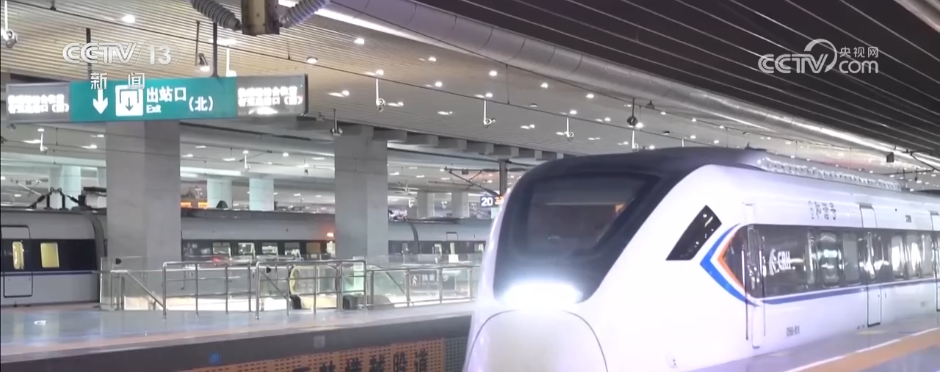
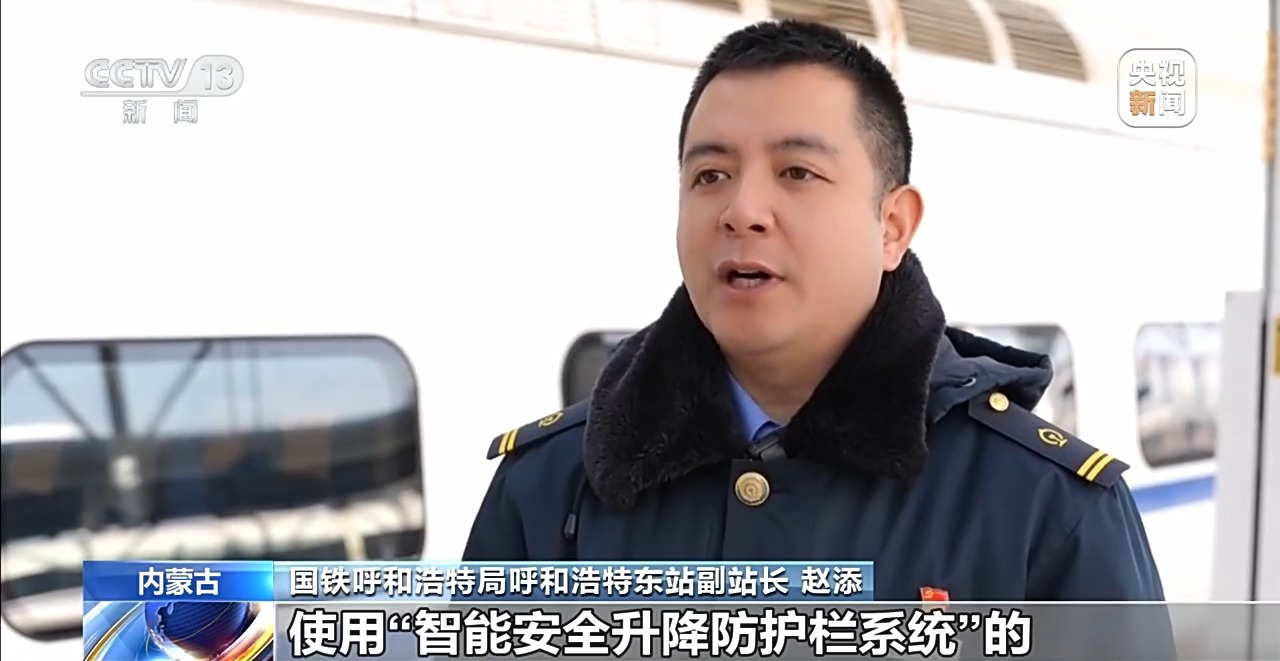
0:00 在呼和浩特东站,随着一列动车组列车进站停稳,列车和站台之间的这个智能安全防护栏自动升起,为旅客上下车开放通道。上下完乘客,安全护栏就恢复 到下降模式,能更好地保证旅客在安全区域候车。 国铁呼和浩特局包头站客运车间副主任 于晓庆:为保障出行安全,建议广大旅客不要在高铁站台打伞,列车停稳之前请站在安全线内候车。上下车时不要 拥挤和堵塞车门,以免发生危险。 另外,站台地面上的这些彩色地标也会让您候车更方便。蓝色、黄色分别代表8节和16节编组列车的正编,也就是动车组列车前进方向的第1节车厢为1号车 厢,车厢号从小到大以此类推。紫色和绿色地标代表相应反编列车车厢。 铁路出行,站台上候车时有哪些注意事项您知道吗?今天的春运服务台,我们一起来了解一下。 国铁呼和浩特局呼和浩特东站副站长 赵添:今年是我们车站使用"智能安全升降防护栏系统"的首个春运,用科技手段为旅客出行筑起一道动态安全屏障。 它的升降控制立柱上还能实时显示车次、车厢号、到发时刻等信息,方便旅客寻找车厢位置、安全有序乘车。 没有智能安全升降防护栏的站台,候车时更要注意地面的白色安全线。由于列车进站时会产生明显的"狭管效应",在站台区域形成强烈气流,如 ...
坐上高铁回延安
Ren Min Ri Bao· 2026-02-09 12:36
Core Insights - The opening of the high-speed rail line from Xi'an to Yan'an has significantly improved transportation for local residents and businesses, enhancing economic opportunities in the region [1][2] - The introduction of high-speed rail has led to a dramatic increase in the sales and distribution efficiency of local agricultural products, particularly apples from Luochuan, with transportation losses reduced from 15% to below 2% [1] - The tourism sector in Yan'an is expected to benefit greatly from the high-speed rail, with an anticipated increase in visitor numbers to over 50 million this year due to promotional packages and improved accessibility [2] Group 1 - The high-speed rail allows for rapid transportation, with trains capable of reaching speeds of 5.8 kilometers per minute, making travel more efficient for residents [1] - Local farmers, such as those selling apples, report doubling their income due to increased customer access facilitated by the high-speed rail [1] - The establishment of cold chain logistics and agricultural product exhibition centers around the new high-speed rail station is underway, further supporting local agriculture [1] Group 2 - The Yan'an station is preparing for increased tourism by providing red tourism route maps and service manuals, along with discounts for travelers [2] - Packages combining high-speed rail travel with accommodation and recreational activities are being offered to attract more visitors [2] - The cultural significance of the region is highlighted through local music and festivities, enhancing the overall travel experience for visitors [2]
低至2折!长三角铁路部分列车车票打折优惠
Yang Zi Wan Bao Wang· 2026-02-09 12:22
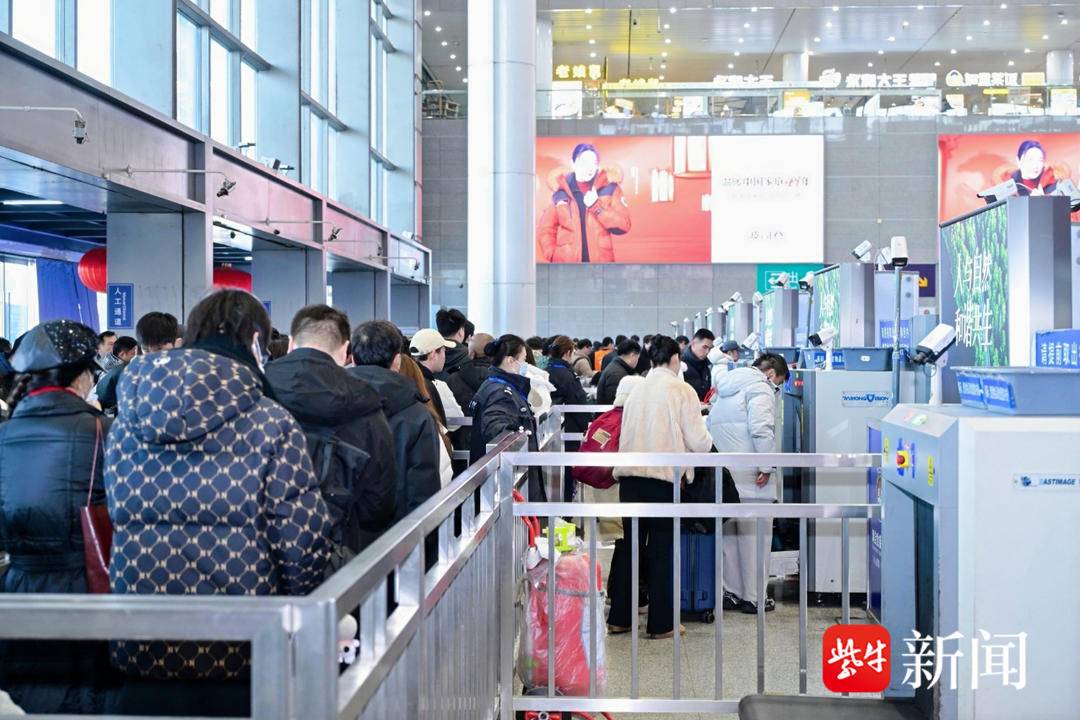
当天,长三角铁路继续加大对重点时段和热门方向运力投放,计划增开旅客列车547列,其中云贵、川渝、东北、西北、湖南、湖北、河南等方向旅客列 车372列,安徽、苏北等方向旅客列车175列,对334列动车组列车进行扩编。增开的列车中含夜间高铁列车285列,包括京沪、沪昆等主要高铁干线通道高 铁列车134列。 铁路部门持续完善便民利民惠民服务举措,让旅客春运出行体验更美好。春节前,上海站、上海南站、上海虹桥站、上海松江站从2月8日起全面进入通宵 运营模式,南京南站、合肥南站、杭州东站、杭州西站2月8日至9日、11日至14日启动阶段通宵运营模式,在检票口、服务台等关键岗位增派人员值守, 候车室24小时开放,及时响应夜间旅客需求。南京南站持续强化客流动态监测,实时调整旅客进站流线,推行"双手检、双处置",利用护栏、软隔离等措 施优化候车区域外围引导,在排队处设置等候时间提示牌,提升旅客进站效率与候车体验。 校对盛媛媛 2月9日,2026年春运第8天。记者从中国铁路上海局集团有限公司获悉,春运客流高位运行、持续攀升,长三角铁路8日发送旅客285.9万人次,当日预计 发送旅客306.5万人次。 春运期间,铁路部门将分日期、分 ...
今年春运云南铁路计划开行30余趟夜间动车
Xin Lang Cai Jing· 2026-02-09 12:03
中新网昆明2月9日电 (殷学合)9日4时28分,昆明南至成都东G3994次列车从昆明南站始发,11时16分抵 达成都东站,标志着中国铁路昆明局集团有限公司今年春运期间夜间动车拉开运行帷幕,为旅客提供多 样化出行选择。 今年春运,中国铁路昆明局集团有限公司计划加开夜间动车30余趟,开行范围覆盖了大理、丽江、西双 版纳等旅游热门目的地,以及贵阳北、重庆西、成都东等热门线路,为旅游、商务出行和探亲访友的旅 客提供了更多便利。 据悉,云南铁路部门在梯次安排夜间动车的同时,还全方位提升服务质量,旅客在夜间候车过程中,可 持续享受到免费充电、热水供应等贴心服务。不仅如此,铁路部门还在"D"字头、"G"字头动车组列车 上推行静音车厢,为旅客提供安静、舒适的夜间乘车环境,让旅客在旅途中能够放松身心,享受惬意旅 行时光。(完) ...
今年首趟广州至重庆夜间动车开行:旅客“睡一觉就到家”
Xin Lang Cai Jing· 2026-02-09 12:03
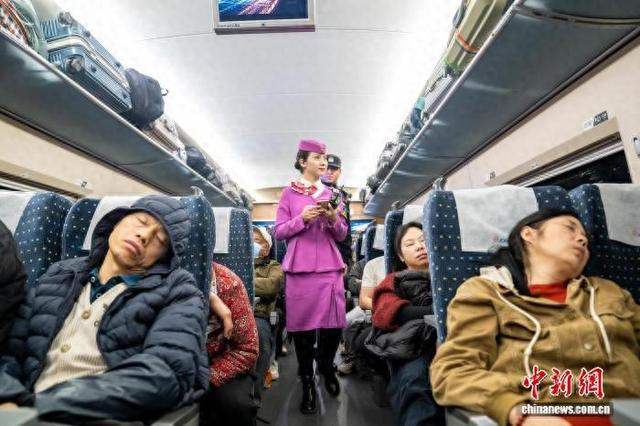
中新网重庆2月9日电 (张旭 钟洁)2月9日凌晨,广州至重庆方向春运首趟"夕发朝至"夜间动车组列车顺 利抵达重庆。该列车以"睡一觉就到家"的便捷模式,为归心似箭的务工人员与探亲旅客铺就温暖顺畅的 返乡之路。 据铁路部门介绍,随着春运返乡客流高峰的持续攀升,该部门精准对接旅客出行需求,加大夜间运力投 放。2月8日22时24分,G4502次列车从广州南站准时启程,载着1229名旅客,向着重庆西站疾驰而去。 列车于次日4时28分平稳抵达终点,全程运行6小时4分钟,实现了"夜间出发、清晨到家"。 工作人员在夜间动车上服务旅客。胡勇 摄 图为列车 作为2026年春运期间广州至重庆方向的首趟夜间高铁,该车次沿途停靠肇庆东、贵阳东等关键站点,精 准覆盖粤西至渝黔的务工返乡热门线路,让沿线务工人员无需中转即可直达家乡。 为保障夜间长途运行的安全与舒适,中国铁路成都局集团有限公司重庆客运段与铁路公安机关联动推出 多项定制化服务。 其中,包括通过12306App提前推送到站信息,搭配乘务员逐座提醒,形成"双保险"模式,彻底解决旅 客夜间乘车易坐过站的顾虑;列车班组推行"一车一流程"服务标准,提前规划专属大件行李存放区,为 旅客免 ...
春运客流持续增长 重点区域增加夜间运力
Yang Shi Wang· 2026-02-09 11:49
Group 1 - The total inter-regional personnel flow in the society is expected to exceed 230 million people today, with a month-on-month increase of 3.4% [1] - The national road personnel flow is projected to be 218 million people today [1] - The railway is expected to send 14.25 million passengers today, with additional night high-speed trains added on major routes [1] Group 2 - The civil aviation sector is expected to send 2.348 million passengers today, representing a year-on-year growth of 5.6% [1] - Weather conditions have affected the efficiency of passenger and roll-on/roll-off ships in the Qiongzhou Strait, but normal operations have resumed [1] - The transportation department has advised travelers to pay attention to road conditions due to freezing rain in high-altitude areas of Guizhou, Hunan, and Hubei [1]
新通道班列里的“年味儿”
Xin Hua Wang· 2026-02-09 11:31
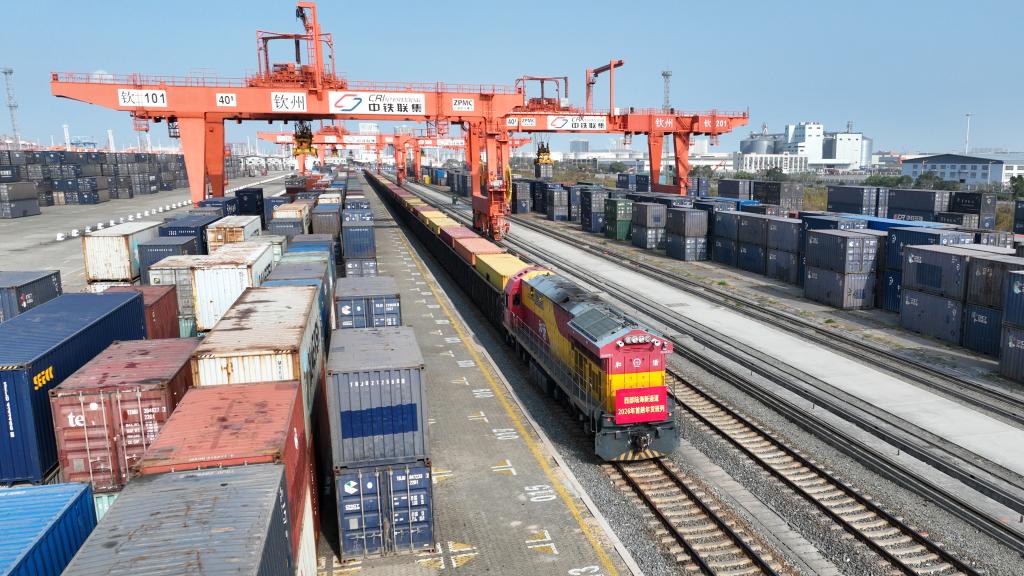
Core Viewpoint - The Western Land-Sea New Corridor freight trains are increasingly facilitating the transport of seasonal goods, including imported food items from ASEAN countries to China, enhancing the variety of New Year products available in the market [1][2][7]. Group 1: Transportation and Logistics - The Western Land-Sea New Corridor freight trains have become a vital link between China's southwestern regions and ASEAN countries, with increased frequency of operations during the New Year season [1]. - The logistics advantages of the China-Vietnam freight trains, including stable daily operations and controllable transit times, have led to a significant increase in food exports to Vietnam [2][7]. - The railway department has optimized cross-border freight services to ensure smooth transportation during the Spring Festival, including upgrading the Qinzhou railway hub from a single to a double track to enhance efficiency [5][7]. Group 2: Market Trends and Consumer Behavior - There has been a noticeable increase in the variety of imported goods in the Chinese New Year market, with products like durians, mangosteens, and curry sauces from ASEAN countries becoming popular choices among consumers [2]. - Consumers in Nanning are increasingly selective in their New Year purchases, moving from bulk buying to carefully choosing high-quality products, including those from Thailand [5]. - The Western Land-Sea New Corridor has expanded its transportation categories to over 1,300 types of goods, reaching 75 cities across 18 provinces and connecting to 584 ports worldwide [7].
截至2月9日8时铁路12306累计售出春运火车票1.70亿张
Xin Hua Cai Jing· 2026-02-09 11:20
Core Insights - The China National Railway Group announced that on February 9, the national railway is expected to send 14.25 million passengers, with plans to add 1,674 passenger trains, including night high-speed trains on major routes such as Beijing-Guangzhou, Beijing-Shanghai, and Beijing-Harbin [1] - The railway has sold over 170 million tickets during the Spring Festival travel period, with tickets for February 23 now available, and there are still available tickets for various routes before and after the holiday [2] - The railway department is implementing a market-oriented pricing mechanism, offering discounts as low as 20% on tickets for less popular routes to provide travelers with more options and to encourage staggered travel [2] Group 1 - On February 9, the railway is expected to send 14.25 million passengers and add 1,674 trains, including night services on major high-speed routes [1] - The railway has sold over 170 million tickets during the Spring Festival, with remaining tickets available for various routes [2] - Discounts of up to 80% are being offered on certain non-popular routes to enhance travel options and balance passenger flow [2] Group 2 - Local railway departments are increasing capacity during peak travel times by adding night high-speed trains to meet passenger demand [3] - Tickets for the newly added night trains can be purchased through the railway 12306 platform, with a pre-sale period of five days [3]
京广、京沪、京哈等主要高铁通道增开夜间高铁列车
Xin Lang Cai Jing· 2026-02-09 11:01
Core Viewpoint - The railway sector is enhancing passenger services during the Spring Festival travel season by increasing train services and offering significant discounts on tickets for less popular routes, aiming to balance passenger flow and improve resource utilization [1][3]. Group 1: Passenger Volume and Train Services - On February 9, the national railway is expected to send 14.25 million passengers, with 1,674 additional trains planned, including night trains on major high-speed rail routes [1]. - On February 8, the railway sent 13.442 million passengers, maintaining safe and orderly transport [1]. - As of February 9, over 170 million tickets have been sold for the Spring Festival period, with tickets for February 23 now available [1]. Group 2: Ticket Pricing and Discounts - The railway is implementing a market-based pricing mechanism, offering discounts as low as 20% on certain non-popular routes to provide travelers with more options and encourage off-peak travel [3]. - Specific examples of discounted tickets include a 20% fare for the G4480 train from Zhengzhou East to Beijing South, costing 74 yuan, and a 20% fare for the K4505 train from Wuchang to Wenzhou, costing 23 yuan [3]. Group 3: Night Train Services - Various railway departments are increasing capacity during peak travel times by adding night trains, with ticket sales for these trains starting five days before departure [5]. - The Shenyang Bureau is adding 20 night trains, while the Zhengzhou Bureau is adding 28, and the Xi'an Bureau is adding 46 night trains to various destinations [5]. Group 4: Official Ticket Purchase and Travel Information - The railway 12306 platform is the only official ticket sales channel, emphasizing the importance of purchasing tickets through official means to ensure safety and fairness [7]. - Travelers are advised to monitor weather conditions and travel service information during peak times, allowing sufficient time for boarding and adhering to regulations regarding personal items [7].