电力

Search documents
连板股追踪丨A股今日共101只个股涨停 这只电力股5连板
Di Yi Cai Jing· 2026-02-25 07:37
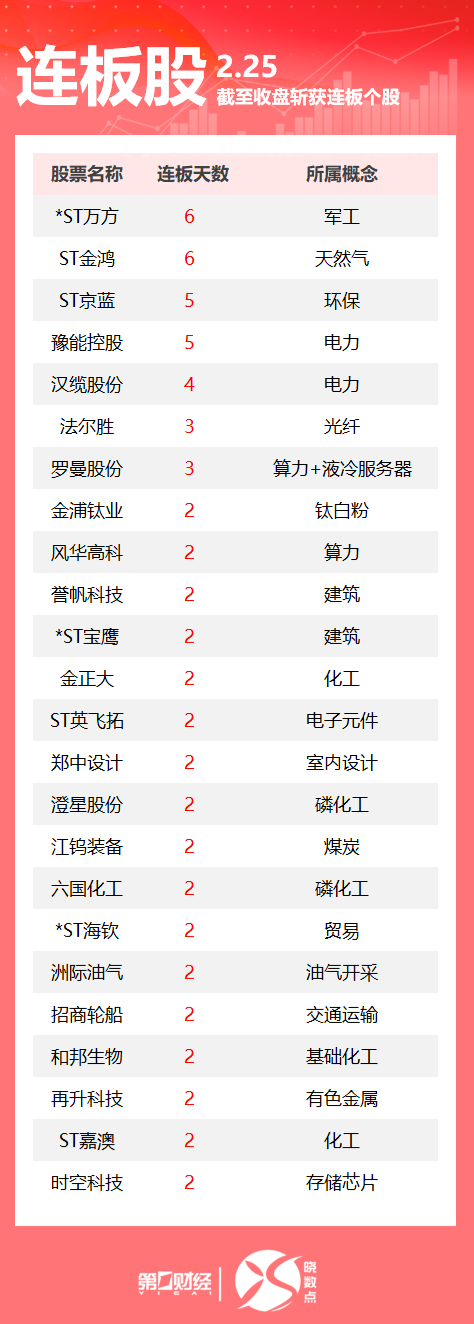
Group 1 - The power sector shows strong performance with Yunnan Energy Holding Co. achieving a 5-day consecutive limit-up, while Hancable Co. has a 4-day consecutive limit-up [1] - A total of 101 stocks in the A-share market reached their daily limit-up on February 25, indicating a bullish trend [1] - Other notable stocks include *ST Wanfang and RI 25, both achieving 6 consecutive limit-ups in their respective sectors [1] Group 2 - The list of stocks with consecutive limit-ups includes various sectors such as environmental protection, natural gas, and construction, highlighting diverse investment opportunities [1][2] - Specific stocks like ST Jinglan and Falunsheng also show significant performance with 5 and 3 consecutive limit-ups respectively, indicating sector-specific momentum [1]

还有多少 GW 需要中国制造?
远川投资评论· 2026-02-25 07:11
Core Viewpoint - The article emphasizes the ongoing evolution of AI and its implications for the power industry, highlighting the significant investment opportunities and structural changes within the sector as it adapts to increasing demand driven by AI technologies [3][6][12]. Group 1: AI and Power Demand - Despite 84% of the global population having no exposure to AI, the urgency for investment in AI infrastructure is rising, with fears of missing out (FOMO) driving capital towards AI-related projects [6]. - The power industry is experiencing a mismatch in supply and demand, with China facing an oversupply of electricity while Western countries struggle with power shortages due to industrial hollowing out [7][12]. Group 2: Investment Opportunities - The State Grid of China announced a planned investment of 4 trillion yuan in fixed assets during the 14th Five-Year Plan, focusing on ultra-high voltage, distribution networks, and pumped storage power stations, marking a 40% increase from the previous plan [8]. - The transition to a new power system is characterized by a shift from high-carbon to low-carbon energy sources, necessitating significant investment in energy storage and grid modernization [9][11]. Group 3: Structural Changes in the Power Industry - The new power system will integrate energy sources, grids, loads, and storage, creating a complex network that requires advanced digital capabilities for real-time management [11]. - The traditional power system's linear flow is evolving into a multi-directional flow, necessitating smart grid upgrades and the integration of distributed energy resources [9][11]. Group 4: Global Supply Chain Dynamics - The U.S. is projected to face a significant power generation gap by 2030, with estimates indicating a cumulative shortfall of up to 134 GW, highlighting the urgent need for infrastructure development [12]. - Chinese companies are positioned to fill the global power supply gap, leveraging their comprehensive power industry chain and competitive advantages in manufacturing and delivery times [13][21]. Group 5: Investment Strategies - Investment firms like Huaxia Fund are focusing on sectors such as power grid equipment, green energy, and public utilities, aiming to capture excess returns from the energy revolution and AI era [15][17]. - The proactive investment approach includes identifying undervalued companies within the power sector that are poised for growth as global demand for electricity surges [18][20].

定调!十五五“期间初步建成新型能源体系
Guo Ji Jin Rong Bao· 2026-02-25 07:05
在能源系统发展中,如何平衡好"能源安全、能源公平(可负担性)与环境可持续性"三者之间的矛盾, 是所有国家都面临的难题。中国要想建设"能源强国",就必须加快建设新型能源体系。 2月23日,国家能源局发布消息,明确2026年作为"十五五"规划开局之年,将发布实施新型能源体系及 系列分领域能源规划,深入践行能源安全新战略,加快建设新型能源体系,推进能源强国建设。 关键转折点来了 为什么在此时提出要建立新型能源体系?业内人士分析称,主要是"十四五"期间,我国非化石能源消费 占比显著提升(占到总能源消耗的两成),而煤炭消费占比稳步下降,意味着我国建立了全球最大的可 再生能源体系。这一趋势带来了一个历史性的变革时刻,那就是中国可再生能源(风电光伏等)总装机 容量第一次超过了传统的煤电和其他化石能源,这是一个非常关键的转折点,为我国初步建成清洁低 碳、安全高效的新型能源体系奠定了基础。此次新型能源体系建设的目标是要从根本上颠覆过去100多 年里的传统能源网络。 为什么急于建立这样一个"新"体系?业内认为,因为当前我国能源发展面临多重挑战。 根据国家发展改革委、国家能源局等权威部门发布的政策文件,到2030年,我国将基本建成 ...
定调!十五五”期间初步建成新型能源体系
Guo Ji Jin Rong Bao· 2026-02-25 07:04
Core Viewpoint - The establishment of a new energy system in China is essential for balancing energy security, affordability, and environmental sustainability, with a target implementation year of 2026 as part of the 14th Five-Year Plan [1][3]. Group 1: Current Energy Landscape - During the 14th Five-Year Plan, China's non-fossil energy consumption rose significantly, accounting for 20% of total energy consumption, while coal consumption decreased, marking a historic shift towards renewable energy [3]. - China has now established the world's largest renewable energy system, with total installed capacity of renewable energy surpassing that of traditional coal and other fossil fuels [3]. Group 2: Challenges in Energy Development - Energy security is increasingly threatened by global instability and competition for resources, leading to uncertainties in energy imports [4]. - There is a growing contradiction between rapid economic development and carbon emissions, necessitating a faster transition to green energy [4]. - The global competition for energy technology has intensified, with countries vying for leadership in clean energy, storage, and smart grid technologies [4]. Group 3: Key Indicators of the New Energy System - The new energy system aims for enhanced supply security, improved energy structure with non-fossil energy consumption reaching 25%, and a more resilient and integrated energy infrastructure [6]. - By 2030, the goal is for non-fossil energy consumption to constitute 25% of total energy consumption, reflecting a comprehensive green transition [6]. Group 4: Relationship Between New Energy System and New Power System - The new energy system is a broader framework encompassing all energy forms, while the new power system focuses specifically on electricity, addressing the integration of renewable energy sources [8][9]. - The new energy system aims to reduce reliance on fossil fuels and support national energy security and carbon neutrality goals [10]. Group 5: Implementation Strategy - A dual strategy of "large and small projects" will be employed to achieve the new energy system goals, including major strategic projects and smaller, innovative initiatives [12]. - Key projects include the development of wind and solar bases, nuclear power stations, and electric vehicle charging networks, alongside smaller-scale renewable energy projects [12].
晶科能源取得叠层电池及其制备方法专利
Jin Rong Jie· 2026-02-25 06:46
Group 1 - The core viewpoint of the article highlights that Jinko Energy (Haining) Co., Ltd. has obtained a patent for "stacked batteries and their preparation methods and photovoltaic components," with the authorization announcement number CN121194620B and an application date of November 2025 [1] - Jinko Energy (Haining) Co., Ltd. was established in 2017 and is located in Jiaxing City, primarily engaged in the production and supply of electricity and heat [1] - The registered capital of Jinko Energy (Haining) Co., Ltd. is 357 million RMB [1] Group 2 - According to data analysis from Tianyancha, Jinko Energy (Haining) Co., Ltd. has participated in 56 bidding projects and holds 960 pieces of patent information [1] - The company also possesses 74 administrative licenses [1]

米尼加发生大规模停电
Zhong Guo Xin Wen Wang· 2026-02-25 06:15
据多米尼加能源与矿业部长乔尔·桑托斯介绍,此次停电是由于输电线路中有线路开关跳闸,导致系统 进入保护模式。 桑托斯称,到当日下午,电力系统已恢复近30%的运行能力。 报道称,此次停电导致公共交通中断,一些企业被迫关门。 圣多明各消息:加勒比岛国多米尼加当地时间23日发生全国大规模停电,这是该国在过去约三个月时间 里第二次发生类似停电事件。 综合路透社与美联社消息,多米尼加输电公司称,该国主要发电厂在当日中午前突然停止供电,导致其 他所有发电厂停止运转。 去年11月,多米尼加因输电系统故障导致大规模停电,首都圣多明各公共交通全面中断,交通陷入瘫 痪,医院、银行和政府机构等依靠发电机维持运作。 责任编辑:江蓬新 ...
碳酸锂节后涨势延续,南方基金旗下新能源ETF(516160)上涨2.24%,新能源赛道景气度攀升
Xin Lang Cai Jing· 2026-02-25 06:12
Group 1 - The core viewpoint of the news is that the new energy sector is experiencing significant growth, driven by government policies and market dynamics, particularly in the context of the electricity market reform and lithium prices [1][2]. Group 2 - As of February 25, 2026, the New Energy ETF (516160) rose by 2.24%, with a trading volume of 201 million yuan and a turnover rate of 2.88% [1]. - The State Council issued an implementation opinion on improving the national unified electricity market system, marking a shift towards a more systematic approach to electricity market reform [1]. - The top ten weighted stocks in the China New Energy Index include major players such as CATL, Sungrow Power, and LONGi Green Energy, reflecting the overall performance of the new energy sector [3]. Group 3 - UBS has raised its price forecasts for lithium spodumene and carbonate, indicating that the global lithium market has entered a third price supercycle, driven by the electric vehicle sector [2]. - The cost of single battery cells has decreased to $55 per kWh, nearly a 50% reduction since 2020, with manufacturing costs continuing to decline by approximately 10% annually [2]. - The upcoming Beijing Auto Show is expected to stimulate market demand as new flagship models are set to be launched, potentially leading to a rebound in new energy vehicle penetration rates [2].




国家能源局通报:某地在办理分布式光伏接入时存在违规
Xin Lang Cai Jing· 2026-02-25 05:44
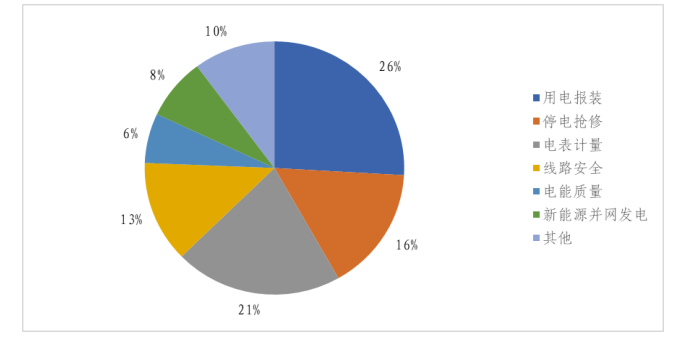
日前,国家能源局12398能源监管热线投诉举报处理情况通报,通报称2026年1月,热线平台接收举报问题线索94件。其中,承装(修、 试)电力设施许可59件、新能源并网发电17件、用电报装8件、线路安全5件、电力交易2件、其他3件(详见图3)。举报数量较多的省份 为:浙江11件、广东8件、辽宁8件、江苏7件、山东7件。 通报中典型案例提到,四川群众举报供电企业分布式光伏并网服务不规范。四川群众通过12398热线举报,反映国网四川雅安电力集团在 分布式光伏并网接入服务中存在不规范问题。经核实,群众反映情况属实。该供电企业在办理分布式光伏并网接入时,存在违规增设并网 接入前置条件、并网接入流程线下流转、办理时限超出规定要求等问题。四川能源监管办对该企业下发整改通知书,要求其对供电区开展 全面排查整改,严格落实电网公平开放要求。 原文如下: 国家能源局12398能源监管热线投诉举报处理情况通报 (2026年1月) 根据《12398能源监管热线投诉处理办法》和《12398能源监管热线举报处理办法》规定,现将2026年1月12398能源监管热线(以下简 称"热线")投诉举报处理情况通报如下。 一、投诉情况 (一)投诉接收 ...
AI算力的终点是电力:紧抓确定性受益标的
2026-02-25 04:13
Summary of Conference Call on North American Power Shortage Company/Industry Involved - Focus on the North American power shortage, particularly in the context of data centers and related sectors such as gas turbines, power equipment, and energy storage. Core Points and Arguments 1. **Market Overview**: The A-share market opened strongly, with all indices rising and significant trading volume, particularly in the power equipment and grid sectors, which saw an ETF increase of over 4% in a single day. This is attributed to increased infrastructure and grid investment [1][2][3]. 2. **Electricity Shortage Consensus**: The conference emphasized that the issue of electricity shortage is widely recognized, particularly in North America, driven by the increasing capital expenditures of major tech companies like Nvidia and Microsoft, which contribute to rising electricity costs [1][2]. 3. **Quantitative Analysis of Shortage**: The analysis will quantify the extent of the electricity shortage in the U.S. and identify key technologies and companies that could benefit from addressing this crisis, including gas turbines, power equipment, and energy storage [2][3]. 4. **Core Reasons for Power Shortage**: The primary cause of the current power shortage in the U.S. is the mismatch between the explosive demand from data centers and the capacity of the electricity system. The peak load in summer 2025 is projected to be approximately 829 GW, with significant increases expected in the following years [3][5][6]. 5. **Projected Load Growth**: Forecasts indicate that the peak load will increase by 166 GW from 2025 to 2030, with a substantial portion attributed to data centers, which are expected to account for over 55% of this growth [6][7]. 6. **Mismatch Issues**: There are two main mismatches: - Between expected and actual demand, with actual data center planning far exceeding institutional forecasts [7][8]. - Between actual demand and infrastructure capacity, particularly in stable power sources and grid transmission capabilities [8][9]. 7. **Electricity Generation Capacity**: The current stable power generation capacity is 945 GW, primarily from natural gas (577 GW). However, the retirement of coal plants and insufficient new installations of stable power sources pose significant challenges [8][9]. 8. **Regional Analysis**: The Northeast (PJM) and South (ERCOT) regions are identified as critical areas for data center growth and associated power shortages. These regions are experiencing load growth significantly above the national average [13][14]. 9. **PJM Capacity Market Dynamics**: PJM's capacity auction prices have surged nearly tenfold due to declining reliability and increasing demand from data centers. The reserve margin has dropped below the critical threshold, indicating a deteriorating reliability of the power system [16][18]. 10. **Investment Opportunities**: The worsening power shortage is expected to create long-term investment opportunities in gas turbines, power equipment, and energy storage. Companies like Dongfang Electric and Shanghai Electric are highlighted as potential beneficiaries [28][30]. 11. **Political and Regulatory Risks**: The primary risk identified is political, particularly regarding trade policies that could impact the supply chain and investment in power infrastructure [33]. 12. **Future Outlook**: The conference concluded that the North American power shortage is transitioning from a narrative to a structural investment opportunity, driven by increasing demand, regulatory support, and the need for reliable power sources [36][37]. Other Important but Possibly Overlooked Content - The conference highlighted the importance of energy storage as a short-term solution to address the reliability issues in the power system, particularly in regions like PJM and ERCOT [11][12]. - The potential for Chinese companies to capture market share in the North American gas turbine market due to supply constraints faced by overseas manufacturers [28][30]. - The impact of recent policy changes in India regarding the import of power equipment, which could influence market dynamics and opportunities for Chinese companies [29].

财新周刊-第7期2026
2026-02-25 04:09
本⽂由第三⽅AI基于财新⽂章 https://a.caixin.com/Qg8nsMi6提炼总结⽽成,可能与原⽂真实意图存在偏差。不代表财新观点和立场。推荐点击链接阅读原⽂细致⽐对和校验 Summary of the Conference Call on the Prepared Dishes Industry Industry Overview - The prepared dishes industry is experiencing rapid growth in China, driven by the popularity of takeout services and changing consumer preferences. The industry has been developing for several years and has reached a significant scale, similar to trends seen in other countries where prepared dishes have become a substantial part of the food industry [6][7]. Key Points and Arguments - **Regulatory Developments**: Recent documents from the State Council's Food Safety Office and the National Health Commission have introduced national standards for prepared dishes, including definitions, ingredient regulations, and production processes. This is the first time such standards have been published, aiming to enhance consumer trust and industry quality [5][8]. - **Definition of Prepared Dishes**: Prepared dishes are defined as pre-packaged meals made from one or more food products, which may or may not include seasonings, and are produced through industrial processes without preservatives. This definition excludes main food items, clean vegetables, ready-to-eat foods, and dishes made in central kitchens [6][7]. - **Consumer Trust**: The industry's future hinges on consumer trust, which is influenced by the safety, nutrition, and taste of prepared dishes. Establishing trust requires continuous improvement in product quality and adherence to safety regulations throughout the production and sales processes [7][9]. - **Quality Assurance**: The national standards emphasize the prohibition of preservatives and the use of approved food additives. They also encourage the use of advanced technologies to retain nutritional value and ensure food safety during production and transportation [8][9]. - **Regulatory Compliance**: The industry must adhere to a comprehensive legal and regulatory framework to ensure quality and safety. This includes strict licensing and inspection processes for production facilities, as well as transparency in ingredient sourcing and product labeling [9][10]. - **Consumer Rights**: New regulations encourage food service providers to transparently disclose the processing methods of dishes, allowing consumers to make informed choices. This voluntary disclosure is seen as a way to build trust without imposing mandatory requirements [9][10]. Other Important Insights - **Market Dynamics**: The prepared dishes market is not a new phenomenon but has been evolving with significant consumer interest. The industry must address concerns regarding nutrition and taste to gain wider acceptance [6][7]. - **Future Prospects**: The success of the prepared dishes industry will depend on its ability to navigate regulatory challenges and consumer expectations. The establishment of clear standards and regulations is crucial for sustainable growth [9][10]. This summary captures the essential points discussed in the conference call regarding the prepared dishes industry, highlighting the importance of regulatory frameworks, consumer trust, and quality assurance in driving the industry's future.