
快递

Search documents
港股异动 | 极兔速递-W(01519)涨近3% 去年包裹量同比增长22.2% 东南亚及新市场表现强劲
智通财经网· 2026-01-07 03:25
在东南亚,极兔2025年第四季度实现包裹量24.4亿件,同比增长73.6%,全年实现包裹量76.6亿件,同 比增长67.8%。在新市场(包括沙特阿拉伯、阿联酋、墨西哥、巴西及埃及),极兔继续维持了自上个 季度以来的强劲增速,2025年第四季度实现包裹量破亿,达1.3亿件,同比升79.7%;全年实现包裹量 4.0亿件,同比升43.6%。 消息面上,1月7日,极兔速递公布2025年第四季度及全年主要经营数据。2025年第四季度,公司总体实 现包裹量84.6亿件,同比增长14.5%,日均包裹量9,200万件。2025年全年,公司总体包裹量首次突破 300亿件大关,达301.3亿件,同比增长22.2%,日均包裹量8250万件,同比增长22.6%。期内,极兔整体 实现稳健增长,主要得益于东南亚和新市场强劲的业务表现,以及中国市场的稳定贡献。 智通财经APP获悉,极兔速递-W(01519)涨近3%,截至发稿,涨2.68%,报11.5港元,成交额1.48亿港 元。 ...
极兔速递-W涨近3% 去年包裹量同比增长22.2% 东南亚及新市场表现强劲
Zhi Tong Cai Jing· 2026-01-07 03:22
Core Viewpoint - J&T Express reported strong growth in parcel volume for Q4 and the full year of 2025, driven by robust performance in Southeast Asia and new markets, alongside stable contributions from the Chinese market [1] Group 1: Q4 Performance - In Q4 2025, J&T Express achieved a total parcel volume of 8.46 billion pieces, representing a year-on-year increase of 14.5%, with an average daily parcel volume of 92 million pieces [1] - The company’s overall performance in Q4 was supported by strong business growth in Southeast Asia and new markets [1] Group 2: Full Year Performance - For the full year 2025, J&T Express's total parcel volume surpassed 30 billion pieces for the first time, reaching 30.13 billion pieces, which is a year-on-year growth of 22.2%, with an average daily parcel volume of 82.5 million pieces, up 22.6% [1] - The growth in parcel volume for the full year was primarily attributed to the stable contribution from the Chinese market and strong performance in Southeast Asia and new markets [1] Group 3: Southeast Asia and New Markets - In Southeast Asia, J&T Express reported a Q4 parcel volume of 2.44 billion pieces, marking a significant year-on-year increase of 73.6%, with a full year parcel volume of 7.66 billion pieces, up 67.8% [1] - In new markets, including Saudi Arabia, UAE, Mexico, Brazil, and Egypt, the company maintained strong growth, achieving a Q4 parcel volume of 130 million pieces, a year-on-year increase of 79.7%, and a full year volume of 400 million pieces, up 43.6% [1]
低位的快递存在哪些预期差
2026-01-07 03:05
低位的快递存在哪些预期差?20260106 快递公司是否会因业务量下降而面临成本压力? 快递公司的成本结构中约 50%来自人工成本,30%左右来自运输成本,而折 旧摊销仅占总成本的 10%左右。因此,即使业务量有所下降,也不会对大部分 快递公司的成本造成显著影响。除非业务量减少超过 10%,否则规模效应仍能 保持,总体上不会导致边际上的成本上升。 摘要 流成本上升、电商税合规征收及平台策略转变导致轻巧件和低价单收缩, 刷单现象受遏制,快递行业结构发生变化。 尽管 2025 年下半年快递行业增速放缓,但预计 2026 年将恢复至中高 个位数增长,优质电商将迎来更健康经营环境。 快递公司人工成本占比约 50%,运输成本约 30%,业务量小幅下降对 成本影响有限,除非业务量减少超过 10%,规模效应仍能维持。 反内卷和成本上涨使低价电商减少,利好头部快递公司,龙头公司市场 份额有望提升,估值折价预计在 2026 年逐步修复。 顺丰自 2025 年 8 月调整产品结构,单票价格跌幅收敛,收入和产品结 构改善,预计四季度为业绩拐点,长期投资价值较高。 顺丰专注高盈利业务,如放弃抖音退货件,显示其盈利能力提升的决心。 极 ...
极兔速递:2025年总体包裹量突破300亿件,同比增长22.2%
Xin Lang Cai Jing· 2026-01-07 01:00
极兔速递1月7日公告,2025年第四季度,公司总体实现包裹量84.6亿件,同比增长14.5%,日均包裹量 9200万件。2025年全年,公司总体包裹量首次突破300亿件大关,达301.3亿件,同比增长22.2%,日均 包裹量8250万件,同比增长22.6%。 ...
极兔速递2025年包裹量再创新高,首次突破300亿件,同比增长22.2%
Ge Long Hui· 2026-01-07 00:51
Core Insights - The company, J&T Express, reported a significant increase in parcel volume for Q4 2025 and the entire year, with a total of 84.6 billion parcels in Q4, representing a year-on-year growth of 14.5%, and an annual total of 301.3 billion parcels, up 22.2% from the previous year [1][2] Group 1: Operational Performance - In Q4 2025, the company achieved a daily average parcel volume of 92 million, while the annual daily average was 82.5 million, reflecting a year-on-year increase of 22.6% [1] - The Southeast Asia and new markets contributed significantly to the growth, with Q4 parcel volume in Southeast Asia reaching 24.4 billion, a 73.6% increase year-on-year, and an annual total of 76.6 billion parcels, up 67.8% [1] - New markets, including Saudi Arabia, UAE, Mexico, Brazil, and Egypt, saw Q4 parcel volume surpassing 100 million, reaching 1.3 billion, a 79.7% increase year-on-year, with an annual total of 4.0 billion parcels, up 43.6% [1] Group 2: Market Strategy and Infrastructure - The company continued to invest in infrastructure and resource allocation, optimizing network partners and upgrading transit centers to enhance operational efficiency [2] - In China, the automation of network points and cloud warehouse layout accelerated, with a 26% increase in automated equipment by the end of 2025 and the deployment of 1,000 unmanned logistics vehicles [2] - The company opened 173 cloud warehouses and implemented value-added services to enhance customer engagement and experience [2] Group 3: Future Outlook - The company aims to strengthen its global network and drive growth through innovation, with the achievement of over 300 billion parcels in 2025 marking a new starting point [2]
极兔速递2025年财报:包裹量首次突破300亿件,同比增长22.2%
Xin Lang Cai Jing· 2026-01-07 00:44
Core Insights - J&T Express reported a total package volume of 84.6 billion pieces in Q4 2025, representing a year-on-year growth of 14.5%, with an average daily package volume of 92 million pieces [1][3] - For the entire year of 2025, the company surpassed 300 billion packages for the first time, reaching 301.3 billion pieces, a year-on-year increase of 22.2%, with an average daily volume of 82.5 million pieces, up 22.6% [1][3] Southeast Asia and New Markets Performance - In Q4 2025, J&T Express achieved a package volume of 24.4 billion pieces in Southeast Asia, marking a significant year-on-year growth of 73.6%, with an annual total of 76.6 billion pieces, up 67.8% [2][4] - In new markets, including Saudi Arabia, UAE, Mexico, Brazil, and Egypt, the company maintained strong growth, with Q4 2025 package volume reaching 130 million pieces, a year-on-year increase of 79.7%, and an annual total of 400 million pieces, up 43.6% [2][4] China Market Growth - The Chinese market showed quality growth, with Q4 2025 package volume at 58.9 billion pieces and an annual total of 220.7 billion pieces, reflecting a year-on-year increase of 11.4% [2][4] Infrastructure and Automation - By the end of 2025, J&T Express operated 19,300 service points and 246 transit centers, with a total of 413 automated sorting lines across all markets, an increase of 134 lines year-on-year [2][4] Strategic Outlook - The Vice President of J&T Express, Hou Junyi, stated that the company benefits from the rapid development of e-commerce and a diversified customer base, aiming for quality growth in China while continuing to strengthen its global network and drive innovation for future growth [2][4]
【记者在现场】快件配送,又快又准
Xin Lang Cai Jing· 2026-01-07 00:39
【记者在现场】 快件配送,又快又准 冬日,记者走进临泽县张掖丹霞公路港物流园,只见一座座大型厂房拔地而起,物流车进进出出,好不热 闹。"3号厂房投用了,是个快递分拣仓,包裹进出可快了!"临泽县通达公路工程有限责任公司副总经理刘明 汉说。 记者跟随刘明汉来到快递分拣仓一探究竟。只见200米长的崭新智能分拣线吞吐自如,将来自全国各地的快件 准确送到220个对应分拣格口。"3万个快件2小时完成分拣,相比人工,效率高了5倍,错分、损坏、丢失包裹 的情况几乎没有了。"刘明汉说。 据介绍,该系统启用以来凭借高效能与高精度的分拣模式,吸引了当地"三通一达"、极兔等快递公司入园。 "以前城里的分拣点地方窄,环境差。现在搬进了物流园,地方敞亮,分拣更快。"申通快递临泽网点负责人 张倍嘉说。 如今,城里包裹有快递无人车帮忙,镇村的快件可以"搭上"城乡公交实现直送,村民当天就能收到。"分拣效 率做'加法',运输环节做'减法',快件配送又快又准!"刘明汉说。 责任编辑:郭林玉 张掖丹霞公路港物流园的工作人员在分拣快递。新甘肃·甘肃日报通讯员 王将 新甘肃·甘肃日报记者 侯洪建 ...

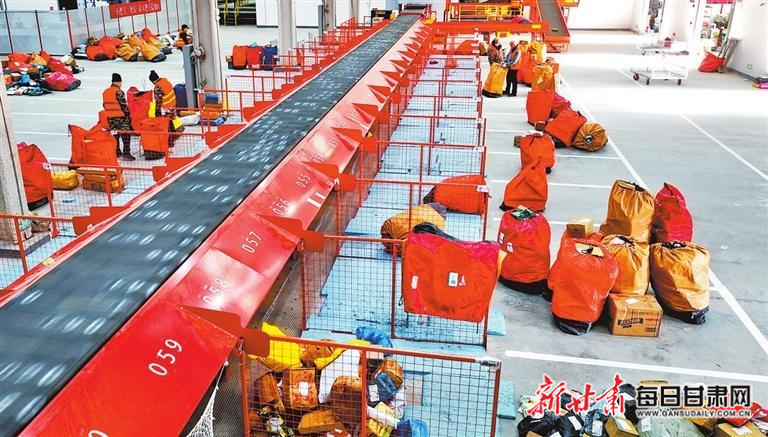
极兔速递2025年包裹量再创新高 首次突破300亿件
Zheng Quan Shi Bao Wang· 2026-01-07 00:37
人民财讯1月7日电,极兔速递1月7日公布2025年第四季度及全年主要经营数据。2025年第四季度,公司 总体实现包裹量84.6亿件,同比增长14.5%,日均包裹量9200万件。2025年全年,公司总体包裹量首次 突破300亿件大关,达301.3亿件,同比增长22.2%,日均包裹量8250万件,同比增长22.6%。 转自:证券时报 ...
极兔的命有多硬?
3 6 Ke· 2026-01-07 00:31
Core Viewpoint - The Chinese express delivery industry is experiencing a significant price war, exacerbated by the entry of J&T Express, which has led to increased competition and price adjustments across the sector. Despite efforts to combat "involution," the industry has struggled with declining single-ticket prices and profitability challenges, particularly for major players like SF Express [1][2][4]. Group 1: Industry Dynamics - The express delivery industry in China has been in a state of price decline for 17 years, with a notable shift in 2016 when many companies went public, leading to expectations of price stabilization above 3 yuan per ticket. However, the industry has not consolidated effectively, maintaining over five major competitors reliant on price wars [4][6]. - The entry of J&T Express from Southeast Asia has intensified the price competition, with its stock price increasing over 70% this year, contrasting sharply with the struggles of established players like SF Express [2][3]. - The express delivery market in China is highly tied to the e-commerce sector, with the competitive landscape influenced by the strategies of e-commerce platforms, which have begun to build their own logistics networks [8][28]. Group 2: J&T Express's Strategy and Performance - J&T Express has successfully leveraged its experience in Southeast Asia to establish a strong market presence, achieving profitability in China by 2024 after initially struggling with low margins [11][15]. - The company has capitalized on the rapid growth of e-commerce in Southeast Asia, where online shopping revenue has surged from 0.8% to 22% of retail sales over a decade, positioning itself as a preferred logistics partner for major e-commerce platforms [20][24]. - J&T's operational model, which includes a regional agency system, allows for lower asset investment compared to direct management models, enhancing its competitive edge in the fragmented Southeast Asian market [22][24]. Group 3: Financial Metrics and Market Position - As of 2025, J&T Express's single-ticket revenue in Southeast Asia is projected to be 4.38 yuan, significantly higher than its Chinese competitors, indicating a strong pricing power in that region [15]. - The company's financial performance shows a decline in single-ticket revenue from 5.92 yuan in 2020 to 4.37 yuan in 2025, with a corresponding drop in gross margin from 29.8% to around 17-20% [30][31]. - Despite the challenges, J&T Express has maintained a competitive cost structure, with single-ticket costs decreasing from 4.15 yuan in 2020 to 3.59 yuan in the first half of 2025, allowing it to sustain profitability [31].
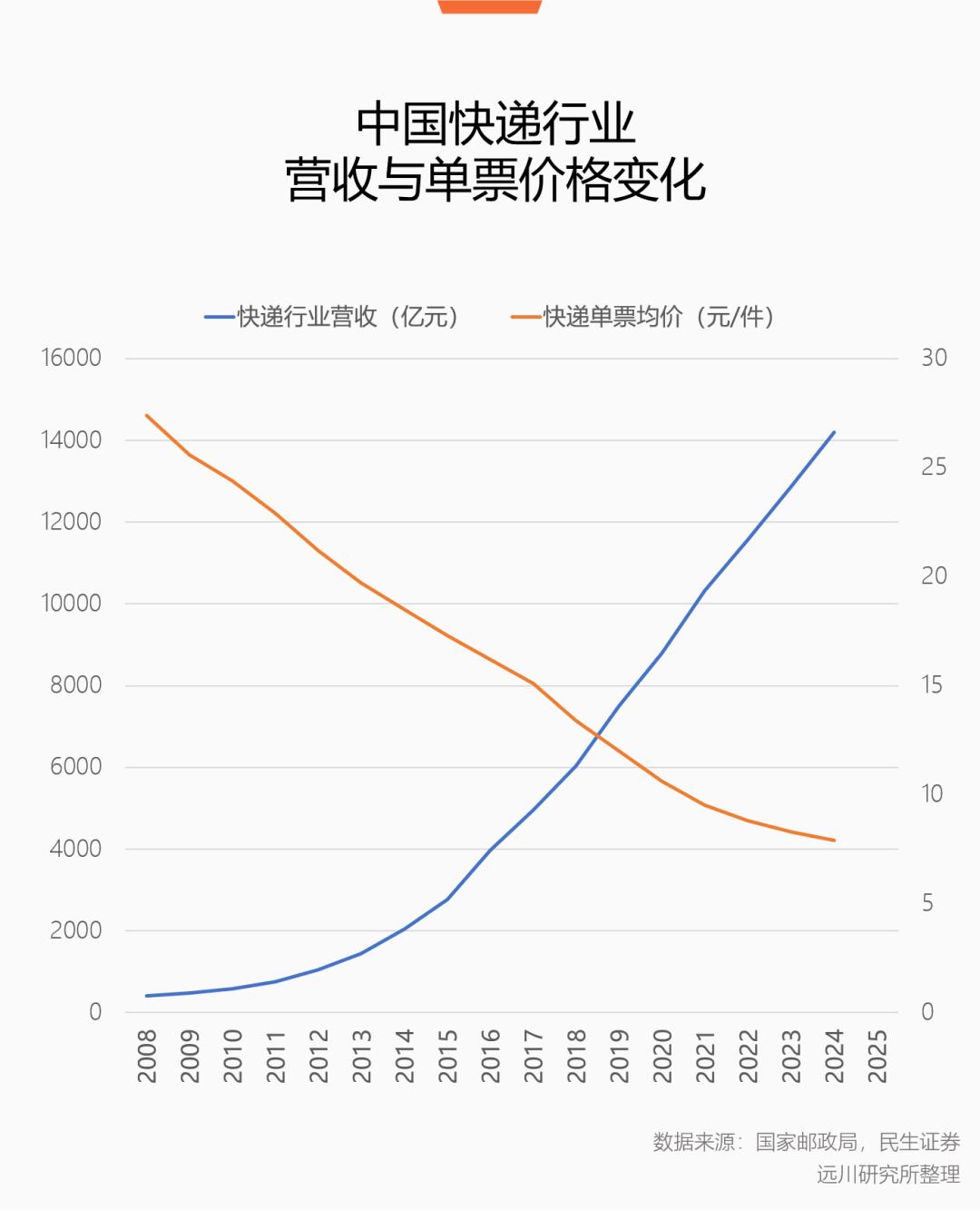
极兔速递-W(01519)2025年包裹量合计301.287亿件,同比增长22.2%
智通财经网· 2026-01-06 22:25
Core Viewpoint - Jitu Express (极兔速递-W) reported a significant increase in package volume for Q4 2025, reaching 8.461 billion packages, representing a year-on-year growth of 14.5% [1] Group 1: Package Volume Growth - In Q4 2025, the total package volume reached 8.461 billion, with Southeast Asia and new markets experiencing year-on-year growth of 73.6% and 79.7% respectively [1] - For the entire year of 2025, the total package volume amounted to 30.1287 billion, reflecting a year-on-year increase of 22.2% [1] - The package volume growth for 2025 was driven by Southeast Asia, China, and new markets, with respective year-on-year growth rates of 67.8%, 11.4%, and 43.6% [1]