稀土

Search documents
中国稀土大宗交易成交692.94万元
Zheng Quan Shi Bao Wang· 2025-12-04 09:58
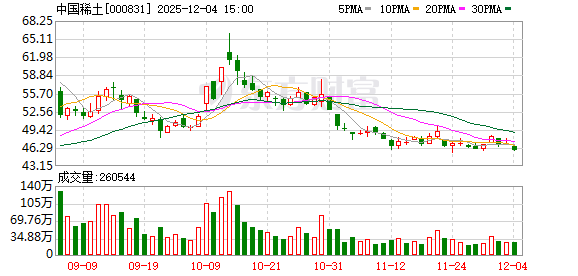
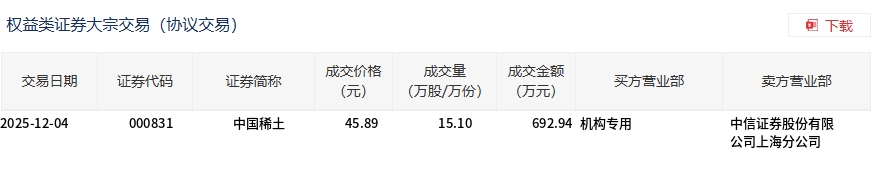
Group 1 - The core transaction of China Rare Earth on December 4 involved a volume of 151,000 shares and a transaction amount of 6.9294 million yuan, with a transaction price of 45.89 yuan per share [2][3] - The closing price of China Rare Earth on the same day was 45.89 yuan, reflecting a decrease of 2.30%, with a daily turnover rate of 2.46% and a total transaction amount of 1.199 billion yuan [2] - Over the past five days, the stock has seen a cumulative decline of 0.28%, with a total net outflow of funds amounting to 73.9678 million yuan [2] Group 2 - The latest margin financing balance for China Rare Earth is 2.14 billion yuan, which has increased by 60 million yuan over the past five days, representing a growth rate of 2.88% [3] - China Rare Earth Group Resources Technology Co., Ltd. was established on June 17, 1998, with a registered capital of 10.61220807 billion yuan [3] - The buyer in the major transaction was an institutional proprietary trading department, while the seller was CITIC Securities Co., Ltd. Shanghai Branch [3]


商务部:中国政府依法开展稀土相关物项出口管制
Yang Shi Xin Wen Ke Hu Duan· 2025-12-04 09:04
今天下午,商务部召开例行新闻发布会,新闻发言人就开展稀土相关物项出口管制进行了回应。 (文章来源:央视新闻客户端) 商务部新闻发言人何亚东:中国政府依法依规开展稀土相关物项的出口管制工作,据我所知,只要是用 于民用用途的,合规的出口申请,中国政府都及时予以了批准。同时,中国政府积极适用通用许可等便 利化措施,促进两用物项合规贸易,切实维护全球产供链的安全稳定。 中方10月底以来已批准多少企业的稀土出口许可?商务部回应 12月4日,商务部举行例行新闻发布会。有媒体记者现场提问:请问10月底以来,中方已经批准多少企 业的稀土出口许可? 商务部新闻发言人何亚东说,关于你提到的稀土出口许可问题,我刚才已经作了回应。我想强调的是, 只要是用于民用用途的、合规的出口申请,中国政府都及时予以了批准。 此前有媒体记者现场提问:中国欧盟商会周一(1日)发布了一份快速调查,多数受访企业表示受到了 中国稀土出口管制的影响,包括成本上升,交付周期延长等。商会呼吁建立通用许可机制,为企业提供 稳定性和可预测性。请问商务部有何回应?是否正在讨论适用通用许可制度? 何亚东回复说,中国政府依法依规开展稀土相关物项出口管制工作。据我所知,只要 ...

中国稀土今日大宗交易平价成交15.1万股,成交额692.94万元
Xin Lang Cai Jing· 2025-12-04 08:52
| 交易日期 | 证券代码 | 证券简称 | 成交价格 | 成交量 | 成交金额 | 买方营业部 | 卖方营业部 | | --- | --- | --- | --- | --- | --- | --- | --- | | | | | (元) | (万股/万份) | (万元) | | | | 2025-12-04 | 000831 | 中国稀土 | 45.89 | 15.10 | 692.94 机构专用 | | 中信证券股份有限 | | | | | | | | | 公司上海分公司 | 12月4日,中国稀土大宗交易成交15.1万股,成交额692.94万元,占当日总成交额的0.57%,成交价45.89元,较市场收盘价 45.89元持平。 ...
证券简称:广晟有色 证券代码:600259 公告编号:临2025-065
Zhong Guo Zheng Quan Bao - Zhong Zheng Wang· 2025-12-04 08:43
Core Viewpoint - The company has approved the continued use of raised funds to provide loans to its wholly-owned subsidiary, Guangdong Shengyuan Permanent Magnet Materials Co., Ltd., to support the implementation of investment projects [1][3]. Fundraising Overview - The company raised a total of approximately RMB 1.396 billion through a private placement of 34,633,619 shares at a price of RMB 40.31 per share, with a net amount of approximately RMB 1.386 billion after deducting issuance costs [1]. - As of September 30, 2025, the company has invested RMB 501.84 million in the high-performance NdFeB permanent magnet material project and RMB 191.25 million in the upgrade of the Yttrium and Europium mixed rare earth ore processing project [2]. Loan Provision Details - The company plans to provide a loan of RMB 106 million to Shengyuan Company to support its capacity expansion to 4,000 tons per year and settle the remaining payments for early engineering equipment [3]. - Previous loans included RMB 200 million for capital increase and RMB 300 million for project implementation, which have been fully utilized [2][3]. Subsidiary Information - Guangdong Shengyuan Permanent Magnet Materials Co., Ltd. was established on April 13, 2021, with a registered capital of RMB 300 million and is a wholly-owned subsidiary of the company [4][5]. - As of December 31, 2024, the subsidiary had total assets of RMB 587.78 million and total liabilities of RMB 379.97 million, with a net profit of -RMB 70.98 million [5]. Purpose and Impact of the Loan - The loan aims to facilitate the expansion of Shengyuan Company's production capacity and ensure the smooth implementation of investment projects, aligning with the company's development strategy and benefiting all shareholders [5][6]. Decision-Making Process - The board of directors approved the loan with unanimous consent during the meeting held on December 3, 2025, without the need for shareholder approval [6]. - The audit, compliance, and risk management committee also supported the decision, confirming that the loan aligns with the investment plan and does not alter the intended use of raised funds [7]. Sponsor's Opinion - The sponsor has verified that the loan provision complies with relevant regulations and does not conflict with the investment project implementation, ensuring the protection of the company's and shareholders' interests [8].

商务部:中国政府依法依规开展稀土相关物项出口管制
21世纪经济报道· 2025-12-04 08:02
今天下午,商务部召开例行新闻发布会,新闻发言人就开展稀土相关物项出口管制进行了回 应。 来源丨央视新闻 编辑丨刘雪莹 SFC 商务部新闻发言人 何亚东:中国政府依法依规开展稀土相关物项的出口管制工作,据我所 知,只要是用于民用用途的,合规的出口申请,中国政府都及时予以了批准。同时,中国政府 积极适用通用许可等便利化措施,促进两用物项合规贸易,切实维护全球产供链的安全稳定。 ...

事关稀土相关物项出口管制,商务部最新表态
第一财经· 2025-12-04 07:51
编辑 | 钉钉 商务部新闻发言人 何亚东: 中国政府依法依规开展稀土相关物项的出口管制工作,据我所知,只要是 用于民用用途的,合规的出口申请,中国政府都及时予以了批准。同时,中国政府积极适用通用许可等 便利化措施,促进两用物项合规贸易,切实维护全球产供链的安全稳定。 来源|央视新闻 今天下午,商务部召开例行新闻发布会,新闻发言人就开展稀土相关物项出口管制进行了回应。 ...
商务部:中国政府依法依规开展稀土相关物项出口管制
Yang Shi Xin Wen Ke Hu Duan· 2025-12-04 07:42
商务部新闻发言人何亚东:中国政府依法依规开展稀土相关物项的出口管制工作,据我所知,只要是用 于民用用途的,合规的出口申请,中国政府都及时予以了批准。同时,中国政府积极适用通用许可等便 利化措施,促进两用物项合规贸易,切实维护全球产供链的安全稳定。 今天下午,商务部召开例行新闻发布会,新闻发言人就开展稀土相关物项出口管制进行了回应。 (文章来源:央视新闻客户端) ...
近3900只个股下跌
第一财经· 2025-12-04 07:40
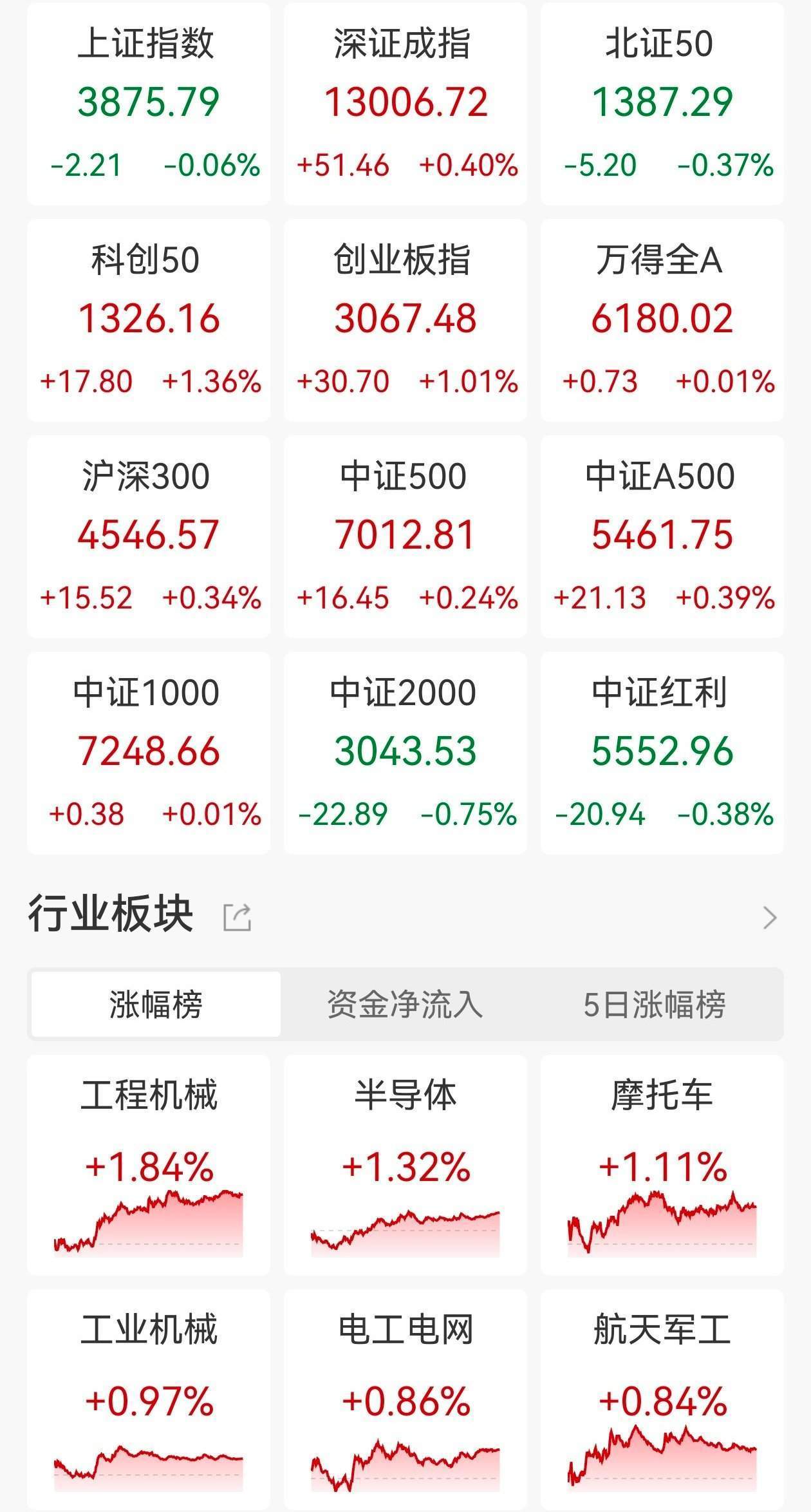
Core Viewpoint - The market experienced a narrow fluctuation with the Shanghai Composite Index slightly down by 0.06%, while the Shenzhen Component Index rose by 0.4% and the ChiNext Index increased by 1.01% [3][4]. Market Performance - The consumer sector showed weakness, with retail, catering, liquor, and e-commerce sectors leading the declines. In contrast, industries such as aluminum, gold, rare earths, and real estate also performed poorly [3][4]. - Notable strength was observed in the robotics sector, with companies like Dayfa Precision Machinery, Giant Wheel Intelligent, Sichuan Jinding, and Heertai seeing significant gains, with over 10 stocks hitting the daily limit up [5]. Sector Analysis - The consumer sector faced adjustments, with companies like Zhongqing Building, Haixin Food, and Zhongshui Fishery hitting the daily limit down [6]. - The overall trading volume in the Shanghai and Shenzhen markets was 1.55 trillion yuan, a decrease of 121 billion yuan compared to the previous trading day, with nearly 3,900 stocks declining [7]. Capital Flow - Main capital inflows were noted in the home appliance, aerospace, and semiconductor sectors, while there were outflows from basic chemicals, banking, and food and beverage sectors. Specific stocks like Sanhua Intelligent Control, Giant Wheel Intelligent, and China Satellite saw net inflows of 2.353 billion yuan, 854 million yuan, and 818 million yuan respectively [9][10]. - Conversely, stocks such as Xiangnong Chip, Aerospace Power, and Shunhao Co. experienced net outflows of 840 million yuan, 714 million yuan, and 559 million yuan respectively [10]. Institutional Perspectives - According to Everbright Securities, despite market adjustments, there is no panic, and the current situation is considered a normal range fluctuation. Positive news from upcoming significant meetings could lead to a rebound in indices [11]. - Wanhe Securities suggests that the market rebound is likely to continue, with a focus on the consumer and technology sectors, particularly integrated circuits and commercial aerospace [12]. - According to招商证券, the market is expected to break out upward after three months of consolidation, indicating a high probability of a year-end rally [12].


收盘丨创业板指探底回升涨超1%,机器人概念股掀涨停潮
Di Yi Cai Jing· 2025-12-04 07:21
大消费板块震荡调整,同庆楼、海欣食品、中水渔业跌停。 | 板块名称 | 涨幅◆ | 涨速 | | --- | --- | --- | | 海南 | -3.43% | -0.06% | | 海南自贸区 | 0 -3.35% | -0.05% | | 旅游及酒店 | -3.20% | +0.01% | | ही ग | 0 -3.13% | -0.08% | | 食品加工制造 | -2.69% | +0.02% | | 饮料制造 | -2.55% | -0.03% | | 互联网电商 | -2.44% | -0.01% | | 中船系 9 | -2.42% | -0.05% | | 预制菜 9 | -2.36% | -0.04% | | 种植业与林业 | -2.31% | -0.01% | | 培育钻石 | 8 -2.18% | -0.00% | | 9 啤酒概念 | -2.06% | -0.04% | | 人造肉 9 | -2.03% | -0.03% | | 网红经济 | o -2.03% | -0.01% | | 美容护理 | -2.02% | +0.01% | | 零售 | -2.01% | -0.03% ...


ETF收评 | A股指数分化,半导体设备板块午后领涨,半导体设备ETF、科创半导体设备ETF涨3%,食品饮料ETF跌1.33%
Sou Hu Cai Jing· 2025-12-04 07:20
Core Viewpoint - The A-share market showed mixed performance with the Shanghai Composite Index slightly declining by 0.06%, while the Shenzhen Component Index and ChiNext Index increased by 0.4% and 1.01% respectively, indicating sector-specific movements in the market [1] Market Performance - The Shanghai Composite Index closed at 3875.79, down by 2.21 points or 0.06% [2] - The Shenzhen Component Index closed at 13006.72, up by 51.46 points or 0.40% [2] - The ChiNext Index closed at 3067.48, increasing by 30.70 points or 1.01% [2] - Overall market turnover was 156.17 billion, a decrease of 12.19 billion from the previous day [1] Sector Performance - The consumer sector weakened, with retail, catering, liquor, and e-commerce showing significant declines [1] - The aluminum, gold, and rare earth industries also performed poorly [1] - Strong performance was noted in sectors such as Moore Threads, commercial aerospace, robotics, and semiconductor concepts [1] ETF Performance - The technology ETF from Harvest Fund rose by 3.85%, with semiconductor equipment ETFs also showing strong gains [4] - The human-robot sector saw a broad rally, with ETFs like the Invesco Robotics 50 ETF increasing by 3% [4] - The consumer sector ETFs, particularly food and beverage, experienced declines, with the liquor ETF down by 1.58% and the food and beverage ETF down by 1.33% [4]