
家居建材

Search documents
帝欧家居(002798.SZ):已累计回购1.96%股份
Ge Long Hui A P P· 2025-09-02 09:39
Core Viewpoint - The company, Diou Home (002798.SZ), announced a share buyback program, indicating a strategic move to enhance shareholder value and confidence in the company's future prospects [1] Summary by Relevant Sections - **Share Buyback Details** - The company repurchased a total of 10,030,907 shares, which represents 1.96% of the current total share capital [1] - The highest transaction price during the buyback was 7.23 yuan per share, while the lowest was 3.01 yuan per share [1] - The total amount spent on the buyback was 62.8542 million yuan, excluding transaction fees [1]

居然智家:上半年净利润3.28亿元 同比下降45.52%
Zheng Quan Shi Bao Wang· 2025-08-29 12:21
Core Viewpoint - The company, Juran Smart Home (居然智家), reported a mixed performance in its semi-annual report, with revenue growth but a significant decline in net profit due to market pressures and strategic support for merchants [1] Financial Performance - For the first half of 2025, the company achieved operating revenue of 6.445 billion yuan, representing a year-on-year increase of 1.54% [1] - The net profit attributable to shareholders was 328 million yuan, showing a year-on-year decrease of 45.52% [1] - Basic earnings per share were reported at 0.05 yuan [1] Market Conditions - The decline in net profit was primarily attributed to fluctuations in the domestic economic environment and cyclical impacts on the real estate market, leading to intensified competition in the home furnishing and building materials market [1] - The company, as a leading player in the home furnishing and building materials sector, faced significant operational pressures on its merchants [1] Strategic Responses - To support merchants during challenging times, the company provided certain quality merchants with rent and management fee reductions, which resulted in a temporary decline in rental and management income [1] - In response to the revenue decline, the company innovated its market cooperation model and strengthened cost control management, leading to a gradual decrease in fixed rental costs [1] - The management expense ratio, sales expense ratio, and financial expense ratio all showed significant improvement year-on-year [1]

大亚圣象:2025年上半年净利润3565.76万元,同比下降43.89%
Xin Lang Cai Jing· 2025-08-27 08:46
Core Viewpoint - The company reported a decline in revenue and net profit for the first half of 2025, indicating financial challenges ahead [1] Financial Performance - The company's operating revenue for the first half of 2025 was 2.096 billion yuan, a year-on-year decrease of 11.84% [1] - The net profit for the same period was 35.6576 million yuan, reflecting a year-on-year decline of 43.89% [1] Dividend Policy - The company announced plans not to distribute cash dividends, issue bonus shares, or increase capital through reserves [1]

法狮龙: 法狮龙家居建材股份有限公司第三届董事会第六次会议决议公告
Zheng Quan Zhi Xing· 2025-08-25 16:52
Group 1 - The board meeting of Lawson Home Building Materials Co., Ltd. was held on August 22, 2025, with all 7 directors present, confirming compliance with legal and regulatory requirements [1][2] - The board approved the proposal regarding the "2025 Half-Year Report" and its summary, which was reviewed and passed by the company's audit committee [1]

法狮龙: 法狮龙家居建材股份有限公司第三届监事会第五次会议决议公告
Zheng Quan Zhi Xing· 2025-08-25 16:52
Meeting Overview - The third meeting of the supervisory board of Fashilong Home Building Materials Co., Ltd. was held on August 22, 2025, in Jiaxing, Zhejiang Province, with all three supervisors present [1][2] - The meeting was chaired by the chairman of the supervisory board, Pan Xiaoxiang, and included attendance from company directors and senior management [1] Resolutions Passed - The supervisory board approved the proposal regarding the "2025 Half-Year Report" and its summary, affirming that the report's content is true, accurate, and complete [1] - The board confirmed that the report reflects the company's financial status and operational results for the first half of the year objectively [1]
个人消费贷政策激活家居消费市场,Lamett乐迈石晶开启行业投资新想象
Sou Hu Wang· 2025-08-25 06:02
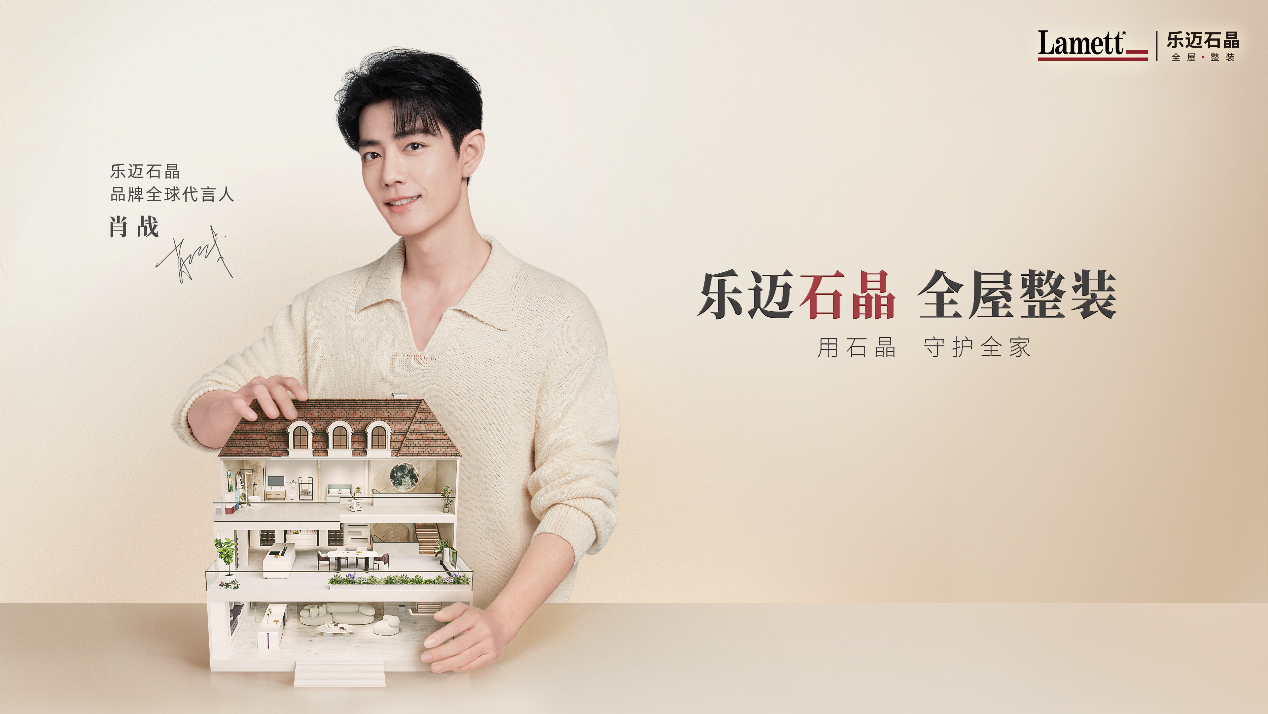
Core Insights - The implementation of personal consumption loan interest subsidy policy starting from September 2025 is expected to stimulate demand for home decoration, particularly benefiting innovative building materials and leading brands like Lamett [1][14] - Lamett has established a strong brand presence and market position through a significant brand endorsement partnership and over 40 years of technical expertise [2][3] Brand Strategy - Lamett officially announced its first global brand ambassador, actor and singer Xiao Zhan, in July this year, aligning his positive image with the brand's values of health, safety, comfort, and environmental friendliness [3][5] - The brand endorsement has led to a rapid increase in brand awareness, with significant advertising exposure in major cities and extensive discussions on social media platforms, resulting in increased foot traffic and customer inquiries at retail locations [3][6] Product Innovation - Founded in 1985, Lamett is a high-end whole-house decoration brand that pioneered the global first stone crystal floor in 2016, addressing traditional flooring issues such as formaldehyde, waterproofing, wear resistance, slip resistance, sound insulation, and compatibility with underfloor heating [6][16] - In 2024, Lamett developed the world's first stone crystal cabinet board, expanding the application of stone crystal materials to various home spaces, including wardrobes, cabinets, and bathrooms, thus redefining whole-house decoration standards [6][16] Supply Chain and Local Investment - Lamett has established a global supply chain with over 10 factories and sales offices across countries, ensuring standardized production and efficient cost management [10][13] - The company has invested in local production capabilities in China, acquiring over 800,000 square meters of land for modern production bases and R&D centers, enhancing service efficiency and customer satisfaction [13][14] Market Position and Recognition - Lamett has received industry recognition, including the 2025 Forbes "Design Leading Brand" award, reinforcing its position as a market leader and providing confidence to partners [7][14] - The company is actively seeking partnerships in the burgeoning stone crystal market, positioning itself as an innovator and leader in the industry [14]

产销一体+自有品牌,汇通达网络(9878.HK)家居产业发展觅得“加速器”
Cai Fu Zai Xian· 2025-08-22 04:07
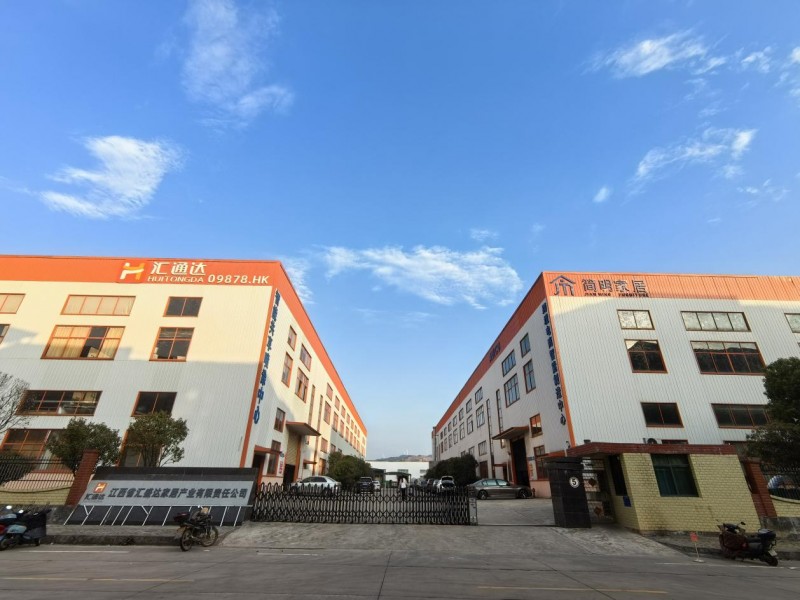
Core Viewpoint - Huitongda Network is advancing its strategic layout in the home furnishing and building materials sector, focusing on "production and sales integration" and developing its own brand products to enhance profitability and market presence [1][3]. Group 1: Strategic Developments - Since 2018, Huitongda has been developing an industrial internet model across multiple sectors, entering the home furnishing market [3]. - In 2024, the company initiated an industrial upgrade focusing on a B2F efficient supply chain driven by orders, integrating raw materials, factories, and channels [3]. - The introduction of high-quality, competitively priced proprietary home furnishing brands aims to expand market reach [3]. Group 2: Profitability and Efficiency - The new model has resulted in a significant increase in gross margins, with proprietary home furnishing products achieving over double the gross margin compared to previous agency or cooperative brands [3]. - The integration of production and sales has led to cost reductions and efficiency improvements across the entire supply chain, benefiting upstream processing plants, home furnishing factories, channel distributors, and consumers [5]. - For example, a high-quality water-based lacquer oak bed can be priced 10%-15% lower than well-known brands, providing stable orders for factories and better prices for consumers [5]. Group 3: Growth and Expansion - The home furnishing industry upgrade represented by Huitongda injects new momentum for high-quality development, with visible long-term scale and profit potential [7]. - The proprietary home furnishing products are sold through the company's member store network and expanded into e-commerce and third-party offline channels [7]. - Huitongda is also participating in local government initiatives to promote consumption, further enhancing its market presence [7]. - Future plans include leveraging AI and digitalization to improve efficiency across the entire production, research, and sales chain [7].
品质为基,标杆引领 | 米兰之窗率先作出质量承诺,共筑家居行业新生态!
Bei Jing Shang Bao· 2025-08-19 03:22
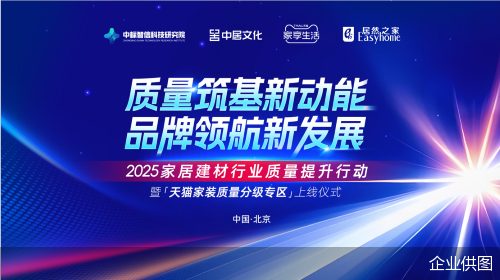
8月12日,"2025家居建材行业质量提升行动暨天猫家装质量分级专区上线仪式"在京隆重举行。 米兰之窗作为首批受邀参与的门窗企业,与行业同仁共聚一堂,见证了这一历史性时刻,并以先行者的 姿态,郑重发表"2025年家居建材企业质量承诺",为推动行业高质量发展贡献核心力量。 响应国家战略,质量分级时代已来 消费升级的浪潮下,消费者对"好产品"的定义早已超越了基础功能,转向了对品质、性能、安全与服务 的全方位追求。然而,市场中产品质量良莠不齐,价格体系混乱,让消费者在选择时常常陷入困惑。 为破解这一难题,国家明确提出"建立健全质量分级制度"、"实施产品和服务质量分级,引导优质优 价"。本次质量提升行动正是对国家政策的精准落地,旨在建立一套清晰、透明的质量分级标准,帮助 消费者快速识别优质产品,让好品质看得见、摸得着,从而激励企业摆脱低质低价的内卷,转向高附加 值的品牌创新,共同构建一个"优质优价"的良性市场生态。 标杆企业担当,米兰之窗郑重承诺 米兰之窗深知"质量"二字是品牌的生命线,更是对万千家庭的郑重承诺。在此次盛会上,米兰之窗作为 首批参与企业,率先响应,并共同发表了"2025年家居建材企业质量承诺"宣言。这 ...
居然智家股价小幅上扬 公司新聘副总裁强化管理
Jin Rong Jie· 2025-08-18 11:56
Group 1 - The stock price of Juran Zhijia closed at 2.96 yuan on August 18, 2025, with an increase of 1.02% compared to the previous trading day [1] - The trading volume on that day reached 331 million yuan, with a volume of 1.123 million hands and a fluctuation of 2.05% [1] - Juran Zhijia operates in the commercial retail sector, focusing on home building materials and has stores in multiple cities across the country [1] Group 2 - On August 15, Juran Zhijia announced the appointment of Wang Peng as Vice President, responsible for the management of the new retail operations center, aimed at strengthening the management team to meet strategic development needs [1] - The retail sales of furniture products in July reached 17 billion yuan, showing a year-on-year growth of 20.6% [1] Group 3 - On August 18, the net inflow of main funds into Juran Zhijia was 23.3 million yuan, accounting for 0.13% of the circulating market value [1] - Over the past five days, the net outflow of main funds was 8.015 million yuan, representing 0.05% of the circulating market value [1]
消费贷“国补”落地,消费建材“金九银十”可期
Xuan Gu Bao· 2025-08-17 15:22
Group 1 - The National Building Materials and Home Furnishing Prosperity Index (BHI) for July 2025 is reported at 112.02, showing a month-on-month decline of 4.12 points and a year-on-year decline of 8.90 points, indicating a slowdown in consumer spending during the traditional off-season [1] - Despite the overall decline in BHI, the "Manager Confidence Index" increased to 147.89, up 11.36 points month-on-month, reflecting positive short-term market expectations due to upcoming peak seasons and supportive government policies [1] - Recent implementation of personal consumption loan interest subsidy policies and service industry loan interest subsidies is expected to lower interest costs, improving market expectations for home furnishing demand stabilization [1] Group 2 - Companies to watch as the peak season approaches include Sangokushi and Beixin Building Materials, indicating potential investment opportunities in the sector [2]