教育科技

Search documents
陪学关系迭代:AI 如何打通技能、情绪与知识陪伴?
3 6 Ke· 2025-12-09 00:43
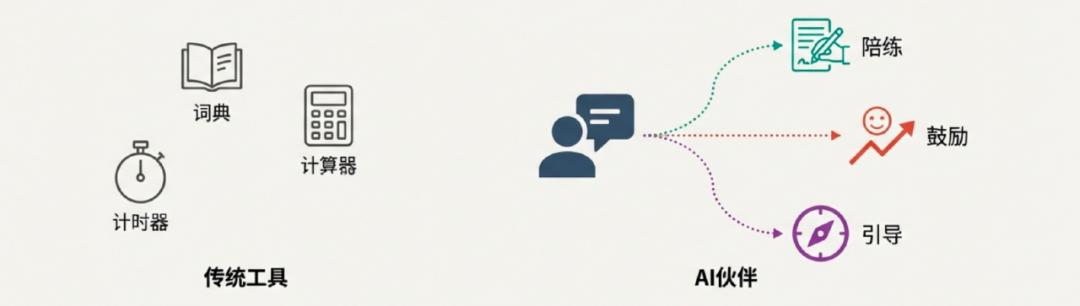
Core Insights - The emergence of AI Learning Companions is transforming the education sector by providing personalized, long-term, and emotionally supportive learning experiences, moving beyond traditional educational software [1][3] Group 1: AI Language Practice - Language learning is a key area for AI Learning Companions, addressing the scarcity of immersive practice and real-time feedback that traditional methods lack [5] - Duolingo has integrated GPT-4 into its platform, allowing users to engage in roleplay conversations in various virtual scenarios, enhancing the realism of language practice [5][6] - In China, products like SpeakGuru offer tailored practice for exams like IELTS and high school English, providing instant feedback based on official scoring criteria [6][9] - AI language companions lower the barriers to practice, enabling students to engage in conversation anytime and anywhere, thus increasing practice frequency significantly [9][11] Group 2: Emotional Support and Habit Management - Learning is influenced by emotional factors, and AI Learning Companions can provide scalable emotional support that traditional educational systems often lack [12][17] - Replika, an AI emotional companion, has shown potential in helping users express emotions and alleviate stress, although it faces regulatory challenges regarding user safety [12][13] - Domestic products like Xiaosi 3.0 focus on emotional perception and habit guidance, helping students manage anxiety and procrastination through interactive dialogue [15][17] Group 3: Knowledge Guidance - AI is evolving towards providing knowledge guidance, with products like PhotoMath offering process-oriented learning in mathematics, enhancing understanding rather than just providing answers [18][21] - The integration of visual recognition and interactive explanations in products like Xiaoyuan AI aims to create a more engaging learning experience similar to that of a human tutor [21][25] - The potential for AI to handle routine knowledge explanations could free up teachers for more complex tasks, but challenges regarding reliability and ethical boundaries remain [25]


网红“牛津女孩”朱雯琪回深圳当CEO
Nan Fang Du Shi Bao· 2025-12-08 23:12
朱雯琪硕士毕业照。受访者供图 如今31岁的朱雯琪即将完成在牛津大学数学系的博士学业,她给自己解锁了新任务——回国创业。11 月,朱雯琪选择将公司落地深圳南山,成为一名初创企业CEO。 自学 "妈妈带我理解数学、爱上数学" 南都:你介绍道,自己10岁从小学退学,当时如何安排自学生活? 朱雯琪:我从小在深圳长大,到了读书的年纪就在一所公立小学上学。小学时的成绩经常上上下下,最 差的时候曾经英语考36分,数学考45分。 我妈妈曾是中科大少年班的毕业生,毕业后当过几年教师。在妈妈全职在家教我的时间里,我基本上是 学英语和数学比较多。每天的学习时间也与同龄人不同,有点像武侠小说里那种"闭关修炼"。常常是10 时开始学习,到了中午和妈妈外出吃个午饭,再回来学习到17时。 很多人问我在家自学了两年就直接上高中,是不是等于两年里学了三年的内容?我是学了三倍的课吗?其 实不是。我妈妈是在教学中从另一个维度回头看这些知识,她擅长把数学还原成一种很自然的东西,用 生活中的例子把好几个概念串在一起讲。 举一个例子,她会从"4开根号是±2"讲起,再用"赚4块是+4,付4块是-4"帮我理解正负数。接着她就会 问"那-4能不能开根号",就 ...
罗曼股份20251208
2025-12-08 15:36
Summary of Roman Holdings Conference Call Company and Industry Overview - **Company**: Roman Holdings (罗曼股份) - **Industry**: Digital Entertainment, AI Infrastructure, and Storage Solutions Key Points and Arguments 1. **Collaboration with Netflix and Warner Bros**: Roman Holdings has partnerships with both Netflix and Warner Bros, with Netflix's acquisition of Warner Bros expected to create more project expansion opportunities, particularly in IP utilization, benefiting the company's digital entertainment business [2][5] 2. **AI Infrastructure Orders**: The company announced two AI infrastructure service orders from leading state-owned enterprises, indicating strong industry recognition. These orders are expected to be delivered by the end of December [3] 3. **Wutong Tree's Financial Performance**: Wutong Tree, a subsidiary, achieved a net profit margin of 15.2% in the first half of the year, outperforming peers due to a stable GPU supply chain and extensive investments in education and healthcare applications [2][7] 4. **Educational Collaborations**: Wutong Tree is collaborating with Yangpu District in the education sector and with East China Normal University for commercial satellite launches, requiring significant storage and computing power [2][8] 5. **Expansion of AI Storage Industry Chain**: Roman Holdings plans to expand its AI storage industry chain through collaboration with Baidai Storage Company, focusing on software architecture to meet future market demands [2][10] 6. **Integration Post-Acquisition**: Following the acquisition, Roman Holdings has integrated teams and business operations, leveraging government resources to support Wutong Tree's computing center and utilizing its renewable energy sector for green energy support [4][14] 7. **Future Project Growth**: Wutong Tree is expected to see revenue growth starting in 2025, with 16 projects already signed and under construction, including plans for a large computing cluster [3] 8. **AI Short Drama Production**: The company is exploring AI applications in short drama production, achieving lower costs and faster production times, which increases demand for computing power [16] 9. **Challenges in Replicating Netflix's House Model**: While there are plans to replicate Netflix's House model in China, challenges include funding and site selection [17] 10. **Global Market Expansion**: Roman Holdings is looking to expand into Asian markets, particularly in regions with higher investment needs, while also considering the Middle East due to favorable conditions for mall projects [18] Additional Important Content - **Supply Chain Stability**: Wutong Tree's competitive edge lies in its stable GPU supply chain, which ensures high operational efficiency [7] - **Framework Agreements**: Framework agreements with local governments are in progress, with construction expected to begin in 2026, contingent on funding and GPU supply [9] - **Potential for Hardware Development**: Baidai Storage Company may consider developing storage hardware in the future, depending on overall strategic decisions [11] - **Collaboration with Other Sectors**: Wutong Tree is well-positioned to expand into commercial and internet sectors, with significant demand for computing power in education and healthcare [15]

港股异动 | 卓越睿新上市首日高开23.85% 公开发售超额认购逾4800倍
Xin Lang Cai Jing· 2025-12-08 04:16
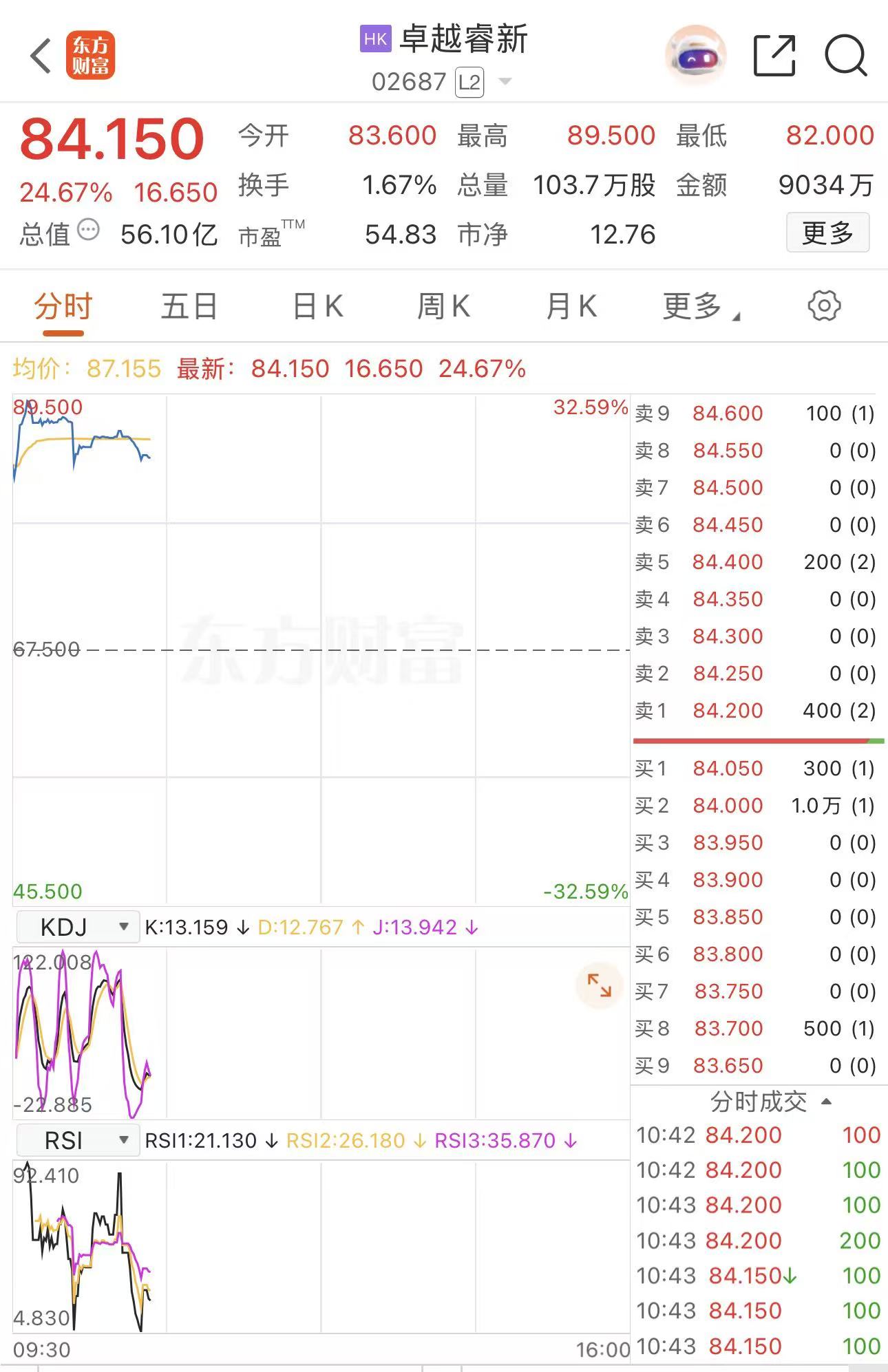
公开资料显示,卓越睿新本次全球发售666.67万股H股,发行价确定为每股67.50港元,公开发售超额认购达4813.4倍。招股书显示,卓越睿新是一家国内高 等教育教学数字化解决方案提供商,公司产品与服务覆盖教、学、练、考、评、管等环节。 2022年至2024年,卓越睿新收入为4亿元(人民币,下同)、6.53亿元、8.48亿元,对应净利润分别为-5911万元、8142万元、1.05亿元。2025年上半年,卓 越睿新收入为2.75亿元,净利润为-9895.6万元。 来源:上海证券报·中国证券网 上证报中国证券网讯(记者 唐燕飞)12月8日,卓越睿新登陆港交所主板,股价高开23.85%,盘中一度涨超32%。截至10时42分,卓越睿新涨24.67%,报 84.15港元/股,成交额超9000万港元,总市值约为56亿港元。 | | HK 卓越容新 | | | | --- | --- | --- | --- | | | 02687 L2 ▼ | | | | 84.150 >> | 83.600 最高 | 89.500 最低 | | | 换手 24.67% 16.650 | 1.67% 总量 103.7万股 金额 | | | ...
衡水思建教育科技有限责任公司成立 注册资本50万人民币
Sou Hu Cai Jing· 2025-12-05 22:20
Group 1 - The company Hengshui Sijian Education Technology Co., Ltd. has been established with a registered capital of 500,000 RMB [1] - The legal representative of the company is Kang Chenliu [1] - The business scope includes software development, enterprise management consulting, professional design services, advertising publishing, and various printing services [1] Group 2 - The company is authorized to engage in activities such as publication printing, electronic publication production, and wholesale and retail of publications, subject to approval from relevant authorities [1] - The company will operate under a general project framework, allowing for a range of business activities without needing specific approvals [1]
鸿合科技:提名姚瑞波、王陈琛、彭骥为公司第三届董事会非独立董事候选人
Mei Ri Jing Ji Xin Wen· 2025-12-05 16:07
每经AI快讯,鸿合科技(SZ 002955,收盘价:28.88元)12月5日晚间发布公告称,经控股股东安徽省 瑞丞鸿图股权投资基金合伙企业(有限合伙)提名,董事会提名委员会审核,公司董事会同意提名姚瑞 波先生、王陈琛女士、彭骥先生为公司第三届董事会非独立董事候选人,同意提名宋利国先生、李姚矿 先生为第三届董事会独立董事候选人。经股东鸿达成有限公司及邢正提名,董事会提名委员会审核,公 司董事会同意提名黄福平先生为第三届董事会独立董事候选人。 2025年1至6月份,鸿合科技的营业收入构成为:教育占比81.91%,商用及其他占比18.09%。 每经头条(nbdtoutiao)——秒光、售罄!银行大额存单成稀缺资源,2%以上产品很难抢,有的门槛高 达1000万元!专家:存款利率或长期下行 (记者 曾健辉) 截至发稿,鸿合科技市值为68亿元。 ...

聚焦“AI+教育”!长三角高校专家共探研究生教改新路径
Guo Ji Jin Rong Bao· 2025-12-05 11:28
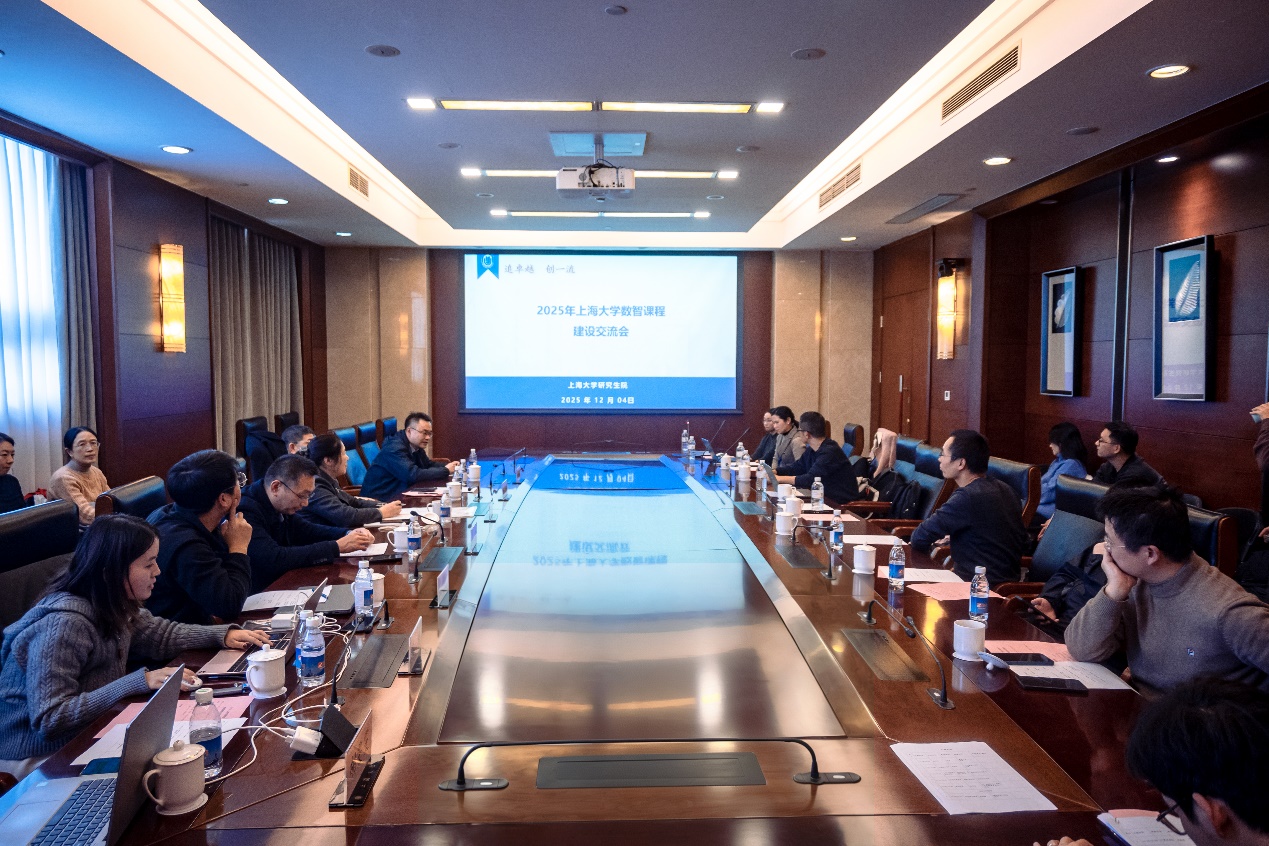
Core Insights - The seminar on "Human-Machine Collaboration: AI Empowering Graduate Education" was held at Shanghai University, focusing on the integration of AI in graduate education and innovative teaching methods [1] - Shanghai University has implemented the "AI for Education" talent cultivation reform, establishing a layered digital curriculum system with 100 AI-related graduate courses developed over the past six years [3] - The university aims to deepen industry-education integration and create a dynamic curriculum content update mechanism to enhance the quality of graduate education [3] Group 1 - Zhang Yong'an, Executive Vice Dean of the Graduate School at Shanghai University, highlighted the significant achievements in AI-related course development, with eight courses selected for the National Higher Education Smart Education Platform [3] - Professor Yu Huilai from East China University of Science and Technology discussed a three-dimensional collaborative mechanism for reshaping the knowledge system in graduate education, aligning with the national "AI+" strategy [3] - Professor Lu Tan from Fudan University shared insights on the application of AI in social sciences, emphasizing a human-centered approach for deep integration of AI across disciplines [3] Group 2 - Dr. Liu Qiang from Super Star Pan-Ya Group analyzed the current state and challenges of graduate education, introducing various technological innovations to enhance the quality of graduate training [4] - Professor Wang Gang from Shanghai University emphasized the importance of computational power and model construction in promoting interdisciplinary integration of AI [4] - Professor Guo Chunsheng from the Microelectronics College proposed a three-tiered curriculum system driven by both field expertise and AI, enhancing collaboration between academia and industry [4] Group 3 - Graduate students at the roundtable forum expressed that AI should not be seen as a competing force but rather as a collaborative partner in their studies [5] - Students shared experiences on how AI tools, such as course mapping, have improved their learning efficiency and knowledge integration [5] - The importance of maintaining independent judgment while using AI tools was emphasized by students, highlighting the need for critical evaluation of AI-generated information [5] Group 4 - The Shanghai University Graduate School officially launched the Super Star Digital Curriculum Platform, introducing 28 AI courses and online courses [6] - The university plans to continue its commitment to openness, collaboration, innovation, and pragmatism, actively contributing to the development of a first-class innovation ecosystem in Shanghai [7] - Shanghai University aims to explore new paradigms and standards for graduate education in the intelligent era, contributing to the nation's educational and technological advancement [7]
大数据下的2025教育科技行业
Bei Jing Wan Bao· 2025-12-05 06:56
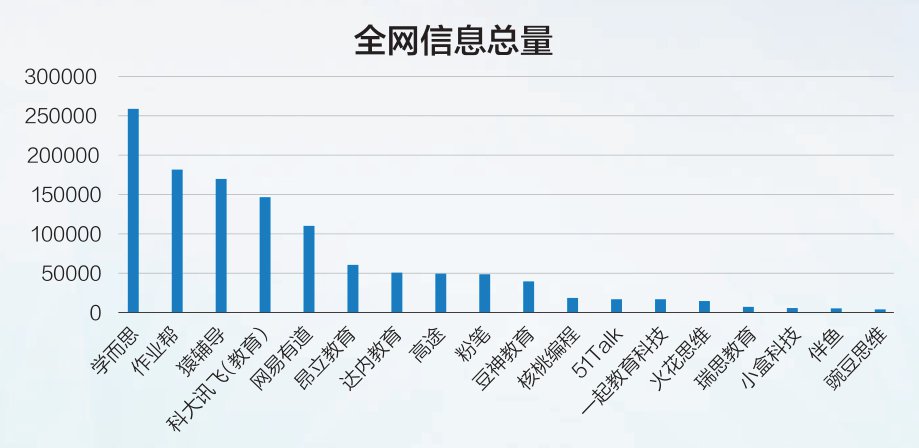
随着教育科技行业的不断发展和变化,北京晚报《科技周刊》的"2025教育科技行业发展指数"在编写过程中,将视角扩大至18家教 育科技企业,它们分别是:作业帮、猿辅导、学而思、网易有道、科大讯飞(教育)、核桃编程、粉笔、火花思维、一起教育、 高途、瑞思教育、昂立教育、51Talk、豌豆思维、达内教育、小盒科技、豆神教育、伴鱼。 与国内教育科技行业数以万计的企业相比,18家样本企业在数量上确实是沧海一粟。即便如此,北京晚报《科技周刊》仍尽可能 地将多元化的教育科技企业样本装进指数测算的"篮子"之中。 在核心视角方面,"2025教育科技行业发展指数"持续聚焦"用户体验""社会责任""企业经营""产品创新""品牌建设"五大维度。监测 数据显示,2025年1月-10月,围绕五大维度的信息总量(去除相关噪音)为1174797条。 在"用户体验"维度(高相关信息总量30480条),消费者知情权、公平交易权、求偿权等方面被更多关注。在"社会责任"维度(高 相关信息总量13335条),今年更侧重于教育科技企业对教育公平促进、公益实践参与等方面的参与度。在"企业经营"维度(高相 关信息总量54047条),更多关注教育质量与透明度、 ...
高途Q3亏损收窄七成,“AI+好老师”驱动高质量增长
Xin Lang Cai Jing· 2025-12-04 07:31
Core Insights - Gaotu Group (NYSE: GOTU) reported Q3 FY2025 revenue of 1.58 billion yuan, a year-on-year increase of 30.7%, with adjusted net loss significantly narrowing by 69.9%, indicating a successful strategic shift from "scale-first" to "efficiency-first" [1][6] - The company is focusing on an "All with AI, Always AI" strategy, systematically restructuring its teaching products, operational systems, and organizational capabilities to drive high-quality development through a dual engine of technology and talent [1][6] Financial Performance - As of the end of Q3, Gaotu had over 3.04 billion yuan in cash and equivalents, with deferred revenue reaching 1.77 billion yuan, providing solid revenue visibility for the upcoming quarters [3][8] - The company expects Q4 revenue to be between 1.628 billion and 1.648 billion yuan, representing a year-on-year growth of 17.2% to 18.7% [3][8] - Despite a GAAP net loss of 147 million yuan, adjusted losses have been significantly reduced over multiple quarters, with operating expenses as a percentage of revenue decreasing by 27.6 percentage points and customer acquisition efficiency improving by 12.8% [3][8] AI Integration and Strategy - Gaotu's AI transformation extends beyond product development to organizational structure, with the establishment of an AI R&D department and innovation center, and the integration of AI into decision-making and execution processes through the Gaotu Business System (GBS) [3][8] - The company has launched products like "Maodou AI Tutor" and "AI Smart Learning" that facilitate personalized learning and real-time Q&A, effectively implementing the concept of tailored education [2][7] - CEO Chen Xiangdong emphasizes that AI is not a threat to teachers but a tool to enhance their capabilities, advocating for a deep integration of AI with the "good teacher supply chain" to maintain personalized education while achieving scale [2][7] Strategic Vision - In the post-"double reduction" education ecosystem, Gaotu opts for a more challenging yet sustainable path, focusing on product strength, operational efficiency, and technological capability rather than relying on cash-burning for growth [4][9] - The Q3 financial report serves not only as a financial statement but also as a strategic declaration, highlighting that the future of education belongs to those who embrace technological advancements while respecting the essence of education [4][9]

这不对劲儿,教育各家AI功能越来越像了
3 6 Ke· 2025-12-04 04:12
Core Insights - The education AI products are increasingly becoming homogeneous in terms of functionality and marketing, raising concerns about potential commoditization akin to bottled water [2][3] - The true differentiation in education AI products lies not in surface-level features but in deeper aspects such as foundational capabilities, user experience, and underlying philosophies [5][9] Group 1: Homogenization of AI Products - Over the past year, both education and technology companies have launched AI features that exhibit high levels of similarity, including personalized learning paths, interactive Q&A, and generative explanations [2] - The trend of homogeneity is evident as companies adopt similar functionalities and marketing strategies, leading to a perception of a competitive race where everyone offers the same AI capabilities [3] Group 2: Concerns of Commoditization - There is a growing concern that if the trend continues, education AI products may become indistinguishable, relying solely on brand and distribution channels for competition [3] - Historical parallels can be drawn from other industries, such as smartphones and home appliances, where competition shifted from functionality to branding and supply chain efficiency [3] Group 3: Hidden Differentiation - Despite the apparent similarity in product offerings, significant differences exist in the effectiveness of AI functionalities, which can be perceived by users upon actual usage [5][6] - The foundational capabilities, such as knowledge and data systems, are critical for differentiation, as they determine the AI's ability to understand and respond to student needs [6][7] Group 4: Philosophical Differences - The underlying philosophy of a company regarding education shapes its product's character, influencing how AI is integrated into the learning process [8][10] - Companies may have varying beliefs about the essence of education, whether it is efficiency, companionship, knowledge structure, or curiosity-driven, which directly impacts product design and functionality [8][10] Group 5: Future of Differentiation - The future of competition in the education sector will not be defined by what companies do but by what they believe, as AI technology enables these beliefs to manifest in tangible product features [10][11] - The evolution of AI is pushing the industry towards a focus on core values and long-term accumulation of knowledge, rather than just surface-level functionalities [10][11]