
夸克学习

Search documents
AI教育“神仙打架”:作业帮、豆包爱学、小袁AI谁能笑到最后?
Sou Hu Cai Jing· 2025-12-15 01:42
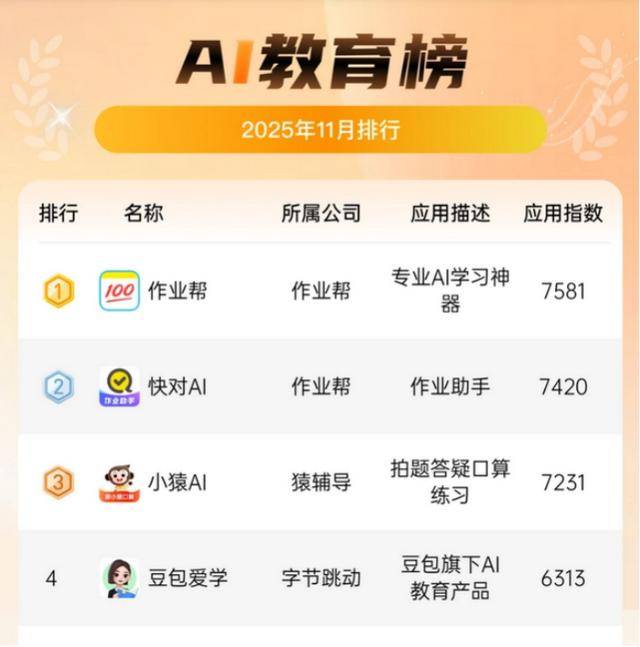
Core Insights - Xiaomi is rumored to be entering the AI education sector, as indicated by multiple AI education-related job postings on its recruitment page, sparking speculation about potential educational offerings [1] - The AI education market is highly competitive, with various players leveraging their resources to penetrate diverse learning scenarios, including ByteDance's "Doubao Aixue" and Alibaba's "Quark Learning" [1] Group 1: Market Dynamics - The AI education sector is characterized by intense competition and increasing product homogeneity, with many offerings focusing on common functionalities such as photo-based question answering and homework correction [2] - The market is witnessing a significant shift towards AI integration in online education platforms, with leading companies like Zuoyebang leveraging their long-standing educational expertise to gain a competitive edge [3][4] Group 2: Company Strategies - Zuoyebang has established a comprehensive commercial ecosystem that includes live classes, subscription services, and smart learning devices, enhancing user lifetime value and generating stable revenue [3] - ByteDance's "Doubao Aixue" utilizes a unique combination of technology and traffic to rapidly penetrate the K12 smart learning market, benefiting from the vast user base of its super apps [6][8] Group 3: Product Differentiation - Zuoyebang's AI tools have evolved from basic functionalities to intelligent tutoring services, capitalizing on its extensive user base and data assets for effective AI model training [3][4] - "Doubao Aixue" integrates ByteDance's proprietary model, showcasing advanced capabilities in natural language understanding and dynamic response, although it faces challenges in educational content depth [6][8] Group 4: Challenges and Opportunities - Despite its advantages, Zuoyebang has faced public scrutiny due to marketing practices and content oversight, highlighting the need to balance rapid growth with educational integrity [4] - "Doubao Aixue" must address its lack of a systematic research and development framework and broaden its educational service offerings to remain competitive [8] - Xiaoyuan AI focuses on a robust educational research foundation, aiming to evolve AI from a mere tool to a more comprehensive educational entity, but faces challenges in user acquisition and brand recognition [9][11] Group 5: Future Outlook - The AI education sector is evolving, driven by technological advancements and market demands, but it also faces challenges such as sustainability of business models and the need for deeper integration of technology with educational practices [12] - Companies must transition from a focus on functionality to a deeper understanding of educational principles to establish a differentiated value proposition in the long run [12]

这不对劲儿,教育各家AI功能越来越像了
3 6 Ke· 2025-12-04 04:12
Core Insights - The education AI products are increasingly becoming homogeneous in terms of functionality and marketing, raising concerns about potential commoditization akin to bottled water [2][3] - The true differentiation in education AI products lies not in surface-level features but in deeper aspects such as foundational capabilities, user experience, and underlying philosophies [5][9] Group 1: Homogenization of AI Products - Over the past year, both education and technology companies have launched AI features that exhibit high levels of similarity, including personalized learning paths, interactive Q&A, and generative explanations [2] - The trend of homogeneity is evident as companies adopt similar functionalities and marketing strategies, leading to a perception of a competitive race where everyone offers the same AI capabilities [3] Group 2: Concerns of Commoditization - There is a growing concern that if the trend continues, education AI products may become indistinguishable, relying solely on brand and distribution channels for competition [3] - Historical parallels can be drawn from other industries, such as smartphones and home appliances, where competition shifted from functionality to branding and supply chain efficiency [3] Group 3: Hidden Differentiation - Despite the apparent similarity in product offerings, significant differences exist in the effectiveness of AI functionalities, which can be perceived by users upon actual usage [5][6] - The foundational capabilities, such as knowledge and data systems, are critical for differentiation, as they determine the AI's ability to understand and respond to student needs [6][7] Group 4: Philosophical Differences - The underlying philosophy of a company regarding education shapes its product's character, influencing how AI is integrated into the learning process [8][10] - Companies may have varying beliefs about the essence of education, whether it is efficiency, companionship, knowledge structure, or curiosity-driven, which directly impacts product design and functionality [8][10] Group 5: Future of Differentiation - The future of competition in the education sector will not be defined by what companies do but by what they believe, as AI technology enables these beliefs to manifest in tangible product features [10][11] - The evolution of AI is pushing the industry towards a focus on core values and long-term accumulation of knowledge, rather than just surface-level functionalities [10][11]

AI解题出海,“做题家”成全球“AI教师”
Xin Lang Cai Jing· 2025-12-02 11:44
Core Insights - The article discusses the rise of AI educational apps, particularly Gauth, which is gaining popularity among students in North America for its photo-based problem-solving capabilities [1][3][4]. Group 1: AI Educational Apps Overview - Gauth, developed by ByteDance, is an AI learning app that allows students to take pictures of problems and receive detailed solutions and explanations [3][4]. - Other notable apps include Question AI from Zuoyebang and Uknow.AI from Yuanfudao, which also focus on photo-based problem-solving [4][32]. - Gauth has achieved significant success, topping the North American App Store's education category for two consecutive months in late 2025, surpassing established apps like Duolingo and Google Classroom [4][32]. Group 2: Competitive Landscape - The AI educational app market is competitive, with established players like Quizlet and Photomath already having a foothold before the entry of Chinese apps [11][41]. - Gauth's success is attributed to its effective use of TikTok for marketing, where students discover the app through shared experiences [11][44]. - The app has been downloaded over 39 million times globally, with significant growth in Southeast Asian markets, indicating a strong international presence [14][44]. Group 3: Technological Advancements - The evolution of AI educational apps has shifted from merely providing answers to offering comprehensive explanations and teaching methodologies, resembling a tutoring experience [10][40]. - Gauth and similar apps are now expanding their capabilities beyond mathematics to include subjects like statistics, physics, and literature [10][40]. - The integration of advanced AI models has improved the apps' ability to provide personalized learning experiences, enhancing user engagement [18][48]. Group 4: Market Dynamics - The AI education market is projected to grow significantly, with estimates suggesting it could reach 1.6 trillion yuan by 2027 and nearly 1.8 trillion yuan by 2030 [18][48]. - The competitive structure of the market is characterized by a three-tier funnel, with tech giants at the top, educational companies in the middle, and niche startups at the bottom [19][49]. - The strategies of internet giants focus on user acquisition through free features, while educational companies often rely on subscription models to monetize their offerings [19][50]. Group 5: Challenges and Future Directions - Despite the rapid growth, AI educational apps face challenges such as the "hallucination problem" where AI may provide incorrect answers, impacting user trust [27][57]. - The lack of standardized evaluation metrics in the industry complicates the assessment of app effectiveness, leading to potential user dissatisfaction [27][57]. - The future of AI in education will likely focus on balancing technological advancements with ethical considerations, aiming to enhance learning outcomes while maintaining academic integrity [28].

AI家教赛道升温,互联网大厂与教育巨头开启攻防战
3 6 Ke· 2025-11-03 04:57
Core Insights - The education AI application market is experiencing unprecedented growth, with monthly active users and download numbers reaching record highs, driven by the "double reduction" policy and the increasing demand for efficient home education tools [1][3][5] - Major internet companies and traditional education giants are heavily investing in this sector, leading to a competitive landscape that reflects differing development strategies and user needs [3][6][12] Group 1: Market Dynamics - The surge in education AI applications is a result of both demand and supply factors, with a 50% increase in registered users reported during the back-to-school season [5][41] - The global education AI market is projected to grow from approximately $5.88 billion in 2024 to $32.27 billion by 2030, with a compound annual growth rate (CAGR) of 31.2% [6][41] - ByteDance's products lead in downloads, with Gauth at 6.75 million and Doubao Aixue at 4.81 million, both showing over 100% growth [6][9] Group 2: User Engagement - Monthly active users (MAU) are considered more critical than download numbers in the education AI sector, with five apps exceeding 20 million MAU in September [9][10] - The highest MAU is reported for Homework Help at 98.63 million, despite a 1.94% decline, while Yuanfudao's products also show significant growth [10][12] Group 3: Product Differentiation - Internet giants focus on user experience and rapid user acquisition, while traditional education companies emphasize teaching effectiveness and user retention [12][37] - The product design and user experience differ significantly between internet companies and education firms, with the former prioritizing efficiency and the latter focusing on educational outcomes [12][38] Group 4: Challenges and Opportunities - Despite the high potential for monetization in the education sector, actual revenue generation remains low, with top products earning only hundreds of thousands to millions monthly [41][42] - User skepticism regarding the effectiveness of AI tutoring products, combined with the prevalence of free offerings, hampers the willingness to pay [42][45] - The industry faces challenges such as product homogeneity and a lack of standardized evaluation metrics, which complicate user decision-making [45][47]
被在华留学生吐槽身份认证难!夸克回应
Xi Niu Cai Jing· 2025-09-16 07:35
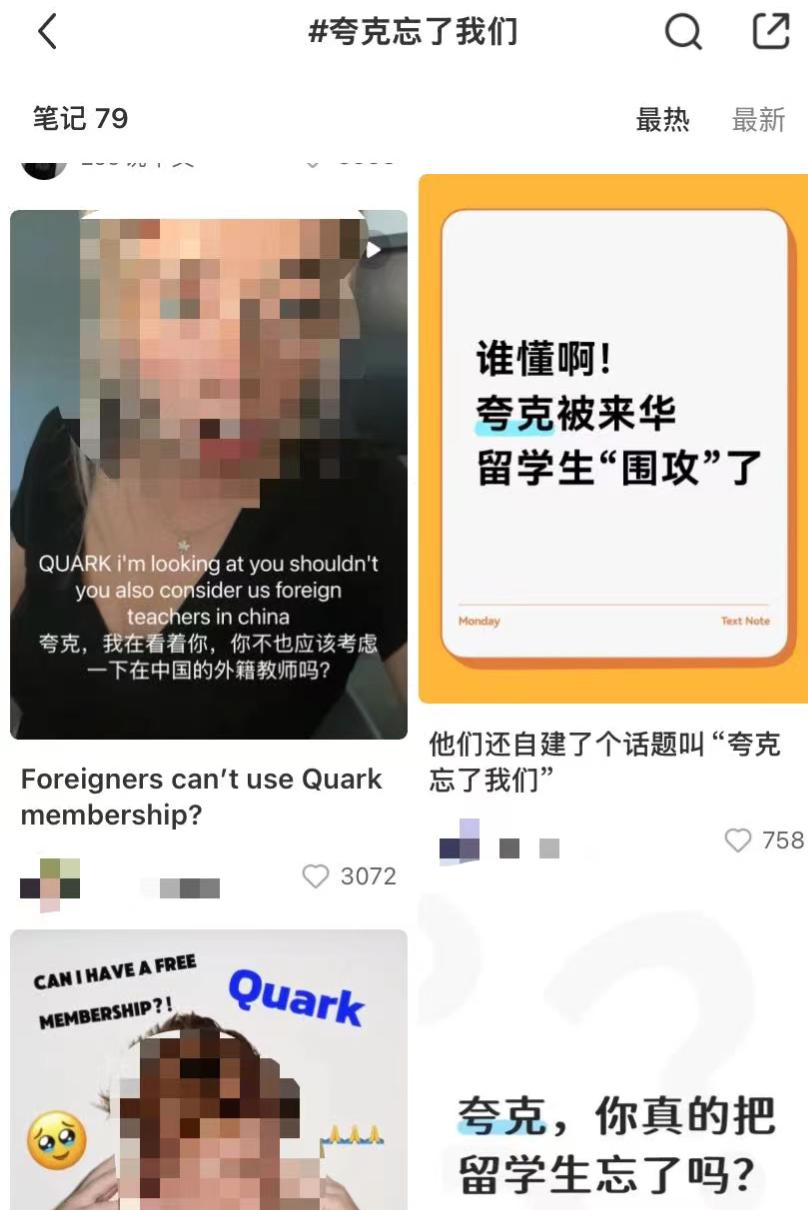
Group 1 - Quark has launched an "Education Plan" aimed at nearly 70 million college teachers and students nationwide, offering free membership benefits and exclusive discounts [1] - Many international students in China have reported difficulties in completing identity verification, preventing them from accessing the free membership benefits, leading to discussions on social media about the issue [1] - Quark's official response indicated that foreign students in China can verify their status through the China Higher Education Student Information (CHESI) system, but some may face delays due to data entry issues at their universities [3] Group 2 - Quark has introduced a new independent education app called "Quark Learning," which features functions such as photo-based problem-solving, homework correction, and personalized materials, promoting a "0 yuan anytime inquiry" slogan [6] - The app aims to disrupt the current education market dominated by companies like iFLYTEK, ByteDance, and Zuoyebang, by providing targeted one-on-one tutoring based on students' learning stages and historical mistakes [6] - The sustainability of Quark Learning's free model is uncertain, as the K12 online question bank market in China is projected to reach approximately 8.6 billion yuan in 2024, with a low payment rate of less than 15% [6][7]
苹果发布Xcode 26 Beta 7:新增GPT-5支持并集成Claude;夸克将推AI新品“造点”丨AIGC日报
创业邦· 2025-08-30 01:06
Group 1 - Apple released Xcode 26 Beta 7, introducing support for GPT-5 and integration with Claude, allowing developers to choose between GPT-5 and GPT-4.1 for new conversations [2] - Quark is reportedly developing a new AI product named "ZaoDian," which combines AI creation and content interaction, with plans for a separate "Quark Learning" app in the education sector [2] - Honor's Magic V5 overseas version launched in Europe, featuring offline real-time translation, achieving an 11% year-on-year growth in a declining smartphone market [2] Group 2 - Alibaba Travel launched an AI travel solution, including modules for employee travel recommendations and enterprise management, currently in internal testing [2]


AI日报丨华尔街警示!英伟达 “不可避免的” 增速放缓即将来临
美股研究社· 2025-08-29 14:33
Core Insights - The article discusses the rapid development of artificial intelligence (AI) technology and its potential opportunities in various sectors [3]. Group 1: AI Developments - OpenAI has released GPT-Realtime, a voice model designed for AI agents, capable of generating natural and fluent speech, suitable for customer service, education, finance, and healthcare [5]. - Dell has raised its full-year guidance, increasing its AI server shipment expectations, with Q2 net revenue reported at $29.78 billion, exceeding analyst expectations of $29.18 billion [5]. - Dell's AI solutions shipment value reached $10 billion in the first half of FY2026, with full-year revenue expected between $105 billion and $109 billion, surpassing previous estimates [6]. Group 2: Company Performance - Dell anticipates AI server shipments to reach $20 billion for the full year, up from an earlier estimate of over $15 billion, with ISG revenue growth projected between 20% and 30% [6]. - Nvidia's data center business generated $41 billion in revenue for the quarter ending July 27, slightly below Wall Street expectations, with large cloud service providers contributing about half of this revenue [8]. - Analysts express concerns about potential slowdowns in AI spending from tech giants, which could pose risks to Nvidia's growth, although they believe AI investment will remain strong in the coming years [9]. Group 3: New AI Products - Quark is developing a new AI product called "ZaoDian," which integrates AI creation and content interaction, alongside plans for a dedicated education app [7]. - Elon Musk's xAI has introduced Grok Code Fast 1, a programming model aimed at being a high-speed tool for daily use, currently available only via API [7]. - Meta Platforms plans to release its next-generation AI model, Llama 4.X or Llama 4.5, by the end of this year, as part of its Superintelligence Lab initiatives [14][16].

夸克将推AI新品“造点”?知情人士:确有此规划
Xin Lang Cai Jing· 2025-08-29 01:57
Group 1 - Quark is developing a new AI product named "ZaoDian," which integrates AI creation and content interaction [1] - The specific timeline for the development and launch of "ZaoDian" has not been confirmed [1] - Quark is also planning to launch a separate "Quark Learning" app to enhance its educational offerings [1] Group 2 - Quark has initiated a large-scale "Education Plan" targeting nearly 20 million teachers and 50 million college students across the country [1] - The plan aims to lower the barriers to using AI tools, offering free memberships to certified teachers and college students during the back-to-school season [1] - The initiative includes benefits such as annual AI membership gifts for teachers and three-month free memberships for college students, along with exclusive discounts for educators and students [1]