高速公路建设

Search documents
杭淳开高速衢州段开工
Zhong Guo Xin Wen Wang· 2025-12-16 00:47
Core Viewpoint - The commencement of the Hangzhou-Chuzhou Expressway's Chuzhou section marks the beginning of a significant infrastructure project aimed at enhancing economic connectivity between Zhejiang and Jiangxi provinces, contributing to regional development and prosperity [1][4]. Group 1: Project Overview - The Hangzhou-Chuzhou Expressway is a crucial part of the national expressway network G25 and is included in Zhejiang's comprehensive transportation planning [1][2]. - The Chuzhou section of the expressway spans approximately 61.1 kilometers, designed as a dual four-lane highway with a speed limit of 100 km/h and a total estimated investment of 136.5 billion yuan [2]. - The project is expected to be completed by the end of 2029, serving as a vital artery for regional economic and social development [4]. Group 2: Economic and Social Impact - The expressway will facilitate better access to key areas in Zhejiang, enhancing connectivity to major cities and regions, thus promoting local economic growth [2][3]. - It aims to improve transportation for agricultural products from the mountainous areas, supporting rural revitalization and increasing farmers' incomes [3]. - The project is anticipated to create a significant economic corridor that integrates tourism and local industries, enhancing the overall development of the region [2][3]. Group 3: Environmental and Technological Considerations - The project incorporates green and eco-friendly principles throughout its construction, aiming to minimize ecological disruption, particularly to local forest ecosystems [3]. - It employs advanced construction technologies, including the establishment of a "smart construction site" to enhance efficiency and safety in the building process [3].
杭淳开高速衢州段开工 浙赣省际大动脉建设提速
Zhong Guo Xin Wen Wang· 2025-12-15 12:34
Core Viewpoint - The construction of the Hangzhou-Chun'an-Kai Highway's Quzhou section has officially commenced, marking a significant step in enhancing the economic corridor and connectivity between Zhejiang and Jiangxi provinces [1][3]. Project Overview - The Hangzhou-Chun'an-Kai Highway is a crucial part of the national expressway network G25 and is included in the "Nine Verticals and Nine Horizontals" plan of Zhejiang's comprehensive transportation network [3]. - The project spans approximately 245 kilometers with a total investment of about 591 billion yuan, led by the Zhejiang Transportation Group [3]. - The Quzhou section of the highway is approximately 61.1 kilometers long, designed as a dual four-lane expressway with a speed limit of 100 km/h, and has a projected total investment of 13.65 billion yuan [3][4]. Economic and Social Impact - Once completed, the highway will facilitate better access to various regions, enhancing the transportation network in the western Zhejiang area and supporting local economic development [4]. - The project aims to integrate resources along the route, promoting tourism and economic activities, thereby creating a vital economic artery for county-level development [4][5]. - The highway will also support the agricultural sector in the Quzhou area, helping local products reach broader markets and contributing to rural revitalization and income growth [5]. Environmental Considerations - The project incorporates a "green, eco-friendly, and ecological" philosophy throughout its construction process, aiming to minimize disruption to local ecosystems [5][6]. - Innovative construction techniques, such as the "smart construction site" and the use of prefabricated components, are being employed to enhance efficiency and sustainability [6]. Timeline - The Hangzhou-Chun'an-Kai Highway's Quzhou section is expected to be completed and open to traffic by the end of 2029, serving as a key infrastructure project for regional economic and social development [6].

四川南三高速公路有限公司成立
Zheng Quan Ri Bao Wang· 2025-12-11 06:11
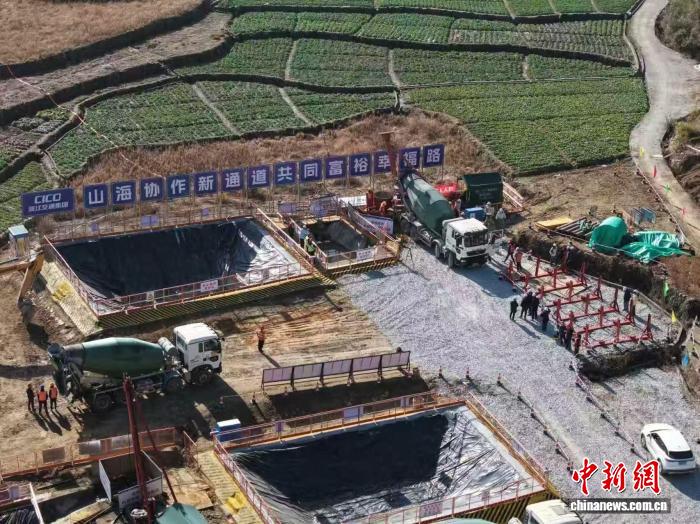
本报讯(记者袁传玺)天眼查App显示,近日,四川南三高速公路有限公司成立,注册资本1亿元,经营范 围包括公路管理与养护、建设工程施工、道路货物运输等,由四川蜀道高速公路集团有限公司、上海城 建市政工程(集团)有限公司、中国华西企业股份有限公司等共同持股。 ...
奋战四季度 确保全年红丨济源四个高速项目通车在即
He Nan Ri Bao· 2025-12-09 23:49
12月5日,初冬的太行山上阳光灿烂,在位于济源承留镇栗子村沿太行山高速西延项目济源西收费站施工现 场,各种机械的轰鸣声与金属的撞击声交织成了决战四季度、确保全年红的奋进交响曲。 挖掘机挥舞着"铁臂"精准作业,大卡车穿梭运送土石方,施工人员正在开展边坡防护加固,一派热火朝天的 景象。"目前济源西收费站建设已全部完工,A、B、I、F、H匝道已完成施工,剩下的L匝道和道路衔接正处 于攻坚阶段。"该标段项目安全总监张伟杰介绍,预计L匝道几天内可完成施工。 作为河南省高速公路网的重要组成部分,沿太行山高速公路西延项目东起二广高速,西至济阳高速,全长34 公里,总投资57亿元,是贯通豫北沿太行地区的关键通道。截至目前,该项目已累计完成总工程量的98%, 全线进入交工验收倒计时。 济源境内85%的面积为山区,这里是愚公移山故事的发生地。近年来,济源大力弘扬愚公移山精神,先后修 通了菏宝高速济源段、二广高速济源段、阳城至洛阳高速济源段3条高速。 记者了解到,自2020年《河南省高速公路网规划(2021—2035年)》发布以来,济源紧抓机遇,分别争取到 沿太行高速焦作至济源段、沿太行山高速公路西延、济源至新安高速、沿黄高速4个 ...

四中全会精神在基层丨郑洛高速铺就中原新通途
He Nan Ri Bao· 2025-12-08 23:16
Core Insights - The Zheng-Luo Expressway project is progressing rapidly, with 97% of earthworks and 50% of water-stabilized construction completed in the 33 km section within Luoyang [1][2] - The project incorporates local cultural elements into its design, featuring four uniquely named stations that blend transportation with tourism [2] - Safety measures are prioritized, with a weekly safety training and daily briefings to ensure compliance and risk management on-site [2] Group 1 - The Zheng-Luo Expressway serves as a new transportation corridor connecting Zhengzhou and Luoyang, spanning approximately 99 km with a dual six-lane design [1] - Construction is being conducted continuously, with strategies in place to mitigate the impact of cold weather on operations [1] - The project is part of a broader initiative to enhance the modern transportation infrastructure in China, aligning with national goals for a comprehensive transport system [2] Group 2 - The project aims to complete 20% of the median greening and 30% of the communication engineering by the upcoming Spring Festival, with a target to open the expressway by the third quarter of next year [3] - The completion of the expressway is expected to reshape regional development and facilitate deeper integration of the Central Plains urban agglomeration into the Belt and Road Initiative [3]
我省今年将新建成高速公路九百公里 通车总里程达一点一万公里
Si Chuan Ri Bao· 2025-12-07 01:32
Group 1 - The core viewpoint highlights the significant progress in highway construction in Sichuan, with the province expected to have 152 counties (cities, districts) connected by highways by the end of the year [1][2] - By the end of this year, the total length of Sichuan's highways will reach 11,000 kilometers, ranking among the top three in the country, with over 3,000 kilometers of new highways built since the start of the 14th Five-Year Plan [1][3] - The completion of the Chongqing-Zichong highway will mark the 17th highway connecting Sichuan to Chongqing, facilitating a one-hour travel time between neighboring cities in the Sichuan-Chongqing region [1][2] Group 2 - The Chengdu metropolitan area is set to enhance its traffic efficiency with the completion of the Chengnan Expressway expansion project, which is the largest and longest expansion project in Sichuan, extending over 240 kilometers [2] - This year, several highways will connect previously isolated areas in Liangshan Prefecture, including the completion of the Leixi Expressway and the Jiuma Expressway, which will end the history of no highway access for counties like Rebo and Hongyuan [2][3] - The integration of transportation and tourism is being promoted, with highways like the Jiuzhai-Mianyang Expressway linking over 30 tourist attractions, enhancing accessibility to scenic areas [2] Group 3 - Sichuan is prioritizing ecological protection alongside highway construction, with projects like the Jiuzhai-Mianyang Expressway and Leixi Expressway implementing significant environmental measures, including the transplantation of rare plant species [3] - The province's investment in road and waterway construction has exceeded 268 billion yuan this year, setting a historical record, with a cumulative investment of over 1 trillion yuan planned for the 14th Five-Year Plan period [3]
河南高速里程即将突破1万公里
Xin Hua Wang· 2025-12-06 07:33
Core Viewpoint - The successful inspection of the Yellow River Three Gorges Bridge marks the final stage of the Jiyuan to Xin'an Expressway's full opening, with the total length of expressways in Henan expected to exceed 10,000 kilometers by the end of 2025 [1] Group 1: Highway Construction Progress - Since the beginning of the 14th Five-Year Plan, the construction of expressways in Henan has accelerated [1] - By the end of 2025, there will be 27 expressway projects under construction in the province, with 17 projects, including the Yellow River Expressway, expected to be completed by the end of the year [1] - 13 provincial cities, including Zhengzhou, Kaifeng, and Luoyang, will achieve a "ring network" of expressways, with the goal of "double expressway access" for every county in the province [1] Group 2: Economic Development Support - The Henan Provincial Department of Transportation aims to continuously improve the comprehensive transportation network and ensure the timely opening of key projects to support high-quality regional economic and social development [1]
通途贯东西 发展“跑”起来——沈卢高速为中原发展注入新动能
He Nan Ri Bao· 2025-12-05 23:34
Core Insights - The Shenlu Expressway segment from Shenqiu to Suiping is set to officially open by the end of December, enhancing regional development in Central China [1] - The expressway, spanning 105.96 kilometers with a total investment of 13.629 billion yuan, connects key transportation networks and facilitates faster logistics and passenger flow [1] Group 1: Project Overview - The Shenlu Expressway segment is a crucial link between Zhoukou and Zhumadian, featuring a dual four-lane design with 46.12 kilometers in Zhoukou and 59.84 kilometers in Zhumadian [1] - The project connects to the Shanggu Expressway and the Beijing-Hong Kong-Macau Expressway, forming a significant transportation network that integrates the Yangtze River Delta and the Belt and Road Initiative [1] Group 2: Quality and Safety Measures - The project team emphasizes quality as the lifeline of the engineering, implementing a "11356" management system to achieve long-term quality goals [2] - Special measures for winter construction include using insulation techniques for concrete pouring and strict control of moisture content in roadbed filling to ensure stability [2] - The project has achieved zero accidents since its inception and has been recognized as a provincial-level "Safety Production Demonstration Unit" [2] Group 3: Innovation and Efficiency - The project promotes collaboration between academia and industry, working with institutions like Zhengzhou University to enhance construction techniques and materials [2] - A total of 198 innovative results have been generated through ongoing improvement activities, with 68 outstanding results being implemented across the project [2] - The project has also secured 12 provincial-level construction methods and 26 authorized patents, showcasing its commitment to innovation [2] Group 4: Environmental Considerations - The project adopts a sustainable approach to land use, implementing a "river dredging + reservoir silt removal + land transformation" model to protect basic farmland [3] - Through these efforts, 730 acres of land have been created while saving 20,000 acres of farmland, achieving a "zero take, zero occupy" policy for basic farmland [3] - The project has successfully integrated ecological considerations, ensuring clean waterways and connected farmland alongside the expressway [3]
郑州⇌洛阳将缩短至1小时!高速免费路段一览...
Sou Hu Cai Jing· 2025-12-05 07:02
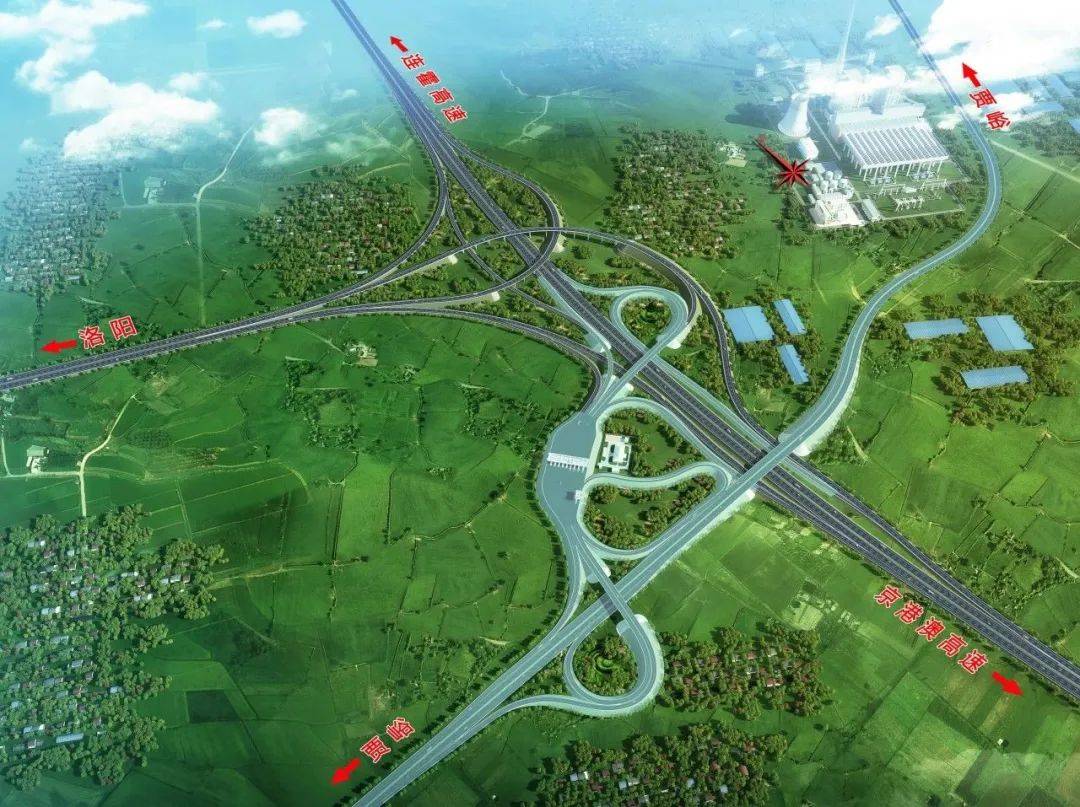
郑洛高速 ▶️线路规划: 项目起点位于郑州市荥阳市贾峪镇周新庄东南,设置马米路枢纽互通与郑州西南绕城高速相交,终点位于洛阳市伊滨区刘窑西,设置龙门枢纽互通与二广 高速相交,路线全长99.013公里 郑洛高速与绕城高速互通效果图(图源:中建八局) ▶️主要控制点: 郑州市、荥阳市、巩义市、偃师市、洛阳市、伊川县 ▶️建设规模: 郑洛高速全线采用双向六车道高速公路技术标准,设计速度分段采用120公里/小时、100公里/小时。 ▶️建设意义: 该设计将改变郑洛双城格局,过去两地产业协作常受制于2小时车程瓶颈,通车后通勤时间将压缩40%以上。贯通后将极大便利郑州、洛阳两地直接联 通,进一步促进两地经济文化交流。 11月27日,随着吊车将最后一片钢箱梁落下,郑洛高速凤凰山枢纽互通上跨焦桐高速钢箱梁架设任务圆满完成。 图源:豫见交通 此次钢箱梁的成功架设,为后续架梁通道贯通及桥面系施工的全面展开奠定了坚实基础。郑洛高速建成通车后,将承担郑州与洛阳之间最便捷高速通道的 功能,进一步完善中原城市群快速公路网络,加快中西部地区的经济发展步伐,为区域内的资源开发和经济发展建立良好的交通基础条件。 除此之外 安罗高速原阳至郑州段 ...
最难标段三座隧道累计掘进过半
Bei Jing Ri Bao Ke Hu Duan· 2025-12-03 21:20
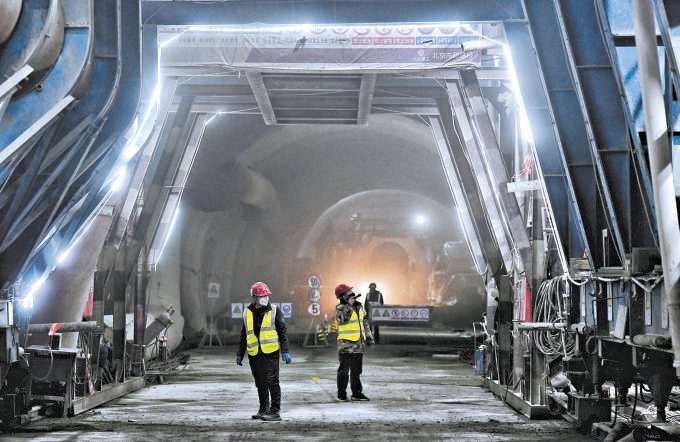
Core Points - The construction of the 108 New Line Expressway's sixth section has reached a significant milestone, with a cumulative excavation of 2,500 meters, marking over half of the total excavation completed [2] - The sixth section spans 5.21 kilometers and traverses complex geological and ecological areas, recognized as a challenging segment of the entire project [2] - The project is crucial for emergency response in the western mountainous regions of Beijing, especially after severe damage from extreme rainfall [3] Summary by Sections Construction Progress - Three tunnels are advancing simultaneously, with the completion of the left and right tunnel portals of the 1,700-meter-long Tanmugang Tunnel, which has achieved nearly 60% of its total excavation [2] - The construction team has implemented strategies to address challenges such as broken slate and water seepage, ensuring steady progress [3] Bridge Engineering - The construction of the Tanmugang Bridge's pier columns has reached a completion rate of 96%, while the North Port Special Bridge has successfully erected eight spans of beam slabs [3] - The U-turn ramp bridge completed all cast-in-place box girder pouring within nine days and has transitioned to upper structure construction [3] Importance of the Project - The 108 New Line Expressway is designated as a "lifeline" for the western region, enhancing disaster resilience and forming a dual-use transportation guarantee system [3] - The completion of this expressway will integrate with other highways to create three main horizontal emergency communication routes [3]