
Tobacco

Search documents
Philip Morris Shares Edge Higher After Q4 Results Meet Expectations and Smoke-Free Growth Continues
Financial Modeling Prep· 2026-02-06 21:01
Core Insights - Philip Morris International Inc. reported fourth-quarter results that met analyst expectations, with adjusted earnings per share of $1.70 and revenue of $10.4 billion, slightly above the expected $10.39 billion [1] Group 1: Financial Performance - The company achieved adjusted diluted EPS of $7.54 for the full year 2025, reflecting a year-over-year growth of 14.8%, or 14.2% on a currency-neutral basis [2] - Revenue from smoke-free products constituted 41.5% of total net revenues and nearly 43% of total gross profit, marking increases of 2.8 and 3.2 percentage points compared to full-year 2024 [3] Group 2: Business Growth and Strategy - Smoke-free shipment volumes increased by 8.5% in the quarter, while traditional cigarette volumes saw a decline of 2.2% [2] - Philip Morris guided for fiscal 2026 adjusted EPS in the range of $8.38 to $8.53, surpassing the analyst consensus of $8.33 [4] - The company set new growth targets for 2026–2028, aiming for organic net revenue growth of 6% to 8%, organic operating income growth of 8% to 10%, and adjusted diluted EPS growth of 9% to 11%, excluding currency effects [4]



Philip Morris International Inc. (NYSE:PM) Earnings Report Highlights
Financial Modeling Prep· 2026-02-06 19:05
Core Insights - Philip Morris International Inc. reported an earnings per share (EPS) of $1.70, matching estimates, but revenue of $10.36 billion slightly missed expectations of $10.40 billion [1][6] - The company has achieved its fifth consecutive year of volume growth, with net revenues exceeding $40 billion in 2025, of which nearly $17 billion came from its smoke-free business [2][6] - Despite a decline in stock price due to softer-than-expected revenue figures, the company's strong performance and strategic focus on smoke-free products position it well for future success [3][6] Financial Metrics - The price-to-earnings (P/E) ratio of Philip Morris is approximately 32.90, with a price-to-sales ratio of about 7.09 and an enterprise value to sales ratio of 8.25, indicating market valuation of its earnings and sales [4] - The company's earnings yield stands at around 3.04%, reflecting its profitability relative to its stock price [4] - Philip Morris has a debt-to-equity ratio of -4.59, indicating a significant level of debt compared to equity, and a current ratio of 0.85, suggesting its ability to cover short-term liabilities with short-term assets [5]
Marlboro Cigarette Maker Now Says Smoke-Free Drives Over Half Of Sales - Philip Morris Intl (NYSE:PM)
Benzinga· 2026-02-06 18:03
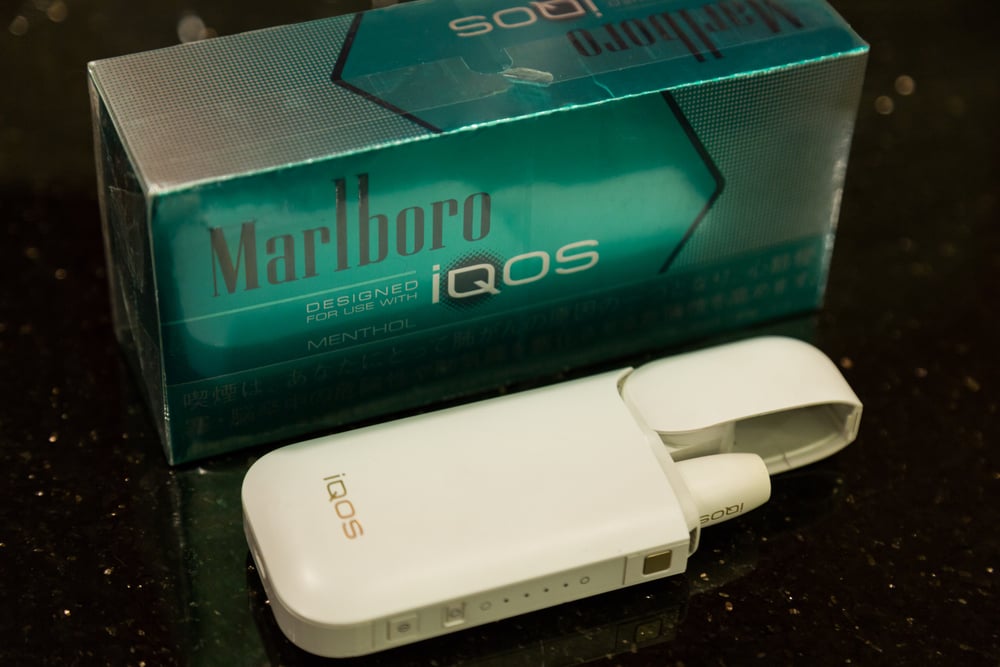
Core Viewpoint - Philip Morris International Inc. reported strong fourth-quarter results for fiscal 2025, highlighting significant growth in its smoke-free business and a record market share for Marlboro [1][2]. Quarterly Metrics - Adjusted earnings per share for the fourth quarter were $1.70, aligning with market expectations [2] - Quarterly sales reached $10.362 billion, reflecting a 6.8% year-over-year increase, but fell short of the anticipated $10.440 billion [2] - The company achieved net revenues exceeding $40 billion for the year, with nearly $17 billion from smoke-free products [2][4]. Smoke-Free Portfolio Growth - In the fourth quarter, net revenue from smoke-free products grew by 12.0% (8.6% organically), and gross profit increased by 12.2% (8.3% organically) [5]. - Over 50% of net revenues were generated from smoke-free products in three out of four regions [5]. Combustibles - Net revenues from combustible products grew by 3.2% (0.3% organically), with gross profit rising by 5.5% (2.8% organically) [6]. - Marlboro achieved a record high category share of 11.0% [6]. Outlook - For fiscal 2026, the company forecasts GAAP earnings of $7.87 to $8.02 per share, slightly below analysts' estimates of $7.94 [7]. - Adjusted earnings for fiscal 2026 are projected to be between $8.38 and $8.53 per share, compared to estimates of $8.33 [7]. - The company anticipates organic net revenue growth of 6% to 8% for 2026-2028 and 8% to 10% growth in organic operating income [8]. Stock Performance - Philip Morris shares increased by 1.48% to $184.68, nearing its 52-week high of $186.69 [9].
The Rotation into Consumer Staples: Defensive Strength in an Uncertain 2026
ZACKS· 2026-02-06 17:55
Core Viewpoint - The beginning of 2026 has highlighted a significant shift in investor sentiment, with a notable rotation into consumer staples stocks as technology shares face pressure due to high valuations and sustainability concerns regarding AI momentum [1][3]. Consumer Staples Sector Performance - The Consumer Staples Select Sector SPDR Fund (XLP) has increased approximately 13% year-to-date through early February, marking one of its strongest starts in over a decade, contrasting with a 3% decline in the technology sector [2]. - This shift reflects a classic de-risking move as investors seek stability amid broader economic uncertainties [2]. Reasons for Rotation to Consumer Staples - The rotation is driven by concerns over elevated expectations in technology, potential regulatory scrutiny, and a normalizing interest rate environment, prompting profit-taking in tech stocks [3]. - Broader economic signals, including a weakening jobs market, lingering inflation, and geopolitical uncertainties, have encouraged investors to seek the stability offered by consumer staples [4]. Characteristics of Consumer Staples - Consumer staples provide predictable demand for essentials, resulting in resilient earnings, consistent dividends, and lower volatility, making them attractive during periods of economic uncertainty [4][5]. - The sector has seen record inflows as portfolios de-risk, with staples becoming one of the few areas of relative strength amid broader market selloffs [5]. Notable Companies in the Sector - Philip Morris has shown strong performance, with shares advancing following a robust Q4 2025 report, driven by its transition to smoke-free products, resulting in a 9.7% year-over-year increase in adjusted EPS to $1.70 and revenue growth of 6.8% [6][7]. - Coca-Cola has also performed well, leveraging its global brand strength and volume growth in emerging markets, with a focus on non-carbonated options, appealing to yield-seeking investors with its high dividend yield [8]. Financial Metrics and Valuations - Consumer staples exhibit recurring revenue from necessities, strong balance sheets for dividends, and moderate growth from innovation or international exposure, with forward P/E ratios in the high teens or low-20s, which are reasonable compared to the higher multiples in the tech sector [11]. - In a potentially recessionary environment, consumer staples offer downside protection while maintaining total returns over time, making them a reliable choice for balanced portfolios [12].

Philip Morris Q4 Earnings Beat Estimates, Revenues Grow 6.8% Y/Y
ZACKS· 2026-02-06 17:06
Core Insights - Philip Morris International Inc. (PM) reported a strong performance in Q4 2025, with both net sales and earnings showing year-over-year growth, although net sales fell short of expectations while earnings exceeded them [1][3]. Financial Performance - Adjusted earnings for Q4 2025 were $1.70, reflecting a 9.7% increase year-over-year, and beating the Zacks Consensus Estimate of $1.67 [3]. - Net revenues reached $10,362 million, marking a 6.8% increase on a reported basis and a 3.7% increase on an organic basis, although this was below the Zacks Consensus Estimate of $10,428 million [4]. - The adjusted operating income rose 5.8% to $3,722 million, driven by improved pricing and a positive volume/mix, despite increased costs in marketing, administration, and research [6]. Business Segments - Revenues from smoke-free products increased by 12% (8.6% organically), contributing over 50% of net revenues in three of the four regions [5]. - Net revenues from combustible products grew 3.2% year-over-year, with a 0.3% organic increase [5]. Regional Performance - In the European region, net revenues grew 11% (5.1% organically) to $4,598 million, supported by positive pricing and volume/mix, despite lower cigarette volumes [7]. - The SSEA, CIS & MEA regions saw net revenues increase by 8.4% (6.5% organically) to $3,109 million, primarily due to favorable pricing [8]. - In the EA, AU & PMI GTR regions, net revenues fell 0.6% (1% organically) to $1,425 million, while revenues in the Americas decreased by 2.5% (4.4% organically) to $1,230 million [9][10]. Future Outlook - For 2026, adjusted EPS is projected to be in the range of $8.38-$8.53, indicating growth of 11.1-13.1%, with reported EPS expected between $7.87-$8.02 compared to $7.26 in 2025 [12]. - The company anticipates net revenues to increase by 5-7% on an organic basis and operating income to rise by 7-9% in 2026 [14]. - Management expects an operating cash flow of around $13.5 billion and capital expenditures of $1.4 to $1.6 billion, primarily for smoke-free business investments [14].
Philip Morris (PM) Q4 2025 Earnings Transcript
Yahoo Finance· 2026-02-06 15:42
Core Insights - The company achieved a 15% adjusted diluted EPS growth, the strongest since 2011, driven by strong pricing, portfolio resilience, and disciplined execution [1] - The smoke-free business generated over $17 billion in revenue, accounting for 41.5% of total net revenues, with a significant increase in gross profit [6][22] - The company expects continued strong growth in smoke-free products, projecting organic net revenue growth of 5% to 7% for 2026 [40] Financial Performance - Total net revenues reached over $40 billion in 2025, with adjusted operating income growing by 11.8% to $16.4 billion [11][6] - The adjusted diluted EPS was $7.54, reflecting a 14.2% growth, driven by strong underlying business performance and a favorable tax rate [11][43] - Operating cash flow matched the record delivery of $12.2 billion, supporting further deleveraging [11][50] Smoke-Free Product Growth - Smoke-free product volumes grew by 12.8%, with IQOS shipments increasing by 11% to 155 billion units [4][13] - The nicotine pouch category, led by ZYN, saw a 37% growth in shipments, making up close to 7% of total smoke-free product volumes [13][22] - The company expanded its smoke-free presence to 106 markets, with 27 markets exceeding 50% net revenue from smoke-free products [7][6] Market Dynamics - The company noted robust performance in international markets, particularly in Italy and Taiwan, contributing to broad growth across geographies [3][4] - Despite supply constraints and competitive portfolio gaps, the U.S. market showed significant growth potential, particularly for ZYN [2][32] - The company anticipates a stable outlook for total shipment growth, with a projected decline of around 3% for combustibles [40] Future Outlook - The company is targeting a leverage ratio close to 2x by 2026, with a dividend payout ratio around 75% of adjusted diluted EPS [5][50] - Continued investment in smoke-free products and innovation is expected to drive future growth, with a focus on expanding market reach and enhancing brand equity [48][38] - The company plans to launch new products, including ZYN Ultra, pending FDA approval, to capture a broader consumer base [36][74]
Philip Morris (PM) Reports Q4 Earnings: What Key Metrics Have to Say
ZACKS· 2026-02-06 15:30
Core Insights - Philip Morris reported $10.36 billion in revenue for Q4 2025, a 6.8% year-over-year increase, with an EPS of $1.70 compared to $1.55 a year ago [1] - The revenue fell short of the Zacks Consensus Estimate of $10.43 billion by 0.63%, while the EPS exceeded the consensus estimate of $1.67 by 2.04% [1] Financial Performance - The company’s stock has returned +14.6% over the past month, outperforming the Zacks S&P 500 composite, which declined by -1.5% [3] - Philip Morris holds a Zacks Rank 3 (Hold), indicating expected performance in line with the broader market in the near term [3] Shipment Volumes - Total shipment volume for cigarettes and heated tobacco units (HTUs) was 38.4 billion, exceeding the average estimate of 37.97 billion [4] - In Europe, cigarette shipment volume reached 36.89 billion, surpassing the estimated 36.01 billion [4] - Total shipment volume in Europe was 53.18 billion, compared to the average estimate of 51.98 billion [4] - In the Americas, total shipment volume was 16.87 billion, above the estimated 16.47 billion [4] Geographic Revenue Breakdown - Net revenues in the Americas were $1.23 billion, slightly below the $1.3 billion estimate, reflecting a -2.5% year-over-year change [4] - Net revenues from EA, AU & PMI DF were $1.43 billion, compared to the estimated $1.45 billion, marking a -0.6% change year-over-year [4] - Net revenues from SSEA, CIS & MEA were $3.11 billion, slightly below the estimate of $3.12 billion, with an 8.4% year-over-year increase [4] - European net revenues reached $4.6 billion, exceeding the estimate of $4.59 billion, with a 13.4% year-over-year increase [4] Smoke-Free and Combustible Tobacco Revenues - Smoke-free revenues excluding W&H in Europe were $2.26 billion, below the estimate of $2.32 billion, but showed a 17.2% year-over-year increase [4] - Smoke-free revenues excluding W&H in SSEA, CIS & MEA were $546 million, slightly above the estimate of $540.69 million, with a 33.2% year-over-year increase [4] - Total smoke-free revenues excluding W&H were $4.35 billion, below the estimate of $4.39 billion, reflecting a 14.6% year-over-year increase [4] - Total revenues from combustible tobacco were $6.01 billion, below the estimate of $6.15 billion, with a year-over-year increase of 3.3% [4]

PMI(PM) - 2025 Q4 - Earnings Call Transcript
2026-02-06 15:02
Financial Data and Key Metrics Changes - In 2025, total net revenues exceeded $40 billion, with 41.5% or nearly $17 billion generated from smoke-free products [9] - Adjusted diluted EPS grew by 15% in dollar terms, marking the strongest growth since 2011, excluding the pandemic recovery year of 2021 [7] - Organic top-line growth was reported at 6.5%, with adjusted operating income growth at 10.6%, reflecting a 140 basis points organic margin expansion [12][19] - Adjusted diluted EPS reached $7.54, at the high end of guidance, with currency-neutral adjusted diluted EPS growth of 14.2% [14] Business Line Data and Key Metrics Changes - Smoke-free product volumes grew by 12.8%, with IQOS shipments increasing by 11% [4][15] - The nicotine pouch category, particularly ZYN, saw a 37% increase in shipments in the U.S., contributing significantly to growth [7][24] - Combustibles delivered low single-digit growth, with Marlboro achieving a historic high market share [7][36] Market Data and Key Metrics Changes - The international business generated the majority of total PMI organic net revenue growth, with smoke-free products leading the way [7] - In Japan, the heat-not-burn category surpassed 50% of total industry volumes, driven by IQOS [10][28] - The U.S. market for nicotine pouches is rapidly growing, with ZYN capturing around 50% of category growth [32] Company Strategy and Development Direction - PMI is focused on leading the transition to smoke-free products, with a multi-category strategy enhancing consumer offerings [5][10] - The company aims to achieve a leverage ratio close to 2x by the end of 2026, supporting strong returns to shareholders [8] - Continued investment in innovation and digitalization is planned to sustain growth and market leadership [10][44] Management's Comments on Operating Environment and Future Outlook - Management expressed confidence in achieving strong growth despite transitory headwinds, with a forecast of 5%-7% organic net revenue growth for 2026 [38] - The competitive landscape is evolving, particularly in Japan, but IQOS is expected to maintain its strong market position [62] - The company anticipates significant growth opportunities in the U.S. and other international markets, supported by new product launches [31][43] Other Important Information - PMI's smoke-free gross profit contribution has doubled in five years to 43% of total PMI [9] - The company has delivered around $1.5 billion in gross cost savings since 2024, on track to achieve a $2 billion objective for 2024-2026 [20] - The number of legal-age consumers of PMI's smoke-free products reached approximately 43.5 million, an increase of around 10 million users in two years [22] Q&A Session Summary Question: Can you expand on the reacceleration in smoke-free volume growth compared to the 2026 growth guidance? - Management indicated that the acceleration is expected due to tax changes in Japan and competitive portfolio adjustments in the U.S. [51][52] Question: How are you thinking in terms of IQOS, HTU shipments, and IMS for 2026? - Management noted that while Japan faces challenges, other markets like Italy and Germany are showing strong growth, contributing positively to the overall outlook for IQOS [60][63] Question: What are the key growth drivers for the upcoming year? - Management highlighted the importance of FDA approvals for new products like ZYN Ultra and the ongoing growth of IQOS and VEEV in international markets [75]
PMI(PM) - 2025 Q4 - Earnings Call Transcript
2026-02-06 15:02
Financial Data and Key Metrics Changes - In 2025, total net revenues exceeded $40 billion, with 41.5% or nearly $17 billion generated from smoke-free products [8][12] - Adjusted diluted EPS grew by 15% in dollar terms, marking the strongest growth since 2011, excluding the pandemic recovery year of 2021 [6][12] - Organic top-line growth was reported at 6.5%, with a currency-neutral adjusted diluted EPS growth of 14.2% [11][12] - Adjusted operating income grew by 11.8% to $16.4 billion, with an organic operating income growth of 10.6% [11][12] Business Line Data and Key Metrics Changes - Smoke-free product volumes grew by 12.8%, with IQOS shipments increasing by 11% [3][14] - The nicotine pouch category, represented by ZYN, saw a shipment growth of 37% in the U.S. [5][14] - Combustibles delivered robust performance despite a 1.5% decline in cigarette shipments, with Marlboro reaching a historic high share [6][14] Market Data and Key Metrics Changes - The international business generated the majority of total PMI organic net revenue growth, particularly from smoke-free products [5][6] - In Japan, the heat-not-burn category surpassed 50% of total industry offtake volumes, driven by IQOS [25][26] - The U.S. market for nicotine pouches is rapidly growing, with ZYN capturing around 50% of category growth [29][30] Company Strategy and Development Direction - PMI continues to lead the shift towards smoke-free alternatives, with a multi-category strategy enhancing consumer adoption [3][9] - The company aims to achieve a leverage ratio close to 2x by the end of 2026, supporting strong returns to shareholders [7][42] - A focus on innovation and digitalization is expected to drive future growth, with a pipeline of initiatives planned for the next three years [9][41] Management's Comments on Operating Environment and Future Outlook - Management expressed confidence in achieving strong growth despite transitory headwinds, with a forecast for 2026 organic net revenue growth of 5%-7% [36][39] - The competitive landscape in the U.S. and Japan is acknowledged, with expectations for continued strong performance in smoke-free products [35][36] - Management highlighted the importance of brand equity and innovation in driving future growth, particularly for ZYN and IQOS [31][32] Other Important Information - The company has achieved around $1.5 billion in gross cost savings since 2024, on track to meet a $2 billion objective for 2024-2026 [19][42] - The number of legal-age consumers of smoke-free products reached an estimated 43.5 million, reflecting broad-based growth across categories [20][21] - PMI's dividend payout ratio is now close to 75% of adjusted diluted EPS, allowing for potential dividend growth aligned with earnings growth [42][43] Q&A Session Summary Question: Can you expand on the reacceleration in smoke-free volume growth compared to the 2026 growth guidance? - Management indicated that the acceleration is expected due to tax changes in Japan and competitive dynamics in the U.S. [48][50] Question: How are you thinking in terms of IQOS, HTU shipments, and IMS for 2026? - Management noted that while Japan faces challenges, other markets like Italy and Germany are showing strong growth, contributing positively to IQOS's outlook [57][61] Question: What are the key growth drivers for the upcoming year? - Management highlighted the importance of ZYN's pending applications with the FDA and the overall growth of smoke-free products as key drivers for 2026 [72][74]
PMI(PM) - 2025 Q4 - Earnings Call Transcript
2026-02-06 15:00
Financial Data and Key Metrics Changes - In 2025, total net revenues exceeded $40 billion, with 41.5% or nearly $17 billion generated from smoke-free products [8][11] - Adjusted diluted EPS grew by 15% in dollar terms, marking the strongest growth since 2011, excluding the pandemic recovery year of 2021 [5][11] - Organic top-line growth was +6.5%, with adjusted operating income growth at +10.6%, reflecting +140 basis points of organic margin expansion [11][12] Business Line Data and Key Metrics Changes - Smoke-free product volumes grew by 12.8%, with organic smoke-free gross profit growth of 18.7% [3][12] - IQOS shipments grew by approximately 11%, with a notable acceleration in the fourth quarter [3][15] - ZYN shipments in the U.S. increased by 37%, contributing significantly to smoke-free product growth [5][14] Market Data and Key Metrics Changes - The international business generated the majority of total PMI organic net revenue growth, with smoke-free products leading the way [5][19] - In Japan, the heat-not-burn category surpassed 50% of total industry volumes, driven by IQOS [25][26] - The U.S. market for nicotine pouches saw ZYN capturing around 50% of category growth, with a volume share of 61.5% [30][22] Company Strategy and Development Direction - The company continues to focus on a multi-category strategy, expanding its smoke-free product offerings and geographic reach [4][9] - There is a strong emphasis on innovation and digitalization to support long-term growth [9][43] - The company targets a leverage ratio of close to 2x by the end of 2026, indicating a focus on financial flexibility and shareholder returns [7][44] Management's Comments on Operating Environment and Future Outlook - Management expressed confidence in achieving strong growth despite transitory headwinds, with a forecast of 5%-7% organic net revenue growth for 2026 [36][37] - The company anticipates continued strong cash generation, with operating cash flow projected at around $13.5 billion [38][43] - Management highlighted the importance of navigating regulatory environments and enhancing brand equity for future growth [32][33] Other Important Information - The company achieved a historic high share for Marlboro, reaching 11% of the international category, excluding China [34][5] - The number of legal-age consumers of smoke-free products reached an estimated 43.5 million, reflecting broad-based growth across categories [20][19] - The company is committed to delivering superior shareholder value, with a target dividend payout ratio of around 75% of adjusted diluted EPS [44][45] Q&A Session Summary Question: Can you expand on the reacceleration in smoke-free volume growth compared to the 2026 growth guidance? - Management indicated that the acceleration is expected due to tax changes in Japan and competitive dynamics in the U.S. market [49][50] Question: How are you thinking in terms of IQOS, HTU shipments, and IMS for 2026? - Management noted that while Japan faces challenges, other markets like Italy and Germany are showing strong growth, contributing positively to IQOS's outlook [58][62] Question: What are the key growth drivers for the upcoming year? - Management emphasized the importance of ZYN and IQOS, along with ongoing investments in marketing and innovation, as key drivers for growth [72][75]