
零售业

Search documents
香港出入境人次再创通关后新高!中小企业营商气氛有改善
Nan Fang Du Shi Bao· 2025-08-14 16:08
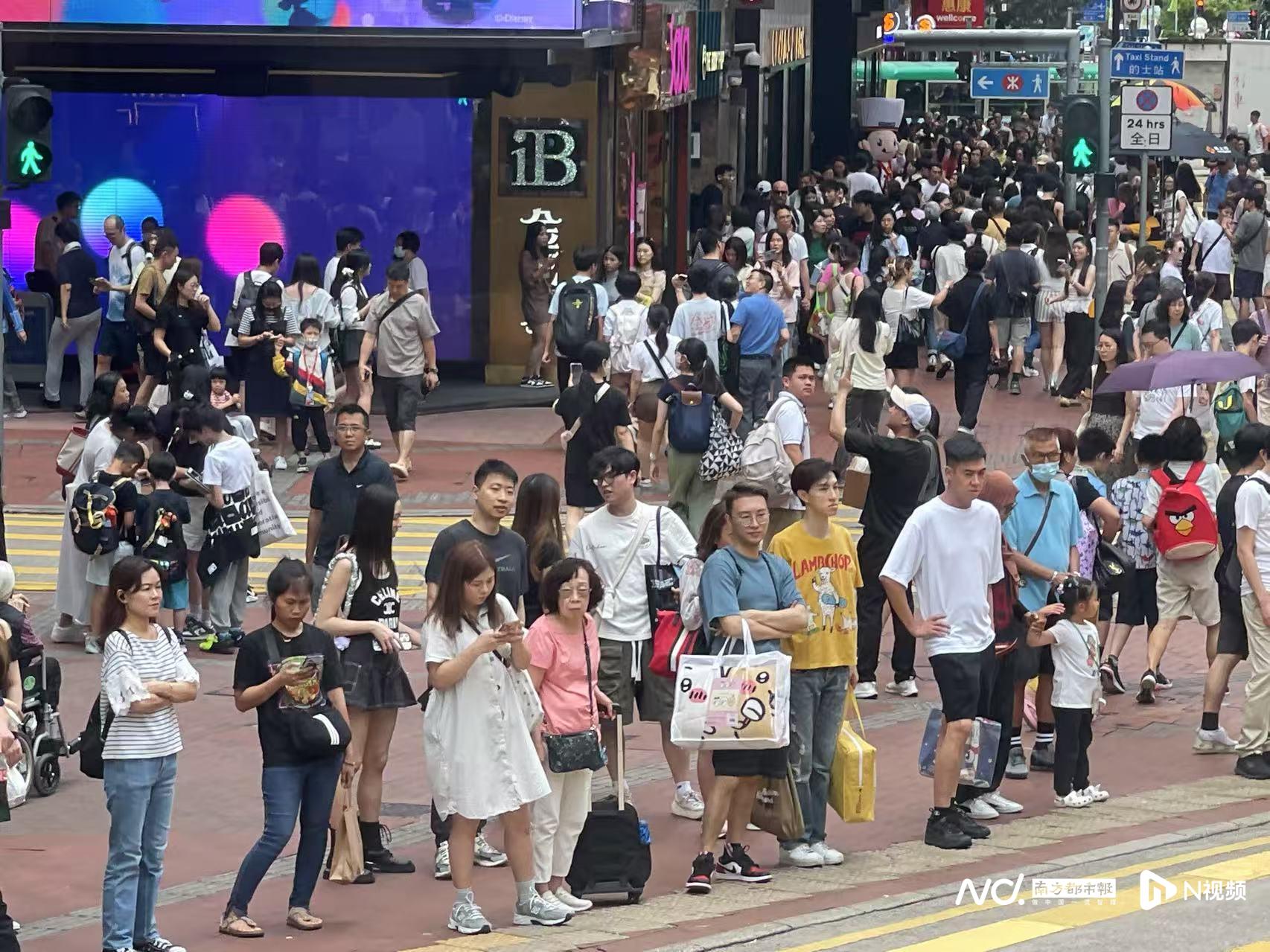
Group 1: Tourism and Retail Industry Recovery - The summer season has seen a significant increase in travel to Hong Kong, with over 1.32 million and 1.34 million people entering and exiting on August 9 and 10, respectively, marking a new high since the full reopening [1][12] - Local businesses are actively promoting various marketing initiatives to attract tourists, including recreating traditional herbal tea shops in MTR stations to enhance cultural experiences [4][5] - The introduction of themed attractions, such as the giant panda birthday celebrations, is part of a broader strategy to enhance the tourism experience and connect with local culture [5][12] Group 2: Business Environment for SMEs - The business sentiment among small and medium-sized enterprises (SMEs) in Hong Kong showed slight improvement in July, with the current business performance index rising from 41.6 in June to 42.1 in July [6][8] - The future business outlook index for August stands at 45.5, indicating a positive expectation among SMEs [6] - Various sectors, particularly real estate and commercial services, have seen an increase in their respective indices, suggesting a recovery trend in the local economy [8][12] Group 3: IPO Market Performance - Hong Kong's IPO market has outperformed other major international markets, with 53 new listings in the first seven months of the year, raising approximately HKD 127 billion, a year-on-year increase of over six times [9][11] - The presence of international companies from Southeast Asia and beyond in the IPO market reinforces Hong Kong's position as a key international listing hub [11]

9月降息概率超9成——美国7月CPI数据点评
2025-08-14 14:48
Summary of Key Points from the Conference Call Industry Overview - The discussion primarily revolves around the **U.S. economy** and its inflation dynamics, particularly focusing on the **Consumer Price Index (CPI)** and the implications of potential Federal Reserve interest rate cuts. Core Insights and Arguments - **Inflation Trends**: The July CPI data indicates that U.S. inflation pressures are relatively low, with a year-on-year increase of **2.7%**, slightly below market expectations of **2.8%**. Core CPI rose by **3.1%**, marginally above the expected **3%**. There is an anticipated upward pressure on inflation due to tariffs, with core CPI expected to rise to around **3.6%** by year-end [3][12][13]. - **Interest Rate Expectations**: The market's expectation for a Federal Reserve rate cut in September has surged to over **90%**, with projections for two rate cuts totaling **100 basis points** by 2025, bringing the policy rate down to between **3.75% and 4%** [1][7][15]. - **Employment and Economic Growth**: Recent employment data shows a slight cooling in the job market, with non-farm payrolls increasing by less than **100,000**. However, the unemployment rate remains low, indicating a relatively healthy economic environment [2][9]. - **Tariff Impact on Inflation**: New tariffs implemented in August are expected to have a significant impact on commodity inflation, with average tariff levels potentially approaching **20%**. This is particularly relevant for goods from countries like Vietnam, which face tariffs as high as **20%** [4][10]. - **Market Reactions**: Following the inflation data release, U.S. stock indices saw notable increases, with the S&P 500 reaching **17 historical highs** this year. The Nasdaq led the gains with an increase of **1.39%** [8][18]. Additional Important Insights - **Service Inflation**: Service inflation has risen significantly to **4.3%**, indicating resilience in this sector, while commodity inflation has shown a slight rebound, influenced by tariff policies [10][11]. - **Long-term vs. Short-term Inflation Expectations**: Long-term inflation expectations remain stable, with a five-year forward rate at **2.32%**. Short-term expectations have decreased from **5%** to **4.5%**, suggesting a positive signal for potential rate cuts [11]. - **Potential Risks**: While the current economic outlook is optimistic, there are concerns regarding liquidity risks associated with the Federal Reserve's balance sheet reduction in September [2][19][20]. - **Sector Performance**: All sectors in the U.S. stock market are experiencing upward trends, with consumer staples, real estate, and communication services showing the largest gains [21]. This summary encapsulates the key points discussed in the conference call, highlighting the current economic landscape, inflation dynamics, and market expectations regarding Federal Reserve policies.
王一博起诉莆田鞋,将于9月开庭
第一财经· 2025-08-14 12:49
Core Viewpoint - The article discusses the legal case involving Wang Yibo suing multiple companies for unauthorized use of his likeness, highlighting the importance of celebrity rights and the implications of unauthorized endorsements [2][8]. Summary by Sections Legal Proceedings - Wang Yibo has filed a lawsuit against several companies, including Putian Lai Le E-commerce Co., Ltd. and Putian Lai Le Investment Co., Ltd., for a portrait rights dispute, with the court hearing scheduled for September 2, 2025 [2][5]. - The case number is (2025) Min 0304 Min Chu 5168, and it will be heard at the Putian City Licheng District People's Court [5]. Company Background - Putian Lai Le Investment Co., Ltd. was established in December 2023, with a registered capital of 880,000 RMB, and is involved in investment activities and business management [6]. - Putian Lai Le E-commerce Co., Ltd. was founded in July 2021, with a registered capital of 500,000 RMB, focusing on internet sales and retail of shoes and hats [7]. Celebrity Rights and Legal Framework - The article emphasizes that unauthorized use of a celebrity's likeness for commercial purposes constitutes infringement, as outlined in the Civil Code, which protects individuals' portrait rights [8]. - It states that any organization or individual must obtain consent from the portrait rights holder before using their likeness for any purpose, including advertising and promotions [8].

成都市双流区焕靓鞋业店(个体工商户)成立 注册资本1万人民币
Sou Hu Cai Jing· 2025-08-14 09:01
天眼查App显示,近日,成都市双流区焕靓鞋业店(个体工商户)成立,法定代表人为蒲欢,注册资本 1万人民币,经营范围为一般项目:鞋帽零售;鞋帽批发;箱包销售;服装服饰零售;服装服饰批发; 日用百货销售;日用品销售;母婴用品销售;家居用品销售;厨具卫具及日用杂品零售;金属制品销 售;家用电器销售;文具用品零售;塑料制品销售;电力电子元器件销售;包装材料及制品销售;化工 产品销售(不含许可类化工产品);消毒剂销售(不含危险化学品);工艺美术品及收藏品零售(象牙 及其制品除外);卫生用品和一次性使用医疗用品销售;互联网销售(除销售需要许可的商品)。(除 依法须经批准的项目外,凭营业执照依法自主开展经营活动)。 ...
通胀加剧美元弱势后,英镑借就业数据超越后怎么看?
Sou Hu Cai Jing· 2025-08-14 07:54
本周美国唯一重磅数据——7月CPI公布后,重新定下了美元短线疲惫的基调,因为市场几乎可以确认美联储9月降息会成定局。与此同时,英镑得以在非美 货币中崭露头角,兑美元升至近三周高位,昨日在美国通胀温和的同时,英国的就业市场意外带来了惊喜。 央行警告称9月份通胀率将达到4%——这一数字将是其目标的两倍,且比11月的下一次预测提前几周。英国央行还暗示,将在下个月的年度评估中放缓所谓 的量化紧缩步伐,并警告称长期债券市场出现紧张迹象。 英国国家统计局报告显示,7月就业人数减少8353人,为今年1月以来最小降幅,降幅不仅小于经济学家预期的2万人,周二公布的数据还下修了前几个月的 失业人数,表明劳动力市场或许已开始企稳。截至6月的三个月里,英国失业率维持在4.7%的四年高点,而剔除奖金后,私营部门薪资增长率从4.9%小幅降 至4.8%。 上周英国央行决议进行了最新的降息,为一年内第五次下调关键利率,使借贷成本降至两年多以来的最低水平,但是却发出了相对鹰派的信号。由于最先的 投票未能达成共识(5票赞成降息,4票赞成维持利率不变),英国央行不得不进行史无前例的第二次投票,才最终将利率下调25个基点。 这种情况表明,利率制定者 ...
内地电商巨头入局,香港零售业洗牌
Sou Hu Cai Jing· 2025-08-14 05:10
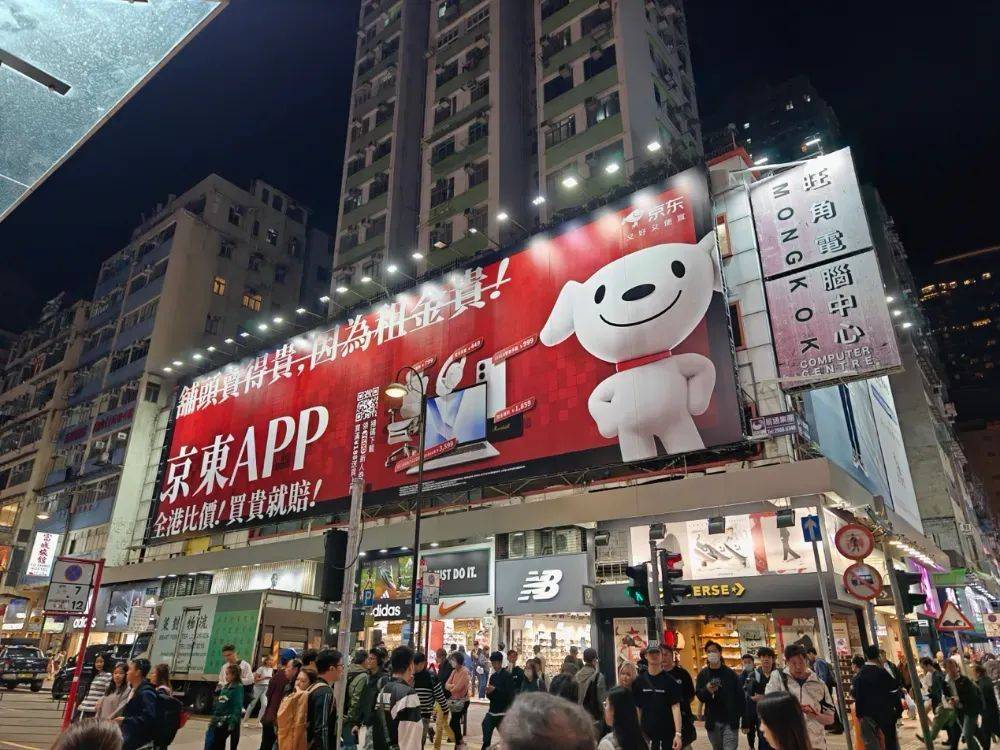
今年3月,京东在香港人流最稠密的旺角地区投入大型广告牌,提出"全港比价,买贵就赔"。摄/焦建 在逐渐打通物流链条后,中国内地电商巨头为抢占中国香港市场可能会有哪些新的竞争方向?又或将给当地零售市场带来哪些影响? 文|《财经》特派香港记者 焦建 编辑|苏琦 中国香港的零售市场,正因中国内地电商巨头的频频入港动作变得如同天气般持续火热。 8月13日,按照中国香港海关方面正式公布的相关消息显示,京东物流旗下相关机构已成功获得香港认可经济营运商计划(HKAEO Programme)的AEO认证。 此次认证被认为标志着京东在粤港澳大湾区内的物流服务能力将迎来进一步提升。继菜鸟物流网络在香港加速布局、拼多多推出"包邮香港"政 策后,京东在港积极布局从物流到零售的脉络亦日渐清晰。 AEO全称为Authorized Economic Operator,中国内地译为"经认证的经营者"。作为世界海关组织《全球贸易安全与便利标准框架》中的核心制 度,该认证旨在通过海关与海关、海关与商界以及海关与其他政府部门的合作,促进全球供应链安全与贸易便利化,实现关企互利共赢、贸易 畅通。 中国香港的相关计划推出至今,有约90家企业获得认证,其 ...

零售板块大幅调整,国光连锁触及跌停
Xin Lang Cai Jing· 2025-08-14 03:25
Group 1 - The retail sector has undergone significant adjustments, with Guoguang Chain hitting the daily limit down [1] - Other companies such as HeBai Group, Wushang Group, Guofang Group, Youhao Group, and Chongqing Department Store also experienced declines [1]

道真润生商贸有限公司成立,注册资本600万人民币
Sou Hu Cai Jing· 2025-08-13 20:04
Core Points - Daozhen Runsheng Trading Co., Ltd. has been established with a registered capital of 6 million RMB, fully owned by Daozhen Autonomous County Huicheng Trading Co., Ltd. [1] - The legal representative of the new company is Han Hongxia, and it is located in the Shangba Tujia Ethnic Township, Zunyi City, Guizhou Province [1] - The business scope includes food sales, daily necessities sales, and various retail activities, with specific licensing requirements for certain operations [1] Company Information - Company Name: Daozhen Runsheng Trading Co., Ltd. [1] - Legal Representative: Han Hongxia [1] - Registered Capital: 6 million RMB [1] - Business Type: Limited Liability Company (wholly owned by a legal entity) [1] - Business Duration: Until August 12, 2025, with no fixed term thereafter [1] - Registration Authority: Zunyi City Daozhen Miao and Gelao Autonomous County Market Supervision Administration [1] Business Scope - The company is authorized to engage in food sales, including pre-packaged food, and various retail activities such as stationery, household appliances, and clothing [1] - The business operations are subject to legal and regulatory approvals where necessary [1] - The company can autonomously conduct business activities as per its business license, except for projects requiring approval [1]
【环球财经】英国第二季度失业率保持在近四年来最高值
Xin Hua Cai Jing· 2025-08-13 13:48
Group 1 - The UK job market is experiencing a cooling trend, with the unemployment rate reaching 4.7% in the second quarter, the highest level in nearly four years [1] - The number of registered jobs in the UK has decreased both year-on-year and month-on-month, indicating a decline in employment opportunities [1] - There were 718,000 job vacancies in the UK from May to July 2025, a decrease of 16.8% year-on-year and down 9.7% compared to pre-pandemic levels [1] Group 2 - 16 out of 18 monitored industries in the UK reported a reduction in job vacancies, with significant declines noted in the hospitality and retail sectors [1] - Continuous wage growth is posing challenges for businesses and the economy, leading many employers to halt hiring or implement layoffs [1] - A recent survey indicated that 73% of respondents identified high labor costs as the biggest pressure on business expenditures [1]
两项贷款贴息政策出台 对市场有何影响?
Xin Hua Cai Jing· 2025-08-13 07:34
SHMET 网讯:金融促消费再迎政策利好。8月12日,服务业经营主体和个人消费贷款迎贴息"红 包"同步落地。 二级市场上,受利好消息影响,零售板块高开,合百集团2连板,国光连锁一度触及涨停,通程控 股、友好集团、武商集团、国芳集团、杭州解百跟涨。 同时,沪指突破3674.40点,创去年"924"行情以来新高。 两大贴息"礼包"同步落地 8月12日,财政部、民政部、人力资源社会保障部、商务部等九部门联合发布《服务业经营主体贷 款贴息政策实施方案》;同日财政部、中国人民银行、金融监管总局三部门亦同步印发《个人消费贷款 财政贴息政策实施方案》。 具体来看,服务业经营主体贷款贴息政策聚焦餐饮、养老、托育等8类消费领域;而个人消费贷款 财政贴息政策则为中央层面首次实施,直接面向消费者个人,通过降低消费信贷成本激活需求端潜力。 两项政策在贴息比例设定上保持一致:年贴息比例均为1个百分点,且贴息资金由中央财政承担90%、 省级财政承担10%,既体现政策力度,又兼顾央地协同。 财政部有关负责人表示,通过实施个人消费贷款财政贴息政策,进一步强化财政金融协同联动, 以"真金白银"支持居民消费,降低居民消费信贷成本,在激发居民消费 ...





