
医疗服务

Search documents
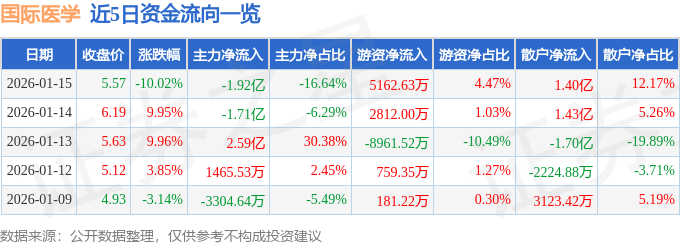
国际医学(000516)1月15日主力资金净卖出1.92亿元
Sou Hu Cai Jing· 2026-01-16 01:30
Core Viewpoint - International Medical (000516) experienced a significant decline in stock price, closing at 5.57 yuan on January 15, 2026, down 10.02% with a trading volume of 204.04 million shares and a turnover of 1.154 billion yuan [1] Group 1: Stock Performance and Trading Data - On January 15, 2026, the stock saw a net outflow of 192 million yuan from main funds, accounting for 16.64% of the total turnover, while retail investors had a net inflow of 140 million yuan, representing 12.17% of the total turnover [1] - Over the past five days, the stock's closing prices and corresponding changes in main, retail, and speculative funds were as follows: - January 15: 5.57 yuan, -10.02%, main net outflow -192 million yuan, retail net inflow 140 million yuan [1] - January 14: 6.19 yuan, +9.95%, main net outflow -171 million yuan, retail net inflow 143 million yuan [1] - January 13: 5.63 yuan, +9.96%, main net inflow 259 million yuan, retail net outflow -170 million yuan [1] - January 12: 5.12 yuan, +3.85%, main net inflow 14.65 million yuan, retail net outflow -22.25 million yuan [1] - January 9: 4.93 yuan, -3.14%, main net outflow -33.05 million yuan, retail net inflow 31.23 million yuan [1] Group 2: Financing and Margin Trading - On January 15, 2026, the financing balance was 379 million yuan, with a net financing purchase of 12.42 million yuan, while the margin trading balance remained at 379 million yuan [2] - The financing data over the past five days showed fluctuations in financing balance and net purchases: - January 15: -10.02%, financing balance 379 million yuan, net financing purchase 12.42 million yuan [2] - January 14: +9.95%, financing balance 367 million yuan, net financing outflow -1.91 million yuan [2] - January 13: +9.96%, financing balance 369 million yuan, net financing purchase 21.54 million yuan [2] - January 12: +3.85%, financing balance 347 million yuan, net financing outflow -6.89 million yuan [2] - January 9: -3.14%, financing balance 354 million yuan, net financing purchase 2.97 million yuan [2] Group 3: Company Financials and Industry Comparison - As of the latest report, International Medical has a total market value of 11.217 billion yuan, with a net asset value of 3.054 billion yuan and a net profit of -294 million yuan [4] - The company's financial ratios indicate a poor performance relative to the industry average: - Price-to-earnings ratio (P/E) is -28.65 compared to the industry average of 381.89 [4] - Gross margin stands at 6.59%, significantly lower than the industry average of 36.47% [4] - The company ranks 43rd in the industry for net profit and return on equity (ROE) [4] - For the first three quarters of 2025, the company reported a main revenue of 2.995 billion yuan, a year-on-year decrease of 16.94%, and a net profit decline of 38.45% [4]


我省已改造提升村卫生室3.1万个
Da Zhong Ri Bao· 2026-01-16 01:15
Core Insights - The provincial health system has significantly improved healthcare access for over 30 million rural residents through the renovation of 31,000 village clinics, enhancing local medical conditions [1][3] Group 1: Healthcare Infrastructure Improvement - A total of 31,000 village clinics have been renovated, improving healthcare access for over 30 million rural residents [3] - The renovation included the addition of over 400,000 new medical facilities and equipment, such as remote ECG machines in 16,000 clinics, enabling the treatment of common illnesses locally [3] Group 2: Pediatric Healthcare Services - By 2025, the pediatric inpatient visit rate in county-level hospitals is expected to reach 93.7%, with comprehensive pediatric services available in all township health centers and community health service centers [2] Group 3: Medical Data and Technology Integration - The province has implemented a mutual recognition system for medical tests, achieving over 15 million mutual recognitions, with 1,468 medical institutions connected to the provincial platform [2] - The "Luyun Imaging" system processes over 20 million medical imaging data daily, showcasing the province's leadership in healthcare technology [2] Group 4: Traditional Chinese Medicine (TCM) Services - The province has established 90 smart shared TCM pharmacies, providing online herbal medicine preparation and home delivery services, with a maximum daily preparation capacity of 259,000 doses [3] - The initiative aims to address the inconvenience of traditional herbal medicine preparation, serving over 631 million people and distributing 34.4 million doses of herbal medicine [3]
国内首批!山东首例青光眼微创植入术在山二医附院实现新突破
Qi Lu Wan Bao· 2026-01-15 23:26
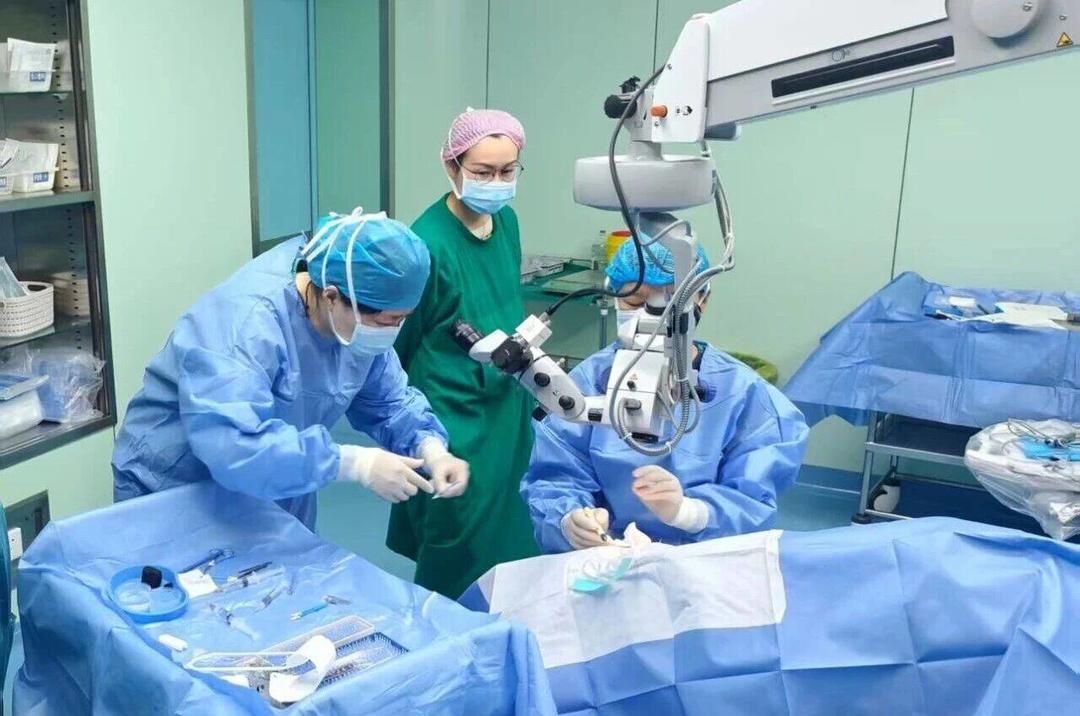
据HORIZON研究数据,这项技术联合白内障手术治疗轻中度原发性开角型青光眼,效果显著,术后24个月,患者未用药眼压平均降低7.5±4.1mmHg, 77.2%患者眼压降幅≥20%,78%患者可完全停用降压药物,安全性获长期验证。 此次首例手术的成功,体现了山东第二医科大学附属医院眼科中心在青光眼诊疗领域的技术实力。随着这项微创技术的推广,更多患者将摆脱药物依赖与 传统手术风险,以更小创伤获得持久眼压控制。 近年来,微创青光眼手术(MIGS)因其切口小、恢复快、安全性高,成为青光眼治疗新趋势。2025年,三重降压MIGS技术正式登陆中国,为患者带来更微 创、长效的选择。近日,山东第二医科大学附属医院眼科中心王俊团队成功完成山东省首例三重引流机制青光眼引流器(Hydrus Microstent)植入术,标志 着山东青光眼治疗迈入新阶段! 据悉,这名患者为36岁原发性开角型青光眼,术前长期使用三种降眼压药物,但眼压仍波动在24mmHg左右,且已出现视神经损害与眼部刺激症状。在经 过王俊团队评估后,为其施行三重引流机制青光眼引流器植入术。手术创伤小、痛苦轻,术后第一天眼压即降至17mmHg的理想水平,无并发症,恢复 ...
最新名单公示!来自云南各大医院、高校、科研机构→
Xin Lang Cai Jing· 2026-01-15 20:25
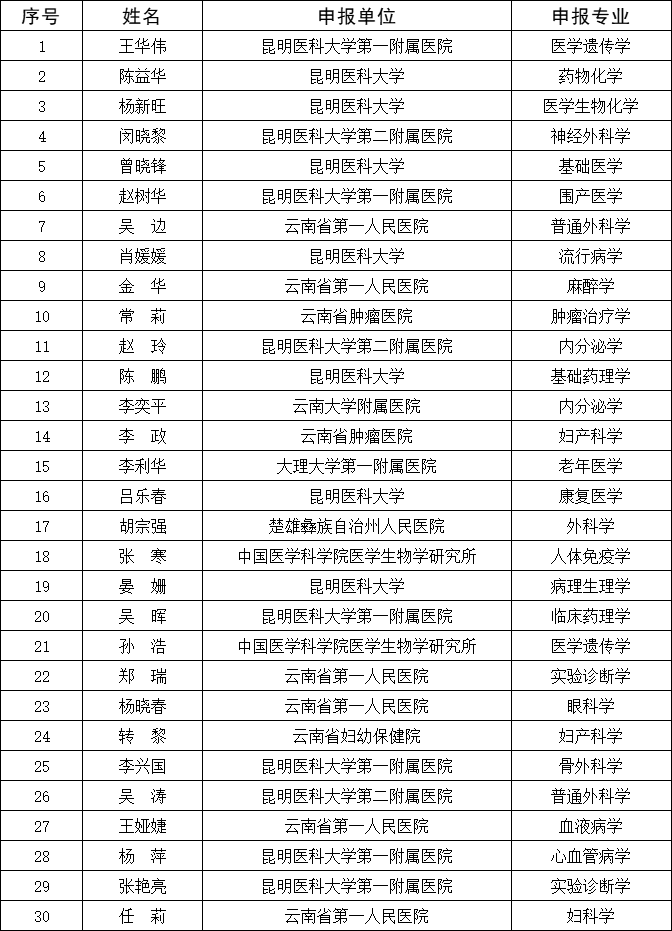
Core Points - The Yunnan Provincial Health Commission has announced the list of high-level health technology talent to be trained for 2025, including 30 "high-end medical talents," 60 "medical discipline leaders," and 90 "medical reserve talents" [1][2]. Group 1: Announcement Details - The announcement is based on the implementation plan issued by the Yunnan Provincial Health Commission and the Yunnan Provincial Finance Department [1]. - The selection process involved expert reviews and approvals from the provincial health commission's director's office and party committee meetings [1]. Group 2: Training Categories - The training categories include: - 30 individuals designated as "high-end medical talents" [1]. - 60 individuals designated as "medical discipline leaders" [1]. - 90 individuals designated as "medical reserve talents" [1]. Group 3: Public Feedback - The public can provide feedback on the announced list from January 13 to January 20, 2026 [2].
锦欣生殖(01951.HK):1月15日南向资金减持278.45万股
Sou Hu Cai Jing· 2026-01-15 19:31
Group 1 - Southbound funds reduced their holdings in Jinxin Reproductive Medicine (01951.HK) by 2.7845 million shares on January 15 [1] - Over the past 5 trading days, southbound funds have reduced their holdings on 4 days, with a total net reduction of 13.494 million shares [1] - In the last 20 trading days, there have been 13 days of reductions, totaling a net decrease of 20.509 million shares [1] Group 2 - As of now, southbound funds hold 1.444 billion shares of Jinxin Reproductive Medicine, accounting for 52.35% of the company's issued ordinary shares [1] - Jinxin Reproductive Medicine Group Limited is an investment holding company primarily providing in vitro fertilization (IVF) services [1] - The company offers assisted reproductive services, management services, ambulatory surgical center facility services, auxiliary medical services, obstetrics and pediatrics medical services, as well as sales of medical consumables and equipment, mainly in China and the United States [1]

Here's Why Charles River Laboratories (CRL) is a Great Momentum Stock to Buy
ZACKS· 2026-01-15 18:01
Core Viewpoint - Momentum investing focuses on following a stock's recent price trends, aiming to buy high and sell higher, with the expectation that established trends will continue [1] Company Overview: Charles River Laboratories (CRL) - CRL currently holds a Momentum Style Score of B and a Zacks Rank of 2 (Buy), indicating a favorable outlook for the stock [3][4] - The stock has shown significant price performance, with a 9.13% increase over the past week and a 10.41% increase over the past month, outperforming the Zacks Medical Services industry, which rose 2.52% and 1.48% respectively [6] - Over the past quarter, CRL shares increased by 15.72%, and over the last year, they gained 24.43%, compared to the S&P 500's increases of 4.57% and 19.92% [7] Trading Volume - CRL's average 20-day trading volume is 605,064 shares, which serves as a baseline for price-to-volume analysis; a rising stock with above-average volume is generally seen as bullish [8] Earnings Outlook - Recent earnings estimate revisions for CRL have been positive, with 2 estimates moving higher for the current fiscal year, raising the consensus estimate from $10.21 to $10.22 [10] - For the next fiscal year, 3 estimates have increased with no downward revisions, indicating a positive trend in earnings expectations [10] Conclusion - Given the positive momentum indicators and earnings outlook, CRL is positioned as a strong buy candidate for investors seeking short-term gains [12]


国际顶尖放射肿瘤专家马特乌什·比尔斯基教授出诊兰州重离子中心
Xin Lang Cai Jing· 2026-01-15 14:20
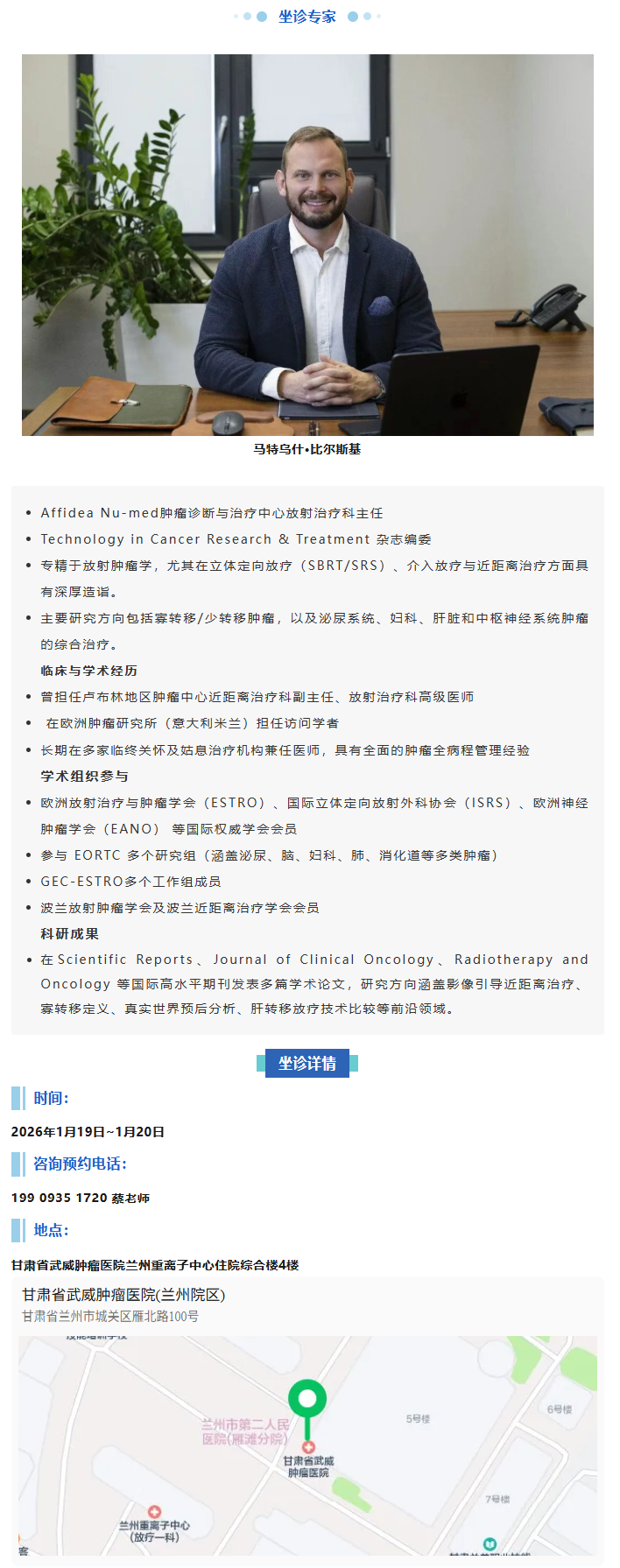
兰州重离子中心特邀波兰著名放射肿瘤学专家马特乌什·比尔斯基(Mateusz Bilski)教授来院开展临床 诊疗与学术指导,以国际前沿水准赋能区域肿瘤诊疗升级。 1月19日-20日期间,马特乌什·比尔斯基教授将开展特需门诊服务,为患者提供国际水准的个性化诊疗 方案,让患者足不出境享欧洲顶尖肿瘤放疗专家的精准诊疗。 精准诊疗,赋能健康。目前,教授特需门诊已开放预约,欢迎有需求的患者抓紧预约,把握与国际顶尖 专家面对面咨询的宝贵机会! 199 0935 1720 蔡老师 地点: 甘肃省武威肿瘤医院兰州重离子中心住院综合楼4楼 甘肃省武威肿瘤医院(兰州院区) 甘肃省兰州市城关区雁北路100号 6号楼 5号樓 7日报 责任编辑:李靓 字不组织梦与 坐诊详情 时间: 2026年1月19日~1月20日 咨询预约电话: ● 欧洲放射治疗与肿瘤学会 (ESTRO)、国际立体定向放射外科协会 (ISRS)、欧洲神经 肿瘤学会(EANO) 等国际权威学会会员 ● 参与 EORTC 多个研究组(涵盖泌尿、脑、妇科、肺、消化道等多类肿瘤) · GEC-ESTRO多个工作组成员 · 波兰放射肿瘤学会及波兰近距离治疗学会会员 科研成果 ...
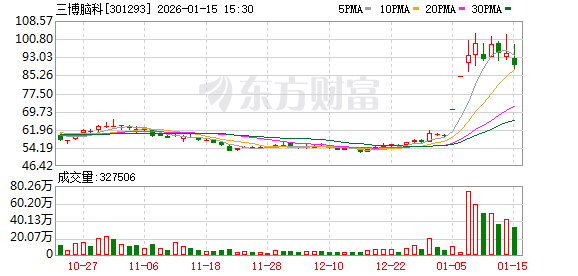
三博脑科:目前公司财务部门正在核算2025年度的财务数据
Zheng Quan Ri Bao· 2026-01-15 12:43
(文章来源:证券日报) 证券日报网讯 1月15日,三博脑科在互动平台回答投资者提问时表示,目前公司财务部门正在核算2025 年度的财务数据,如触及披露标准,公司将按规定在指定媒体公开披露,请留意公司的公告。 ...

国泰海通|医药:AI技术发展迅速,引领制药领域创新变革
国泰海通证券研究· 2026-01-15 12:07
Core Insights - The article highlights the collaboration between NVIDIA and Eli Lilly to establish the first AI+ Pharmaceutical Innovation Lab, focusing on integrating AI into drug development, marking a significant shift in the pharmaceutical industry towards data and algorithm-driven processes [1] - Tempus AI reported a revenue of approximately $1.27 billion for 2025, reflecting an 83% year-over-year growth, validating the commercial viability of AI in clinical diagnostics and medical data [2] - The current phase is characterized by a resonance of technological breakthroughs, active funding, and accelerated application in the AI+ healthcare sector, indicating a promising market outlook [2] Group 1: AI+ Pharmaceutical Developments - NVIDIA and Eli Lilly plan to invest up to $1 billion over the next five years in talent, infrastructure, and computational resources for the AI+ Pharmaceutical Lab, indicating a commitment to integrating AI into core R&D processes [1] - The partnership signifies a transition from traditional experience-driven drug development to a more efficient, data-driven approach [1] Group 2: AI+ Healthcare Performance - Tempus AI's diagnostic revenue reached approximately $955 million, with a year-over-year growth of about 111%, driven by a 26% increase in tumor testing and a 29% increase in genetic testing [2] - The data and application segment generated around $316 million, growing approximately 31%, with the Insights business experiencing a growth of about 38% [2] Group 3: Industry Trends - The industry is currently experiencing a phase of active technological innovation, significant policy support, and a broad market outlook, driven by recent breakthroughs in AI technology across the drug discovery and clinical trial processes [2]

中国口腔产业(08406.HK)拟成立合资推动大湾区医院的临床治疗业务
Ge Long Hui· 2026-01-15 11:29
Core Viewpoint - The announcement indicates a strategic collaboration between China Dental Industry and Bio-Hui Biotechnology to enhance their business operations in the healthcare sector, particularly in the Greater Bay Area [1] Group 1: Strategic Collaboration - China Digital Health, a wholly-owned subsidiary of China Dental Industry, has signed a memorandum of understanding with Bio-Hui Biotechnology to establish a joint venture [1] - The joint venture aims to form qualified medical and biotechnology teams to promote clinical treatment services in hospitals within the Greater Bay Area [1] Group 2: Business Diversification - The board of directors believes that this memorandum marks a new phase for the group in entering the medical biotechnology field and provides opportunities for diversified business development [1] - Through this strategic partnership, the group aims to leverage its connections in the Greater Bay Area to broaden its revenue base and enhance overall competitiveness [1]