Autos

Search documents
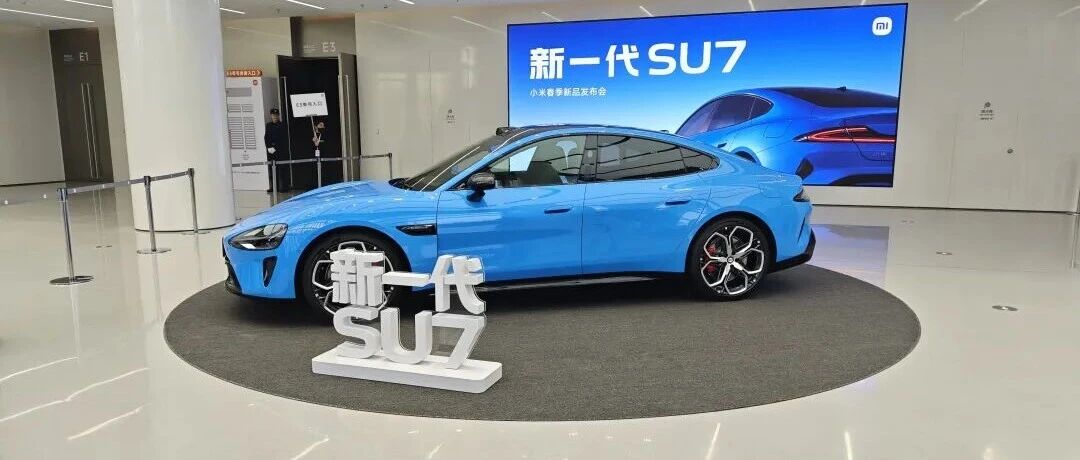
34分钟锁单1.5万台!涨价4千,新一代小米SU7依旧卖爆?
电动车公社· 2026-03-19 18:29
Core Viewpoint - The new generation Xiaomi SU7 has been officially launched after a two-month pre-sale period, with significant upgrades in performance, safety, and user experience, despite a price increase of 4,000 yuan compared to the previous generation [1][5][47]. Pricing and Sales - The new SU7 is priced at 219,900 yuan for the standard version, 249,900 yuan for the Pro version, and 303,900 yuan for the MAX version [2]. - Compared to the pre-sale prices, the standard and Pro versions are 10,000 yuan cheaper, while the MAX version is 6,000 yuan cheaper [4]. - The overall price is 4,000 yuan higher than the previous generation SU7 [5]. - Within 34 minutes of the official sale, over 15,000 units were locked in, indicating strong market demand [6]. Performance and Driving Experience - The new SU7 maintains its positioning as a "driver's car," focusing on power and handling upgrades [10]. - The entire lineup features the updated V6s Plus motor, reducing overall energy loss by 1.5% and improving efficiency [11]. - The standard and Pro versions have a total power output of 235 kW (an increase of 10 kW), while the MAX version reaches 508 kW (an increase of 13 kW), with a 0-100 km/h acceleration time of 3.04 seconds [12]. - The chassis has been upgraded to the "Xiaomi Dragon" platform, enhancing steering sensitivity and precision [12]. Safety Features - The braking system has been upgraded to a four-piston fixed caliper across the lineup, with the MAX version using low-metal brake pads, achieving a stopping distance of 33.3 meters from 100 km/h [16]. - The new SU7 has optimized brake performance to maintain consistent braking over 40+ consecutive stops without significant degradation [17]. - A slip control system has been added for wet and slippery conditions, improving traction and providing driver alerts [19]. - The MAX version's battery underwent puncture testing under high-temperature conditions, demonstrating safety features that prevent fire or explosion [20]. User Experience Enhancements - The seating has been significantly upgraded, with the driver's seat featuring 18-way adjustments and built-in massage functions [27]. - The audio system has been enhanced to 14 speakers in the standard and Pro versions, with improved bass and speaker layout [29]. - The vehicle includes soundproofing features such as four-door soundproof laminated glass, with the MAX version offering an optional "super quiet cabin" [30]. - New features include a dual-zone adjustable light roof, custom fragrances, and enhanced voice interaction capabilities [33][35]. Advanced Driving Assistance - The new SU7 is equipped with a 700 TOPS Nvidia Thor chip and additional 4D millimeter-wave radar, along with a self-cleaning surround camera for stable operation of the driving assistance system [40]. - The latest self-developed "Xiaomi XLA cognitive model" supports various driving assistance features, including voice commands for lane changes and distance adjustments [42][44]. Production and Delivery - The company has implemented a new order locking system, allowing a 5,000 yuan deposit with a 3-day cancellation option, and modifications within the locked configuration [52][55]. - To address previous delivery delays, the company has committed to improving production capacity and reducing delivery times, aiming for a maximum wait of six months [59][62].


BYD to invest in R&D center in Brazil as part of Latin America expansion plan (BYDDF:OTCMKTS)
Seeking Alpha· 2026-03-19 18:09
Core Insights - BYD Company plans to invest approximately $57 million in a new automotive research and testing center in Rio de Janeiro, enhancing its presence in the Brazilian electric vehicle market [2] Investment Details - The investment amount is $57 million, aimed at establishing a research and testing facility [2] - The construction of the center is expected to commence toward the end of the year [2]

Tesla Fades: Three Big Stories Are Moving the Stock Today and They're Pulling in Different Directions
247Wallst· 2026-03-19 18:06
Core Viewpoint - Tesla's stock is facing downward pressure due to regulatory scrutiny, capital-intensive semiconductor production, and the strategic sharing of its Supercharger network with competitors, leading to mixed investor sentiment [2][3][5]. Regulatory Scrutiny - The National Highway Traffic Safety Administration (NHTSA) has intensified its investigation into Tesla's Full Self-Driving (FSD) system, covering approximately 3.2 million vehicles after nine crashes, including one fatality [6][7]. - The investigation is now at the engineering analysis stage, focusing on FSD's ability to detect degraded road conditions and provide timely warnings to drivers [6]. - The heightened scrutiny adds friction and delays to Tesla's long-term plans for autonomous driving and robotaxi services, which are critical to its growth narrative [7][8]. Semiconductor Production - Tesla has launched its Terafab semiconductor unit, aiming to produce hundreds of billions of custom chips annually, which is a significant move towards vertical integration for AI and autonomous systems [9][10]. - This initiative could reduce dependency on third-party suppliers and potentially enhance profit margins, but chip fabrication is highly capital-intensive [11]. - The market may discount this long-term strategy due to immediate pressures on delivery numbers [11]. Supercharger Network Strategy - Tesla is expanding access to its Supercharger network for Stellantis vehicles, which could generate additional revenue from charging fees, contributing to a reported $3.37 billion in services and other revenue in Q4 2025, up 18% year-over-year [13][14]. - However, sharing the Supercharger network with competitors diminishes Tesla's competitive advantage, transforming it from a unique selling point to an industry utility [14]. - The strategic implications of this move could affect Tesla's market positioning as more automakers gain access to its once-exclusive charging infrastructure [12][14].

X @Bloomberg
Bloomberg· 2026-03-19 17:41
BMW’s new electric sedan is part of a range of new models from European automakers meant to bolster sales. https://t.co/G2i4l5t1F6 ...

Gordon Johnson Warns Tesla's Potential Recall Could Derail 'Robotaxi Story'
Benzinga· 2026-03-19 17:37
Core Viewpoint - Tesla Inc. is facing significant regulatory challenges as the NHTSA escalates its investigation into the Full Self-Driving (FSD) system, impacting approximately 2.4 million vehicles [1]. Regulatory Developments - The NHTSA has moved its investigation from a Preliminary Evaluation (PE) to an Engineering Analysis (EA), indicating a more in-depth examination of the FSD system [1][2]. - The EA signifies confirmed patterns and active vehicle testing, with the potential for a mandatory recall looming [2]. Analyst Insights - Analyst Gordon Johnson warns that the situation is critical for Tesla's valuation, stating that a forced recall could jeopardize the company's robotaxi narrative, which is not currently reflected in its market pricing [3]. - Johnson emphasizes that building a $1.2 trillion robotaxi company on software that may soon be deemed unsafe is unsustainable [3]. Safety Concerns - The NHTSA is particularly focused on FSD collisions that occur under reduced roadway visibility, assessing whether Tesla's degradation detection system adequately alerts drivers during adverse conditions [3]. - Current data suggests that Tesla's vision-based system may fail to warn drivers effectively, with reports of FSD losing track of lead vehicles [4]. Hardware and Software Issues - CEO Elon Musk has promoted the upcoming AI5 chip, claiming it will significantly enhance performance, but there are criticisms regarding the need for hardware upgrades to achieve true unsupervised driving [5]. Legal Challenges - The regulatory scrutiny follows a $1 million lawsuit in Texas related to a Cybertruck incident, where the Autopilot system allegedly failed to navigate a curve [6]. - The NHTSA investigation raises broader concerns about Tesla's camera-only "Tesla Vision" approach, highlighting systemic issues within the company's safety protocols [6].
General Motors Company (GM) Presents at Bank of America Global Automotive Summit - Slideshow (NYSE:GM) 2026-03-19
Seeking Alpha· 2026-03-19 17:32
Seeking Alpha's transcripts team is responsible for the development of all of our transcript-related projects. We currently publish thousands of quarterly earnings calls per quarter on our site and are continuing to grow and expand our coverage. The purpose of this profile is to allow us to share with our readers new transcript-related developments. Thanks, SA Transcripts Team ...


Tesla targets December 2026 for next-generation AI6 chip tape-out
Proactiveinvestors NA· 2026-03-19 16:42
Company Overview - Proactive is a financial news publisher that provides fast, accessible, informative, and actionable business and finance news content to a global investment audience [2] - The company operates with a team of experienced and qualified news journalists, ensuring independent content production [2] Market Focus - Proactive specializes in medium and small-cap markets while also covering blue-chip companies, commodities, and broader investment stories [3] - The news team delivers insights across various sectors, including biotech and pharma, mining and natural resources, battery metals, oil and gas, crypto, and emerging digital and EV technologies [3] Technology Adoption - Proactive is recognized for its forward-looking approach and enthusiastic adoption of technology to enhance workflows [4] - The company utilizes automation and software tools, including generative AI, while ensuring that all content is edited and authored by humans [5]

新款小米Su7不降价,是昏头了吗?
半佛仙人· 2026-03-19 16:27
Core Viewpoint - Xiaomi's pricing strategy for the new SU7 model is notably rational, opting not to lower prices despite market competition, instead focusing on enhancing product features to maintain value for consumers [2][3]. Pricing Strategy - Xiaomi has increased the price of the new SU7 compared to its predecessor, which is a strategic move in a highly competitive market [2]. - The company believes that lowering prices indiscriminately is not a wise approach, especially when the market is saturated with competition [2]. Product Enhancement - Instead of reducing prices, Xiaomi aims to enhance the product's value by increasing configurations, such as improved computing power, horsepower, battery life, and luxurious interiors, while keeping the price relatively stable [2][4]. - The strategy includes offering long-term low-interest or interest-free installment plans and trade-in promotions to attract consumers without altering the base price [2]. Customer Perception - Maintaining price stability is crucial as it serves as an anchor for consumer expectations, especially for existing customers who may feel undervalued if prices drop [3][4]. - A price drop could lead to negative consumer sentiment, where existing customers feel deceived, potentially damaging brand loyalty and reputation [3][4]. Brand Image - Xiaomi's approach is designed to avoid alienating existing customers while still appealing to new ones, ensuring that the brand image remains intact [4]. - The company recognizes that a stable price combined with significant product upgrades can satisfy both existing and potential customers, reinforcing brand trust [4].
Rivian Stock Rises as EV Maker Gets Into Robotaxi Race With Uber Partnership
Investopedia· 2026-03-19 16:20
Rivian is getting into the robotaxi race. ...


The Great Magnificent 7 Breakup: Nvidia Stands Tall While Tesla, Microsoft Stumble And Fall
Benzinga· 2026-03-19 16:10
Core Viewpoint - The Magnificent Seven stocks are experiencing a divergence in performance, with investors increasingly distinguishing between the winners and laggards within the group [1][5][7] Group Performance - Tesla is facing challenges due to weak vehicle deliveries and declining demand in the EV market, raising growth concerns [2] - Apple, Amazon, and Meta have also seen declines, attributed to mixed factors such as growth questions for Apple and spending scrutiny for Amazon and Meta in the AI sector [3] - Nvidia has maintained a stronger position, being viewed as central to AI infrastructure development, while Alphabet shows stability due to its balance of AI opportunities and advertising strength [4] Investment Narrative Shift - The narrative surrounding the Magnificent Seven is evolving, with companies now being evaluated on individual merits, risks, and their ability to convert market hype into actual earnings [5][7] - Investors are becoming more discerning, focusing on immediate pricing power, potential disruptions from technology investments, and the sustainability of spending [5][6] Year-to-Date Returns - Year-to-date performance of the Magnificent Seven stocks shows significant declines: - Apple: -8.1% - Amazon: -9.6% - Alphabet: -2.3% - Meta: -7.8% - Microsoft: -19.2% - Nvidia: -4% - Tesla: -14.6% [8]