个人电脑制造

Search documents
戴尔营收预期高于预期 股价跳涨
Xin Lang Cai Jing· 2026-02-26 23:43
Core Viewpoint - Dell Technologies' stock price rose 11% to $134.25 after the company projected higher-than-expected revenue for fiscal year 2027, driven by increased demand for AI-optimized servers [1] Financial Performance - The company expects total revenue for the fiscal year to be between $138 billion and $142 billion, surpassing the LSEG estimate of $125.54 billion [1] - Projected adjusted earnings per share for the year are $12.90, exceeding the expected $11.59 [1] Shareholder Returns - Dell announced a $10 billion stock buyback plan and increased its cash dividend by 20% [1] Stock Performance - The company's stock price increased by 9.2% in 2025 [1]
财报超预期股价却暴跌!惠普盘后重挫7%,关税与内存涨价成“利润杀手”
Zhi Tong Cai Jing· 2026-02-24 23:48
Core Viewpoint - HP Inc. reported its Q1 FY2026 earnings, indicating a cautious outlook for the upcoming quarters due to rising memory costs and U.S. tariff policies, projecting full-year earnings at the lower end of previous guidance [1] Financial Performance - For Q1 FY2026, HP's revenue increased by 6.9% year-over-year to $14.4 billion, with adjusted earnings per share (EPS) of $0.81, both exceeding market expectations [1] - The company anticipates Q2 adjusted EPS to be between $0.70 and $0.76, slightly below the analyst average estimate of $0.75 [1] Challenges and Cost Pressures - HP faces multiple challenges, including the impact of U.S. tariffs and rising memory chip prices, which have doubled compared to the previous quarter [2] - Memory and storage costs are projected to rise from 15%-18% of the PC material cost list to 35% in the current fiscal year [2] - The adjusted operating margin for Q1 was 6.9%, below the analyst average expectation of 7.4% [2] Strategic Initiatives - HP has initiated a multi-year cost reduction plan aimed at saving $1 billion annually by 2028, which includes restructuring-related expenses [3] Business Segment Performance - The personal systems segment, which includes consumer and commercial PCs, saw revenue growth of 11% to $10.25 billion, driven by a 16% increase in consumer PC sales attributed to the growth of AI PCs [4] - The printing segment experienced a revenue decline of 2% to $4.19 billion [4] Management Changes and Market Outlook - Following the appointment of HP's CEO Enrique Lores to PayPal, Bruce Broussard has been named interim leader while the company searches for a successor [5] - Market research indicates a projected low double-digit decline in shipments of smartphones and PCs in 2026, with demand for consumer electronics potentially impacted by the rapid construction of AI infrastructure consuming global memory chip supplies [5]

个人电脑制造商股价上涨,戴尔股价上涨1.9%
Mei Ri Jing Ji Xin Wen· 2026-02-20 15:52
Group 1 - The U.S. Supreme Court ruled that Trump's global tariff measures were illegal, leading to a positive market reaction for personal computer manufacturers [2] - Dell's stock price increased by 1.9% following the Supreme Court's decision [2] - HP Inc.'s stock price rose by 1.4% in response to the same ruling [2]


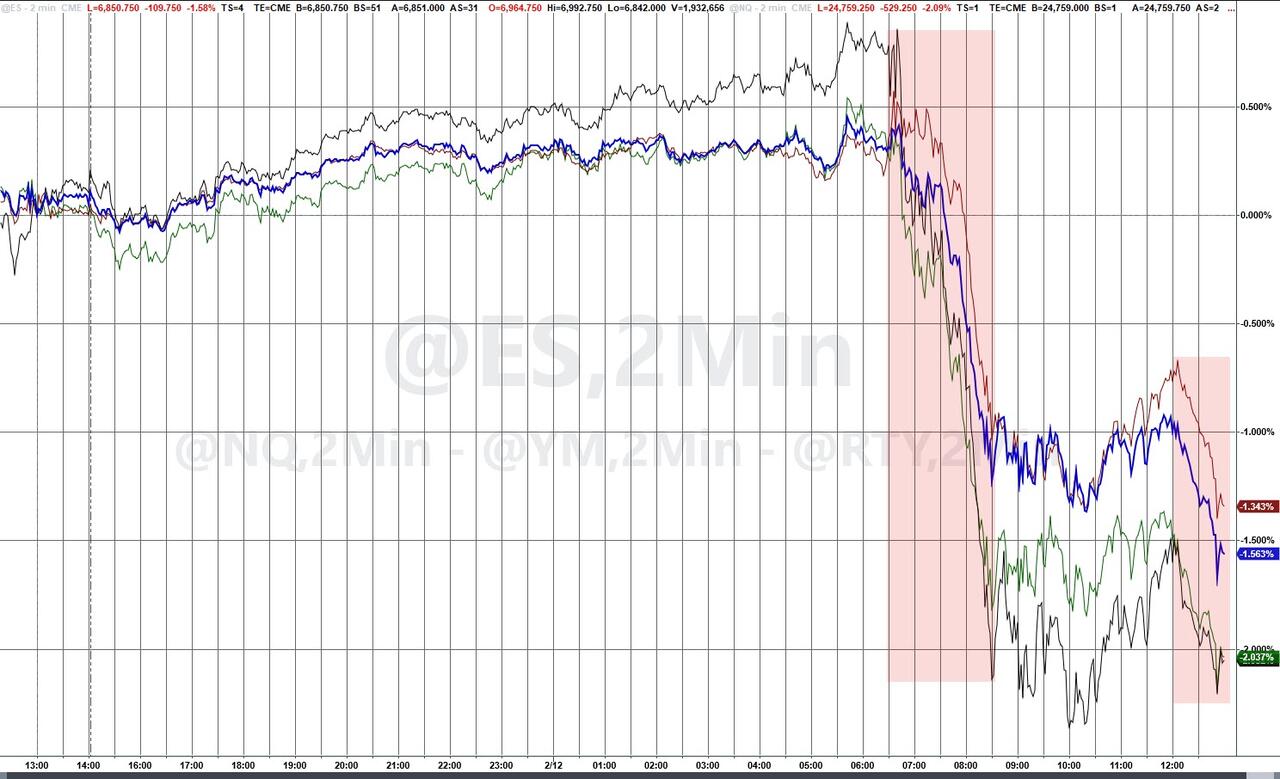
AI恐慌扩散,科技股再度拖垮美股,地产股连日重挫,苹果一日蒸发2000亿
Hua Er Jie Jian Wen· 2026-02-12 23:25
Group 1 - The core viewpoint of the articles highlights a significant market downturn driven by fears surrounding the disruptive impact of artificial intelligence (AI) on traditional industries, leading to panic selling among investors [1][4][12] - Major U.S. stock indices fell over 1%, with the Nasdaq dropping approximately 2%, marking a three-day decline, while the Dow Jones Industrial Average closed below the 50,000 mark for the first time in a week [1][2] - The technology sector was identified as the primary culprit for the market decline, with Cisco's stock plummeting 12% due to disappointing gross margin guidance, and the "big seven" tech companies all experiencing losses [2][8] Group 2 - Concerns about the return on AI investments have intensified, with major tech firms like Amazon, Google, Meta, and Microsoft expected to spend around $650 billion on AI this year, raising doubts about whether such capital expenditures will yield tangible returns [4][6] - The narrative in the market has shifted from identifying beneficiaries of AI to recognizing potential victims, with sectors such as software, insurance brokerage, asset management, and commercial real estate facing significant pressure [6][11] - The commercial real estate sector has been particularly hard hit, with companies like CBRE and Jones Lang LaSalle seeing stock declines exceeding 25% over two days, as fears grow that AI could automate key functions and reduce demand for human brokers [5][12] Group 3 - The market sentiment has transitioned from "AI euphoria" to "AI phobia," with investors reassessing whether AI capital expenditures are overheated and if the commercialization of AI is lagging behind expectations [6][10] - Analysts have noted that the recent sell-off appears disproportionate to the actual risks, suggesting that the market may be overreacting to AI-related concerns [12] - Despite the overall downturn, some segments within the semiconductor industry, such as storage chip stocks, have managed to maintain gains, indicating a divergence within the tech sector [8][10]

戴尔创始人向“特朗普账户”豪捐62.5亿美元
财联社· 2025-12-03 01:35
Core Viewpoint - Michael Dell and his wife Susan announced a donation of $6.25 billion to help open investment accounts for a majority of American children, building on the "Invest in America" plan from Trump's "Big and Beautiful" legislation [1][2] Group 1: Donation Details - The donation will be managed by the U.S. Treasury to establish accounts for 25 million children aged 10 and under who do not qualify for government funding, with each account receiving an initial deposit of $250 (approximately 1,767 RMB) [1] - The initiative aims to cover areas with median household incomes below $150,000, potentially benefiting 80% of children in the same age group [2] Group 2: Program Structure - The program allows parents to open accounts for their children, with a maximum annual contribution of $5,000, and employers can contribute an additional $2,500 without it counting as taxable income [4] - Funds will be invested in index funds tracking the U.S. stock market, with restrictions on withdrawals until the child turns 18, at which point funds can be used for education, home purchases, or startup costs [5] Group 3: Impact and Reactions - Michael Dell emphasized that having such accounts increases the likelihood of high school and college graduation, home ownership, entrepreneurship, and reduces the chances of incarceration [2] - The announcement led to a 3.5% increase in Dell Technologies' stock price, which has risen over 20% year-to-date [2]