低空消费

Search documents
国务院总理李强主持召开国务院常务会议:制定和实施好城乡居民增收计划
Mei Ri Jing Ji Xin Wen· 2026-01-18 12:58
Group 1: Core Insights - The State Council emphasizes the need to implement consumption-boosting actions to enhance residents' consumption power and drive economic growth [1][2] - The meeting highlights the importance of developing new growth points in service consumption, focusing on quality service supply and addressing issues related to credit, standards, and safety management [2][3] - The government plans to establish a long-term mechanism for promoting consumption, including the formulation of the "14th Five-Year" plan for expanding consumption and increasing urban and rural residents' income [3] Group 2: Specific Measures - The government aims to accelerate the development of digital consumption and quality e-commerce, promoting new technologies such as artificial intelligence and autonomous driving to create high-growth consumption sectors [3] - There is a strong focus on cleaning up overdue enterprise payments and ensuring the payment of migrant workers' wages, which are crucial for protecting corporate rights and public interests [4] - The meeting also discusses the need to revise and abolish certain administrative regulations to enhance the quality and effectiveness of government legislation [4] Group 3: Economic Context - The transition towards carbon emission control is highlighted as a significant future challenge, with the carbon market expansion expected to drive energy-saving and carbon-reduction transformations in key industries [5]
重大利好来了!国务院同意→
Jin Rong Shi Bao· 2025-11-26 11:20
Core Viewpoint - The implementation plan aims to enhance the adaptability of consumer goods supply and demand, leading to consumption upgrades that drive industrial upgrades, thereby achieving a dynamic balance between supply and demand at a higher level [1][4]. Policy Framework - The plan is jointly issued by multiple government bodies, including the Ministry of Industry and Information Technology, the National Development and Reform Commission, and others, marking it as a significant policy document following the Fourth Plenary Session of the 20th Party Congress [1][2]. Goals and Targets - By 2027, the supply structure of consumer goods is expected to be significantly optimized, forming three trillion-level consumption sectors and ten hundred-billion-level consumption hotspots [4]. - By 2030, a high-quality development pattern characterized by positive interaction between supply and consumption is anticipated, with a steady increase in the contribution of consumption to economic growth [4]. Industry Focus Areas - The plan emphasizes the development of new fields and tracks, focusing on key industries such as smart connected vehicles, smart home products, consumer electronics, modern textiles, food, and green building materials [5]. - It encourages the integration of artificial intelligence across the entire consumer goods industry, promoting the development of AI-enabled products like household service robots and smart appliances [5]. Sports and Health Products - The plan aims to enhance the supply of leisure and sports products, targeting new demands from the sports economy, outdoor economy, and ice and snow economy [6]. - It supports the innovation and development of health products, including special dietary foods and high-end medical devices, while promoting the consumption of organic and geographical indication agricultural products [6]. Diverse Consumer Interests - The plan seeks to expand the supply of interest-based consumer products, including pet-related items, anime, and trendy products, while also promoting low-altitude tourism and private flying [7]. - It encourages the development of local intellectual property and innovative design in cultural products, as well as the transformation of traditional retail spaces to include trendy stores [7]. Customization and Experience - The plan emphasizes the need for precise matching of consumer needs, particularly in the baby and children's product sector, and encourages the development of high-end fashion brands and personalized services [8]. - It promotes the creation of immersive consumer experiences through the use of digital technologies, including virtual reality and the metaverse [10]. Financial Support and Services - The plan highlights the importance of financial support for the consumer goods industry, including policies for equipment upgrades and trade-in programs, as well as enhancing the adaptability and convenience of consumer financial services [11].

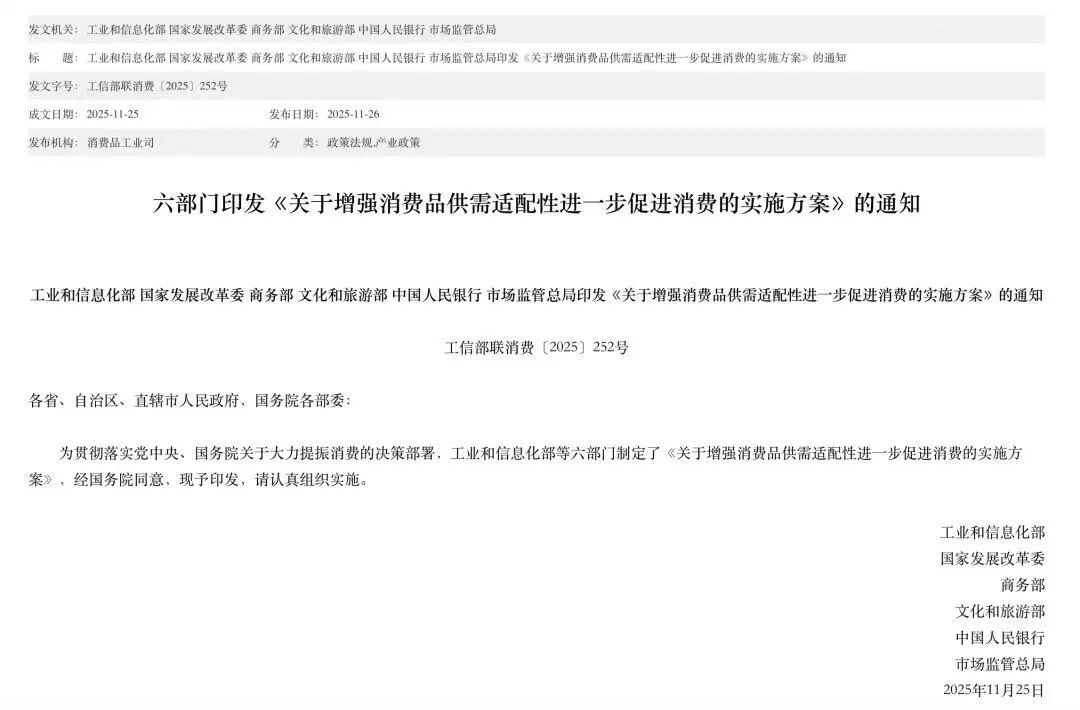
六部门:有序扩大低空旅游、航空运动、私人飞行、消费级无人机等低空消费供给
Zheng Quan Shi Bao Wang· 2025-11-26 06:41
Core Insights - The Ministry of Industry and Information Technology, along with five other departments, has issued a plan to enhance the adaptability of supply and demand in consumer goods, aiming to further promote consumption [1] Group 1: Expansion of Diverse Consumer Offerings - The plan emphasizes the development of interest-based consumer products, including pet-related items, anime merchandise, and trendy clothing and toys [1] - There is a focus on expanding low-altitude tourism, aviation sports, private flying, and consumer-grade drones, while ensuring safety and risk control [1] Group 2: Automotive and IP Development - The initiative aims to expand the automotive aftermarket by promoting car modifications, RV camping, and automotive events, as well as supporting the high-quality development of car rentals [1] - It encourages companies to incubate local intellectual property (IP), innovate in cultural and creative product design, and develop brand licensing, including a series of IP-licensed products [1] Group 3: Retail Environment Enhancement - The plan advocates for the redesign and transformation of traditional supermarkets, shopping centers, and commercial streets to incorporate "valley stores" or collective trendy toy shops [1]
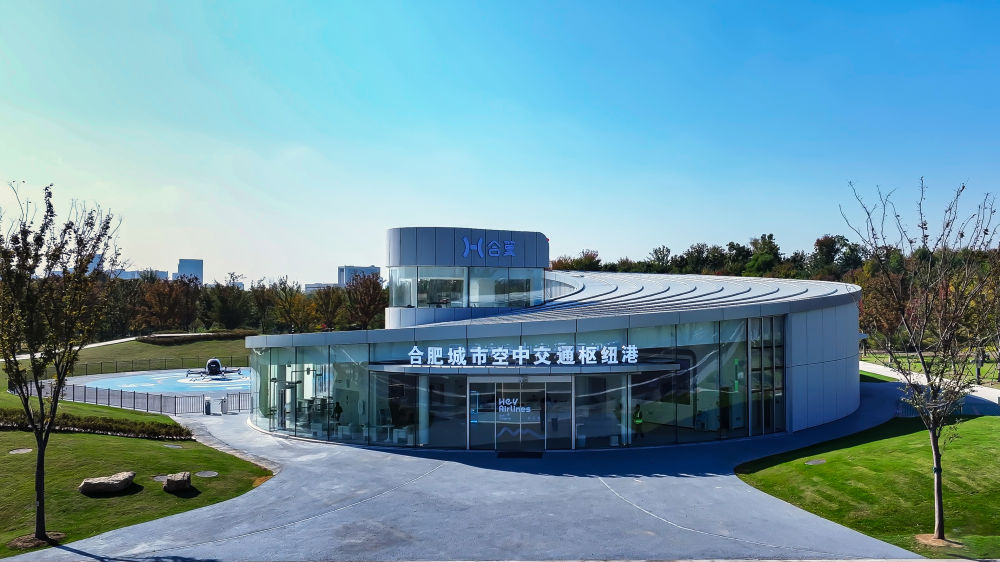
“穿越”场景看消费|“穿越”城市公园看低空消费新场景
Xin Hua She· 2025-06-27 13:15
Core Points - Hefei is transforming into a "super experimental field" for low-altitude economy, with the development of the urban air traffic hub at Luogang Park, covering an area of 12.7 square kilometers [1][8] - The hub features electric vertical takeoff and landing aircraft, which are expected to operate commercially, allowing people to purchase tickets for aerial sightseeing similar to public transportation [3][6] - The city has actively expanded low-altitude economic activities, launching over 100 flight routes for various applications including tourism, medical supply delivery, and food delivery [8][9] Group 1 - The urban air traffic hub in Hefei is designed with a futuristic and technological aesthetic, spiraling upwards [1][3] - Demonstration flights of electric vertical takeoff and landing aircraft are being conducted regularly at Luogang Park [5][6] - The introduction of drone delivery services allows residents to receive food within half an hour, enhancing the novelty of the delivery experience [7] Group 2 - Hefei's low-altitude economy initiatives include a variety of services such as cultural tourism, medical supply delivery, and inspections for railways and power lines [8] - The city is positioning itself as a leader in low-altitude economic development, capitalizing on innovative consumption scenarios [9]