
城乡居民增收

Search documents
这一波民生好消息,请查收
证券时报· 2026-03-06 07:57
Key Points - The article discusses various initiatives outlined in the government work report aimed at improving the economic and social conditions for residents, particularly focusing on income growth and employment opportunities [3][8][12]. Group 1: Income Growth and Employment - The government plans to implement a rural and urban resident income growth plan, targeting low-income groups and enhancing property income through practical measures [3]. - There will be a focus on promoting high-quality and sufficient employment, with increased policy support for job creation and a shift towards an employment-friendly development model [8]. - The introduction of policies to support flexible employment and new employment forms, allowing these workers to participate in employee insurance [10] [11]. Group 2: Education and Talent Development - The government aims to improve the alignment between talent cultivation and socio-economic development needs, initiating reforms in higher education and enhancing the quality of education [6][14]. - There will be a push for equitable access to quality education, including expanding high-quality preschool education and increasing the availability of ordinary high school placements [14]. Group 3: Social Security and Healthcare - The article highlights an increase in the per capita financial subsidy for resident medical insurance by 24 yuan and a rise in the minimum monthly standard for urban and rural residents' basic pensions by 20 yuan [17]. - Efforts will be made to strengthen social security systems, including expanding unemployment and work injury insurance coverage and improving the transfer and continuity of social security relationships [18]. Group 4: Housing and Living Conditions - The government is set to enhance housing security for newly married and childbearing families, supporting multi-child families in improving their housing conditions [21]. - There will be initiatives to promote the construction of safe, comfortable, and green housing, along with quality improvement projects for housing and property services [24].

政府工作报告:制定实施城乡居民增收计划
21世纪经济报道· 2026-03-05 01:58
Core Viewpoint - The government work report outlines the tasks for 2026, emphasizing the development and implementation of a plan to increase income for urban and rural residents, focusing on practical measures to boost income for low-income groups, enhance property income for residents, and improve salary and social security systems [1] Group 1 - The report highlights the importance of increasing income for low-income groups as a key objective [1] - It mentions the need to enhance residents' property income as part of the income growth strategy [1] - The report calls for improvements in salary and social security systems to support income growth [1]

你的建议,他们“在线接单”
Xin Lang Cai Jing· 2026-02-26 22:49
Group 1 - The upcoming National Two Sessions in 2026 will provide a platform for citizens to share suggestions and ideas regarding current economic and social development issues [1] - Citizens can submit their opinions through various online platforms, which will be reviewed by representatives and committee members, potentially leading to actionable proposals [1] - The online work station will integrate with the "Wenzheng Sichuan" platform, ensuring that submitted suggestions are processed within 5 to 15 working days [1] Group 2 - The "Wenzheng Sichuan" platform has identified the top ten hot topics of public concern this year, which include high-quality employment, social security optimization, and public service improvement [2] - These topics align with the development priorities of the 14th Five-Year Plan and reflect the public's aspirations for a better life [2] - The summarized topics will serve as important references for representatives and committee members in their legislative activities [2]
经济新方位·对话·奋进2026丨如何推动能消费敢消费愿消费
Ren Min Ri Bao· 2026-01-28 08:30
Core Viewpoint - Consumption is a crucial engine for China's economic growth, with insufficient total demand being a prominent issue in the current economic operation. The Central Economic Work Conference has prioritized "domestic demand-led growth and building a strong domestic market" as the first of eight key tasks, emphasizing the need to boost consumption [1] Group 1: Promoting Stable Income and Employment - Promoting stable income is fundamental to expanding consumption, which includes enhancing employment quality, optimizing income distribution, and increasing the middle-income group to advance common prosperity [2][3] - In the "14th Five-Year Plan" period, Beijing's per capita disposable income rose from 69,000 yuan in 2020 to 89,000 yuan, with a low urban survey unemployment rate [2] - Shanxi aims to create 473,000 new urban jobs by 2025, addressing structural contradictions in employment due to resource-based economic transitions [2][4] - Sichuan's per capita disposable income is expected to grow by 5.5% by 2025, but faces challenges with income structure and employment mismatches [3][4] Group 2: Clearing Consumption Restrictions - The Central Economic Work Conference emphasizes the need to eliminate unreasonable restrictions in the consumption sector to unleash consumption potential [6] - Beijing is reforming to remove barriers to consumption, such as optimizing large event management and promoting regular promotional activities [6][7] - Shanxi is working to improve the business environment by removing market barriers and ensuring equal participation in consumption activities [6][8] - Sichuan is simplifying processes in the second-hand car market and reducing down payment ratios to encourage consumption [7][8] Group 3: Enhancing Quality of Goods and Services - There is a significant gap between China's consumption rate and that of developed countries, particularly in service consumption [9] - In 2022, Beijing's per capita service consumption expenditure reached 59.3%, with a 6.5% increase in education, culture, and entertainment spending [9][10] - Shanxi is focusing on cultural tourism to boost service consumption, with a projected 1.2 billion visitors to key monitored scenic spots by 2025 [10] - Sichuan's per capita service consumption expenditure is expected to reach 45.1% by 2025, with ongoing efforts to enhance high-quality service offerings [10][12] Group 4: Expanding Consumer Goods Supply - Beijing is promoting new consumption scenarios and supporting the development of innovative consumer goods, including smart and green products [11] - Shanxi aims to implement a "trade-in" policy for consumer goods, targeting a sales volume of 80.191 billion yuan by 2025 [11] - Sichuan's consumer goods are steadily growing, with over 33,000 promotional events planned for 2025 and a retail growth rate of 5.4% [12]
大力促消费 功夫不负“有心人”
Xin Lang Cai Jing· 2026-01-27 17:53
Group 1 - The core focus of Beijing's 2026 key work is to vigorously promote consumption, with a specific emphasis on enhancing residents' income and consumption capacity [1] - The government plans to formulate policies aimed at increasing urban and rural residents' income, addressing consumption bottlenecks to encourage residents to consume more [1] - The report outlines a roadmap for boosting consumption, focusing on both goods and services, and aims to optimize commercial layouts and improve the quality of traditional business districts [1] Group 2 - The integration of cultural, commercial, tourism, and sports events is seen as a significant opportunity to stimulate consumption, particularly through attracting non-local consumers [2] - The development of new consumption scenarios, such as leisure, fashion, and winter sports, is identified as a key strategy to activate consumer spending and expand the consumption supply chain [2] - The transition from high-speed economic growth to high-quality development highlights the critical role of consumption, necessitating a long-term strategy to cultivate new consumption habits and expand domestic demand [2]
每日晨报:弱势整理,探底回升-20260121
Guoxin Securities Co., Ltd· 2026-01-21 03:14
Domestic Market Overview - The domestic market showed a weak consolidation with a slight recovery, with the Shanghai Composite Index closing at 4113.65 points, down 0.01%, and the Shenzhen Component Index at 14155.63 points, down 0.97% [1][4] - Among 30 sectors, 17 saw gains, with the oil and petrochemical, construction materials, and real estate sectors leading the increases, while defense, telecommunications, and computer sectors experienced significant declines [1][4] - The total trading volume of the A-share market was approximately 280.42 billion yuan, showing a slight increase compared to the previous day [1][4] Overseas Market Overview - All three major U.S. stock indices closed lower, with the Dow Jones down 1.76%, the S&P 500 down 2.06%, and the Nasdaq down 2.39% [2][4] - Notable declines included 3M Company, which fell nearly 7%, and IBM, which dropped over 4%, leading the Dow's decline [2][4] - Chinese concept stocks mostly fell, with JinkoSolar down over 12% and CenturyLink down more than 10% [2][4] News Highlights - The Chinese government has released five significant fiscal and financial policies aimed at boosting consumption, investment, and industrial upgrades [3][14] - The National Development and Reform Commission is working on plans to stabilize employment and increase urban and rural residents' income [3][19] - The Ministry of Natural Resources and the Ministry of Housing and Urban-Rural Development have announced measures to further support urban renewal actions [3][17] Driving Factors - The macro policy for 2026 will focus on strengthening domestic circulation and expanding domestic demand, with plans to optimize support policies and establish a national-level merger fund [10] - On January 20, 2026, a total of 2233 stocks rose while 3102 fell, indicating a mixed market sentiment [10] - International market fluctuations may impact short-term market sentiment [10]
国家发改委:正在研究制定城乡居民增收计划
Di Yi Cai Jing· 2026-01-20 05:14
Group 1 - The National Development and Reform Commission (NDRC) is formulating a strategic implementation plan for expanding domestic demand from 2026 to 2030, aiming to enhance consumer capacity and optimize supply [1][4] - The focus of macroeconomic policy this year is to strengthen the domestic circulation and comprehensively expand domestic demand, with innovative measures and resource guarantees to promote supply-demand interaction and cyclical upgrades [1][5] - The "Two New" policies are expected to play a significant role in stabilizing investment, expanding consumption, and improving people's livelihoods, with over 360 million people applying for subsidies under the program in 2025, driving retail sales growth [4][5] Group 2 - The NDRC emphasizes the need to advance the construction of a unified national market, enhancing market vitality and addressing "involution" competition by shifting from price competition to value competition [2] - There will be a focus on improving market access, fair competition, and capacity exit mechanisms, as well as regulating prices in key industries to foster a healthy market order [2] - The government aims to increase investment efficiency and promote both physical and human capital, with a commitment to optimizing government investment structures and increasing the proportion of investments in livelihood projects [5]
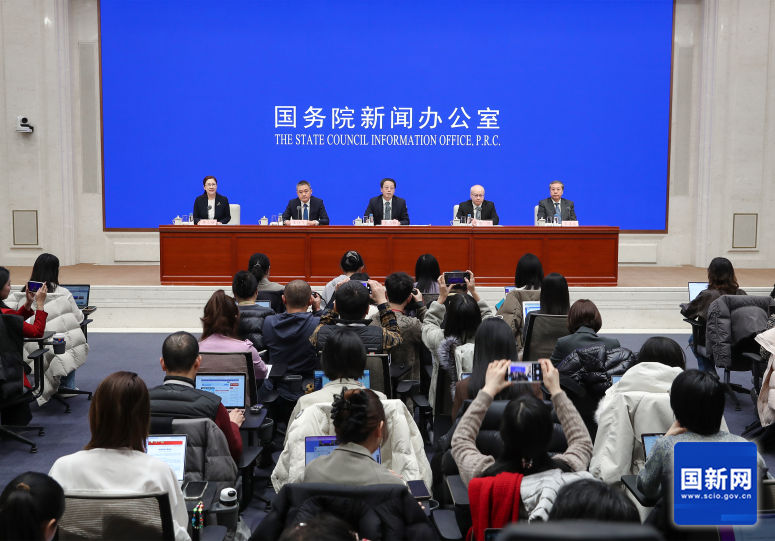
国家发展改革委表示有关方面正在研究制定稳岗扩容提质行动和城乡居民增收计划
Xin Hua She· 2026-01-20 03:05
Core Viewpoint - The National Development and Reform Commission is formulating plans to enhance employment stability and increase income for urban and rural residents, aiming to boost consumer spending and optimize consumption upgrades [1] Group 1: Employment and Income Plans - The government is researching the development of a "Stabilizing Employment and Expanding Capacity" action plan [1] - A plan for increasing income for urban and rural residents is also being developed to enhance their consumption capacity [1] Group 2: Service Industry Initiatives - This year, there will be a push to implement actions aimed at expanding and improving the service industry [1] - A series of high-quality policies will be introduced to support these initiatives [1]
国务院总理李强主持召开国务院常务会议:制定和实施好城乡居民增收计划
Mei Ri Jing Ji Xin Wen· 2026-01-18 12:58
Group 1: Core Insights - The State Council emphasizes the need to implement consumption-boosting actions to enhance residents' consumption power and drive economic growth [1][2] - The meeting highlights the importance of developing new growth points in service consumption, focusing on quality service supply and addressing issues related to credit, standards, and safety management [2][3] - The government plans to establish a long-term mechanism for promoting consumption, including the formulation of the "14th Five-Year" plan for expanding consumption and increasing urban and rural residents' income [3] Group 2: Specific Measures - The government aims to accelerate the development of digital consumption and quality e-commerce, promoting new technologies such as artificial intelligence and autonomous driving to create high-growth consumption sectors [3] - There is a strong focus on cleaning up overdue enterprise payments and ensuring the payment of migrant workers' wages, which are crucial for protecting corporate rights and public interests [4] - The meeting also discusses the need to revise and abolish certain administrative regulations to enhance the quality and effectiveness of government legislation [4] Group 3: Economic Context - The transition towards carbon emission control is highlighted as a significant future challenge, with the carbon market expansion expected to drive energy-saving and carbon-reduction transformations in key industries [5]
2026:26个关键词里的未来(三)
Di Yi Cai Jing· 2025-12-30 13:14
Group 1: State-Owned Enterprise Reform - The central economic work conference emphasized the need to deepen state-owned enterprise (SOE) reform, focusing on optimizing the layout of state-owned economy, improving modern enterprise systems, and enhancing state asset supervision efficiency [1][2] - Key areas of reform include functional, structural, and institutional reforms, with a focus on better utilizing market forces to fulfill national strategic missions and improving the evaluation system for SOEs [2][3] Group 2: Urban and Rural Resident Income Increase Plan - The central economic work conference proposed a new income increase plan for urban and rural residents, transitioning from a focus on low-income groups to a broader approach covering all residents [3][4] - The plan aims to enhance consumer spending and stabilize the middle-income group while addressing income disparities and illegal income [3][4] Group 3: Investment Stabilization - The conference highlighted the need to stabilize investment, suggesting an increase in central budget investment and optimizing the use of local government special bonds [6][7] - Investment growth has been declining due to various factors, including real estate market adjustments and competition, with fixed asset investment down by 2.6% year-on-year [6][7] Group 4: Education Resource Allocation - The "14th Five-Year Plan" suggests improving education resource allocation in response to demographic changes, particularly by expanding ordinary high school enrollment to address the shortage of high school places [8][9] - The number of ordinary high school enrollments is set to exceed 10 million in 2024, with a recorded admission rate of over 60% [8][9] Group 5: Long-Term Care Insurance Implementation - Long-term care insurance (LTCI) is set to be implemented nationwide in 2026 after a decade of trials, aiming to cover nearly 3 billion people and provide equal protection for all disabled individuals [16][17] - The LTCI is expected to inject significant funds into the market, potentially exceeding 100 billion annually, thus stimulating the long-term care service industry [17] Group 6: Birth Policy Optimization - The central economic work conference stressed the need for a comprehensive optimization of birth policies to stabilize the declining birth rate, with a focus on financial support and service system improvements [18][19] - New measures include expanding maternity insurance coverage to flexible workers and enhancing public services for early childhood care [19][20]