健身器械

Search documents
山东出口连续7个季度保持增长,主要亮点有这3项
Qi Lu Wan Bao· 2025-10-16 08:07
Core Insights - Shandong's exports have maintained growth for seven consecutive quarters, achieving historical highs despite external pressures, showcasing resilience and vitality [1][4]. Group 1: Traditional Advantage Products - Traditional advantage products in Shandong are being upgraded, stimulating new momentum. The province's complete industrial system and focus on technological and industrial innovation have led to significant growth in exports of traditional products such as ships, commercial vehicles, engineering machinery, textiles, and gaming machines, contributing over 60% to export growth [1][4]. - In the first three quarters, Shandong exported retail packaging for pet food worth 5.18 billion yuan, accounting for nearly 70% of the national total, and exports of fitness and rehabilitation equipment grew over 20%, with 18.3% of these products sold in Europe and the U.S. [1][4]. Group 2: Emerging Industries - Shandong is focusing on high-end, intelligent, and green development, fostering a high-tech and high-value export product system. In the first three quarters, high-tech product exports reached 142.57 billion yuan, growing by 29.9%, with high-end equipment growing by 37.3%, electronic information by 28.2%, and instruments by 30.6% [4]. - The province is accelerating its green and low-carbon transformation, with "new three samples" products seeing a 29.6% increase in exports, and wind turbine sets and parts growing by 23.7% [4]. Group 3: Diverse Trade Partners - The initiative "Ten Thousand Enterprises Go Global" has significantly expanded Shandong's export reach to over 240 countries and regions, creating a more balanced and diverse foreign trade network. Exports to emerging markets have seen notable growth, with increases of 6.3% to ASEAN, 39.2% to Africa, 5.1% to Latin America, 10% to the Middle East, and 40.2% to Central Asia [4]. - Exports to traditional markets such as the EU and the UK have also outpaced overall growth, increasing by 10.7% and 11%, respectively [4].


售价2万一台的智能健身器械,这家深圳公司要攻下全球高端家庭市场|Insight全球
36氪· 2025-07-31 09:27
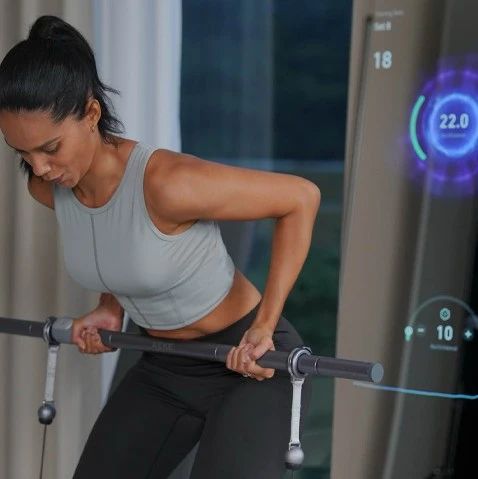
Core Viewpoint - The article discusses the emergence of AEKE, a startup focusing on smart home gym equipment, which aims to capture the growing demand for personalized and intelligent fitness solutions in the home fitness market, particularly targeting young consumers [4][6][38]. Industry Overview - The traditional fitness equipment market has seen minimal innovation, with a compound annual growth rate (CAGR) of only 5.3% from 2020 to 2027 [4]. - The COVID-19 pandemic has accelerated the demand for home fitness equipment, with the global digital fitness market expected to exceed $80 billion by 2025, with the U.S. accounting for 40%-50% of the market share [6]. Company Strategy - AEKE was founded to address the gap in the smart fitness equipment market, focusing on fragmented home workouts and offering integrated hardware and software solutions [10][38]. - The company launched its first product, Smart Home Gym K1, which raised over 15 million RMB on Kickstarter within a month, indicating strong market interest [12]. Product Features - Smart Home Gym K1 is designed for high-end consumers, featuring a 4K touchscreen, surround sound, and the ability to simulate various gym equipment [18]. - The product emphasizes ease of use with a compact footprint of only 0.3 square meters and requires no installation, thus avoiding damage to home interiors [22][19]. AI Integration - AEKE has developed an AI personal training system that assesses users' fitness levels and provides personalized workout and dietary plans, addressing the common challenges faced by new fitness enthusiasts [31]. - The AI system continuously monitors user performance and adjusts training plans based on real-time data, enhancing user engagement and effectiveness [31]. Market Expansion - AEKE plans to accelerate its international expansion, targeting the U.S. market first, with a goal to achieve overseas revenue of over 100 million RMB by 2025 [38]. - The company aims to differentiate itself in a competitive hardware market by focusing on emerging segments that have not yet been saturated by industry giants [39].