免税店运营

Search documents
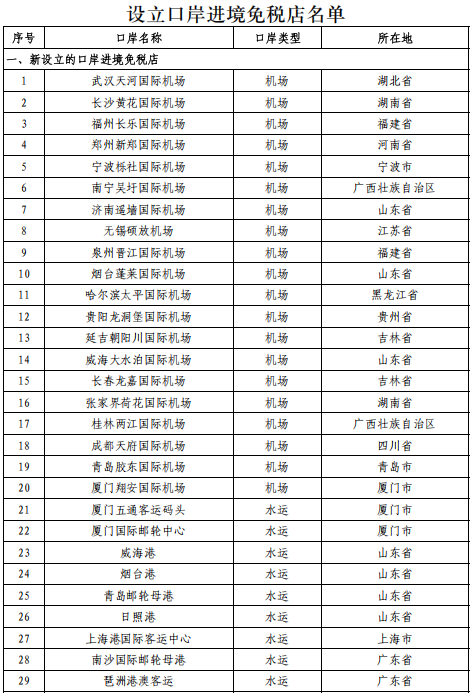
继续在海口美兰机场等11个口岸设立口岸进境免税店!五部门印发通知
Hai Nan Ri Bao· 2026-01-21 13:49
Core Viewpoint - The Ministry of Finance, Ministry of Commerce, Ministry of Culture and Tourism, General Administration of Customs, and State Taxation Administration jointly issued a notice regarding the establishment and adjustment of several duty-free shops at ports of entry, aiming to enhance the duty-free shopping experience for travelers and regulate the market [1][2]. Group 1: New Duty-Free Shops - A total of 41 new duty-free shops will be established at various ports, including one at Wuhan Tianhe International Airport, allowing residents from Macau to purchase duty-free goods up to 15,000 yuan [1][3]. - The new duty-free shops will be located in major airports and ports across several provinces, including Hubei, Hunan, Fujian, and others [3][4]. Group 2: Continuing Duty-Free Shops - Duty-free shops will continue to operate at 11 existing locations, including Haikou Meilan International Airport and Shekou Cruise Center [1][2]. - The list of continuing duty-free shops includes various airports and ports in provinces such as Hainan and Guangdong [4]. Group 3: Cessation of Certain Duty-Free Shops - The establishment of duty-free shops at three locations, including Qingdao Liuting International Airport and Guangzhou East Railway Station, will be halted [1][2]. - The cessation of duty-free shops at Xiamen Gaoqi International Airport will occur after the passenger routes transition to Xiamen Xiang'an International Airport [1][2]. Group 4: Regulatory Framework - Local governments are tasked with guiding the bidding process for duty-free shop operations, ensuring compliance with relevant laws and regulations [2]. - Companies eligible to participate in the bidding must possess duty-free operating qualifications approved by the State Council, including major players like China Duty Free Group and Shenzhen State-owned Duty-Free Goods Group [2]. Group 5: Market Management and Risk Prevention - Local governments are responsible for coordinating and managing the comprehensive mechanisms to prevent illegal resale of duty-free goods and to combat smuggling risks [2].

海南机场:公司尚有可售货值约60亿元
Zheng Quan Ri Bao Wang· 2025-12-18 07:44
Core Viewpoint - Hainan Airport (600515) has approximately 6 billion yuan in sellable assets, with sales recognition varying by real estate project, and future developments will depend on actual project progress [1] Group 1: Real Estate and Asset Management - The company has a sellable asset value of about 6 billion yuan, with different real estate projects having varying sales recognition timelines [1] - Future completion of sales will be based on the actual development progress of each project, with some land reserve projects subject to strategic planning [1] Group 2: Duty-Free Business - The company indirectly participates in five duty-free stores through equity investments and property leasing [1] - The duty-free stores include a 49% stake in the Haikou Meilan Airport duty-free shops, which operate two stores in T1 and T2 terminals, and a 49% stake in the Sanya Phoenix Airport duty-free store [1] - Additional involvement includes leasing space for the China Duty Free Group's Haikou Riyue Plaza duty-free store and the Haikou Global Boutique Duty-Free City [1]

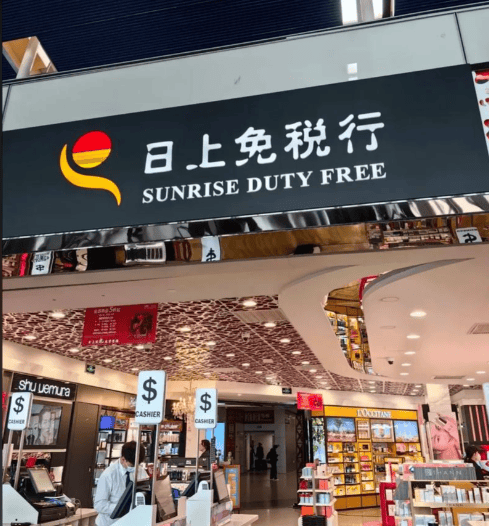
日上免税行确定撤离上海
Sou Hu Cai Jing· 2025-12-17 19:11
Group 1 - The recent bidding results for the duty-free store franchise rights at Shanghai Airport were announced, with the incumbent operator, Sunrise Duty Free (Shanghai) Co., Ltd., failing to secure a renewal, while global duty-free giant Dufry and domestic leader China Duty Free Group won the bids [1][3] - The bidding process involved the duty-free store operations at three terminals of Pudong and Hongqiao airports for the next eight years, from January 1, 2026, to December 31, 2033 [3] - China Duty Free Group secured the operational rights for the international areas of Pudong International Airport's T2 terminal and S2 satellite hall, as well as the T1 terminal international area of Hongqiao International Airport, while Dufry won the rights for the T1 terminal and S1 satellite hall at Pudong Airport, marking Dufry's first significant entry into the Chinese airport duty-free market [3] Group 2 - Sunrise Duty Free (Shanghai) Co., Ltd. was unable to renew its contract due to a lack of support from its major shareholder, which is currently China Duty Free Group [3] - Established in June 1999, Sunrise Shanghai was the first foreign company to operate airport duty-free stores in China, with operations at major airports including Beijing Capital Airport and Shanghai's two main airports [3] - In 2018, China Duty Free Group acquired a 51% stake in Sunrise Shanghai for 1.505 billion yuan, becoming its controlling shareholder [3]

海南机场:房地产业务方面,公司尚有可售货值约60亿元
Mei Ri Jing Ji Xin Wen· 2025-12-17 09:49
Core Viewpoint - The company is actively managing its real estate business and has made significant investments in the duty-free retail sector, indicating a strategic focus on diversifying its revenue streams and adapting to market conditions [1] Real Estate Business - As of now, the company has approximately 6 billion yuan in sellable property value, with sales recognition varying by project due to different development timelines [1] - The company plans to gradually complete sales based on the actual development progress of each project, with some land reserve projects subject to future strategic planning [1] Duty-Free Business - The company has indirectly participated in five duty-free stores through equity investments and property leasing, including: - 49% stake in the duty-free stores at Haikou Meilan Airport (operating two stores in T1 and T2 terminals) - 49% stake in the duty-free store at Sanya Phoenix Airport (also providing property leasing) - Duty-free store at Haikou Riyue Plaza (property leasing) - Haikou Global Boutique Duty-Free City (property leasing) [1]
天津首家市内免税店开业
Xin Hua Wang· 2025-11-28 12:03
Core Points - The first duty-free shop in Tianjin officially opened on November 28, operated by China Tourism Group Duty Free Co., Ltd [1] - The store covers an area of over 1,100 square meters and features both duty-free and taxable product sections [1] - Consumers holding exit-entry documents and a flight ticket for departure within 60 days can enjoy shopping benefits in the duty-free area [1] Group 1 - The duty-free area offers a variety of products including perfumes, cosmetics, watches, jewelry, sunglasses, alcoholic beverages, and travel electronics [1] - The taxable area includes health products, trendy toys, taxable alcoholic beverages, and domestic premium products [1] - A customer made the first purchase in the duty-free area, buying a down jacket at a discounted price of 3,740 yuan, which is approximately 30% off the original price [1] Group 2 - Tianjin's unique geographical advantages, consumer potential, and open environment provide a broad development space for duty-free projects [1] - The opening of the duty-free shop is expected to enhance the shopping experience for travelers and boost local tourism [1]
广州白云国际机场股份有限公司关于共同投资设立中免广州白云机场免税品有限公司的公告
Shang Hai Zheng Quan Bao· 2025-09-26 18:06
Investment Overview - The company has decided to jointly invest with China Duty Free Group to establish a new company named CDF Guangzhou Baiyun Airport Duty-Free Co., Ltd. to operate duty-free shops at the T3 terminal of Guangzhou Baiyun Airport, enhancing service levels and international influence [4][16] - The registered capital of the new company is RMB 45 million, with China Duty Free Group contributing RMB 22.95 million (51%) and the company contributing RMB 22.05 million (49%) [4][9] Approval Process - The investment does not require approval from the board of directors or shareholders' meeting as it does not meet the threshold for such reviews [2][6] Company Structure and Management - The new company will have a board of directors consisting of 5 members, with 3 appointed by China Duty Free Group and 2 by the company. The chairman will be one of the directors recommended by China Duty Free Group [11][13] - The management structure includes a general manager and a deputy general manager, with the general manager and financial officer recommended by China Duty Free Group and the deputy general manager by the company [11][13] Market Context and Strategic Fit - The investment aligns with national policies encouraging the development of duty-free businesses, which supports the expansion of duty-free shops at ports and cities [16] - Establishing the joint venture is seen as a strategic move to enhance the airport's core competitiveness and is consistent with the long-term development strategy of the airport [16] Financial Implications - The investment is expected to create synergies between the two companies, leveraging their strengths to optimize operations and enhance profitability in the duty-free segment [16]

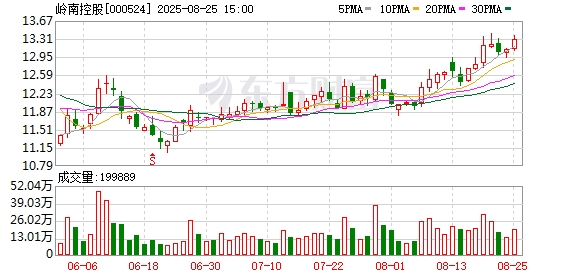
岭南控股:截至2025年5月底中免市内免税品(广州)有限公司已完成工商设立登记手续
Zheng Quan Ri Bao· 2025-08-25 12:39
Core Viewpoint - Lingnan Holdings is expanding its duty-free business in Guangzhou by establishing a joint venture with China Duty Free Group, Guangzhou Baiyun International Airport, and Guangzhou Guangbai Co., Ltd. to operate city duty-free stores [2] Group 1: Company Initiatives - The company has formed a partnership to set up China Duty Free (Guangzhou) Co., Ltd. for the operation of city duty-free stores in Guangzhou [2] - As of May 2025, the registration procedures for the new company have been completed [2] - The initiative aims to leverage the policies supporting Guangzhou's development as an international consumption center [2] Group 2: Market Strategy - The company plans to quickly integrate supply chain resources through collaboration with its partners to enter the city duty-free market [2] - The strategy includes cultivating a "tourism + retail" business model and upgrading the "pan-tourism" industry ecosystem [2] - This move is intended to inject innovative momentum into the company's traditional main business [2]


都市评:广州北站市内免税店落空,后续路径将更考验花都智慧
Sou Hu Cai Jing· 2025-07-01 18:02
Core Viewpoint - The Guangzhou North Station duty-free complex project, initially expected to be operational by 2025, is facing significant challenges, including slow construction progress and the likely failure of its core city duty-free store plan [2][4]. Group 1: Project Development - The project was initiated in 2021 through an agreement between the Huadu District government and China Tourism Group, aiming to create a comprehensive complex with a city duty-free store [2]. - Recent on-site investigations reveal that aside from two residential towers nearing completion, the commercial component is lagging behind [2]. - The only approved city duty-free store in Guangzhou is set to open 40 kilometers away at the Zhujiang New Town International Financial Center, indicating that the North Station duty-free store is likely to remain a concept [2]. Group 2: Economic Impact - The failure of the duty-free store plan significantly impacts Huadu, as the project was intended to leverage the North Station's transportation hub advantages and proximity to Baiyun Airport (10 kilometers away) to create the Greater Bay Area's first duty-free complex [2]. - The absence of a duty-free store undermines Huadu's vision of developing a world-class project and poses further challenges to the North Station's economic elevation [2][4]. Group 3: Urban Planning Insights - This situation serves as a warning for urban commercial planning, emphasizing the need to consider policy feasibility and execution capabilities when pursuing high-profile projects [4]. - The scarcity of city duty-free stores necessitates strategic location choices, with non-core areas needing to optimize policy resources and supporting facilities to compete [4]. - The North Station's elevation bottleneck is highlighted, as it has not achieved ideal operational levels, with limited train services and insufficient connectivity to other Greater Bay Area transport hubs [4]. Group 4: Future Considerations - Huadu must reassess its regional commercial positioning and explore unique commercial pathways beyond duty-free stores [4]. - The future direction of the duty-free complex project will test the collaboration between government and enterprises, serving as a critical case for evaluating the scientific and flexible nature of urban commercial planning [4].