
共享消费

Search documents
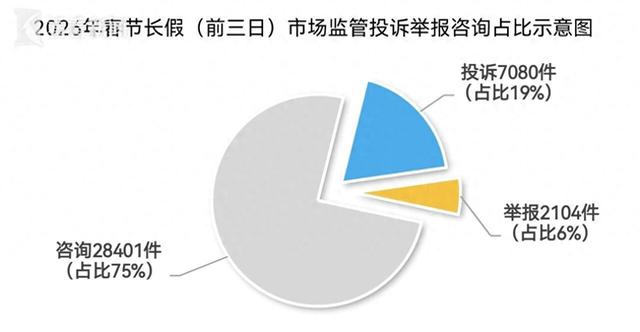
26年春节长假前三日上海消费投诉9184 件
Xin Lang Cai Jing· 2026-02-18 11:06
Group 1 - The core viewpoint of the article highlights the smooth operation of consumer rights protection during the holiday period, with a total of 9,184 complaints and 28,401 consultations received in the first three days of the holiday [1][3] - The market regulatory department has intensified enforcement and consumer rights services to ensure a safe and harmonious holiday for citizens [3] Group 2 - Online consumption complaints accounted for 89.5% of the total complaints, with issues primarily related to quality defects, discrepancies with promotions, order cancellations, and delivery delays [4] - Specific complaints included a case where a consumer received a product that did not match the advertised material [4] Group 3 - Complaints related to traditional holiday dining, such as New Year's Eve dinner orders, remained stable with 27 complaints reported, mainly concerning order disputes and delivery delays [5] - An example included a consumer who faced delays in receiving their ordered New Year's Eve meal from a chain supermarket [5] Group 4 - There was an increase in complaints related to green consumption, with 198 cases reported, reflecting a growing awareness of low-carbon and environmentally friendly practices [6] - Issues included shared consumption and violations of plastic restrictions, with a notable case involving a consumer unable to rent a camera for holiday photography [6] Group 5 - All reported complaints have been forwarded to the respective district market regulatory departments for investigation and resolution [7]

2027年我国将形成3个万亿级消费领域
Bei Jing Shang Bao· 2025-11-27 00:24
Core Viewpoint - The implementation plan aims to enhance the adaptability of consumer goods supply and demand, promoting consumption as a driver of economic growth by optimizing supply structures and creating new consumption scenarios [1][6]. Group 1: Supply and Demand Adaptability - The plan outlines 19 key tasks focusing on expanding new consumption, tapping into existing markets, and targeting niche markets [1][7]. - It emphasizes the importance of new technologies and innovative models in industries such as smart vehicles, smart home products, and consumer electronics [2][6]. Group 2: New Consumption Scenarios - The plan encourages the development of new consumption scenarios, including interest-based products like pet supplies and anime merchandise, while also promoting low-altitude tourism and automotive aftermarket services [4][6]. - It supports the establishment of flagship stores and new concept stores to enhance consumer experience and engagement [4][6]. Group 3: Targeted Product Development - The plan aims to enhance product offerings for specific demographics, including children and the elderly, by promoting high-quality, intelligent, and customized products [7][8]. - It encourages the development of health-related products and services, integrating traditional medicine with modern health management [3][7]. Group 4: Shared Consumption - The plan outlines directions for shared consumption, including the promotion of shared bicycles and other mobility solutions in public spaces [5][6]. - It emphasizes the need for quality certification systems for shared products to ensure safety and reliability [5][6].