即时通讯

Search documents
“电报”在俄罗斯被限流,监管机构称其违法
Xin Lang Cai Jing· 2026-02-10 14:55
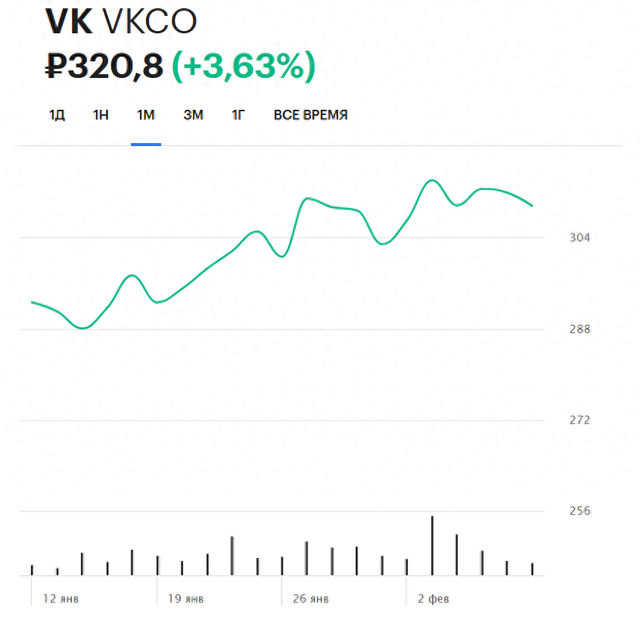
Group 1 - The Russian Federal Telecommunications, Information Technology and Mass Media Supervision Agency plans to restrict access to the messaging app Telegram starting February 10, citing non-compliance with Russian laws and failure to ensure data security for Russian citizens [1] - The agency has begun measures to reduce the access speed of Telegram, emphasizing that the platform has not taken effective steps to combat fraud and prevent its use for criminal and terrorist activities [1] - The Russian government maintains a consistent stance on the operation of social platforms and online services, expressing willingness to cooperate with domestic and foreign platforms, provided they respect Russian laws and citizens [1] Group 2 - In 2018, Telegram was banned in Russia for refusing to provide decryption keys to the Federal Security Service, but the ban was lifted in 2020 after the founder expressed willingness to cooperate in combating terrorism and extremism [2] - The Russian government is promoting a state-owned "super app" called Max, modeled after China's WeChat, which integrates communication, government services, document storage, banking, and other public and commercial services [2] - VK, the company developing Max, saw its stock price increase by 5.22% on February 10, with a peak of 325.7 rubles per share during trading [2]

即时通讯应用Telegram在俄罗斯面临新的限制与罚款
Xin Lang Cai Jing· 2026-02-10 12:50
Core Viewpoint - Telegram is facing new restrictions and fines in Russia due to content that authorities oppose, highlighting the increasing control over foreign tech platforms by the Russian government [1][4][7]. Group 1: Regulatory Actions - The Russian Federal Service for Supervision of Communications, Information Technology and Mass Media plans to restrict access to Telegram starting Tuesday, with throttling measures already in effect [1][4]. - Telegram is set to face fines of up to 64 million rubles (approximately $830,000) in eight upcoming court hearings for allegedly failing to delete content as required by Russian law [6]. Group 2: Current Status and Impact - Despite the restrictions, Telegram remains accessible, although video download speeds have noticeably decreased [5]. - The Russian government has previously attempted to ban Telegram in 2018 but was unsuccessful [3][9]. Group 3: Competition and Surveillance Concerns - The Russian government launched a state-supported competitor app called MAX, which critics claim may be used for surveillance, although official media denies this [2][8]. - Since August of last year, Russia has limited certain calling features of Telegram and WhatsApp, accusing them of not cooperating with law enforcement in cases of fraud and terrorism [7].
什么是企业护城河,常见的企业护城河有哪些呢?|投资小知识
银行螺丝钉· 2026-01-25 13:42
Core Insights - The article discusses various types of competitive advantages, referred to as "moats," that companies can possess to maintain their market position and profitability [3][9][13]. Group 1: Types of Competitive Advantages - **Scale Advantage**: Companies like BlackRock, Vanguard, and State Street dominate the index fund market, collectively holding over 80% of the global market share. Larger funds can lower management fees, attracting more investors and creating a positive feedback loop [3]. - **Network Effect**: Industries such as stock exchanges and e-commerce benefit from network effects, where the value of the network increases with the number of users. For instance, the Hong Kong Stock Exchange has a significant market share, making it difficult for new entrants to compete [6][7]. - **Brand Advantage**: In sectors like consumer goods and pharmaceuticals, brand recognition plays a crucial role. Consumers often remember only a few brands, such as Moutai in liquor or Yili in dairy products, which illustrates the power of brand loyalty [9]. - **Switching Costs**: Companies that create ecosystems, like Apple with its product matrix, increase switching costs for users. Once consumers are accustomed to a particular ecosystem, it becomes challenging to switch to competitors [10][12]. - **Resource Advantage**: Industries such as mining and energy benefit from unique resources that are difficult to replicate. Companies with low extraction costs can maintain profitability and market dominance [13]. Group 2: Financial Characteristics of Companies with Moats - Companies with established moats typically exhibit strong financial metrics, indicating their ability to sustain profits over time [13].

股神巴菲特的「护城河」理论,如何帮企业摆脱内卷、长期赚钱 | 螺丝钉带你读书
银行螺丝钉· 2026-01-17 13:37
Core Viewpoint - The article discusses the concept of "economic moats" as proposed by Warren Buffett, emphasizing the importance of competitive advantages for companies to achieve long-term profitability and returns for investors [4][5]. Summary by Sections Introduction to Economic Moats - The article introduces a new investment book titled "Investment Moats," which elaborates on Buffett's investment philosophy regarding economic moats [2]. Definition and Importance of Economic Moats - Economic moats are defined as competitive advantages that allow companies to maintain profitability over time, thus providing returns to investors [4]. Characteristics of Companies with Economic Moats - Companies that possess economic moats typically have stable and significant profits, distinguishing them from early-stage or startup companies [5]. Avoiding Market Saturation - Economic moats help companies avoid "involution," where excessive competition leads to homogenization and price wars, ultimately resulting in losses [6][7]. Types of Economic Moats 1. **Scale Advantage**: Companies like BlackRock and Vanguard dominate the index fund market, controlling over 80% of the global market share, benefiting from lower management fees due to their scale [10][12][14]. 2. **Network Effects**: The value of networks increases with the number of users, making it difficult for new entrants to compete against established players like the Hong Kong Stock Exchange [16][20]. 3. **Brand Advantage**: Strong brands in consumer and pharmaceutical sectors create recognition and loyalty, making it hard for new brands to penetrate the market [22][27]. 4. **Switching Costs**: High switching costs, as seen with integrated product ecosystems like Apple's, make it challenging for customers to change to competitors [28][32]. 5. **Resource Advantage**: Companies with access to low-cost resources, such as mining operations, have a competitive edge in their industries [33]. Conclusion - Companies need unique advantages that are not easily replicable to protect their profits and ensure sustained revenue generation. Financially, companies with economic moats often exhibit high gross margins and long-term return on equity (ROE) levels of 15% or higher [36][37].