
地热

Search documents
银轮股份(002126) - 002126银轮股份投资者关系管理信息20260318
2026-03-18 09:30
Group 1: Automotive Sector Outlook - The automotive business is expected to maintain steady growth this year, driven by increased supply to overseas key clients and expansion of product categories [2] - The passenger vehicle segment is projected to achieve year-on-year growth, with high-value products like thermal management modules contributing to incremental revenue [2] - The commercial vehicle and non-road machinery sectors are also anticipated to experience stable growth due to favorable industry conditions [2] Group 2: Power Energy Sector Strategy - The power energy sector is identified as one of the most flexible segments in the company's business structure, with significant growth potential expected in the coming years [3] - Key products include high-power generator cooling modules and gas generator exhaust treatment systems, with successful mass production already achieved with several international clients [3] - The company's international expansion strategy is progressing steadily, aiming to establish partnerships with more renowned global clients [3] Group 3: Digital Energy Sector Performance - The digital energy (AI liquid cooling) sector is forecasted to experience rapid growth this year, focusing on four core application areas: data center liquid cooling, energy storage, charging and swapping, and low-altitude economy [4] - Each sub-business within this sector is achieving rapid breakthroughs, with ongoing efforts to enhance core technology development and market expansion [4] Group 4: Data Center Liquid Cooling Progress - The data center liquid cooling business is a core area within the digital energy sector, with both domestic and international operations progressing smoothly [5] - Partnerships have been established with several large CSP cloud providers and server manufacturers, with products at various stages of design and validation [5] - Some domestic data center server projects have already been successfully implemented [5] Group 5: Energy Storage Sector Development - The energy storage business is experiencing rapid growth, benefiting from the ongoing favorable market conditions [5] - Product focus includes liquid cooling plates and liquid cooling air conditioning, aligning closely with industry demands [5] - Stable partnerships have been formed with leading industry clients, ensuring smooth product delivery and proactive market expansion [5] Group 6: Geothermal Business Progress - The geothermal business is primarily conducted through a joint venture with Kaishan Co., focusing on high-value products like heat exchangers and liquid cooling systems [6] - The joint venture is included in the company's consolidated financial statements, with ongoing efforts to explore market potential in the geothermal sector [6]

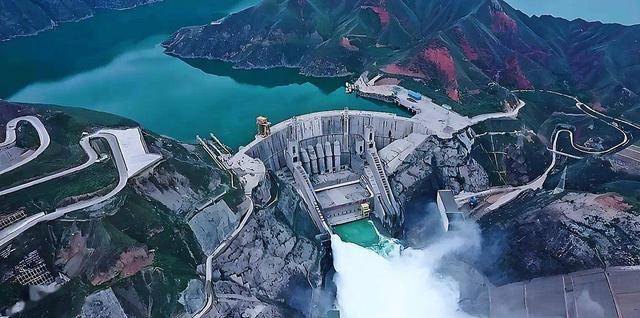
仅凭一个西藏,便能满足中国现在与未来,所有的能源需求!
Sou Hu Cai Jing· 2026-02-14 10:06
Core Insights - The article discusses China's significant investment in the Tibet region, particularly focusing on the construction of the Yarlung Tsangpo River hydropower project, which is expected to generate substantial clean energy and transform the region's economic landscape [1][3]. Group 1: Investment and Infrastructure - The total investment for the Yarlung Tsangpo hydropower project is estimated at 1.2 trillion yuan, which translates to approximately 170 billion USD, equating to about 850 yuan per person for China's 1.4 billion population [1][3]. - The project involves constructing a series of hydropower stations with a total installed capacity of 70-80 million kilowatts, expected to generate around 300 billion kilowatt-hours of electricity annually, equivalent to the output of three Three Gorges projects [3][5]. Group 2: Resource Potential - Tibet possesses the highest technical potential for hydropower resources in China, with over 370 rivers having a hydropower capacity exceeding 10,000 kilowatts, and the Yarlung Tsangpo River's hydropower density being three times that of the Yangtze River [7][9]. - Tibet also has the richest solar energy resources in China, with annual sunshine exceeding 3,000 hours, and the highest geothermal energy potential, exemplified by the Yangbajing geothermal field [9][11]. Group 3: Energy Transmission - Since 2011, four major "power highways" have been constructed to transmit electricity from Tibet to other regions, with the upcoming ±800 kV ultra-high voltage direct current project expected to facilitate the transfer of nearly 40 billion kilowatt-hours of clean energy annually to central China [17][20]. - Future plans include the construction of over ten ultra-high voltage transmission lines by the middle of this century, aiming to export more than 500 billion kilowatt-hours of electricity annually, significantly increasing the current export capacity [21][27]. Group 4: Economic Transformation - The development of low-cost hydropower in Tibet is expected to attract high-energy industries, such as aluminum processing and data centers, to the region, creating a complete industrial chain from raw materials to end products [24][26]. - The National Energy Administration has designated Tibet as a "clean energy transmission base," aligning with China's goals for carbon neutrality and sustainable energy development [27][28].

国际地热标准委员会在京成立
Xin Lang Cai Jing· 2025-11-27 09:14
Core Viewpoint - The International Geothermal Standards Committee (IGSC) was officially established in Beijing on November 26, aiming to lead the development and promotion of international geothermal standards to support sustainable growth in the global geothermal industry [1] Group 1: Establishment and Purpose - The IGSC was initiated by the International Geothermal Association (IGA) and is headquartered at Sinopec [1] - The committee's primary goal is to organize global geothermal industry institutions and experts to collaboratively research and establish international geothermal standards [1] Group 2: Meeting Outcomes - The first plenary meeting approved the "IGSC Standard Formulation Procedures" and the "2025-2027 Work Plan" [1] - The IGSC will focus on building a comprehensive standard system for the entire geothermal industry chain, covering areas such as resource exploration and evaluation, thermal storage engineering, geothermal drilling, heating, power generation, and shallow geothermal systems [1] Group 3: Future Plans - The committee plans to develop standards related to processes, methods, equipment, and materials in the geothermal sector [1] - The aim is to gradually establish a complete standard system that provides comprehensive, advanced, and practical support for the high-quality development of the global geothermal industry [1]

《干热岩资源评价》等三十项行业标准发布
Zhong Guo Zi Ran Zi Yuan Bao· 2025-07-18 01:14
Group 1 - The Ministry of Natural Resources has approved the release of 30 industry standards, including "Evaluation of Hot Dry Rock Resources," which will be implemented on October 1, 2025, providing strong support for the standardized development of related industries [1] - The standards cover various fields such as mineral resource exploration and development, hydrogeological geology, geological exploration techniques, and geological testing, aiming to facilitate the transition and upgrading of China's energy structure [1] - The "Uranium Geological Exploration Specification" aims to scientifically guide uranium exploration work, clarifying the objectives and tasks of geological exploration for both in-situ and non-in-situ uranium deposits, aligning with the national solid mineral resource reserve reform [1] Group 2 - The "Coastal Geological Environment Survey and Evaluation Specification (1:50000)" outlines the content, methods, and quality requirements for coastal geological environment surveys, providing technical and data support for resource utilization and ecological protection [2] - The "Hydrogeological Stratified Exploration Well Construction Specification" specifies technical requirements for well design, drilling, and logging, supporting high-precision hydrogeological parameter acquisition and long-term groundwater observation [2] - The "Geochemical Monitoring Technical Specification for Arable Land" sets technical requirements for monitoring point layout, sample collection, and data evaluation, aimed at objectively reflecting geochemical changes in arable land for resource protection and sustainable use [2] Group 3 - Six industry standards, including "Chemical Analysis Method for Antimony Ore," have been established to meet the experimental testing needs for strategic mineral resource exploration and development, ensuring the accuracy and comparability of analytical data [3] - The "Non-Metallic Mineral Performance Testing Methods (Parts 1-18)" aims to ensure the accuracy and reliability of non-metallic mineral performance analysis results, providing technical support for basic geological research and non-metallic mineral development [3]
中国地质学会地热专业委员会2025年年会召开
Zhong Guo Zi Ran Zi Yuan Bao· 2025-05-22 01:41
Core Insights - The annual meeting of the Geothermal Professional Committee of the Chinese Geological Society was held in Tianjin, focusing on "Geothermal Empowerment for Carbon Neutrality, Innovation Driving the Future" [1] - Experts discussed new technologies, theories, and models in the geothermal sector, exploring industry changes and proposing differentiated development paths based on regional characteristics [1] Group 1: Event Overview - The conference served as a professional exchange platform in the geothermal energy field, gathering experts from prestigious universities and research institutions [1] - The meeting aimed to respond to the requirements of modern geological work and leverage opportunities from the AI technology revolution to promote key technological innovations in the geothermal sector [1] Group 2: Key Presentations and Topics - Notable presentations included a talk by Chinese Academy of Engineering academician Xie Heping on "New Technology Exploration for Low-Temperature Geothermal Power Generation," focusing on innovative ideas and technical pathways [1] - The conference featured six specialized sub-forums covering topics such as resource exploration, deep geothermal technology breakthroughs, comprehensive utilization, sustainable development, regional characteristics, and geothermal monitoring [1]