
能源结构转型升级

Search documents
粤电力A(000539) - 000539粤电力A投资者关系管理信息20251118
2025-11-18 08:00
Group 1: Installed Capacity Overview - The company has a diversified power generation structure, including coal, LNG, and hydropower projects. As of the first three quarters of 2025, the total installed capacity is 40,559.3 MW, with coal power accounting for 20,010 MW (49.34%) [2] - The installed capacity for gas power is 11,847 MW (29.21%), wind power is 3,895 MW (9.60%), solar power is 4,574.5 MW (11.28%), and hydropower is 132.8 MW (0.33%). The total renewable energy capacity is 8,702.3 MW (21.46%) [2] Group 2: New Capacity Additions During the 14th Five-Year Plan - During the 14th Five-Year Plan, the company has added approximately 2,860 MW of coal power, 2,865 MW of gas power, 3,812.7 MW of wind power, 3,286 MW of solar power, and 100 MW of biomass power [2][3] Group 3: Ongoing and Future Projects - Currently, the company has 8,000 MW of coal power under construction, with an expected 3,000-5,000 MW to be operational by the end of 2025, and the remainder in 2026-2027 [3] - There are also 2,942 MW of gas power projects and 1,250 MW of solar and wind projects under construction, with potential adjustments to the operational timeline based on construction progress [3] Group 4: Financial Health and Debt Management - As of Q3 2025, the company's debt-to-asset ratio is 79.45%. The company plans to explore equity financing channels to manage and reduce this ratio [4] - In 2023, the company raised 4.5 billion CNY through equity financing by introducing six strategic investors [4] Group 5: Dividend Policy - The company adheres to a "profit means dividend" policy, aiming to distribute at least 10% of the annual distributable profit as cash dividends. The minimum cash dividend proportion in any profit distribution should be 20% [5] - Over the last three years, the cumulative cash dividends should not be less than 30% of the average annual distributable profit [5]

桂气入滇!这条国家能源基础设施建设工程进度已过半
Yang Shi Wang· 2025-11-11 03:27
Core Viewpoint - The construction of the Guangxi LNG pipeline project is progressing rapidly, with over 50% completion and significant advancements in technology and ecological protection measures, aimed at enhancing energy supply and optimizing the regional energy structure in Yunnan [1][3][5]. Group 1: Project Overview - The Guangxi LNG pipeline project spans 346.8 kilometers, starting from Baise, Guangxi, and ending in Yanshan, Yunnan, with a designed annual gas transmission capacity of 1 billion cubic meters [1]. - The project is expected to be fully operational by 2026, significantly improving Yunnan's resource import capacity and contributing to the region's economic development [1][5]. Group 2: Construction Progress - As of now, the project has surpassed 50% completion, with over 263 kilometers of welding completed since its commencement in August 2024 [1]. - The construction faces challenges due to complex terrain, including the crossing of rivers, mountains, and existing infrastructure, which has led to the adoption of advanced technologies and intelligent management systems [3]. Group 3: Ecological Protection - The project incorporates ecological protection measures, avoiding 11 ecologically sensitive areas and utilizing innovative techniques to prevent soil erosion [5]. - A total of over 1,200 acres of vegetation have been restored as part of the ecological management strategy, ensuring a balance between construction and environmental sustainability [5]. Group 4: Strategic Importance - The pipeline will serve as a key channel for natural gas supply in Southwest China, introducing surplus LNG resources from Guangxi and forming a dual-source supply system with the China-Myanmar oil and gas pipeline [5]. - Once operational, the pipeline will alleviate Yunnan's reliance on a single gas source, enhancing the region's energy security and optimizing its energy structure [5].

中国石油西南油气田建设楚攀"光伏走廊"降碳增绿
Xin Hua Wang· 2025-09-17 11:33
Core Viewpoint - China National Petroleum Corporation (CNPC) is actively promoting the development of photovoltaic (PV) projects in Southwest China, particularly in Yunnan and Sichuan provinces, as part of its strategy to transition to a more sustainable energy structure [1] Group 1: Project Developments - CNPC has initiated significant PV projects in Kunming, Yunnan, and Panzhihua, Sichuan, focusing on the construction of the "Chuanpan Photovoltaic Corridor" [1] - The Yunnan Minzu University rooftop distributed PV project has a capacity of 6.22 megawatts (MW) and has generated over 5.2 million kilowatt-hours (kWh) of electricity this year [1] - The Panzhihua Miyi Salian Binggu 100,000 kW PV project, located in a mountainous area, is expected to generate 170 million kWh annually, with all output connected to the national grid [1] - The Chuxiong Prefecture Yongren County Tianfang PV project has a planned capacity of 50 MW and is progressing well in its preparatory work [1] Group 2: Benefits and Innovations - The rooftop PV project at Yunnan Minzu University utilizes a "self-consumption and surplus electricity grid connection" model, reducing electricity costs for the university while supplying clean energy to the grid [1] - The installation of 159 solar panels on a carport at the university provides shade and charging for new energy vehicles, showcasing innovative applications of PV technology [1] - The Miyi Salian Binggu project has already installed over 40,000 components since its commencement in December of the previous year, highlighting the rapid progress in project execution [1]

“入岛管输天然气”赋能漳州东山高质量发展
Yang Shi Wang· 2025-08-01 03:44
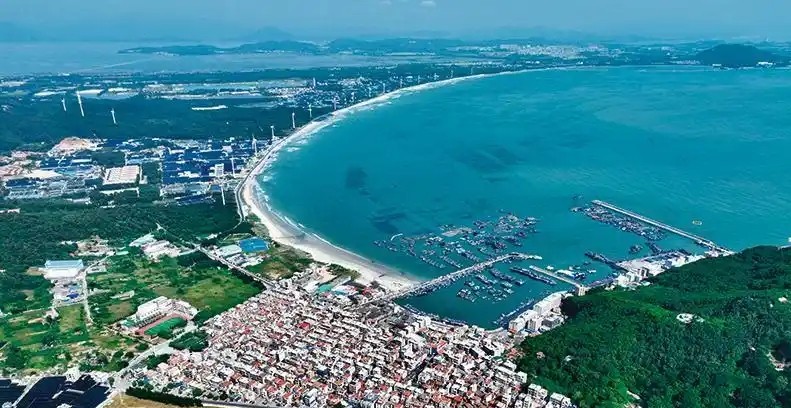
Group 1 - Dongshan County, located in Fujian Province, is the seventh largest island in China and serves as an important port for economic trade with Taiwan [1] - The county is actively promoting itself as a "common prosperity demonstration county" through initiatives in ecological tourism and industrial development [1][2] - Dongshan County has implemented actions to enhance industrial parks, focusing on creating zero-carbon and low-carbon zones [2] Group 2 - The Dongshan Port Economic Industrial Park is a key base for the glass and new materials industry in the western Taiwan Strait, currently hosting eight quality new energy enterprises [3] - The presence of high-quality silica sand resources and convenient maritime conditions in Dongshan helps reduce raw material and logistics costs for high-end glass production [3] - However, the reliance on LNG for photovoltaic products poses challenges due to limited supply and price volatility, increasing cost pressures on enterprises [3] Group 3 - To improve the quality of industrial parks and reduce gas costs for enterprises, the Dongshan government has introduced a key infrastructure project, the National Pipeline Network's East Mountain Branch [5] - This project, constructed by Zhangzhou Zhonglian Huarui Company, includes three stations and two pipelines, connecting to the Dongshan Port Economic Industrial Park [5] - The successful operation of this pipeline project on January 17, 2025, provides stable and high-quality gas supply, significantly benefiting local industrial enterprises and supporting energy structure transformation [7]
《干热岩资源评价》等三十项行业标准发布
Zhong Guo Zi Ran Zi Yuan Bao· 2025-07-18 01:14
Group 1 - The Ministry of Natural Resources has approved the release of 30 industry standards, including "Evaluation of Hot Dry Rock Resources," which will be implemented on October 1, 2025, providing strong support for the standardized development of related industries [1] - The standards cover various fields such as mineral resource exploration and development, hydrogeological geology, geological exploration techniques, and geological testing, aiming to facilitate the transition and upgrading of China's energy structure [1] - The "Uranium Geological Exploration Specification" aims to scientifically guide uranium exploration work, clarifying the objectives and tasks of geological exploration for both in-situ and non-in-situ uranium deposits, aligning with the national solid mineral resource reserve reform [1] Group 2 - The "Coastal Geological Environment Survey and Evaluation Specification (1:50000)" outlines the content, methods, and quality requirements for coastal geological environment surveys, providing technical and data support for resource utilization and ecological protection [2] - The "Hydrogeological Stratified Exploration Well Construction Specification" specifies technical requirements for well design, drilling, and logging, supporting high-precision hydrogeological parameter acquisition and long-term groundwater observation [2] - The "Geochemical Monitoring Technical Specification for Arable Land" sets technical requirements for monitoring point layout, sample collection, and data evaluation, aimed at objectively reflecting geochemical changes in arable land for resource protection and sustainable use [2] Group 3 - Six industry standards, including "Chemical Analysis Method for Antimony Ore," have been established to meet the experimental testing needs for strategic mineral resource exploration and development, ensuring the accuracy and comparability of analytical data [3] - The "Non-Metallic Mineral Performance Testing Methods (Parts 1-18)" aims to ensure the accuracy and reliability of non-metallic mineral performance analysis results, providing technical support for basic geological research and non-metallic mineral development [3]
《干热岩资源评价》等30项重要行业标准发布
Zhong Guo Zi Ran Zi Yuan Bao· 2025-07-17 00:00
Group 1 - The Ministry of Natural Resources has approved the release of 30 important industry standards, including "Evaluation of Hot Dry Rock Resources," which will be implemented from October 1, 2025, providing strong support for the standardized development of related industries [1] - The standards cover various fields such as mineral resource exploration and development, hydrogeological geology, geological exploration techniques, and geological testing, aiming to facilitate the transition and upgrading of China's energy structure [1][2] - Specific standards like "Uranium Geological Exploration Specification" aim to scientifically guide uranium exploration work, clarifying the objectives and tasks of different stages of geological exploration for both in-situ and non-in-situ uranium deposits [1] Group 2 - The "Coastal Geological Environment Survey and Evaluation Specification (1:50000)" outlines the content, methods, results compilation, and quality requirements for coastal geological environment surveys, supporting resource utilization and ecological protection [2] - The "Hydrogeological Layered Exploration Well Construction Specification" sets technical requirements for well design, drilling, logging, and construction processes, providing technical support for high-precision hydrogeological parameter acquisition [2] - The "Soil Geochemical Monitoring Technical Specification" establishes requirements for monitoring point layout, sample collection, monitoring indicators, and data evaluation, aimed at reflecting geochemical changes in arable land for sustainable resource management [2] Group 3 - Six industry standards, including "Chemical Analysis Method for Antimony Ore," have been developed to meet the needs of strategic mineral resource exploration and evaluation, standardizing testing methods to ensure data accuracy and comparability [3] - The "Non-Metallic Mineral Performance Testing Methods (Parts 1-18)" consists of 18 industry standards aimed at ensuring the accuracy and reliability of non-metallic mineral performance analysis results, providing reliable technical support for basic geological research and non-metallic mineral development [3]
国网蒙东电力:蒙东赤峰阿鲁科尔沁100万千瓦风储基地项目500千伏送出工程开工建设
Zhong Guo Neng Yuan Wang· 2025-05-20 13:37
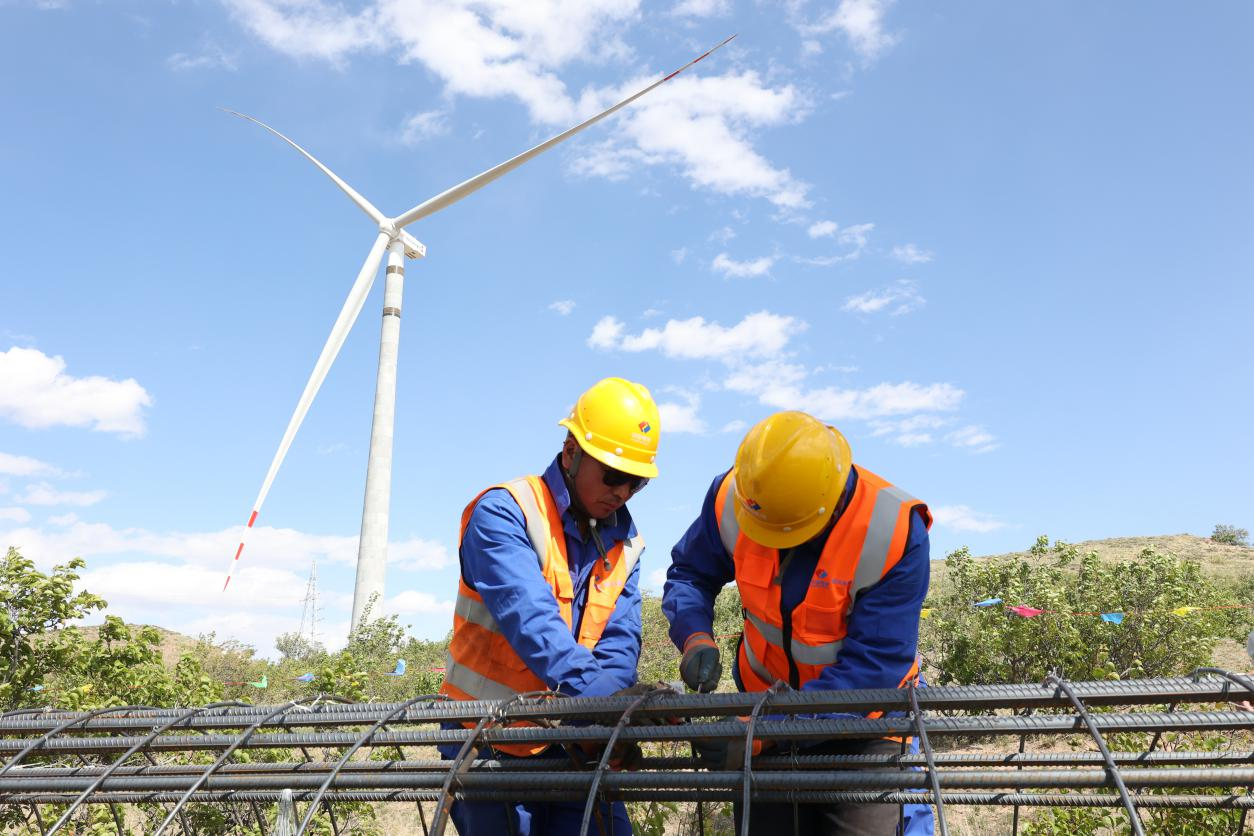
Core Points - The construction of the 1 million kilowatt wind-storage base project in Inner Mongolia has officially commenced with the foundation work of the 500 kV transmission line [1][2] - This project is part of the third batch of large-scale wind and solar power base construction projects in Inner Mongolia, including a 21 km new transmission line and the expansion of a 500 kV substation [2] Group 1 - The 500 kV transmission line project will deliver 3.2 billion kWh of clean electricity annually, equivalent to reforesting 115,000 hectares and reducing CO2 emissions by 1.73 million tons, meeting the annual electricity needs of 2 million households [5] - The project aims to enhance the clean energy utilization level in eastern Inner Mongolia, reduce fossil energy consumption, and promote energy structure transformation [5] Group 2 - The construction faces challenges from 70.6% hilly terrain with sandy and rocky geology, extreme cold temperatures of -40 degrees Celsius, and ice cover of 10 mm [5] - Innovative construction techniques such as "bored piles + Beidou positioning" and the use of advanced steel core aluminum stranded wires with 40% higher ice-breaking capacity will be employed [5] - Drone swarm technology will be utilized for real-time monitoring and crossing of complex airspace involving live power lines and major traffic routes [5]
加快建设“市县乡”三级绿色交通网
Liao Ning Ri Bao· 2025-04-21 01:27
Group 1 - The central government has allocated 135 million yuan in financial support for the construction and operation of public charging and battery swapping facilities in five selected counties, which will help alleviate the "range anxiety" of electric vehicle users and promote consumption and investment in rural areas [1][2] - A total of eight counties in the province have been selected for this initiative, which aims to enhance the infrastructure for electric vehicles and improve the consumption potential in rural regions [1] - The collaborative application by counties with similar economic development levels is expected to maximize the effectiveness of the funding and facilitate shared project management, benefiting a larger user base [1] Group 2 - The pilot counties will explore new technologies and models for charging and battery swapping, such as vehicle-network interaction and energy storage, to accelerate the province's energy structure transformation [2] - The funding will prioritize the establishment of charging facilities at key locations such as postal service points, rural logistics nodes, and transportation hubs, aiming to create a comprehensive network that integrates transportation, energy, and consumption [2] - The provincial finance department plans to expedite project implementation and strengthen fund management to build a three-tier green transportation network across urban, county, and rural areas, contributing to the province's goal of becoming a clean energy stronghold [2]