
城市管网建设

Search documents
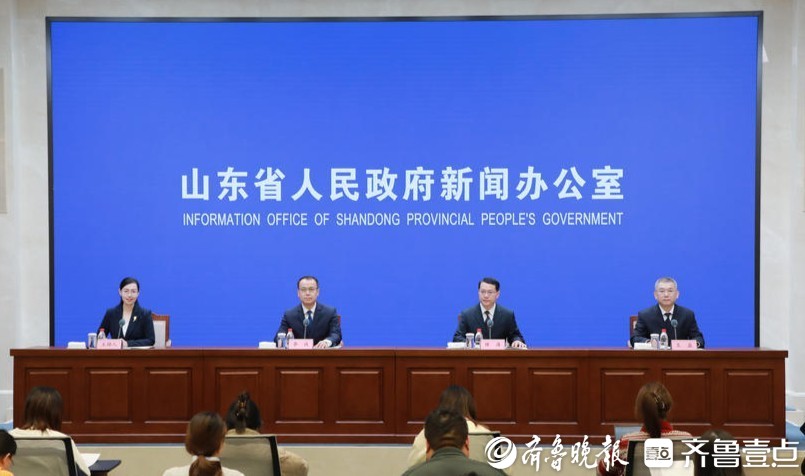
2026年山东计划开展高速铁路、城市地下管网建设改造等审计
Qi Lu Wan Bao· 2026-02-10 09:05
Core Viewpoint - The Shandong Provincial Audit Office is focusing on enhancing supervision of government investment projects in 2026, aiming to promote project implementation, optimize investment structure, and stabilize economic growth [3]. Group 1: Government Investment Projects - The audit will concentrate on areas such as regional coordinated development, urban renewal, improvement of people's livelihoods, and rural revitalization [3]. - There will be increased scrutiny on provincial key project construction, focusing on funding sources, project progress, management, and effectiveness [3]. - The goal is to identify new issues in project decision-making, fund management, and inter-departmental coordination, while eliminating obstacles that hinder investment efficiency [3]. Group 2: High-Speed Rail Development - The audit will include an investigation into the management of high-speed rail construction, emphasizing the completion of planning goals, fund usage, construction management, quality safety, and investment performance [3]. - Special attention will be given to issues related to compensation for relocation, with strict checks on overdue payments and fraudulent claims that harm public interests [3]. Group 3: Urban Underground Pipeline Network - A special audit will be conducted on urban underground pipeline construction and renovation, focusing on flood control, heating capacity enhancement, old pipeline replacement, and road accessibility [4]. - The audit aims to reflect on the implementation of policies addressing risks and shortcomings, as well as the management and effectiveness of construction funds [4]. - There will be strict investigations into irregularities in bidding, substandard construction practices, and quality safety hazards, with targeted recommendations to ensure project effectiveness [4].

稳投资 “放大招”!国家发改委下达提前批两重建设项目清单
Ge Long Hui· 2025-12-31 03:44
Group 1 - The National Development and Reform Commission (NDRC) plans to stabilize investment with greater efforts in 2026, having organized the early batch of two major construction project lists and a central budget investment plan totaling approximately 295 billion yuan [1] - The early batch of "two major" projects for 2026 includes about 220 billion yuan, supporting 281 projects in areas such as urban underground pipelines, high-standard farmland, and logistics cost reduction [1] - NDRC has approved and authorized several major infrastructure projects, including the new Guangzhou Airport and the construction of the Zhanjiang to Haikou cross-sea ferry and related transportation facilities [1] Group 2 - The "two new" policies for 2026 have been optimized to enhance the implementation of equipment renewal policies and support the promotion of green, low-carbon, and smart products [2] - The optimization of the "two new" policies includes three main aspects: expanding the support scope, optimizing subsidy standards, and improving implementation processes [2] Group 3 - NDRC will strictly enforce regulations against fraudulent subsidy claims and will conduct special actions to address illegal activities such as "fake subsidies" and "price hikes before subsidies" [3] - The NDRC is collaborating with the Ministry of Finance to comprehensively review the construction status of equipment renewal projects and improve the efficiency of fund usage [3] Group 4 - The NDRC is committed to advancing the construction of a unified national market, which is seen as both a challenging and long-term endeavor [4] - The NDRC will establish regulations that facilitate the construction of a unified national market and will address obstacles that hinder this process, including rectifying issues related to tax rebates and bidding [4] Group 5 - The NDRC is continuing to promote the "non-restricted entry" policy in market access, having reviewed over 38,000 local regulations and revised or abolished approximately 2,300 of them [6] - The NDRC has addressed a number of violations related to market access barriers, with 372 effective problem reports received from the public, resulting in 225 verified cases across various industries [6]
内蒙古:为地下管网“强筋健骨”
Zhong Guo Fa Zhan Wang· 2025-12-04 02:57
Core Viewpoint - The Inner Mongolia Autonomous Region is focusing on the construction and renovation of urban underground pipelines during the 14th Five-Year Plan period, aiming to enhance municipal infrastructure and improve the quality of life for residents through various projects related to heating, gas, drainage, and water supply [1][2][3]. Group 1: Heating Infrastructure - The central government has allocated a total of 4.5 billion yuan for the renovation of aging heating pipelines and facilities, covering 119 projects to ensure the successful implementation of the "Warm Project" in the region [1]. Group 2: Gas Safety Management - A total of 4.2 billion yuan has been allocated for the renovation of aging gas pipelines and facilities, supporting 182 projects and updating 2,424 kilometers of municipal and courtyard gas pipelines, along with the installation of 978,000 gas safety devices [2]. Group 3: Drainage and Flood Control - The central government has provided 5.38 billion yuan for the construction and renovation of drainage and flood control facilities, supporting 169 projects and updating 1,901 kilometers of drainage pipelines to address urban flooding issues [2]. Group 4: Water Supply Management - An investment of 1.5 billion yuan has been directed towards the management of water supply pipeline leakage, supporting 46 projects and updating 2,371 kilometers of water supply pipelines, significantly improving leakage management levels [3]. Group 5: Future Plans - The fixed asset investment department plans to continue enhancing urban underground pipeline construction and renovation to improve the overall urban carrying capacity and the quality of urbanization development [3].
中国“两重”建设取得阶段性成果 1.5万亿超长期特别国债两年支持近3000个项目
Chang Jiang Shang Bao· 2025-12-01 00:45
Core Viewpoint - The Chinese government is allocating significant funding through ultra-long-term special bonds to support "hard investment" projects, reflecting a strategic approach to enhance national infrastructure and security capabilities [2][4]. Group 1: Funding and Projects - In 2024 and 2025, China will issue 7,000 billion and 8,000 billion yuan respectively in ultra-long-term special bonds to support 1,465 and 1,459 "hard investment" projects [2][3]. - The "Two Heavy" construction initiative aims to integrate major tasks from the 14th and 15th Five-Year Plans, showcasing the institutional advantages of concentrating efforts on significant projects [2][4]. Group 2: Sector-Specific Developments - In new urbanization, the government is enhancing urban underground pipeline systems, improving safety resilience [3]. - Major transportation infrastructure projects along the Yangtze River, such as the Three Gorges waterway and high-speed rail, are being actively promoted [3]. - For food security, large-scale modernization of irrigation systems is planned to establish concentrated grain production bases [3]. - In social welfare, the construction and renovation of high schools and hospital wards are being supported to improve public services [3]. Group 3: Industry Growth Opportunities - The "Two Heavy" construction will create new growth opportunities for related upstream and downstream industries, particularly in urban underground pipeline systems [4]. - An estimated 600,000 kilometers of urban gas, water supply, and heating pipelines will require renovation over the next five years, with an investment demand of approximately 4 trillion yuan [4]. - The combination of "hard investment" and "soft construction" is essential for sustainable project outcomes, ensuring long-term effectiveness [4][5]. Group 4: Interaction Between Hard and Soft Investments - "Hard investment" refers to traditional infrastructure, while "soft construction" includes new facilities like data centers and industrial internet, addressing the needs of the new development stage [5]. - The interaction between "hard investment" and "soft construction" is crucial for overcoming management challenges in related industries [5]. - Innovative financing models are being explored to attract long-term institutional funds for project investments, promoting market-oriented reforms in utility pricing [5].