大数据等

Search documents
新思想引领新征程丨粤港澳大湾区深入推进国际科技创新中心建设 奋力打造全球科技创新高地
Yang Guang Wang· 2025-12-22 08:06
Group 1 - The Guangdong-Hong Kong-Macao Greater Bay Area aims to establish itself as a global technology innovation hub, focusing on the development of emerging industries and leveraging the complementary advantages of the three regions [1][2] - The establishment of the Higher Education Regional Technology Transfer Center in the Greater Bay Area aims to facilitate the transformation of high-level projects from 27 renowned universities, including Hong Kong University of Science and Technology and University of Macau [1] - The region is home to over 400 invention patents authorized daily, showcasing its strong innovation aggregation effect [1] Group 2 - A high-energy direct geometry non-elastic neutron scattering time-of-flight spectrometer was recently accepted and delivered in Dongguan, marking a significant advancement in China's research capabilities [2] - The Greater Bay Area is witnessing a surge in technology innovation, with over 70,000 national high-tech enterprises and major scientific infrastructure projects under construction [2][3] - The region's innovation cluster, particularly the "Shenzhen-Hong Kong-Guangzhou" area, has ranked first globally in innovation index, while the "Macau-Zhuhai" cluster has been recognized among the top 100 globally for two consecutive years [3] Group 3 - The Guangdong Provincial Government emphasizes collaboration with Hong Kong and Macau in fields such as artificial intelligence, low-altitude economy, and biomanufacturing to build a comprehensive innovation community [3][4] - The ongoing development of infrastructure connectivity and regulatory mechanisms is enhancing the efficient flow of various elements within the Greater Bay Area, supporting industrial collaboration and innovation [3] - The "14th Five-Year Plan" period is critical for the Greater Bay Area to become a globally influential international technology innovation center, focusing on frontier emerging fields and cross-border industrial technology integration [4]
从全运会看中国创新(创新谈)
Ren Min Ri Bao· 2025-11-30 22:20
Group 1 - The 15th National Games showcases the collaborative efforts of the Guangdong-Hong Kong-Macao Greater Bay Area, emphasizing resource sharing and innovation through large-scale events [1][3] - The opening ceremony featured two unique flames, one generated from deep-sea methane extraction and the other a virtual flame, symbolizing technological innovation in the region [1] - Various technological advancements were highlighted, including humanoid robots, AI-driven event assistants, and innovative cooling systems, demonstrating the integration of technology in sports [1] Group 2 - The event reflects China's ongoing breakthroughs in technological innovation, leveraging a coordinated national strategy to achieve high-level self-reliance in technology [2] - The integration of resources from universities and enterprises has led to significant innovations, such as deep-sea collection and stable combustion technologies [2] - The Greater Bay Area's strategic focus on new productive forces and technological advancements is aimed at enhancing overall productivity and fostering new competitive advantages [3]
海合会国家积极拥抱“一带一路”(环球热点)
Ren Min Ri Bao Hai Wai Ban· 2025-11-18 23:05
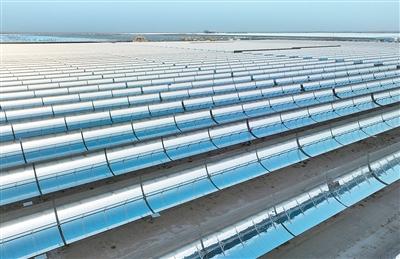
Core Insights - The trade volume between six Gulf countries (UAE, Saudi Arabia, Qatar, Kuwait, Oman, and Bahrain) and China is projected to reach $257 billion in 2024, surpassing the combined trade with the US, UK, and Eurozone, which is estimated at $256 billion. By 2028, this trade volume is expected to grow to $375 billion [4][5][6]. Group 1: Trade and Economic Cooperation - The cooperation between China and Gulf countries has expanded from a focus on energy to include technology, infrastructure, green energy, and aerospace [5][6]. - The implementation of visa-free policies for Gulf countries has facilitated increased personnel exchanges and multi-sector cooperation [5][6]. - The trade volume between China and Gulf countries continues to grow, becoming a significant pillar of cooperation [6][7]. Group 2: Areas of Collaboration - Energy cooperation has shown significant results, with advancements in clean energy technologies such as hydrogen, storage, wind, and solar power [6][7]. - Investment cooperation is on the rise, with Gulf countries increasing their investments in China, showcasing the resilience and potential of their partnership [6][7]. - Innovation cooperation is leading the way in emerging fields like artificial intelligence, 5G, and big data, establishing benchmark cases for multi-sector collaboration [6][7]. Group 3: Strategic Initiatives - All six Gulf countries have signed cooperation documents for the Belt and Road Initiative, with numerous projects underway, such as the Mohammed bin Rashid Al Maktoum Solar Park in the UAE, which has created nearly 50,000 jobs [8][9]. - The mutual benefits of the Belt and Road Initiative are highlighted by the complementary strengths of Gulf countries and China, aiming for economic development and strategic alignment [9][10]. - The cooperation framework has evolved to include multi-level mechanisms such as summits and ministerial meetings, enhancing stability and efficiency in collaboration [7][10]. Group 4: Cultural and Human Exchange - Cultural exchanges are deepening, with initiatives like the establishment of Confucius Institutes in Saudi Arabia and cultural centers in Kuwait, fostering mutual understanding [6][7]. - The cooperation between China and Gulf countries serves as a model for collaboration among countries with different political systems, providing valuable experience for global South cooperation [12][13].