
创新共同体

Search documents
联想举办首届创新加速器开放日 “中小企业朋友圈”再次扩容
Zheng Quan Ri Bao Wang· 2026-02-05 13:18
Group 1 - Lenovo Group held its first Innovation Accelerator Open Day and "New Business Innovation Ecosystem Roadshow," attracting over 100 innovative projects and showcasing 23 representative companies in AI computing power, core components, and software-hardware applications [1] - Over the past three years, the Innovation Accelerator has attracted more than 400 innovative projects, facilitated nearly 100 ecosystem connections, and helped over 60 projects complete Proof of Concept (PoC) validation, with nearly 20 projects achieving commercialization and capital connection [1] Group 2 - The Innovation Accelerator responds to national policies by addressing the pain points of technology-driven SMEs in areas such as technology iteration, market access, and resource integration, promoting AI industry integration and inclusivity [2] - Lenovo has established an ecosystem membership system covering over 2,500 enterprises, with collaborative revenue exceeding 1.5 billion yuan, and aims to connect more internal resources and external partners to accelerate the growth of SMEs [2][3] Group 3 - Lenovo Venture Capital has recommended over 30 invested companies to participate in the Innovation Accelerator, aiming to increase this proportion to 50% in the future, thereby providing more excellent enterprises with support from Lenovo's capital and industry [3] - A roundtable forum discussed the deep integration of business, capital, technology, and supply chains, emphasizing the need for collaboration to build an open and resilient "innovation community" [3] Group 4 - SMEs play a crucial role in technological innovation in China, but face obstacles in their growth, particularly in the current phase where AI technology is transitioning from laboratories to real-world applications [4] - Lenovo aims to empower SMEs by assisting in early exploratory research and facilitating the transformation of laboratory technologies into market-ready products through its flexible production lines [4][5] Group 5 - The Innovation Accelerator has produced notable collaboration cases, such as the development of a three-in-one pressure touchpad solution with Titanium Technology and the introduction of a directional sound technology into Lenovo's PC hardware ecosystem [5] - The Open Day event gathered various stakeholders to inject new momentum into the sustainable development of the industrial ecosystem, helping SMEs transition from "laboratory workbenches" to "hundred billion markets" [5]

展望2026|释放创新驱动强势能
Jing Ji Ri Bao· 2026-01-28 09:18
Core Viewpoint - China is positioning itself to lead in global technology by 2026, focusing on innovation-driven development and strengthening its technological capabilities through a new model of national governance and strategic investments in key areas [1][2]. Group 1: Investment in Research and Development - By 2025, China's R&D expenditure intensity is projected to reach 2.8%, surpassing the OECD average for the first time, with basic research funding accounting for 7.08% of total R&D, a historical high [2]. - The government aims to enhance the proportion of basic research funding in total R&D expenditures, narrowing the gap with developed countries [3]. Group 2: Focus on Core Technologies - The "14th Five-Year Plan" emphasizes breakthroughs in critical core technologies across various sectors, including integrated circuits and advanced materials, to ensure industrial and national security [4]. - In the semiconductor sector, China plans to overcome key technological challenges and promote the large-scale application of domestic chips in consumer electronics and industrial control [4]. Group 3: Strategic Technological Forces - China will strengthen collaboration among national laboratories, research institutions, and leading technology enterprises to build a cohesive strategic technological force [5]. Group 4: New Quality Productivity - The development of new quality productivity is a key focus, with an emphasis on creating application scenarios and platforms for technology verification [7]. - The integration of AI into manufacturing and service sectors is expected to transform production processes and enhance service efficiency [7]. Group 5: International Cooperation and Innovation Community - China aims to foster international cooperation in technology to address global challenges, advocating for a fair and open international governance system [11]. - The establishment of regional innovation centers in Beijing, Shanghai, and the Guangdong-Hong Kong-Macau Greater Bay Area will promote collaborative development and resource sharing [12]. Group 6: Innovation Ecosystem Optimization - Continuous reforms in the scientific and technological system will be implemented to eliminate barriers to innovation and create a supportive environment for research and development [13]. - The promotion of a culture that values innovation and scientific achievement is essential for enhancing the overall innovation landscape [13]. Group 7: Financial Support for Technology - The government plans to enhance financial services for major technological projects and small to medium-sized tech enterprises, ensuring adequate funding for innovation [14][15]. - A comprehensive financial support system will be established to facilitate the financing of key technology sectors and projects [15].
社评:2026,世界可以继续期待中国
Xin Lang Cai Jing· 2025-12-30 16:02
Group 1 - China is perceived as a stabilizing force in a turbulent world, becoming a "stability anchor" amid global governance challenges [1][3] - The "2025 China International Image Global Survey Report" indicates that nearly 80% of respondents recognize the concept of a community with a shared future for mankind [1] - Over three-quarters of foreign respondents view China's five-year planning experience positively, considering it a key to China's success [3] Group 2 - The 80th anniversary of the victory in the Anti-Japanese War and World Anti-Fascist War was commemorated with a grand military parade, emphasizing China's commitment to peace and justice [2] - The emergence of domestic AI models like DeepSeek challenges the perception of U.S. dominance in the AI sector, showcasing China's innovation capabilities [2] - Nearly 90% of foreign respondents express confidence in China's economic growth over the next decade, reflecting a strong belief in China's development trajectory [3]
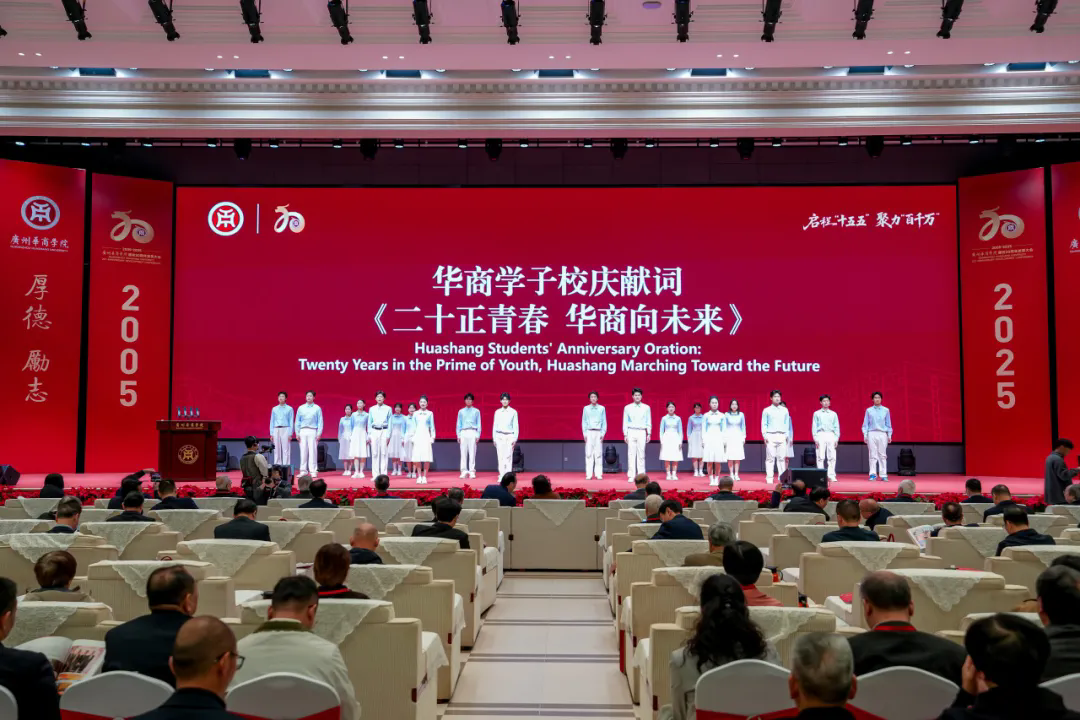
20载培育超10万英才!广州华商学院校庆盛典,政校行企共筑创新共同体
Xin Lang Cai Jing· 2025-12-27 15:38
Core Viewpoint - The Guangzhou Huashang College celebrated its 20th anniversary, emphasizing its commitment to high-quality development during the "15th Five-Year Plan" period and its role in contributing to the Greater Bay Area's growth [1][5][9]. Group 1: Development and Achievements - The college has received over 10 million yuan in donations and more than 100 congratulatory letters, showcasing strong community support [2]. - Over the past 20 years, the college has trained more than 100,000 high-quality applied talents, with nearly 30,000 students currently enrolled across two campuses covering almost 2,000 acres [5][7]. - The college aims to build a century-old institution known for its distinguished faculty and innovative contributions to education [7][9]. Group 2: Strategic Goals and Collaborations - The college plans to enhance its academic programs in alignment with national strategies and the development needs of the Greater Bay Area, focusing on modern emerging industries [7][11]. - A new partnership initiative called "Double Hua Cooperation" with Huawei aims to promote industry-education integration and develop a new ecosystem for digital talent cultivation starting in 2024 [11]. - The college is collaborating with various leading organizations, including Huawei and Baidu, to establish an "innovation community" that connects education, government, and industry [14][16]. Group 3: Community and Alumni Engagement - Alumni have expressed their commitment to the college, with one alumnus announcing a donation of 500,000 yuan to support educational development [13]. - The college's educational philosophy emphasizes the integration of industry and academia, which has led to significant contributions to local economic development [13]. Group 4: Celebratory Events - The anniversary event featured a performance by 1,000 drones, showcasing the college's achievements and future aspirations [20]. - The event concluded with the premiere of an original musical titled "Huashang is Flourishing," highlighting the college's vibrant culture and community spirit [20].

松山湖科学城:高水平科研机构与新型研究型大学“比翼齐飞”
Ke Ji Ri Bao· 2025-12-26 00:42
Core Insights - The establishment of the Dongguan Institute of Materials Science and Technology marks a significant step for Dongguan in participating in the Guangdong-Hong Kong-Macao Greater Bay Area's international science and technology innovation center [1][2] - The new institute aims to enhance the innovation system by integrating basic research, technological breakthroughs, achievement transformation, and talent support, thereby injecting strong momentum into the development of new productive forces in the Bay Area [1][2] Group 1: Strategic Importance - The Dongguan Institute's establishment responds to the urgent need for breakthroughs in key core technologies in the materials field, reinforcing the competitiveness of the industrial chain in Guangdong, a major manufacturing province [2] - The choice of Dongguan Songshan Lake as the location is strategic due to its robust research and industrial foundation, supported by advanced scientific facilities like the China Spallation Neutron Source and the Southern Advanced Photon Source [2] Group 2: Talent and Innovation - The newly established Greater Bay Area University aims to address the mismatch between higher education and industrial needs, serving as a "talent engine" and "innovation pivot" for regional technological self-reliance and economic upgrading [3][4] - The university focuses on six key areas, including material science and advanced engineering, to cultivate high-quality research talents capable of solving complex problems and fostering innovation [3][4] Group 3: Collaborative Ecosystem - The collaboration between the Dongguan Institute and Greater Bay Area University is expected to create a complete loop from fundamental research to industrial application and talent cultivation, enhancing the synergy between materials science and artificial intelligence [5][6] - This partnership aims to facilitate rapid movement and value addition of "talent-knowledge-technology-industry," forming a tightly-knit innovation community that promotes both foundational research and talent development [6]
新思想引领新征程丨粤港澳大湾区深入推进国际科技创新中心建设 奋力打造全球科技创新高地
Yang Guang Wang· 2025-12-22 08:06
Group 1 - The Guangdong-Hong Kong-Macao Greater Bay Area aims to establish itself as a global technology innovation hub, focusing on the development of emerging industries and leveraging the complementary advantages of the three regions [1][2] - The establishment of the Higher Education Regional Technology Transfer Center in the Greater Bay Area aims to facilitate the transformation of high-level projects from 27 renowned universities, including Hong Kong University of Science and Technology and University of Macau [1] - The region is home to over 400 invention patents authorized daily, showcasing its strong innovation aggregation effect [1] Group 2 - A high-energy direct geometry non-elastic neutron scattering time-of-flight spectrometer was recently accepted and delivered in Dongguan, marking a significant advancement in China's research capabilities [2] - The Greater Bay Area is witnessing a surge in technology innovation, with over 70,000 national high-tech enterprises and major scientific infrastructure projects under construction [2][3] - The region's innovation cluster, particularly the "Shenzhen-Hong Kong-Guangzhou" area, has ranked first globally in innovation index, while the "Macau-Zhuhai" cluster has been recognized among the top 100 globally for two consecutive years [3] Group 3 - The Guangdong Provincial Government emphasizes collaboration with Hong Kong and Macau in fields such as artificial intelligence, low-altitude economy, and biomanufacturing to build a comprehensive innovation community [3][4] - The ongoing development of infrastructure connectivity and regulatory mechanisms is enhancing the efficient flow of various elements within the Greater Bay Area, supporting industrial collaboration and innovation [3] - The "14th Five-Year Plan" period is critical for the Greater Bay Area to become a globally influential international technology innovation center, focusing on frontier emerging fields and cross-border industrial technology integration [4]
科创中心扩围意义深远
Jing Ji Ri Bao· 2025-12-20 22:09
Core Viewpoint - The 2025 Central Economic Work Conference has proposed the establishment of international technology innovation centers in Beijing (Jing-Jin-Ji), Shanghai (Yangtze River Delta), and the Guangdong-Hong Kong-Macao Greater Bay Area, marking the first expansion of the scope of Beijing and Shanghai's innovation centers to include these regions [1] Group 1: Necessity of Expansion - The expansion of innovation centers is a necessary choice to address development bottlenecks and align with innovation trends, as global technological competition intensifies and resource demands grow [2] - The three regions have established a solid foundation for innovation, with Shenzhen-Hong Kong-Guangzhou, Beijing, and Shanghai-Suzhou ranking 1st, 4th, and 6th respectively in the 2025 Global Innovation Index [2] - The "siphon effect" of core cities needs to be transformed into regional "radiation dynamics," requiring collaboration between cities to create a complete innovation chain from basic research to industrial application [2] Group 2: Key Components for Effective Expansion - Strategic Technology Community: Establish a cross-regional coordination mechanism for national laboratories and major technological infrastructure to avoid resource dispersion [3] - Industrial Innovation Community: Foster world-class advanced manufacturing clusters and create cross-regional innovation unions to integrate resources from universities and research institutions [3] - Talent Development Community: Implement cross-regional talent exchange and qualification recognition mechanisms to facilitate the free movement of high-level talent [3] - Reform Community: Strengthen institutional guarantees and deepen reforms in the use of research funds and distribution of technology transfer benefits [3] Group 3: Future Outlook - The expansion is seen as a new starting point, transitioning from "single-point breakthroughs" in core cities to "collaborative efforts" among city clusters, which is a significant evolution in China's innovation development philosophy [4] - This strategic deployment is expected to activate greater innovation potential, positioning the three international technology innovation centers as sources of original innovation and leaders in high-end industries [4] - As initiatives are implemented, these centers are anticipated to become key engines driving Chinese-style modernization and enhancing China's presence in the global innovation landscape [4]
“十五五” 区域协同怎么做?专家建言:统一大市场+长三角经验
2 1 Shi Ji Jing Ji Bao Dao· 2025-11-14 04:31
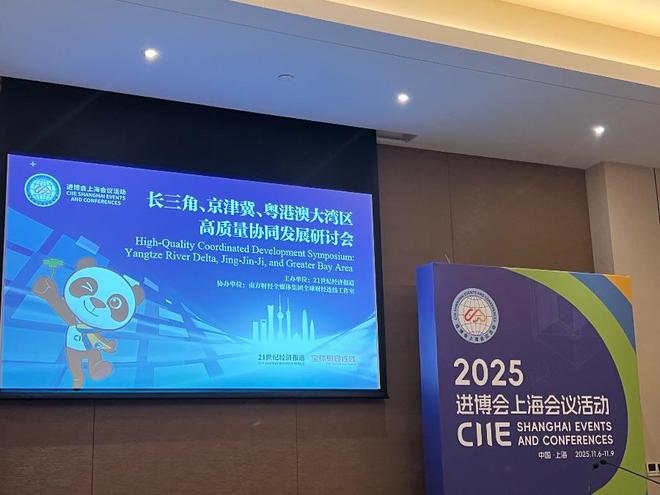
Core Insights - The seminar focused on high-quality collaborative development among the Yangtze River Delta, Beijing-Tianjin-Hebei, and Guangdong-Hong Kong-Macau Greater Bay Area, aligning with the themes of the upcoming China International Import Expo and the 14th Five-Year Plan [1][3] Group 1: Innovation and Collaboration - The seminar emphasized the importance of building a collaborative innovation community to break down barriers and enhance regional cooperation [3][4] - Experts highlighted the construction of a unified national market as a significant variable influencing regional coordinated development, reshaping the economic landscape with new productivity factors like AI and computing networks [3][4] - Suggestions included addressing labor mobility barriers, regulatory discrepancies, and establishing a tax-sharing mechanism to facilitate resource flow among the three regions, which collectively account for 40% of the national GDP [4][5] Group 2: Strategic Development and Mechanisms - The discussion underscored the need for strategic alignment among major national strategies, with a focus on creating synergies that exceed the sum of individual efforts [5][6] - Experts proposed enhancing infrastructure, reducing talent mobility costs, and fostering talent exchange to strengthen regional connections and innovation [6][7] - The importance of a unified market to support the cross-regional flow of innovation elements and industrial integration was emphasized, with examples of successful collaborations between cities [6][8] Group 3: Business Perspectives - Companies are encouraged to leverage the unified national market to optimize resource allocation and enhance competitiveness in the global arena [8][9] - Strategies for businesses include restructuring based on technology, optimizing supply chains, and adhering to compliance standards to align with national strategies [9][10] - The healthcare sector's unique challenges in the Greater Bay Area were discussed, with a focus on patient-centered collaboration and breaking down regional barriers to improve service delivery [10][11] Group 4: Urban Development and Governance - The seminar explored urban cluster development and governance innovation, emphasizing the need for differentiated positioning and digital economy empowerment [10][11] - Recommendations included creating cross-regional industrial collaboration models and leveraging high-level openness to drive institutional innovation [11][12] - The importance of balancing market forces with government intervention to avoid market distortions was highlighted, alongside the need for equal public service access across regions [11][12] Group 5: Future Directions - The discussion concluded with a call for increased efforts in urban cluster construction to promote spontaneous regional collaboration and improve mechanisms for population mobility and social security integration [12][13] - The seminar highlighted the ongoing exploration of regional collaboration, indicating that the dialogue and initiatives will continue beyond the event [14]
3.93万次解难题,炼就成都“新安逸”
Mei Ri Jing Ji Xin Wen· 2025-09-10 09:01
Group 1 - Chengdu has launched a series of policies aimed at improving the business environment, encapsulated in the "进万企、解难题、优环境、促发展" initiative, which includes 70 measures across 22 reform areas [1][20] - The city has seen a significant acceleration in business operations, with companies like影目科技 and 幻景数研 establishing their presence in Chengdu within months, showcasing the effectiveness of government support [6][7] - The local government has implemented a "7-day approval" process for event permits, significantly reducing bureaucratic delays and enhancing the confidence of businesses in the region [10][11] Group 2 - Chengdu's private economy has shown resilience, with a reported increase in value added to the private sector of 6.3% year-on-year, amounting to 618.1 billion yuan [23] - The city has successfully attracted new listings, with four new companies going public, bringing the total to 153 listed companies [24] - Chengdu has seen two of its private enterprises, 新希望集团 and 通威集团, included in the Fortune Global 500 list, indicating a growing recognition of its business ecosystem [25] Group 3 - The government has established a comprehensive support system for businesses, including a 120 billion yuan angel fund and a 1 trillion yuan venture capital fund to address funding challenges for startups [19] - Chengdu has initiated real-world testing for robotics and AI technologies, creating a practical environment for innovation and development [19] - The city has engaged in investment promotion activities across major economic regions, enhancing its connectivity and collaboration with other cities [22]
从长三角到长江经济带:超级“创共体”来了
Ke Ji Ri Bao· 2025-08-13 07:26
Group 1 - The core viewpoint emphasizes the importance of technological innovation as the primary driver for high-quality development in the Yangtze River Delta and the Yangtze River Economic Belt [1][8] - The Yangtze River Delta has implemented the "Decision on Promoting Collaborative Development of Technological Innovation," marking a new legal phase for regional collaboration in technological innovation [1][8] - The Yangtze River Economic Belt is accelerating its collaborative efforts, with 11 provinces and cities signing a framework agreement to promote cross-regional technological innovation [1][2] Group 2 - The establishment of the Yangtze River Delta National Technology Innovation Center has attracted significant innovation resources, leading to the incubation of over 1,700 enterprises and the implementation of more than 140 major technology projects [5][8] - The collaborative innovation ecosystem in the Yangtze River Delta is exemplified by successful cases such as the Huairui Biotechnology Company, which has become the largest β-alanine production base in China [2][4] - The region's focus on high-quality development is reflected in the establishment of various innovation centers and the promotion of cross-regional cooperation among universities and enterprises [6][9] Group 3 - The Yangtze River Economic Belt is recognized for its significant population and economic scale, accounting for a substantial portion of the national economy [2][8] - The collaborative innovation efforts are supported by substantial financial investments, with 1.8 billion yuan from local governments and a total of 11.5 billion yuan in social investments since 2022 [8] - The region aims to enhance its innovation capabilities and efficiency through the integration of resources and the establishment of a robust innovation ecosystem [9]