
天然气加工

Search documents
中国与欧亚地区国家:基于欧亚开发银行相互投资监测的投资流分析-EDB
Sou Hu Cai Jing· 2026-01-28 04:44
Core Insights - The report highlights the growing investment relationship between China and Eurasian countries, with China's cumulative direct investment in the region expected to reach $66.1 billion by mid-2025, reflecting a 13% increase from 2023 [1][2][28] - The majority of investments are concentrated in five countries: Russia, Kazakhstan, Uzbekistan, Mongolia, and Turkmenistan, with Central Asia accounting for over half of China's total investments in Eurasia [1][2][31] - The shift in investment focus from raw materials to high-value industries and long-term infrastructure projects is evident, with manufacturing and energy sectors emerging as key growth drivers [1][2][29] Investment Dynamics and Structure - As of mid-2025, China's cumulative FDI in Eurasia is projected to be $66.1 billion, a nearly 80% increase since 2016, with a total of $29 billion invested over the past decade [1][28] - The investment landscape is evolving, with state-owned enterprises' share in the investment structure declining from 62% to 53%, while private enterprises' share increased from 22% to 27% [2][34] - Greenfield investments, which involve new projects, have become the primary form of investment, accounting for 60% of total investments, indicating a strategic intent for long-term capacity building [2][34] Geographic Distribution - China remains the largest investor in Russia, which accounts for 98% of the total investment in the region, while Kazakhstan's share is relatively small [1][28][33] - In Central Asia, China's cumulative FDI has grown from $19.6 billion in 2016 to $35.9 billion in early 2025, with Uzbekistan emerging as the fastest-growing investment destination, increasing its share from 1% to 16% over ten years [31][34] - The South Caucasus region has seen a 2.5-fold increase in Chinese FDI over the past decade, primarily in Azerbaijan and Georgia, although it still represents only about 1% of China's total investments in Eurasia [32][34] Key Investment Sectors - The energy and manufacturing sectors are becoming increasingly important, with the share of raw materials investment declining from 68% in 2016 to 54% in mid-2025, while manufacturing and energy sectors have seen significant increases [1][29] - Future investment directions are expected to focus on manufacturing, renewable energy, transportation logistics, and agricultural enterprises, aligning with the economic development needs of Eurasian countries [2][34]

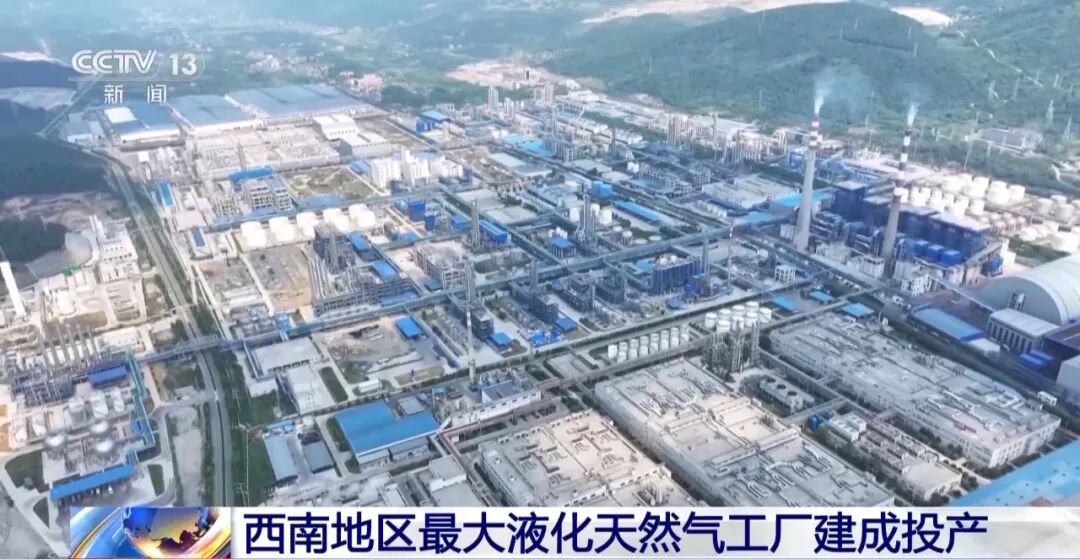
我国首个页岩气处理加工工厂扩能项目建成投产
Yang Shi Xin Wen Ke Hu Duan· 2025-09-25 02:36
据央视新闻客户端9月24日消息,位于重庆涪陵的我国首个页岩气处理加工工厂扩能项目建成投产,工厂产能提升至每天200万立方米,成为西南地区最大 的液化天然气工厂。 据了解,涪陵液化天然气工厂一期项目于2018年建成投产,日处理原料天然气100万立方米,年产液化天然气22.2万吨。随着此次扩能项目的建成投产, 工厂总产能实现翻倍,提升至每天200万立方米,每年可为周边区域稳定提供44万吨液化天然气产品,大幅提升区域液化天然气资源保障能力。液化天然 气工厂投产至今累计为重庆及周边省份提供清洁能源140余万吨。 涪陵液化天然气工厂是将页岩气进行净化处理,再经过零下162摄氏度的低温常压液化,储存和运输。此次新建的日产百万立方米液化天然气的装置,采 用我国自主研发的第二代低能耗液化技术,是国内首个基于人工智能技术设计的液化天然气处理装置。通过采用人工智能优化液化流程,装置运行稳定性 和可靠性更高,较引进工艺能耗低5%。 ...
据国际文传电讯社:哈萨克斯坦表示,卡拉恰加纳克天然气加工厂的建设已经停止。
news flash· 2025-07-02 13:44
Group 1 - Kazakhstan has announced the halt of construction at the Karachaganak gas processing plant [1]
上证能源行业分层等权重指数下跌1.71%,前十大权重包含石化油服等
Sou Hu Cai Jing· 2025-06-24 16:01
Group 1 - The Shanghai Composite Index opened lower but rose later, with the Shanghai Energy Industry Layered Equal-Weight Index down by 1.71% to 2502.08 points, with a trading volume of 14.174 billion yuan [1] - The Shanghai Energy Industry Layered Equal-Weight Index has increased by 1.24% in the past month, decreased by 4.91% in the past three months, and has fallen by 10.24% year-to-date [1] - The index includes companies from eleven primary industries, providing diversified investment targets through market capitalization weighting and equal weighting within secondary industries [1] Group 2 - The top ten holdings of the Shanghai Energy Industry Layered Equal-Weight Index include: Continental Oil & Gas (3.64%), China Coal Energy (3.53%), China National Petroleum (3.46%), Sinopec Oilfield Service (3.44%), China Oil Engineering (3.44%), Shaanxi Coal and Chemical Industry (3.44%), CNOOC Engineering (3.39%), CNOOC Development (3.39%), China National Offshore Oil Service (3.38%), and Shanghai Petrochemical (3.37%) [1] - The index's holdings are entirely from the Shanghai Stock Exchange, with coal accounting for 46.42%, oilfield services for 13.60%, coke for 12.94%, fuel refining for 10.31%, integrated oil and gas companies for 6.75%, oil and gas extraction for 3.44%, oil and gas circulation and others for 3.35%, and natural gas processing for 3.19% [2]

中证1000能源指数报436.46点,前十大权重包含盘江股份等
Jin Rong Jie· 2025-04-29 08:27
Core Points - The China Securities 1000 Energy Index has experienced a decline of 8.54% over the past month, 8.15% over the past three months, and 11.55% year-to-date [2] Group 1: Index Performance - The China Securities 1000 Energy Index is currently reported at 436.46 points [1] - The index is based on a sample of liquid and representative securities from each industry, providing a diversified investment option [2] - The index was established on December 31, 2004, with a base point of 1000.0 [2] Group 2: Index Holdings - The top ten weighted stocks in the China Securities 1000 Energy Index include Donghua Energy (10.57%), New Natural Gas (9.55%), and Continental Oil & Gas (9.04%) [2] - The Shanghai Stock Exchange accounts for 71.66% of the index holdings, while the Shenzhen Stock Exchange accounts for 28.34% [2] - The industry composition of the index holdings includes coal (32.49%), oil refining (22.69%), coke (20.60%), natural gas processing (13.65%), and oil and gas circulation and others (10.57%) [2] Group 3: Sample Adjustment - The index samples are adjusted biannually, with adjustments occurring on the next trading day after the second Friday of June and December [3] - Temporary adjustments may occur under special circumstances, such as delisting or corporate actions like mergers and acquisitions [3] - Changes in industry classification due to special events will also lead to corresponding adjustments in the index samples [3]
