安防摄像头

Search documents
深夜崩盘!英伟达2天蒸发3万亿,银行股集体跳楼!一场席卷全球的资本大逃亡正在上演
Sou Hu Cai Jing· 2026-03-01 07:10
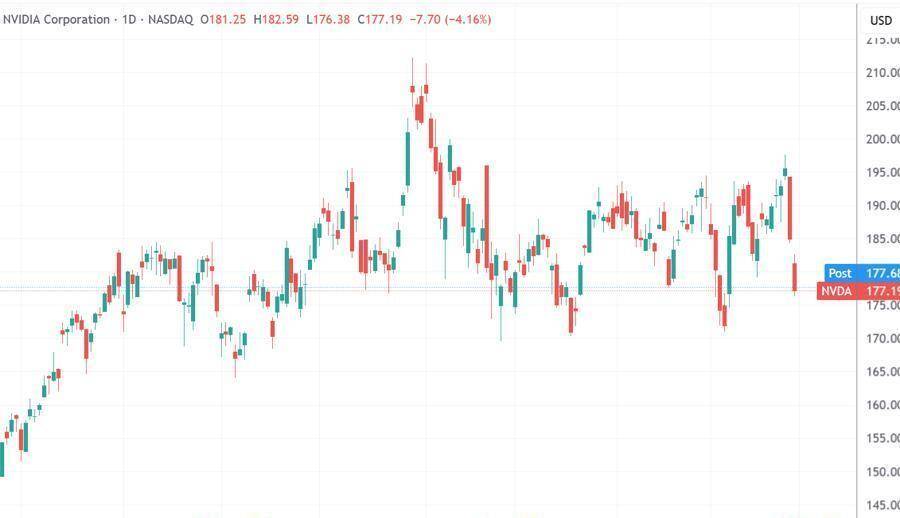
Market Overview - The U.S. stock market experienced significant declines, with the Dow Jones dropping 521 points (1.05%) to close at 48,977.92 points, and the Nasdaq falling 0.92% to 22,668.21 points, marking the largest monthly declines since March 2025 [1] - February saw the Nasdaq index plummet 3.38% and the S&P 500 decrease by 0.87%, both recording their largest single-month declines in a year [1] Nvidia's Market Impact - Nvidia's stock fell 4.16% to $177.19, resulting in a market cap loss of $187.1 billion in one day, and a staggering $446.4 billion over two trading days, equivalent to the total market cap of a major bank [3] - Despite Nvidia reporting a record Q4 revenue of $68.1 billion (up 73% YoY) and a net profit of $43 billion (up 94% YoY), the stock price plummeted, indicating a disconnect between strong earnings and market performance [3] Investor Sentiment and Concerns - Analysts noted that the sell-off reflects profit-taking after positive earnings, alongside skepticism about the sustainability of massive capital expenditures by cloud service providers in the AI sector [4] - Concerns arose regarding whether the substantial investments in AI by tech giants would yield returns, particularly as Nvidia's growth may face limits if customer demand slows [4] CoreWeave's Financial Struggles - CoreWeave, a cloud AI computing rental giant, saw its stock drop over 22% after reporting a Q4 net loss that expanded from $51 million to $452 million YoY, alongside a capital expenditure plan of $30-35 billion for 2026, significantly higher than the previous year's $10.3 billion [4] OpenAI's Funding and Market Reaction - OpenAI announced a new funding round of $110 billion, raising its pre-money valuation to $730 billion, with major investments from Amazon, Nvidia, and SoftBank [5] - Despite this funding, market sentiment remained negative, highlighting the harsh reality of the "burning cash" competition among AI giants [5] Financial Sector Impact - The KBW Bank Index fell 4.85%, marking its largest single-day drop since April of the previous year, with major banks like Goldman Sachs and Morgan Stanley experiencing significant declines [5] - The financial sector's downturn was exacerbated by fears stemming from the collapse of a UK mortgage company, raising concerns about systemic risks in the private credit market [7] Broader Market Trends - The market displayed a stark divide, with tech giants generally declining while some AI-related stocks surged, such as Dell Technologies, which rose 21.93% due to expected doubling of AI server revenue [8] - The overall sentiment shifted towards safe-haven assets like gold and silver, with gold prices nearing $5,280 per ounce and silver rising 6.15% [10] Employment Concerns in AI - The announcement of significant layoffs by Block, a fintech company, due to AI-driven productivity improvements raised alarms about AI's potential impact on employment across sectors, including finance [7] Conclusion - The market turmoil initiated by Nvidia's stock decline reflects a broader reassessment of the AI investment landscape, with implications for both technology and financial sectors as investors grapple with the sustainability of growth in a rapidly changing environment [12]


小米出手了,安防摄像头市场巨变:4G、太阳能、AI成新战场
3 6 Ke· 2026-02-04 09:30
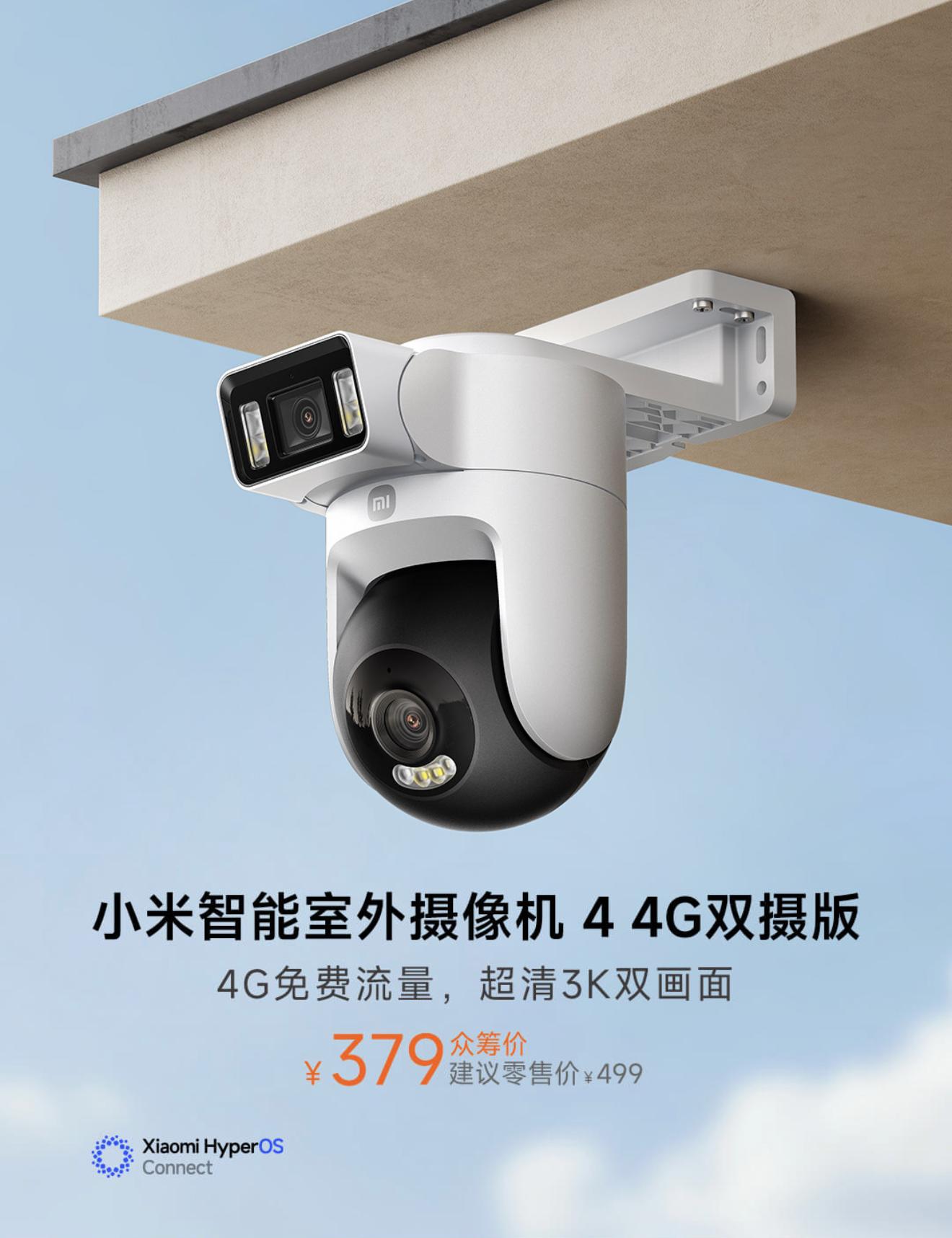
Core Insights - Xiaomi has launched its first outdoor 4G camera, breaking free from Wi-Fi and wired connections, featuring dual 5MP cameras and offering a free unlimited data plan for users of the Mi Home app [1][5] - The security camera market is experiencing a significant transformation with new players entering and a shift towards outdoor applications and low-power technologies [6][9] Company Developments - Xiaomi's outdoor 4G camera is priced at 379 yuan and supports various features such as AI human and vehicle recognition, smart color night vision, and IP66 dust and water resistance [1] - The camera utilizes built-in 4G SIM cards from China Telecom and Unicom, allowing for seamless network switching without additional charges [1][5] Industry Trends - By 2025, the Chinese consumer-grade surveillance camera market is expected to reach 55.07 million units, with online sales accounting for 63.6% of the total [6] - The market is seeing a shift towards head brands, with Xiaomi, JoAn, and Hikvision leading in sales volume and revenue [6] Technological Advancements - The security camera sector is undergoing a major technological update, with a focus on 4G connectivity and wireless power solutions, enabling cameras to operate in outdoor environments [9][12] - Major brands like Hikvision and Ezviz are advancing in the "wireless + 4G" technology, with products that include solar-powered options [13][15] Competitive Landscape - New entrants are flooding the market, with over 500 new brands emerging while more than 260 white-label manufacturers are exiting [6] - The competition is intensifying as brands incorporate AI technologies for features like human detection and intelligent tracking, with Xiaomi's new camera also emphasizing AI capabilities [19][21] Future Outlook - The global annual shipment of security cameras is currently around 300 to 400 million units, with a potential market expansion if wireless camera adoption increases significantly [12] - The industry is moving towards a future where cameras will be fully wireless, AI-enabled, and low-power, with predictions of wireless camera shipments reaching 10 billion units by 2035 [22]